A yoga practice can feel more intentional when movement, breath, and meditation share a theme. Chakra balancing yoga offers one way to bring these elements together, inviting you to notice how different practices shape your attention and experience.
In many spiritual traditions, the seven chakras are described as energy centers along the body, each associated with themes such as stability, creativity, and connection. You might explore this framework spiritually, use it symbolically, or treat it as a prompt for self-reflection. There’s no need to regard chakras as medically measurable structures for the practice to feel meaningful.
A pose, for example, can help you explore steadiness, while a slow breath gives you a moment to notice what is present. Meditation can then create space to reflect, without requiring any particular feeling or outcome. This approach is less about fixing yourself and more about meeting your experience with curiosity.
As you explore, let the framework support your practice rather than dictate it. Joyous Yoga is a place to discover more about yoga and mindfulness, with ideas to help you find a path that feels welcoming and your own.
What Chakra Balancing Means in a Yoga Practice
As you explore your practice with curiosity, you may encounter the chakra system. In traditional yoga and other Indian spiritual traditions, chakras are described as energy centers along the body’s central line. They offer a symbolic map for reflecting on different parts of life and experience.
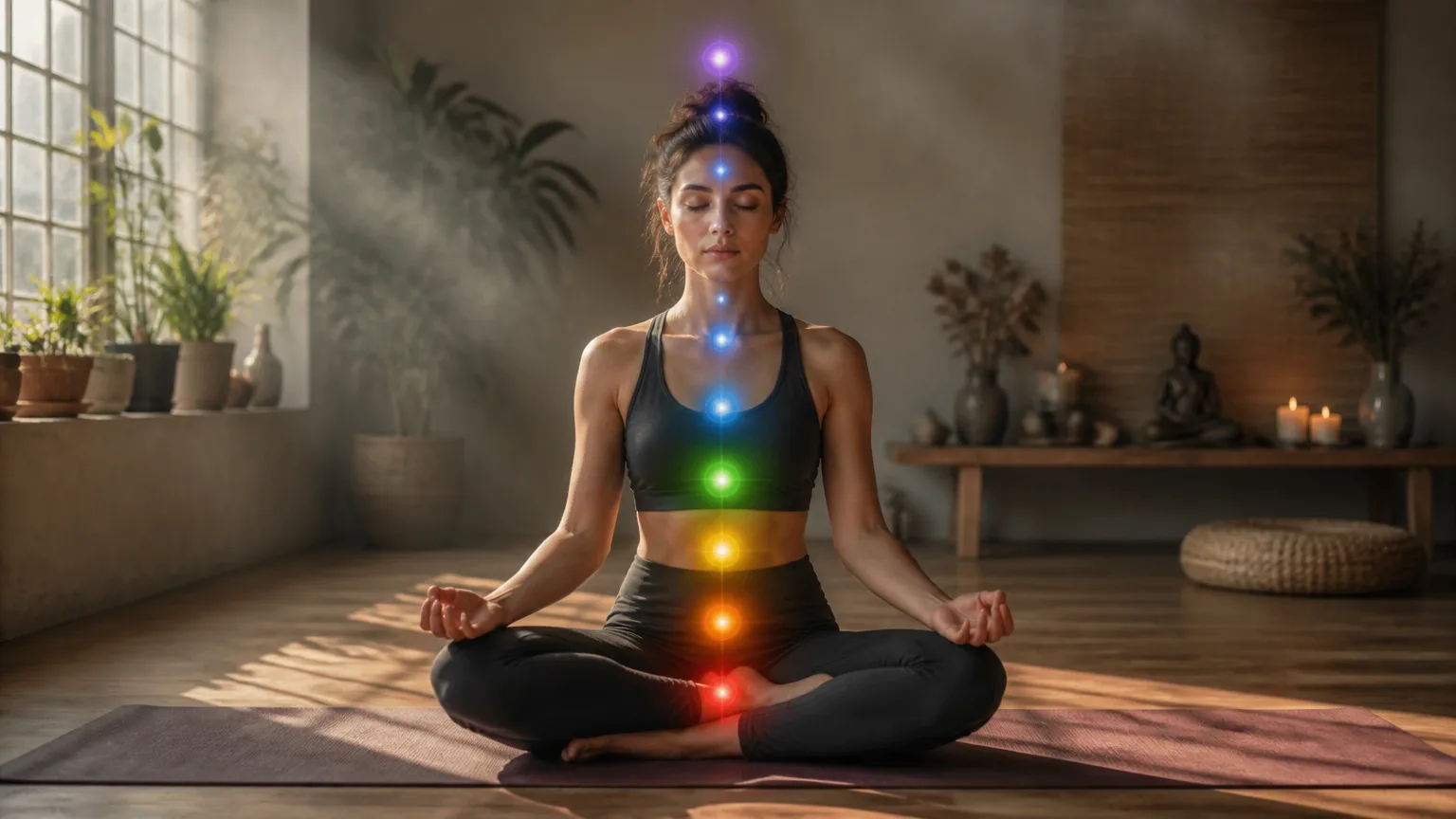
The seven commonly referenced chakras are named from root to crown. The root chakra is traditionally linked with safety and grounding; the sacral with creativity and feeling; and the solar plexus with confidence and personal agency. The heart is associated with love and connection, the throat with expression, the third eye with insight, and the crown with spiritual awareness or a sense of connection beyond the self.
In chakra balancing yoga, these themes can help organize a session. A practitioner might choose a steady standing pose while reflecting on grounding, or pair a gentle chest-opening movement with thoughts of connection. Breathwork and meditation can also support attention to a chosen theme, whether that means noticing the breath, making space for a feeling, or sitting quietly with a question.
Here, balance is best understood as a personal intention, not a fixed state everyone must reach. You might use the framework to notice where you feel steady or where you want to bring more care. Your experience can shift from day to day, and no single pose is expected to resolve a physical or emotional concern.
The chakra system is a traditional spiritual framework, not a medical model or a diagnosis. Its concepts are not established clinical measures of health, so they shouldn’t replace evidence-based care. If you have a health concern, seek guidance from a qualified healthcare professional; a knowledgeable yoga teacher can help you adapt your practice within their scope.
You can draw on the chakra map lightly, choosing the ideas that feel meaningful and leaving the rest. Let it be one way to bring mindfulness to movement, breath, and reflection—not a rulebook for how you should feel.
How Yoga Poses Give Each Chakra a Physical Focus
Once the chakra map feels like an invitation rather than a rulebook, movement can offer a way to explore its themes. A pose gives your attention a physical place to rest: your feet on the floor, your spine lengthening, or your breath moving through the body. In chakra balancing yoga, these sensations can support reflection without promising a particular result.
Mountain Pose offers a simple example. Standing with your feet grounded, knees soft, and weight evenly spread can bring attention to steadiness and support. These qualities are often associated with the root chakra, traditionally connected with safety and belonging. A supported standing posture, such as standing near a wall or chair, can offer a similar point of focus.
The goal is not to stand perfectly or prove that you feel grounded. Notice what helps you feel present: perhaps widening your stance, softening your gaze, or sensing the floor beneath you. If standing is uncomfortable, you might explore those same themes from a seated position, with your feet resting on the ground.
Other poses can invite attention to different areas and qualities. Gentle hip openers, such as a supported Bound Angle Pose, are often linked in yoga traditions with the sacral chakra and themes of creativity, feeling, and adaptability. A comfortable seated twist may bring awareness to the torso and breath, and is sometimes associated with the solar plexus chakra and themes of confidence or personal agency.
These connections are symbolic, and interpretations can vary across traditions. A twist does not guarantee a change in confidence, just as a hip opener does not necessarily release emotion. Instead, you can use the association as a prompt: What do you notice in this area? Does the pose feel spacious, restricted, neutral, or simply like a stretch today?
Balance postures can bring another quality into focus: the relationship between steadiness and attention. In Tree Pose, you might place one foot against the opposite ankle, keep your toes on the floor, or hold a wall for support. Each version can invite patience and concentration without requiring you to stay still or balance without assistance.
If you want to explore a more challenging balance, Crow Pose is one option, not a requirement. Our step-by-step guide to crow pose offers an introduction to building strength and exploring the pose with care. You can also choose a gentler balance, or skip balancing altogether if it does not suit your body or energy that day.
Let comfort and accessibility guide your choices, rather than trying to target a presumed blockage. Props, a smaller range of motion, and rest are all valid parts of practice. You might choose one pose that feels supportive, then pause to notice your breath and response. Over time, this curious approach can make chakra themes tangible while leaving room for your own experience.
Breathwork: The Bridge Between Movement and Attention
With a supportive pose in mind, you can bring attention to another part of your practice: the breath. It offers a simple point of focus between movement and stillness. Noticing each inhale and exhale may help you recognize how a pose feels, without needing to change that feeling.
Try coordinating an easy inhale and exhale with a movement. For example, inhale as you slowly raise your arms, then exhale as you lower them. Move at a comfortable pace, and let your breath remain natural rather than stretching it to match the motion.
This gentle coordination can make effort easier to notice. Are your shoulders tightening? Does the movement feel unhurried, or are you rushing to keep up with your breath? These observations aren’t a test. They’re invitations to adjust your range, pause, or rest.
If movement feels distracting, simply observe your natural breathing for a few moments. Notice the breath at your nostrils, chest, or belly—wherever it is easiest to sense. Another option is gentle, even breathing, with inhales and exhales of similar length. Keep it comfortable; there’s no need to take unusually deep breaths.
Avoid straining, holding your breath, or pushing through dizziness. Return to normal breathing, sit or lie down if that feels safe, and stop the practice if you continue to feel unwell. If you have questions about what is appropriate for you, a qualified teacher or healthcare professional can offer guidance.
In chakra balancing yoga, breath can also serve as a thematic cue, without needing to represent a measurable shift in energy. During a grounding pose, for instance, a teacher might invite you to notice steadiness in your feet and the easy rhythm of your breath. You might then carry that sense of attention into a seated pause.
Music can support the mood of a practice, but silence is just as welcome. If you enjoy a soundtrack, explore ideas for choosing yoga music that suits the pace you want. Let the sound, breath, and movement remain gentle options—not instructions you must follow.
Over time, these small moments of noticing can help connect the body’s movement with a calmer, more attentive state. Your breath does not need to be perfect or profound. It can simply be something you return to, one comfortable inhale and exhale at a time.
Meditation and Visualization for Chakra-Themed Practice
After movement and breathwork, a few quiet minutes can help you notice what the practice feels like from within. Meditation does not need to create a special state or confirm that anything has changed. It can simply offer space to observe your body, breath, and thoughts with curiosity.
Choose a position that feels comfortable and steady. You might sit on the floor, rest in a chair with both feet supported, or lie down. Let your hands settle where they feel natural, and allow your eyes to close or soften.
Try a brief body scan, moving your attention slowly from your feet toward your head. Notice sensations such as warmth, pressure, ease, or tension without needing to change them. If scanning feels uncomfortable, stay with the feeling of your feet on the floor or your body resting on its support.
You can also practice seated attention by noticing the breath as it moves in and out. There is no need to make it deeper or more even. When your mind wanders, gently return to one simple anchor, such as the next exhale or the contact between your hands.
Some practitioners add visualization or mantra to chakra balancing yoga. They may picture a color associated with a chakra, repeat a traditional bija mantra, or hold a personal intention, such as “I can meet this moment with patience.” These are optional tools, not requirements, and there is no single image or phrase everyone must use.
If colors or mantras do not resonate, you can focus on a physical sensation, listen to the sounds around you, or silently name what you notice: “breathing,” “warmth,” or “resting.” You might also imagine a calming place or simply feel the floor beneath you. Choose whatever helps you stay present, and set aside anything that feels distracting or uncomfortable.
A visual image can be another gentle point of reflection. For instance, you might notice how shape, color, or balance in yoga art brings attention to qualities you want to explore in practice. There is no need to interpret an image in a particular way; let your own response guide you.
Keep the practice brief if that feels right. One or two minutes of quiet attention can be meaningful, especially when approached without pressure to feel calm or focused. Meditation is not a test of concentration. Each time you notice distraction and return with kindness, you are practicing attention.
How Poses, Breathwork, and Meditation Work Together
A chakra-themed practice can bring movement, breath, and reflection into one gentle arc. Instead of trying to address every chakra in a single session, choose an intention to guide your choices. You might focus on steadiness, openness, or self-expression, and let that theme shape the poses you try.
Begin by arriving as you are. Sit or stand comfortably, notice the points of contact beneath you, and take a few natural breaths. There is no need to change your breathing. Simply ask yourself what quality you would like to bring into the practice, then pause long enough to let an answer emerge.
Next, warm up with easy movements such as shoulder rolls, gentle side bends, or a few rounds of cat-cow. Move slowly enough to notice how each shape feels. If your intention is steadiness, for example, you might include a comfortable standing pose; if it is openness, try a mild chest-opening movement without forcing a stretch.
For a focused sequence, choose two or three accessible postures that fit your intention. A low lunge with hands supported on blocks can invite a sense of grounding, while a seated twist may offer a moment to explore spaciousness. Move between poses at a pace that feels manageable, pausing whenever you need to rest or notice your response.
Let the breath help pace transitions rather than dictate them. You could begin a movement on an inhale and settle into it on an exhale, keeping the breath easy and unstrained. If that pattern feels distracting, return to natural breathing and move in whatever rhythm feels comfortable. In chakra balancing yoga, the connection comes from attentive practice, not from matching every pose to a perfect breath.
After movement, sit or lie down for a brief breath-awareness pause. Notice where breathing feels easy to sense, such as the chest or belly, without trying to make it deeper. Then spend a minute or two in meditation, reflecting on your intention: What did you notice in your body, breath, or mood? There is no required answer, and distraction is simply a chance to return kindly to the present.
Close with rest in a supported, reclined position, with knees bent or a cushion beneath them if that feels good. A bolster can make resting shapes more comfortable; explore these beginner-friendly yoga bolster poses for ideas on using support. Stay for a few breaths or several minutes, then take your time coming back to sitting.
This sample can be shortened to a few warm-up movements, one pose, and a quiet pause, or expanded with more postures and longer rest. Let comfort, energy, and available time guide the length. The sequence is a flexible framework for noticing how movement, breath, and meditation can support one another.
Adapting the Practice for Your Needs and Experience
A sustainable chakra balancing yoga practice is one you can shape around your body, energy, and circumstances. There is no single correct way to move through the poses or work with chakra themes. Let comfort and curiosity guide your choices, rather than pushing toward a particular shape or feeling.
Props can make poses more comfortable and accessible. Try placing a folded blanket under your knees, sitting on a cushion, or using a chair for support. Chair-based variations, shorter holds, and breaks to rest are all meaningful ways to participate. For example, you might explore a seated twist instead of standing, or pause between poses to notice how you feel.
If you are new to yoga, start with stable, familiar poses and a pace that feels manageable. You do not need to learn every posture or hold one for a long time. When you would like support tailored to your needs, a qualified yoga teacher can suggest adaptations and offer individualized guidance within their scope.
Physical ability and comfort can vary from day to day. You might move through a full sequence when you feel energized, then choose gentle movement or rest another time. If a pose causes pain, strain, or unease, adjust it or stop. Rest is not a setback; it is one way to listen and respond with care.
The inner practices deserve the same flexibility. Visualization, breath focus, or particular poses may not feel right for everyone. You can instead notice sounds in the room, feel your feet supported, or let attention rest on something neutral. If any practice brings discomfort, you have permission to pause, open your eyes, or leave it aside.
With these options, chakra balancing yoga can remain exploratory rather than prescriptive. You are not required to feel a certain way or follow a fixed path. Each choice—from using a prop to taking a quiet break—can help make the practice more welcoming and your own.
Frequently Asked Questions
Is chakra balancing yoga suitable for beginners?
Yes. You can begin with a short, comfortable session and choose gentle poses, easy breathing, and a brief quiet pause. There is no need to know every chakra or follow a particular sequence. Treat chakra themes as a traditional spiritual framework for reflection, not as a diagnosis of what is happening in your body.
How long does a session need to be?
There is no required length. Even five or ten minutes can give you time for a few movements, several comfortable breaths, and a moment of stillness. Let your energy and schedule guide you; a shorter practice can be more supportive than pushing through a session that does not feel right.
Do I need to address all seven chakras at once?
No. You can focus on one theme that feels meaningful, such as grounding or self-expression, and select a pose or reflection to explore it. Traditional chakra systems describe seven energy centers, but you do not have to work with all of them in every practice.
Can this practice replace medical or mental health care?
No. Chakra balancing yoga may be a personal spiritual practice, but claims about energy centers diagnosing or treating health conditions would require scientific evidence. It is not a substitute for medical care or mental health treatment. If you have symptoms or concerns, consult a qualified health professional, and adapt or pause your practice as needed.
A More Connected Approach to Chakra Balancing Yoga
Movement gives you a chance to notice your body, while breath offers a steady point of attention. Meditation creates space to reflect. A shared intention—such as practicing with curiosity—can weave these parts into one connected experience.
You might begin with a few comfortable poses, let your breathing remain natural, and spend a brief moment in quiet reflection. Notice what feels supportive, and adjust or pause whenever you need.
There is no perfect way to practice, and no prescribed experience to pursue. Let curiosity guide you, return when it feels right, and allow consistency to grow at your own pace.