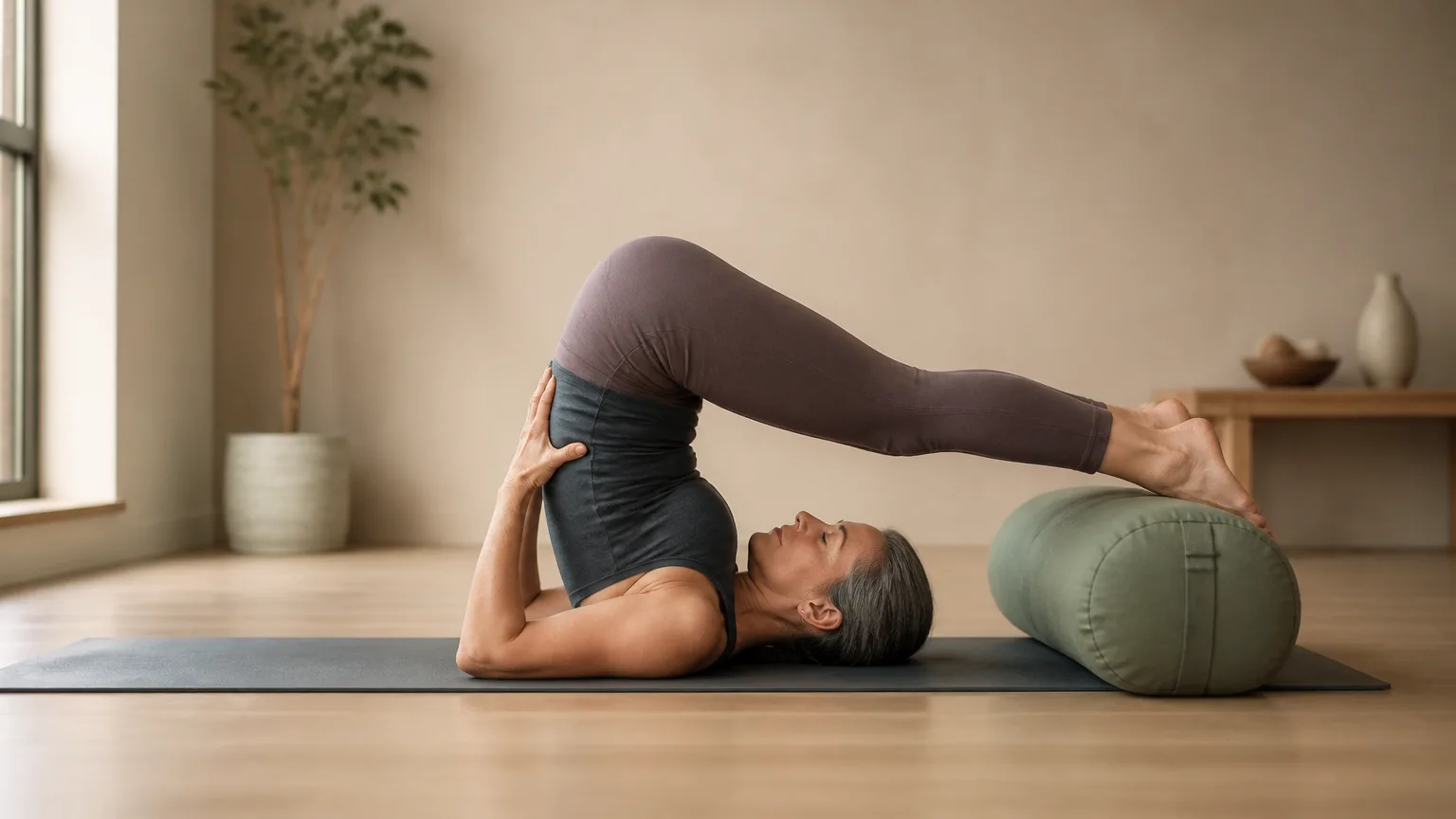
Plow pose yoga, also known as Halasana, is an inverted posture that folds your legs overhead while your shoulders and upper back support you. The shape may look graceful, but it can feel intense, especially if you’re new to inversions or tight through your shoulders and back.
There’s no need to push your feet toward the floor. This pose is optional, and your practice is personal; prioritize steady breathing, comfort, and control over how far your legs travel. If anything feels painful or overwhelming, come out gently and choose a variation that feels more supportive.
In this guide, you’ll learn how to prepare for Halasana, move into it step by step, and adapt the pose to suit your body. We’ll also cover simple safety considerations so you can explore the posture with care rather than pressure.
Yoga is an individual journey, and each practice can look different from day to day. For more welcoming ideas on yoga and mindfulness, visit Joyous Yoga and keep finding the balance that works for you.
What Is Halasana? Benefits, Sensations, and Limits
Halasana, or Plow Pose, is an inversion in which you lie on your back and bring your legs overhead. Depending on your range of motion, your toes may rest on the floor behind you, or your legs may remain lifted. The shape is named for a traditional plow and is often practiced as part of a yoga sequence.
In plow pose yoga, you may notice a stretch through your shoulders, upper back, or the backs of your legs. Your abdomen and other muscles may feel engaged as you guide your legs into position. These are common sensations, not guaranteed outcomes or signs that the pose is right for every body.
The pose asks for a combination of shoulder, spinal, and hip mobility. If one area feels restricted, the others may compensate, so forcing your feet toward the floor can create strain. Use props or a modified shape, and follow guidance that helps you keep your neck comfortable.
Halasana may feel quiet and inward, but the position can also feel unfamiliar or intense. Let your breath stay calm and steady; if you find yourself holding it, rushing, or feeling discomfort, ease out. Move with attention to what your body is telling you, rather than aiming for a particular shape.
Strength and flexibility vary from person to person and from day to day. Plow Pose is not a test of skill or a required milestone in yoga. You can build a meaningful practice without doing it, and choosing a gentler variation is a valuable way to honor your needs.
Core strength can support a more controlled transition into and out of the pose, but it does not replace mobility or careful setup. If you’d like to explore supportive movement, try these yoga poses for confidence and core strength. Let your practice develop gradually, with comfort and awareness guiding each step.
Who Should Skip Plow Pose or Get Guidance First?
Halasana brings the legs overhead and places the body in an inverted position. That combination can affect the neck, spine, eyes, breathing, and circulation. Before trying plow pose yoga, consider your health history and how your body feels today—not just whether you can reach the shape.
If you have a neck or spinal condition, ongoing pain, or a recent injury or surgery, avoid the pose until you’ve received individualized advice. Pregnancy is another reason to check with a qualified healthcare professional and an experienced prenatal yoga teacher before attempting an inversion. Depending on your circumstances, they may recommend skipping Halasana or choosing a different practice.
Glaucoma and other eye concerns also warrant professional guidance. The same is true for conditions that may be affected by inverting or by pressure in the body, such as certain heart or blood-pressure concerns. This is not a complete list, and online guidance cannot determine what is safe for you. If you’re unsure, ask a healthcare professional familiar with your condition rather than trying the pose to see how it feels.
Pay attention to how you respond during practice. Pain, numbness, tingling, dizziness, or restricted breathing are signals to come out of the pose immediately. Pressure or discomfort in the neck is also a reason to stop; it is not a sensation to push through or “work out.” Move slowly and carefully, and ask a teacher for help if you need support exiting.
You do not have to attempt the full pose to benefit from a thoughtful yoga practice. If Halasana feels uncertain, choose a supported alternative—such as resting with your legs on a chair or practicing a gentle reclined pose—while keeping your neck comfortable and your breath easy. A qualified teacher can help you find an option that suits your body, experience, and needs. Choosing a variation, or skipping the pose entirely, is a mindful way to care for yourself.
Prepare Your Body, Space, and Props
A calm, well-prepared space can help you move with greater ease, though no setup removes every risk. Choose a firm, nonslip surface with enough clear space behind you for your legs to travel overhead. If you use a folded blanket beneath your shoulders, keep your head and neck completely off it. Once inverted, keep your head facing upward and avoid turning it.
Warm up gradually rather than moving straight into plow pose yoga. Try gentle spinal movements, such as Cat-Cow, then prepare your hamstrings with easy stretches that don’t force a deep range. A few mindful core-engagement exercises can also help you explore controlled movement. If you’re newer to yoga, these beginner yoga exercises offer approachable ways to build strength, balance, and flexibility before attempting more demanding poses.
Wear clothing that lets you bend and lift your legs without pulling, bunching, or restricting your breath. Avoid loose tops that may fall over your face when your hips rise. These comfortable yoga outfits can help you choose pieces that move with you.
Props are optional supports, not guarantees of safety. A blanket may add cushioning beneath your shoulders, while a nearby chair can provide an alternative place to rest your legs. You might also keep a yoga box for your practice kit for other poses and practice needs; it isn’t required for Halasana. Choose only supports that feel stable, and pause if you notice neck pressure, strain, or difficulty breathing.
How to Practice Halasana Step by Step
Set up in a clear space, with a stable chair behind your head if you’d like support for your feet. If you use folded blankets beneath your shoulders, arrange them with a qualified teacher’s guidance. They should feel secure, and your head should rest comfortably on the floor.
Lie on your back with your arms alongside your body and your palms facing down. Let your head remain still, gaze upward, and take a few easy breaths. Gently engage your trunk, without holding your breath or tightening your jaw.
To begin, bend your knees and draw them toward your chest. Press your upper arms into the floor and slowly lift your hips only as far as you can manage without strain. Avoid swinging your legs or using momentum. More advanced ways of entering the pose are best learned with a teacher who can guide your setup and movement.
If it feels comfortable, continue moving your legs overhead with control. You may place your hands on your back for support, keeping your elbows grounded and close enough to feel steady. Let the shoulders and upper arms bear the support; do not drive weight into your neck. Keep your head still, and never turn it while you are in the pose.
Reaching your feet toward the floor is optional, not a measure of success. If they do not reach comfortably, rest them on a stable chair behind you, or keep your knees bent. Choose an option that allows you to breathe freely and keeps your neck comfortable. In plow pose yoga, a smaller, supported shape can be a complete practice.
Once settled, breathe steadily and stay only briefly, especially if you are new to Halasana. Notice whether your breath remains easy and your shoulders feel supported. Come out sooner if you feel neck pressure, pain, dizziness, or difficulty breathing. There is no need to deepen the pose to make it worthwhile.
To exit, keep your head still and bend your knees if that feels more manageable. Bring your hands back alongside your body, then lower your spine gradually, one section at a time, letting your arms help control the descent. Resist the urge to drop your hips or kick your legs down. Move slowly enough to stay aware of how your back and shoulders feel.
When your spine is resting on the mat, pause with your knees bent and feet on the floor. Take a few relaxed breaths and notice any changes in your body. If your neck feels uncomfortable, rest in a neutral position and seek guidance before trying the pose again. A calm, deliberate exit is part of the practice, not an afterthought.
Halasana Modifications and Accessible Alternatives
Halasana does not need to look the same for everyone. Your range of motion, experience, and comfort can change from day to day, so choose an option that lets you breathe easily and keep your neck comfortable. A modification is a complete practice choice, not a lesser version or a step you must eventually move beyond.
If your feet do not reach the floor, place a stable chair behind your head and rest your feet on its seat. Yoga blocks can also support your feet, but use them only if they feel secure and suit your range. Keep your neck in a comfortable position; do not push your legs farther overhead to reach a prop.
You might instead support your hips with your hands, keeping your legs lifted without lowering them overhead. Another option is a partial leg lift: raise your legs only as far as you can while maintaining steady breathing and a relaxed neck. Even a small, controlled movement can be a meaningful way to explore plow pose yoga.
Choose supports before lifting your legs, and make sure they cannot slide or tip. Keep your head and neck still while your legs are raised; turning your head in an inverted position can strain the neck. If you feel pressure, pain, breathlessness, or anxiety, come out slowly and rest.
For some people, the most supportive choice is not to practice Halasana. If an inversion is not appropriate for you, try a gentle supine stretch instead. Lie on your back with your knees bent and feet resting on the floor, then draw one knee toward your chest at a time. Hold only where the stretch feels easy, and keep your head and neck resting naturally.
You can also lie on your back with your lower legs supported on a chair. This relaxed position offers a chance to pause without lifting the hips or placing weight near the neck. Let your breath remain smooth, and leave the position if anything feels uncomfortable.
If you have balance or mobility concerns, a health condition, or uncertainty about whether Halasana is suitable, ask a qualified yoga instructor for individualized guidance. A teacher can help choose an alternative and arrange props for your body and space. You do not need to try the full posture to make your practice worthwhile. Returning to a supported variation—or choosing a reclined stretch—is a mindful way to care for yourself.
Common Mistakes, Safe Exits, and What to Do Afterward
A few habits can make plow pose yoga feel more strained or less steady. One is forcing your feet toward the floor. Your feet do not need to touch down; let your range of motion, setup, and comfort guide how far you go.
Avoid using momentum to lift your hips or swing your legs overhead. Move with control, and keep your weight supported through your shoulders and upper back—not pressed into your neck. Once inverted, keep your head still; turning it can strain your neck. Let your breath stay easy, rather than holding it to maintain the shape.
Discomfort is a reason to pause, not a challenge to push through. A mild, even stretch may be ordinary, but sharp pain, neck pressure, tingling, numbness, dizziness, or difficulty breathing are warning signs. If any of these arise, come out carefully. Stopping or choosing a different pose is a successful response to your body’s signals.
If the pose feels unstable, don’t make a sudden move or twist while inverted. Slowly bend your knees and bring them toward your chest, then guide your legs back overhead only as far as feels controlled. Lower your spine and hips gradually to the mat, keeping your head still. If you can’t exit smoothly, ask a nearby person or teacher for help rather than rushing.
Afterward, rest on your back with your knees bent and feet on the floor. Take a few comfortable breaths and let your neck settle in a neutral position. Give yourself a moment to notice how you feel before moving on.
Return to movement gradually. You might gently rock your knees from side to side only after you’re fully on your back and comfortable, then roll onto one side before sitting up. If symptoms linger or feel concerning, stop your practice and seek appropriate guidance. There’s no need to repeat the pose; a supported rest or another gentle option can be a mindful way to continue.
Frequently Asked Questions
Can beginners practice Plow Pose?
Beginners may explore a supported or partial variation with guidance from a qualified yoga teacher. You do not need to attempt the full pose to benefit from mindful movement. Start gradually, and choose an option that keeps your neck comfortable and your breathing easy.
Do my feet have to touch the floor?
No. Your feet do not need to reach the floor, and forcing them down is not a goal. Keep your legs supported if needed, or try a gentler variation with your hips resting on the mat. Comfort and steady breathing matter more than the shape of the pose.
How long should I hold Halasana?
Aim for a brief, comfortable stay rather than a set number of breaths or seconds. Let your breathing and your instructor’s guidance help you decide when to come out. If your breath becomes strained or you feel discomfort, exit carefully.
What if I feel neck pressure or dizziness?
Come out of the pose carefully and stop practicing it for now. Move slowly, rest in a comfortable neutral position, and avoid turning or straining your neck. If symptoms persist, or if you have health concerns that may affect your practice, seek advice from a healthcare professional or qualified yoga teacher before trying again.
What if I’m not flexible enough for Plow Pose?
Flexibility is not a requirement for a meaningful practice. A supported or partial version may feel more suitable, or you can rest with your legs on a chair instead. A teacher can help you find an alternative that respects your body today.
Practice Plow Pose with Patience and Choice
A thoughtful Plow Pose practice begins before you lift your legs. Prepare your space, move gradually, and keep your neck comfortable and free from pressure. Use stable support if it helps, and keep your breath easy throughout. If the pose feels strained, uncomfortable, or simply not right for you, come out slowly and rest.
In plow pose yoga, a safe, comfortable range matters more than reaching a picture-perfect shape. Your legs do not need to touch the floor, and your version may change from day to day. Resting your legs on a chair, choosing a gentle reclined stretch, or skipping Halasana altogether are all valid ways to practice with awareness.
If you’re unsure how to set up or modify the pose, seek guidance from a knowledgeable yoga teacher who can help you find an option suited to your needs. Listen to what your body is telling you, and choose a different pose whenever it calls for one. With patience and choice, you can build a practice rooted in mindfulness, balance, and care.