If you’re curious about aerial yoga classes but unsure what to expect, you’re not alone. Your first hammock session is a chance to explore supported movement at your own pace—not to prove how strong, flexible, or fearless you are.
In class, a fabric hammock helps support your body as you move through poses and stretches. It can offer a fresh relationship with balance and gravity, whether you’re standing with the fabric nearby or resting your weight in it. Dramatic inversions aren’t required, and you can choose options that feel comfortable.
It’s also natural to wonder about heights or whether you need yoga experience. A beginner class should include clear guidance, variations, and time to get familiar with the fabric before trying new movements. You can ask questions, take a pause, or stay close to the floor as you build confidence.
Think of your first session as an invitation to notice what feels supportive and enjoyable. The hammock may feel unusual at first, but there’s no need to master it right away. For more ideas and encouragement as you explore your practice, visit Joyous Yoga, a welcoming place to begin discovering yoga and wellness resources.
What Aerial Yoga Is—and What It Isn’t
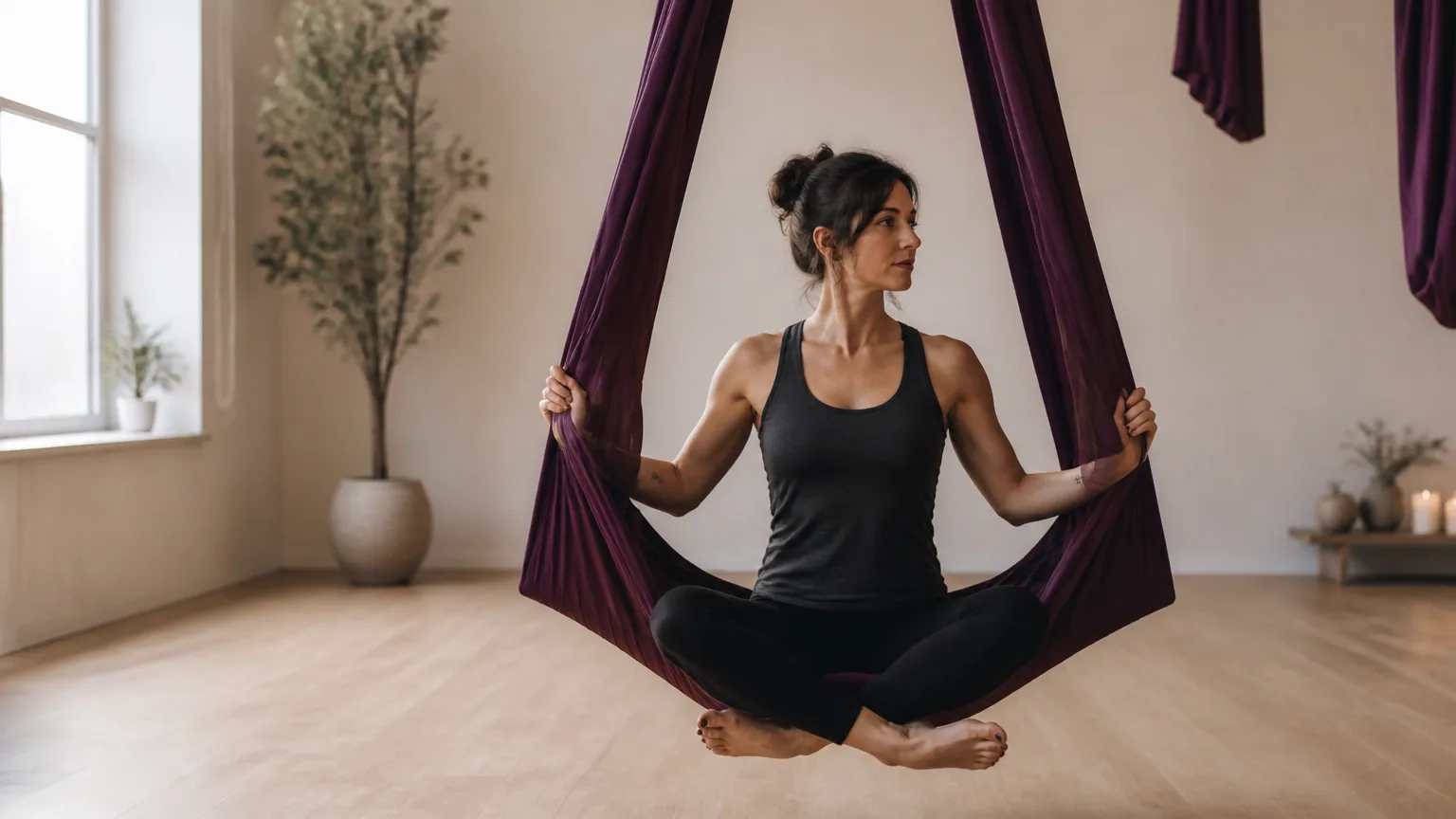
Aerial yoga brings familiar yoga movements into a fabric hammock suspended from the ceiling. The hammock becomes a prop you can use in different ways: it may support your body, cradle you as you rest, or offer gentle resistance during a pose. Rather than requiring you to know special tricks, it gives you another way to explore movement and balance.
In a beginner-friendly class, an instructor may guide you through adapted poses and simple transitions. You might place your hands in the fabric for support during a standing stretch, sit in the hammock for a gentle hip opener, or rest your back in it while your feet stay on the floor. The fabric can change how a pose feels, but you’re still encouraged to move at a pace that feels comfortable.
Aerial yoga isn’t automatically acrobatics or a performance. Many sessions include standing and floor-based movement alongside supported work in the hammock. Some classes offer inversions, where the body turns upside down, but not every class includes them. If inversions aren’t part of your comfort zone, you can ask whether they’re optional and what alternatives are available.
The experience can also vary from one studio to another. Hammocks may differ in fabric, height, or setup, and instructors may emphasize relaxation, strength, flexibility, or playful exploration. Even classes with the same name can feel quite different, so the class description is a helpful starting point rather than a guarantee of one specific style.
Before booking, check whether the session is designed for beginners and what movements it includes. You can also contact the studio to ask about its teaching approach, hammock equipment, and whether you’ll need to climb into the fabric or try inversions. Sharing any concerns with the instructor can help them suggest supportive options.
Your first hammock session doesn’t need to look a certain way to count. You may spend much of the class with your feet on the ground, learning how the fabric responds as you move. Let curiosity lead, and give yourself room to discover what feels steady and enjoyable.
How to Prepare for Your First Hammock Session
A little preparation can help you arrive feeling settled and ready to explore. Each studio has its own setup, so follow its instructions first, especially for clothing, equipment, and arrival time.
Choose close-fitting, comfortable clothing that lets you move without bunching. Sleeves and leggings that cover areas where the fabric may rub can make hammock poses feel more comfortable. Leave zippers, jewelry, watches, and other snag-prone items at home; they can catch on or damage the hammock.
For food, aim for a comfortable middle ground. A large meal right before class may feel distracting during inversions or gentle pressure from the fabric, while coming in hungry can make it harder to focus. If you need a snack, keep it light and give yourself time to digest. Follow any specific guidance from your instructor, and let them know privately if you have concerns that could affect your practice.
Try to arrive early rather than rushing in at the last minute. Extra time gives you space to complete intake forms, ask questions, and learn how to approach the hammock safely. You can also tell the instructor about injuries, pregnancy, mobility needs, or anything else you would like them to know before class. Sharing what feels relevant is enough; you do not need to explain more than you wish.
Most studios provide the hammock, and some may not require a mat. Ask what is supplied and whether a mat would be useful for floor-based portions of the class. If you already practice on a mat, bring it only if the studio recommends it. For broader practice, this guide to choosing a yoga mat can help you think through what suits your needs, but a specialized mat is not required for aerial yoga.
Before you leave home, check the studio’s welcome email or class page for its own checklist. You may want to bring water and a small towel, but avoid carrying extra items into the practice space unless the studio allows them. With comfortable clothing, a little extra time, and clear guidance from your instructor, you can begin at your own pace.
A Step-by-Step Sense of What Class Feels Like
Your first class will usually begin with a welcome and a quick introduction to the instructor. They may ask about your experience, answer questions, and explain how the hammocks are set up. This is a good moment to mention any concerns or physical needs so the instructor can suggest suitable options.
Next comes an orientation to the fabric and its height. Your instructor should demonstrate safe ways to enter and exit the hammock, hold the fabric, and adjust your position. Follow those instructions before trying a movement on your own, and ask for a demonstration if anything feels unclear.
The class may begin with grounding exercises, such as noticing your breath or feeling your feet on the floor. From there, you might explore simple movements close to the ground, using the hammock for light support. These first steps help you get familiar with how the fabric shifts when you lean, press, or move.
As the practice continues, the instructor may guide you through a mix of hammock-supported poses and standing work. You could use the fabric to ease into a stretch, steady your balance, or explore a gentle backbend. Sequences vary, so one class might spend more time moving with the hammock, while another includes longer stretches on the mat.
Transitions are part of the practice, too. Your instructor should explain how to move between positions and offer options for different comfort levels. You can pause, keep your feet grounded, or choose a simpler variation; there is no need to attempt every pose.
Some movements may ask you to place more weight into the fabric, while others use it only as a point of support. Listen to the cues, move gradually, and speak up if a position feels uncomfortable or confusing. A supportive class leaves room to explore without pressuring you to perform.
The atmosphere can feel different from one studio to another, just as class formats differ across yoga styles. If you’re curious about those differences, read how class expectations vary across yoga styles. Comparing class descriptions can help you understand the pace, setting, and focus before you arrive.
Many sessions close with supported rest or relaxation. You may lie back in the hammock, let it cradle your body, and follow a short breathing practice. If being lifted feels unfamiliar, your instructor may offer a grounded alternative so you can rest in a way that feels comfortable.
Because there is no single template for aerial yoga classes, check the studio’s description rather than assuming every session follows the same arc. Look for details about experience level, class focus, and whether beginners are welcome. Knowing what to expect can make it easier to arrive with curiosity and settle into the experience at your own pace.
Beginner Movements, Balance, and Finding Your Comfort Zone
As you begin moving with the hammock, the fabric may feel unfamiliar against your body. It can shift or sway in response to even a small change in weight, which may feel different from practicing on a steady mat. There’s no need to go farther or higher to make the movement worthwhile. Often, small, controlled motions offer the best chance to notice how the hammock supports you.
Your instructor may guide you through simple ways of leaning into the fabric, finding support, or bringing your feet onto the floor again. These beginner movements are opportunities to explore, not tests of flexibility or courage. You can take time to understand each direction and ask for clarification whenever you need it.
Balance in aerial yoga is less about holding a perfect pose and more about noticing what’s happening moment by moment. You might feel your weight shift as the hammock moves, then adjust your position or find a steadier point of support. Breathing comfortably can help you stay present with those sensations, rather than rushing to correct every wobble.
This shifting feedback can build body awareness in a new way. You may notice where you feel secure, where you’re holding tension, or how a small adjustment changes your sense of balance. Over time, those observations can help confidence grow, even if you choose to keep both feet on the ground for much of class.
Your comfort matters throughout the session. Instructors can offer adaptations, such as changing how the fabric supports you or keeping a movement closer to the floor. Pause when you need a moment to breathe or reset, and feel free to opt out of anything that feels uncomfortable. You’re allowed to choose the version that feels right for you.
Some students are curious about the trust and balance explored in partner yoga. While both practices can invite attention to support and connection, aerial yoga is distinct and does not require a partner. In aerial yoga classes, the hammock and instructor’s guidance provide the support for your practice. You can explore at your own pace, with curiosity and care.
Safety, Communication, and When to Modify or Sit Out
Feeling prepared also means knowing how to stay informed and supported. Choose a class led by a qualified instructor who can explain the equipment and offer clear guidance. Each studio may have its own setup and procedures, so listen carefully and ask questions if anything is unclear.
Follow the instructor’s directions for getting in and out of the hammock, checking its position, and using the fabric. Use the hammock only as directed, and avoid trying unfamiliar aerial moves on your own. If a movement feels confusing, wait for the instructor’s help rather than guessing.
Before class, share relevant health concerns or physical limitations with the instructor. You don’t need to share more than you’re comfortable with, but useful information can help them suggest options. If you’re unsure whether taking part is appropriate for you, seek guidance from a qualified healthcare professional before attending.
During class, keep checking in with how you feel. Dizziness, nausea, pain, anxiety, or a sense of instability are valid reasons to pause, return to a supported position, or leave a pose. You can place your feet on the floor, ask for assistance, or take a quiet break. There’s no need to push through discomfort to keep up with the group.
Inversions are optional. They aren’t a measure of progress, and skipping one doesn’t make your practice less complete. You can ask for an alternative or decline a movement without explaining your choice. A supportive instructor will respect that decision and help you find a comfortable way to participate.
It can also help to agree on a simple way to get the instructor’s attention before class begins, especially if you’re new to the hammock. If you want to stop during a pose, say so clearly or use the signal your instructor has explained. Instructors may not be able to see every student at every moment, so speaking up is an important part of staying connected.
In aerial yoga classes, safety isn’t about performing every movement perfectly. It’s about following guidance, communicating honestly, and making choices that feel right for you. You can take part at your own pace, with the hammock offering support while you learn what feels steady.
Mindful Benefits and a Gentle After-Class Reset
After class, give yourself a moment to notice how the experience felt. The hammock may have offered a welcome sense of support, or its movement and fabric sensations may take time to get used to. Both responses are part of learning something new.
Some students enjoy the novelty and discover fresh ways to explore familiar movements. Others prefer to keep their feet grounded while becoming comfortable with the hammock. There’s no single experience to aim for, and no particular pose needs to define your first session.
Instead of counting how many movements you completed, check in with your mood, energy, and comfort. Do you feel curious, calm, pleasantly challenged, or ready for a quieter pace? Simply noticing your response can help you understand what kind of support you might want next time.
A gentle reset can make the transition out of class feel less rushed. Drink some water, find a quiet moment, and take a few slow breaths before heading into the rest of your day. If it feels useful, jot down one thing you enjoyed and one thing you’d like to ask your instructor.
You can bring the same curious attention to mindful activities beyond the studio. For example, yoga painting as a mindful creative practice offers an optional way to explore calm and creativity through art. There’s no need to make it another goal; it can simply be a gentle space to notice, make, and unwind.
With aerial yoga classes, each visit may feel a little different as you learn what suits you. Let your reflections guide you, while giving yourself permission to change your mind, take breaks, and move at your own pace.
Frequently Asked Questions
Starting something new can bring up practical questions. These quick answers may help you feel more prepared, but your studio or instructor can offer guidance for your specific class.
Do I need yoga experience to try aerial yoga?
Not always. Many studios offer beginner classes, but class levels vary, so check the description before booking. Follow your instructor’s guidance and let them know if you’re new to yoga or the hammock.
Do I need to be flexible or strong?
There’s no single flexibility or strength level required across all classes. Activities and physical demands vary, and your instructor can suggest suitable modifications. You can ask about options before class if you have questions about a particular movement.
Will I have to go upside down?
Not necessarily. Inversions aren’t included or required in every class, and you can ask about alternatives. Tell your instructor if you’d rather keep your feet grounded or skip an inversion.
What should I wear, and should I eat beforehand?
Choose comfortable clothing that won’t snag on the fabric; your studio may have specific clothing recommendations. Meal timing and what to bring can also vary, so check the studio’s advice about eating beforehand, water, and other supplies.
What if I feel nervous, dizzy, or uncomfortable?
Pause and tell your instructor how you’re feeling. They can help you return to a supported position or skip the movement. If you feel dizzy or uneasy, there’s no need to push through; take the time and support you need.
Arrive Curious, Move at Your Own Pace
Your first hammock session is a chance to explore movement with support, not to prove anything. Choose a beginner-friendly class, check the studio’s guidance, wear comfortable clothing, and arrive early. Let your instructor know about questions or concerns so they can help you feel settled.
As you begin, comfort and mindful attention are meaningful outcomes. You can modify a movement, pause, or simply notice how the hammock feels before trying something more challenging. Let curiosity guide you, and take each step at your own pace.