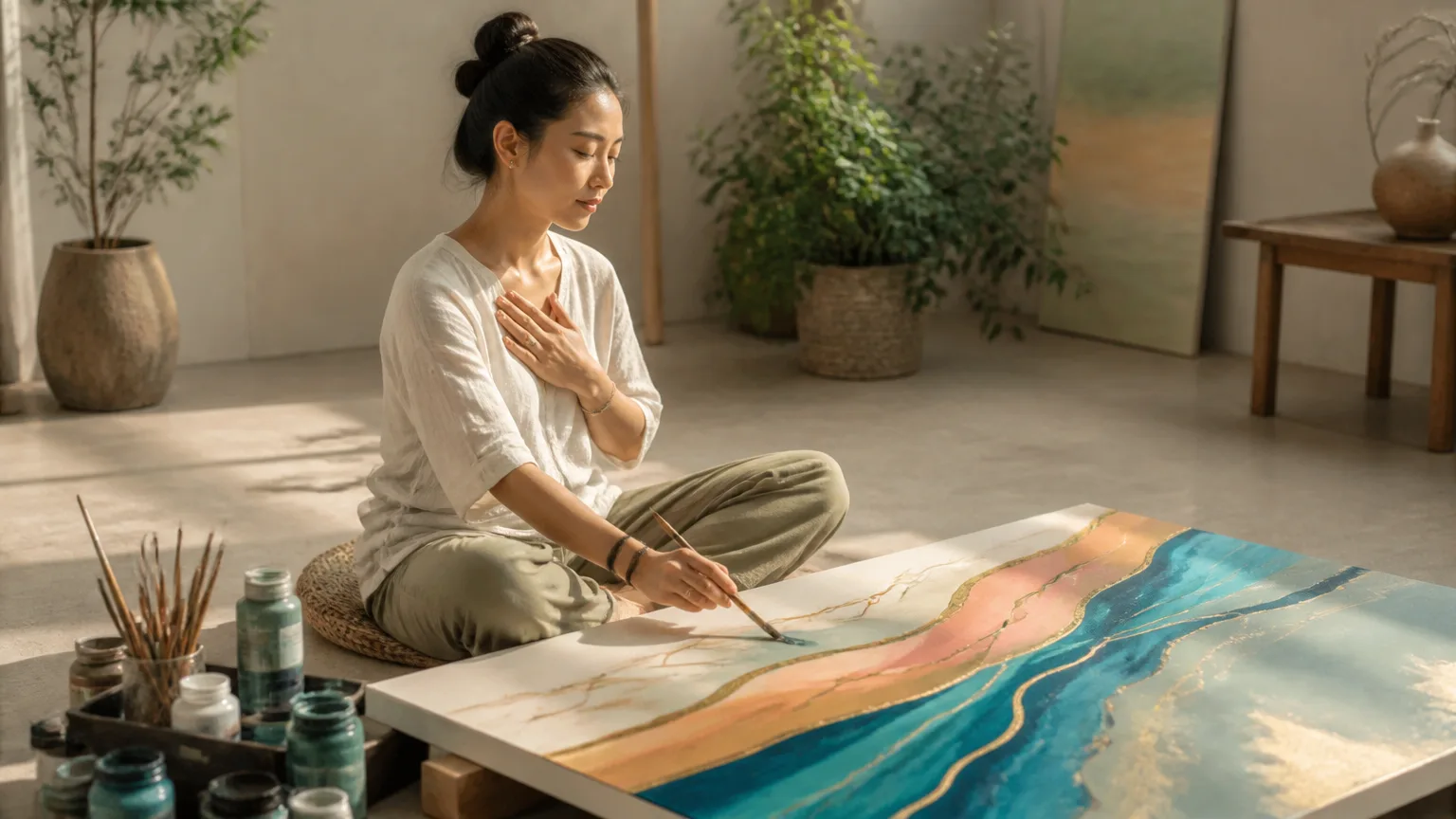
Yoga painting begins before the first brushstroke. You start by breathing, sensing your body, and arriving fully in the present moment. From that grounded place, color and movement can unfold without pressure.
Yoga painting is a mindful art practice that blends gentle, yoga-inspired presence with breath awareness and intuitive visual expression. You might stretch your shoulders, notice the rhythm of your breathing, and let your hand move across the page. The focus is not on creating a perfect image. It is on listening inward and allowing the process to guide you.
This practice can support many different people. Yoga practitioners may enjoy bringing awareness from the mat to the canvas. Mindfulness beginners can explore attention through color and simple movement. Stressed creatives may find a softer way to make art, while anyone who believes they are “not artistic” can discover that creativity does not require technical skill.
Yoga painting is not a standardized yoga style or a formal art class. It is also different from ordinary painting, which may emphasize technique or a finished result, and from art therapy, which is guided by a trained professional for specific therapeutic purposes. Instead, it offers an accessible space to slow down, notice what is here, and create in your own way.
In this article, you’ll explore how yoga painting works and how to begin with simple, welcoming practices from Joyous Yoga. No special experience is needed—only curiosity and a few quiet moments.
The Meaning and Origins of Yoga Painting
Yoga painting is a contemporary mindful art practice that brings together movement, breath, awareness, and creative expression. Rather than following one official method, it invites you to approach painting as a form of meditation. You might create after a yoga class, paint along with your breath, or simply notice how your body feels as your brush moves.
The practice draws from shared principles found in yoga and mindfulness. Presence encourages you to focus on the current moment instead of judging your past choices or planning the finished image. Non-judgment helps you welcome every mark, color, and sensation with curiosity. There is no need to decide whether your painting is “good.”
Breath awareness can provide a gentle rhythm. You might inhale while choosing a color, then exhale as you make a long, unhurried stroke. This simple connection can settle a busy mind and bring attention into the body. Over time, painting may become a way to notice tension, ease, energy, and emotion without needing to explain them.
Yoga painting also reflects embodiment, or the experience of being present through the body. Instead of painting only from an idea, you can explore the movement of your shoulders, hands, wrists, and whole body. A wide canvas might invite sweeping gestures, while a small brush could encourage patience and close attention.
Letting go of attachment to outcomes is another important theme. In many creative settings, we focus on producing something attractive or meaningful. Yoga painting gently shifts the focus toward the process, allowing the image to change without forcing it toward a particular result.
It is helpful to understand yoga painting as a modern mindful art approach, not as a universally defined tradition with one founder, origin story, or prescribed technique. People may practice it in studios, classrooms, homes, or outdoor spaces. Some use prompts and guided movement, while others paint in silence and follow their intuition.
Yoga has deep roots in Indian philosophical, spiritual, and cultural traditions. As you explore yoga painting, take time to learn about those roots and engage with them respectfully. A personal painting exercise can support reflection and calm, but it does not replace the broader practice of yoga, its teachings, or its many lineages. Recognizing this distinction allows your creative practice to remain both personal and culturally aware.
How Yoga Painting Works: From Breath to Brushstroke
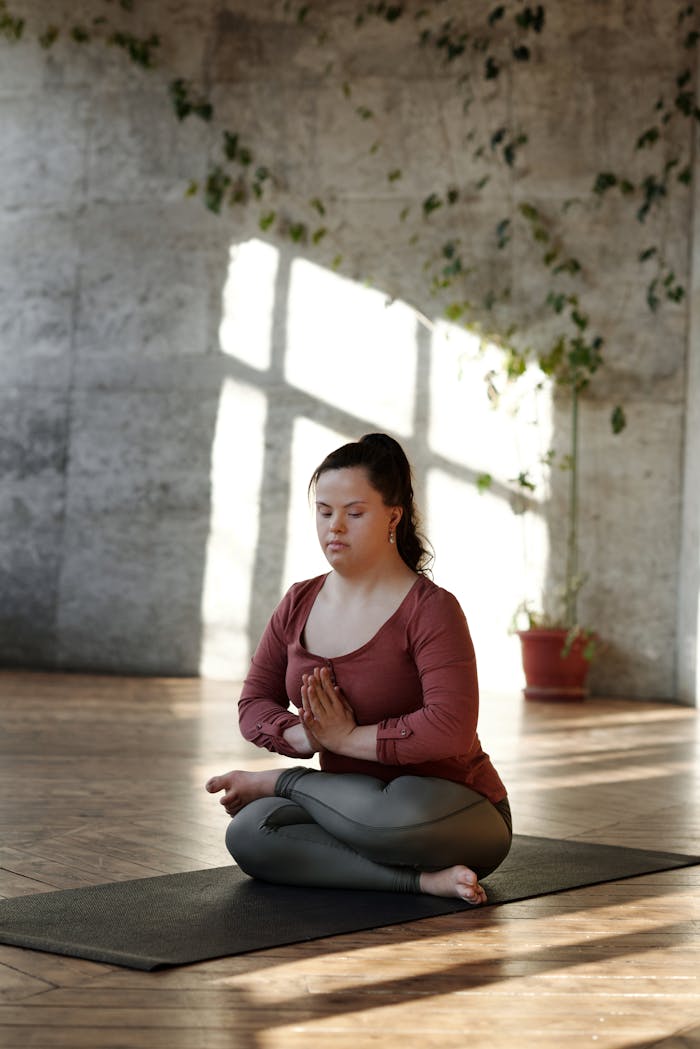
A yoga painting session begins with arrival, not achievement. Give yourself a few quiet minutes to settle your body, gather materials, and notice the space around you. You might sit comfortably, soften your gaze, and take several slow breaths.
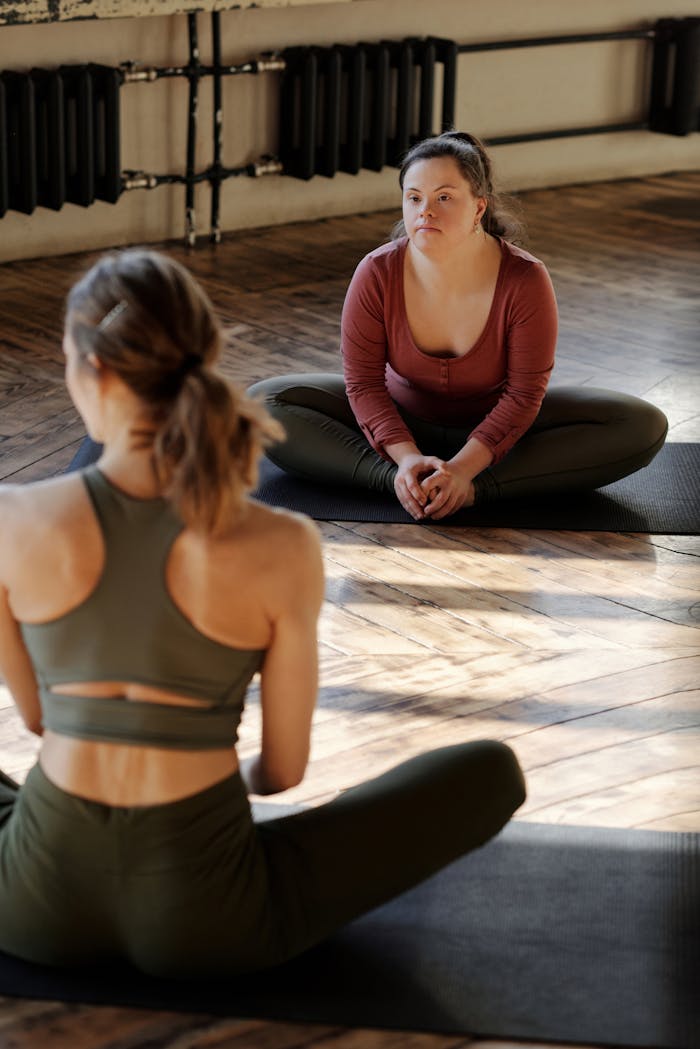
Movement can help you transition into this more attentive state. Try a gentle seated stretch, a few standing poses, simple hand gestures, or slow movements between shapes. There is no need for advanced yoga ability. The purpose is simply to sense your body and create a little more ease.
As your breathing steadies, notice what is present. Do you feel tension in your shoulders, warmth in your hands, or movement in your belly? You do not need to change these sensations. Let them become information as you choose an intention for your practice.
Your intention might be grounding, spaciousness, release, curiosity, or kindness toward yourself. Think of it as a gentle direction rather than a goal. It can guide your attention without deciding what the painting must become.
Begin with simple marks. You might make dots, lines, circles, waves, or broad sweeps across the page. Let your breath influence your rhythm. A long exhale might become a slow brushstroke, while a steady inhale might inspire a lighter, rising line.
From there, follow your visual impulses. Experiment with color, texture, repetition, and empty space. You might change brushes, mix unexpected colors, layer transparent shapes, or leave parts of the page untouched. In yoga painting, the process matters more than producing a polished image.
Try to notice when your mind starts judging the work. If you hear, “This does not look right,” return to sensation and breath. Ask what feels interesting rather than what looks perfect. A mark can be meaningful because of how it feels to make it.
For example, an intention of grounding might lead you toward earthy browns, deep greens, and steady horizontal lines. Spaciousness could become pale blues, open areas, and widely spaced marks. For release, you might choose flowing strokes, changing pressure, or colors that move freely beyond their original shapes.
There is no fixed order, and you may move between painting and gentle movement as needed. Pause whenever your attention feels scattered. Place the brush down, feel your feet or hands, and take a few unhurried breaths.
When you sense the practice is complete, step back and observe your painting. Notice colors, patterns, textures, and empty spaces without assigning a strict meaning. You might write a few words about what you felt, or simply offer yourself a quiet moment of appreciation.
What You Need to Start a Yoga Painting Practice
A yoga painting practice can begin with what you already have at home. Choose paper, cardboard, or a small canvas, depending on your comfort and budget. There is no need to purchase a complete art set before you begin.
Gather a few washable paints, brushes, a cup of water, cloths, and something to use as a palette. An old plate, jar lid, or piece of cardboard can work well. Tempera or watercolor paints are often affordable and easy to clean, while non-toxic supplies are especially helpful when children or pets share your space.
You can also invite gentle sensory exploration with sponges, cotton swabs, leaves, or textured tools. These materials can create different marks without requiring artistic experience. Use what feels interesting, and leave out anything that makes the practice feel complicated or pressured.
Your movement space can be just as simple. A yoga mat, comfortable clothing, and a clear patch of floor can support stretching, breathing, and mindful transitions before or during painting. Specialized equipment is not necessary; your body and a little room to move are enough.
If you enjoy preparing in advance, a simple yoga gear checklist can help you gather useful basics for home or studio practice. Think of it as a supportive guide, not a shopping list. The goal is to make beginning easier, not to collect more things.
Protect your floor with newspaper, a washable cloth, an old sheet, or a reusable table cover. Keep water containers stable, and place paints within easy reach. When painting with children, choose sturdy materials and washable colors; with pets, keep supplies secured and allow paint to dry before curious paws investigate.
A small space can work beautifully. You might paint at a kitchen table, on a tray, or beside your mat on the floor. If bending or sitting on the floor is uncomfortable, place your paper on a table and practice seated movements nearby. Adjusting the setup for mobility needs is part of the practice, not a departure from it.
In a group setting, invite each person to bring simple materials or share a central supply table. Leave enough space for everyone to move safely, and offer different painting surfaces and tools. A welcoming yoga painting environment values curiosity over uniform results, so each person can explore at their own pace.
The Benefits of Yoga Painting for Calm and Creativity
Yoga painting may support calm by bringing attention back to immediate, sensory experience. Noticing the breath, the movement of the body, and the feel of a brush can offer a gentle shift away from constant mental stimulation. For some people, this focused attention makes it easier to pause and notice what is happening in the present moment.
Repetitive mark-making can also create a steady rhythm. Swirling color, layering shapes, or moving a brush across the page gives the hands something simple to follow. These actions do not guarantee relaxation, but they may help some participants feel more grounded and connected to their bodies.
The practice can encourage creativity by making experimentation feel safer. When there is no required image or “right” result, you may become more willing to try unfamiliar colors, tools, and patterns. This freedom can reduce fear of mistakes and create space for new ideas to emerge.
Movement may further loosen fixed habits of thinking. A slow stretch followed by a sweeping brushstroke, for example, can invite you to explore scale, texture, or unexpected combinations. Over time, this playful approach may strengthen your connection to personal imagery, including colors or symbols that feel meaningful to you.
Yoga painting also provides a form of nonverbal expression. Some experiences are difficult to explain, while an image, gesture, or changing color may offer another way to acknowledge them. The painting does not need to carry a definite meaning, and you do not need to interpret every feeling that appears.
It is also important to make room for the possibility that difficult emotions may arise. Mindful movement and art can support reflection, but they are not substitutes for mental health treatment. If you need help with anxiety, trauma, depression, or another health concern, consider speaking with a qualified professional.
Calm and creativity often support one another. When the body feels more settled and the inner critic becomes quieter, creative exploration may feel more accessible. In turn, choosing colors, following curiosity, and making something personal can offer a sense of agency and joyful engagement.
These benefits can vary from person to person. A welcoming yoga painting practice does not measure success by artistic skill or emotional transformation. Instead, it invites you to notice your experience, make space for curiosity, and leave room for your process to change from one session to the next.
Yoga Painting Prompts and Practices to Try
Yoga painting can begin with a simple question: What do you notice right now? Choose a comfortable seat, soften your gaze, and take several steady breaths. Then let your body guide the pace, allowing each prompt to remain open rather than aiming for a specific artistic result.
Paint the Rhythm of Your Breath
Place a brush, pencil, or digital stylus on the page. As you inhale, make a gentle mark; as you exhale, let the line change direction, pressure, color, or speed. You might explore waves, dots, spirals, or spacious pauses.
Notice where your breath feels smooth or restricted. If your mind wanders, return to the next inhale and exhale without criticism. A short version can last three breaths, while a group can paint together in silence or follow a shared, gentle rhythm.
Translate a Favorite Yoga Pose
Choose a pose that feels familiar, supportive, or meaningful today. Without trying to draw the pose accurately, explore its qualities through lines and shapes. A grounded pose might inspire broad marks, while a twisting pose could invite curves, crossing lines, or layered forms.
As you create, notice balance, effort, and areas of ease in your body. Release judgment by remembering that you are expressing an experience, not illustrating a perfect posture. Try colored pencils for precise lines, collage for layered shapes, or ink for a more decisive practice.
Create a Color Field for an Intention
Select a personal intention, such as steadiness, openness, rest, or courage. Choose colors intuitively, then fill the page with blocks, washes, overlapping marks, or untouched space. Let the intention guide your attention without forcing the image to represent it literally.
Notice how each color feels in your body and whether your intention changes as you work. In a workshop, participants can share materials while keeping their intentions private. With a short session, choose one color and work for two minutes; digital tools can offer an easy, mess-free alternative.
Paint with Your Non-Dominant Hand
Begin with a few relaxed marks using the hand you use less often. Follow your breathing, and allow the hand to move slowly or unpredictably. This practice can soften the pressure to control the outcome and invite playful attention.
Notice frustration, laughter, tension, or surprise as they arise. You might switch hands halfway through or invite a group to create a shared mural, adding one mark at a time. Collage, crayons, charcoal, and digital brushes work equally well.
You can also pair your practice with a yoga song for creative inspiration. When finished, pause before interpreting the image. Write a few words about your breath, mood, or body sensations, or simply observe the artwork quietly.
How to Build a Sustainable Yoga Painting Ritual
A sustainable yoga painting ritual begins with a rhythm that fits your real life. Try a 10-minute weekday pause, or reserve a longer session each week. Consistency matters more than duration, so choose a plan that feels supportive rather than demanding.
You might begin by sitting comfortably and taking three steady breaths. Set a simple intention, such as “I am making space to notice.” A few shoulder rolls, gentle stretches, or a brief standing sequence can help you transition from daily activity into creative attention.
Your environment can be simple. Choose a surface where you can move safely and paint without worrying about spills. A comfortable, stable mat may help you feel grounded; this guide to choosing a yoga mat offers useful considerations. Still, your central tool is attention, not a particular brand or product.
Protect the practice from becoming another obligation. Give yourself permission to pause, change materials, make a small mark, or stop early. You can also set personal boundaries around interpretation. Your painting does not need to explain your feelings or become something you share.
Create an ending ritual to help your mind recognize completion. Rinse brushes, return supplies, and wipe your surface with care. Then take one quiet breath, write a brief journal entry, or note a color and body sensation you noticed.
Yoga painting can also become a gentle community practice. Before beginning, agree on shared expectations for space, volume, materials, and cleanup. Ask for consent before offering movement guidance, feedback, or conversation about someone’s artwork.
A group session should include room for different needs. Some participants may want to move, while others prefer to remain still and paint. Make it clear that anyone can opt out of movement, sharing, or discussion without needing to explain.
You might begin with a few minutes of quiet breathing, paint together, and close with optional reflections. A facilitator can offer prompts, but freedom should remain at the heart of the gathering. Whether you practice alone or with others, let the ritual meet you where you are.
Frequently Asked Questions About Yoga Painting
What is yoga painting?
Yoga painting is a mindful practice combining breath, gentle yoga-inspired awareness, and intuitive visual art. It is not a fixed painting technique. Instead, it invites you to slow down, notice your experience, and let colors, shapes, and marks emerge naturally.
Do I need to know yoga or be good at painting?
Not at all. Beginners in both yoga and art can participate. Simple movements, comfortable breathing, and abstract marks are enough to begin. You might stretch your arms, notice your feet on the floor, and paint whatever feels present.
Is yoga painting the same as art therapy?
No. Yoga painting can support reflection, self-expression, and a greater sense of calm. However, it is not automatically therapy or a substitute for support from a qualified mental health professional. If difficult emotions arise, pause gently and seek appropriate care when needed.
What should I paint during a yoga painting session?
Start with sensations rather than a perfect subject. You could paint the rhythm of your breath, the color of your mood, or shapes that reflect an intention. Lines, dots, layers, and loose abstract marks are all welcome. Let curiosity guide you instead of trying to create a specific image.
How long should a yoga painting session last?
Begin with 10 to 20 minutes. This gives you enough time to settle, explore, and pause without creating pressure. Adjust the length according to your energy, attention, physical comfort, and interest. Some days may call for a brief practice, while others may welcome more spacious exploration.
Can I practice yoga painting alone?
Yes. You can create a quiet ritual at home with paper, paint, and a few unhurried breaths. You can also practice in community, where shared presence offers connection without requiring anyone to explain their artwork. There is no single right way to begin.
Begin with One Breath and One Mark
Yoga painting is a simple invitation to slow down, sense your body, and create without performance pressure. You do not need expensive supplies, advanced poses, or artistic confidence. You only need curiosity and permission to notice what is happening within you.
Begin with paper and any materials that feel welcoming. You might paint on the floor, at a table, or beside a yoga mat guide that supports your broader practice. Comfort matters more than creating a perfect setup.
For your first session, choose a quiet moment and settle into an easy position. Take several comfortable breaths. Then, with each exhale, make one color, line, shape, or mark. Let your hand follow your breath rather than an imagined result.
Continue for three to five minutes, or stop sooner if that feels complete. Notice what changes as you paint. Perhaps your shoulders soften, your breathing steadies, or your attention becomes more spacious. You may discover calm, playful energy, or feelings that simply need room to move.
When you finish, pause before judging the image. Observe its colors, textures, and empty spaces. You can write a few words about your experience, share the painting with someone trusted, or leave it without explanation.
The heart of yoga painting is not the final artwork. Its value lives in the experience of attention and expression—the quiet connection between breath, body, and creativity. Each mark offers a chance to meet yourself with kindness. Return whenever you need a mindful pause, and let your practice unfold in its own way.