Yoga blocks are supportive tools that can make your practice feel more accessible, steady, and connected. Rather than signaling inflexibility or inexperience, they offer a practical way to meet your body where it is today. Think of them as extensions of the floor, bringing the ground closer when reaching it feels difficult.
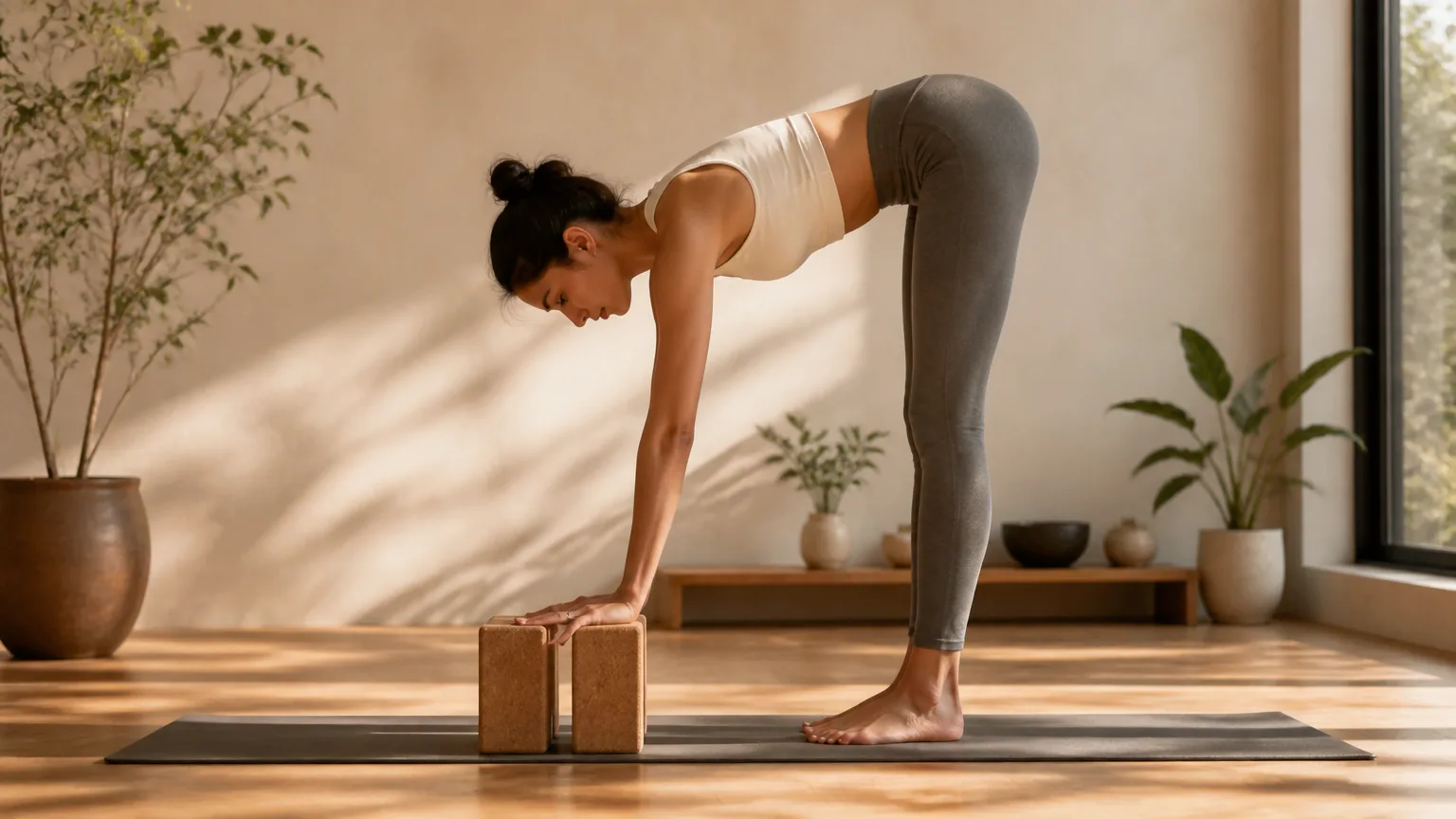
The goal is not to force a deeper pose. Instead, blocks create enough support to help you breathe steadily, maintain alignment, and notice how each movement feels. In a standing forward fold, for example, they can reduce strain while helping you lengthen through the spine. In a seated pose, they can lift the hips and make it easier to sit comfortably.
As you explore yoga blocks, you’ll learn how materials, sizes, and shapes affect their feel and function. You’ll also discover how to choose a pair that suits your practice, whether you’re building confidence in balance poses, adding support to restorative shapes, or creating more stability during strength-focused movements.
Using props can also deepen the self-observation at the heart of yoga. Each adjustment invites mindful movement, patience, and a kinder understanding of your changing body. This practical approach reflects the origins, philosophy, and transformative practices of yoga, where physical practice supports balance and holistic well-being. With the right guidance, blocks become less about modifying poses and more about practicing with greater awareness.
What Are Yoga Blocks, and Why Use Them?
Yoga blocks are firm, supportive props that help you find steadiness, space, and comfort in your practice. Most are made from foam, cork, or wood, with a rectangular shape that offers three common heights. Place a block on its lowest, medium, or tallest side to change your reach, leverage, and level of support.
In a standing forward fold, for example, blocks can bring the floor closer to your hands. This reduces the need to round your spine or strain your hamstrings. In Triangle Pose, a block beneath your lower hand can support a longer spine while preserving the pose’s intended shape.
Blocks also improve proprioception, or your awareness of where your body is in space. Light contact with a block can offer useful alignment feedback. You might notice whether your hips are level, your chest is open, or your weight is shifting too far forward.
Their purpose can change from pose to pose. A block may make a posture more accessible, provide stability, encourage active engagement, or support deep relaxation. For instance, pressing your hand into a block can activate your arm and shoulder muscles, while resting your head or hips on a block can help your body soften.
Yoga blocks are valuable for beginners, but they are not limited to new practitioners. Experienced students use them to explore subtler alignment, develop strength, and work gradually toward greater mobility. They can also support people recovering from limitations, or anyone whose range of motion changes throughout the day.
Using a block does not mean you are avoiding the practice. Instead, it allows you to meet your body where it is today and build awareness over time. A supported variation can help you stay present, rather than forcing your body into a shape before it is ready.
Let comfort and clarity guide your choices. Support should reduce unnecessary tension, not create numbness, sharp pain, joint compression, or instability. If a block causes discomfort or makes your balance feel uncertain, adjust its height, change its position, or choose another variation.
Yoga Block Materials, Shapes, and Features Compared
Once you know how you want support to feel, consider what your block is made from. Material affects weight, firmness, grip, comfort, durability, portability, and cleaning. The best choice depends on whether you need gentle cushioning, steady weight-bearing support, or a reliable companion for travel.
Foam blocks are lightweight, comfortable, and easy to carry. Their softer surface suits restorative poses, seated support, meditation, and gentler practices. Foam can feel welcoming beneath sensitive hips or hands, especially when you are settling into a longer hold.
Because foam is less dense, it may compress slightly under your weight. This makes it comfortable, but less ideal for demanding balance work or poses requiring maximum stability. Many foam blocks are easy to wipe clean, though open textures can absorb sweat or moisture.
Cork blocks offer a firmer, more grounded experience. Their natural texture provides excellent grip, even when your hands become warm, and their durability makes them useful for regular practice. Cork works particularly well beneath the hands in standing poses, balancing shapes, and weight-bearing transitions.
That firmness can feel less forgiving under sensitive joints. If you place cork directly beneath your spine, hips, or knees, notice whether the pressure feels supportive or distracting. A folded blanket can add comfort, much like choosing a yoga mat for comfort and stability helps create a steadier practice environment.
Wooden blocks are exceptionally solid and stable. They resist compression and provide dependable support for challenging balances or strong standing poses. However, they are heavier and less portable than foam or cork, and their hard surface may feel uncomfortable beneath the spine, hips, or other sensitive areas.
You may also find blocks made from recycled foam, bamboo, or specialty composites. These options can balance sustainability, durability, and performance, but their feel varies widely. Check the manufacturer’s guidance for moisture resistance, cleaning, and expected weight before choosing.
Shape and finish matter as much as material. Rounded edges and beveled corners feel kinder against the hands and body, while textured surfaces improve grip. Moisture-resistant finishes are helpful in warm or sweaty practices, and higher block density usually offers more stability.
Think of firmness as a practical tool, not a quality rating. Choose softer support for comfort, relaxation, and seated poses. Choose firm support for weight-bearing, alignment, and balance work. A block with several height options can adapt as your confidence, flexibility, and needs change.
How to Choose the Right Yoga Blocks for Your Body and Practice
Start by considering how you will use your yoga blocks. For most practitioners, two blocks are the most versatile choice. A pair provides symmetrical support in poses such as Bridge, Triangle, and Half Moon. It also gives you more options as your practice develops, from raising both hands to creating support beneath the hips or spine.
Standard blocks usually measure about 3 by 6 by 9 inches. This size works well for many bodies and offers three useful height options. The lowest height gives you a broad, stable surface, while the taller settings bring the floor closer during standing poses or forward folds.
Your proportions and physical needs may call for a different size. Smaller blocks can feel easier to hold if you have smaller hands or limited grip strength. Taller practitioners, people with reduced mobility, or anyone working with therapeutic support may prefer larger blocks. Choose a size that helps you reach the floor without rounding your spine or straining your shoulders.
Material also shapes the experience. Firm cork and wooden blocks offer steady, grounded support for standing poses, arm balances, and strength-focused practices. They are especially helpful when you place significant weight through your hands. Their weight can also make them less convenient to move or carry.
Foam blocks are lighter and often more comfortable against the body. They suit restorative, yin, and prenatal practices, where gentle support matters more than maximum resistance. Foam can also be a practical choice for beginners, home practice, or frequent travel. If you practice several styles, consider combining materials or choosing a medium-firm foam block.
Firmness is not a measure of quality. It is a tool for meeting your needs. A softer surface may feel kinder beneath the head, back, or hips during relaxation. A firmer block usually offers better stability for balance, alignment, and weight-bearing work.
Before buying, prioritize stable contact and a useful height over an attractive design or premium price. At home or in a store, place your hands or feet on the block and gently transfer weight through it. Check for wobbling, slipping, or bending. Notice whether your wrists and shoulders feel comfortable, and make sure the surface stays steady as you shift.
Your practice space matters, too. Heavier blocks work well in a dedicated home studio, where they can remain ready beside your mat. Lightweight foam blocks are easier to store in small spaces or pack for classes and retreats. If you attend a studio, check whether blocks are provided and choose a portable pair for consistent support when needed.
Let your current practice guide your choice, while leaving room to grow. The right blocks should help you feel balanced, supported, and more aware—not pressured to force a pose.
How to Use Yoga Blocks Safely and Effectively
Once you have chosen a block, begin with a steady foundation. Place each block on its broadest, most stable face. Before bearing weight, check that all four corners are grounded and that the surface is not slippery or uneven.
Your hands, feet, hips, pelvis, sacrum, and thighs each need different kinds of support. A block beneath the hands can bring the floor closer in poses such as Triangle or Half Moon. This helps you lengthen through the spine without reaching or collapsing into the shoulder joints.
When a block supports your feet, use it to improve balance or create a more stable base. In standing poses, make sure the entire foot remains connected and the block does not rock. Avoid placing a block beneath the toes or a small part of the foot unless a qualified teacher gives specific guidance.
Blocks beneath the hips or pelvis can make seated poses more comfortable. Sitting on a block may help your knees drop naturally and allow your spine to rise with less effort. For restorative shapes, a block beneath the sacrum can offer gentle support, but never place it directly beneath the natural curve of your lower back.
A block under the thighs can reduce strain in supported bridge, reclined bound angle, or other restorative poses. Position it so the legs feel held rather than pushed apart. If your knees, hips, or lower back feel compressed, reduce the height or choose a different setup.
Most yoga blocks offer three heights. Begin with the highest setting when you are learning a pose or exploring a new range of motion. Move to a lower setting only when your alignment, balance, and breathing remain steady. Height is not a measure of progress; control and awareness matter more.
Keep your muscles gently active, even when the block provides support. Press down through your hands, ground through your feet, or engage your legs as appropriate for the pose. Support should create space and control, not allow your body to hang heavily into a joint.
Let your breath guide every adjustment. You should be able to breathe smoothly without gripping your jaw, holding your breath, or forcing a deeper shape. Never use yoga blocks to chase a more dramatic pose or override sharp pain, numbness, or persistent discomfort.
If a block feels unstable, step out carefully and reset it. Do not force a joint into an uncomfortable angle without qualified instruction. A teacher can help you understand whether changing the block’s position, height, or the pose itself will better support your body.
Yoga Block Exercises for Standing, Seated, and Restorative Poses
Yoga blocks can support a complete practice, from energizing standing poses to quiet restorative shapes. Begin with the lowest height that gives you stability, then adjust as your body settles and your awareness grows.
Standing poses
In Triangle Pose, place a block outside your front foot and rest your lower hand on it. Press through both feet, lengthen both sides of your waist, and keep your chest broad rather than reaching toward the floor. Inhale to create space through the spine; exhale as you gently rotate the upper body.
For Half Moon, position the block slightly ahead and outside your standing foot. Let it receive some weight while you extend the top arm and leg in opposite directions. A taller setting offers more support, while a lower setting challenges balance and control. Shorter practitioners may prefer the highest height, while taller practitioners may reach the floor comfortably.
In Extended Side Angle, place the lower hand on a block inside or outside the front foot. Use the support to preserve length through your spine and reduce collapsing into the waist. Keep the front knee tracking toward the second toe, and breathe steadily into the side ribs.
Forward folds and hamstring work
During a standing forward fold, place blocks beneath your hands. They help you maintain a long spine and reduce the impulse to round or strain. Bend your knees as needed, especially when the hamstrings feel tight.
You can also place a block beneath your forehead in a supported wide-legged fold. Choose a height that lets your neck relax without forcing your weight forward. Taller practitioners may need a higher setup, while shorter practitioners may use a lower block or stack two blocks securely.
Seated poses
Sit on a block in Easy Pose, Staff Pose, or a seated forward fold. The added height tilts the pelvis slightly forward, making upright posture easier and reducing pressure around the hips. Keep your sitting bones grounded and let the crown of your head rise.
In a forward fold, blocks beneath the hands can support a long spine as you hinge from the hips. Do not chase depth; allow your breath and comfort to guide the movement. A folded blanket may be better than a rigid block when you need softer cushioning beneath sensitive sitting bones.
Restorative poses
For Supported Bridge, slide a block beneath the sacrum, not the lower back. Choose the lowest height first, then settle your shoulders and breathe slowly. For gentle chest opening, place a block beneath the upper back and use a folded blanket beneath the head if needed.
You can also place a block between the knees during relaxation. Gently hug it without gripping, allowing the legs and pelvis to feel grounded. A folded blanket may offer greater comfort here, particularly for shorter practitioners or anyone sensitive to firm pressure.
Exploring these variations can deepen your understanding of alignment and mindful teaching, much like Thailand yoga teacher training encourages curiosity and embodied learning. Choose support that helps you breathe freely and remain present.
Using Blocks to Build Strength, Balance, and Body Awareness
Yoga blocks can do more than make a pose accessible. They can give your body clear information about where to direct effort. For example, squeeze a block between your thighs in Chair Pose or Bridge. This creates feedback about midline engagement and helps you notice how your inner legs support your pelvis.
Try placing a block between your hands in Plank or between your feet during a supported core exercise. Maintain steady pressure without collapsing your shoulders, gripping your jaw, or holding your breath. The block becomes a gentle resistance point, helping you build strength while protecting the quality of your alignment.
Blocks can also make strength work more precise. In Chair Pose, hold a block between your palms and reach upward. In Bridge, press into a block between your thighs as you lift and lower slowly. For core practice, place a block beneath your sacrum or between your hands, then explore controlled leg or arm movements. Choose a variation that lets you maintain smooth breathing and a stable spine.
In balancing poses, a block can serve as a visual or tactile target. Place one near the front foot in Warrior III, or lightly touch it with your fingertips in Half Moon. Notice whether your weight shifts toward your toes, heels, or outer foot. Over time, reduce the contact, increase the hold, or move through transitions more slowly.
Your block can also reveal habits. If your breath becomes restricted, your effort may be excessive. If you stop sensing your feet or lose focus, return to a simpler variation. Mindful practice values clear attention over maximum intensity. This awareness supports the same curiosity and connection found through the benefits of acro yoga for holistic well-being.
Progress by using less support, holding steady for a few more breaths, or moving with greater control. You do not need to force a deeper pose to grow. Let the block teach you where strength, balance, and ease can meet.
Frequently Asked Questions About Yoga Blocks
Do beginners really need yoga blocks?
No. Yoga blocks are not mandatory, but they can make alignment, balance, and comfortable range of motion easier to explore. They offer support while you learn to notice your body without forcing a pose.
Should I buy one yoga block or two?
One block can be useful for seated poses, supported stretches, and basic standing work. Two blocks provide balanced support and more options for standing, restorative, and strength-based poses. A pair can also make home practice feel more consistent.
Are foam or cork yoga blocks better?
Neither material is universally better. Foam blocks are lightweight, comfortable, and easy to carry. Cork blocks feel firmer, offer strong grip, and provide dependable stability for weight-bearing poses. Choose based on your comfort, practice style, and storage needs.
Can yoga blocks help flexibility?
They can support a consistent, well-aligned practice and reduce compensations. For example, placing a block beneath your hands in a forward fold may help your spine stay long. Blocks do not force flexibility, however, and they cannot replace gradual mobility work, patience, or mindful breathing.
How should I set up blocks safely?
Place each block on a stable, level surface. Use the lowest height that allows you to breathe comfortably and maintain steady alignment. If the block feels unstable, step out carefully and adjust its position or choose another variation.
How do I clean and maintain yoga blocks?
Follow the manufacturer’s care instructions. Generally, wipe blocks with a lightly damp cloth and mild soap, then allow them to dry fully before storage. Avoid soaking them or storing them while damp, as moisture may affect their surface and durability.
When should I use less support?
Progress when your alignment, breathing, and balance remain steady. You might lower the block, hold a pose for a few more breaths, or move with greater control. Let comfort and awareness guide your practice rather than pressure to advance.
Make Yoga Blocks a Natural Part of Your Practice
With practice, yoga blocks can become a natural part of your movement, rather than an extra step. The right blocks support comfort, alignment, confidence, strength, and mindful exploration. They help you meet your body as it is today while making space for steady, sustainable progress.
Remember that props are tools for your relationship with your body. They do not measure your ability, flexibility, or limitations. A block can bring the floor closer, create stability, or offer support during rest. Use it to listen more clearly, not to force yourself into a shape.
To begin, explore one standing pose, one seated pose, one balance or strength pose, and one restorative pose. Try placing a block beneath your hand in Triangle Pose, beneath your seat in a seated fold, under your hands in a supported plank, and beneath your hips or knees during Restorative Bridge. Test different heights and placements, then notice how your breath, balance, and muscles respond.
Let that feedback guide your choices. If you feel sharp pain, joint compression, numbness, or instability, pause and adjust the setup. If you are pregnant, recovering from an injury, experiencing significant pain, or managing a medical concern, seek guidance from a qualified yoga teacher or healthcare professional.
You might also take your blocks outside and discover the benefits of practicing yoga outdoors, where fresh air and open space can support a sense of connection.
Start with two stable blocks and experiment gently. Over time, you may use less support or explore new variations. Let your breath and body feedback lead the way. This supportive practice reflects yoga’s wider purpose: cultivating steadiness, presence, and balance both on and off the mat.