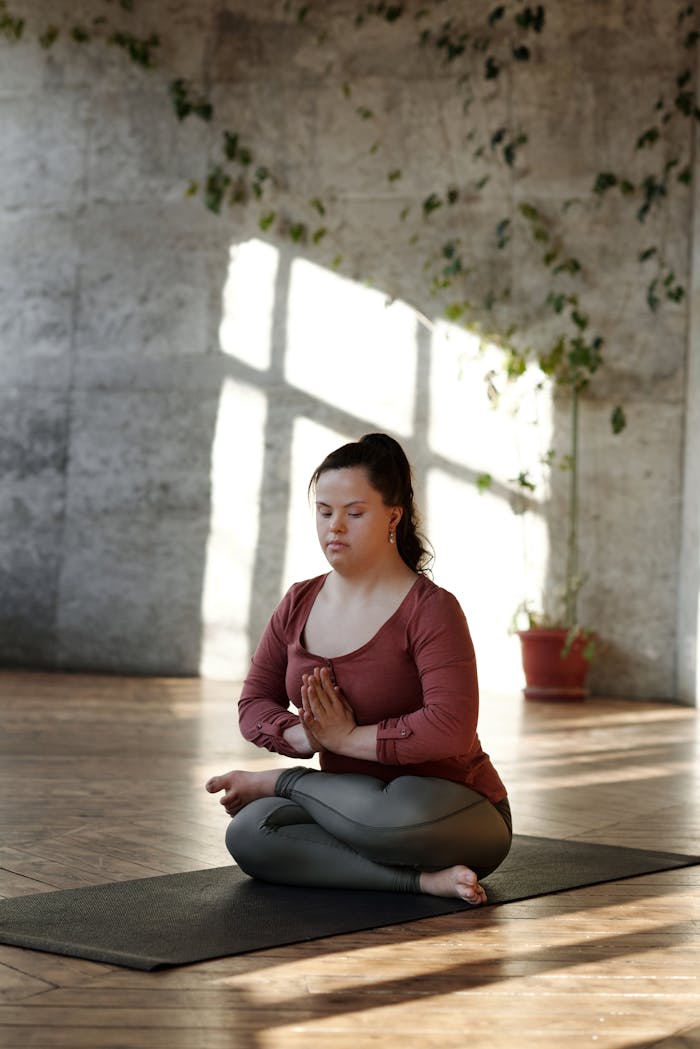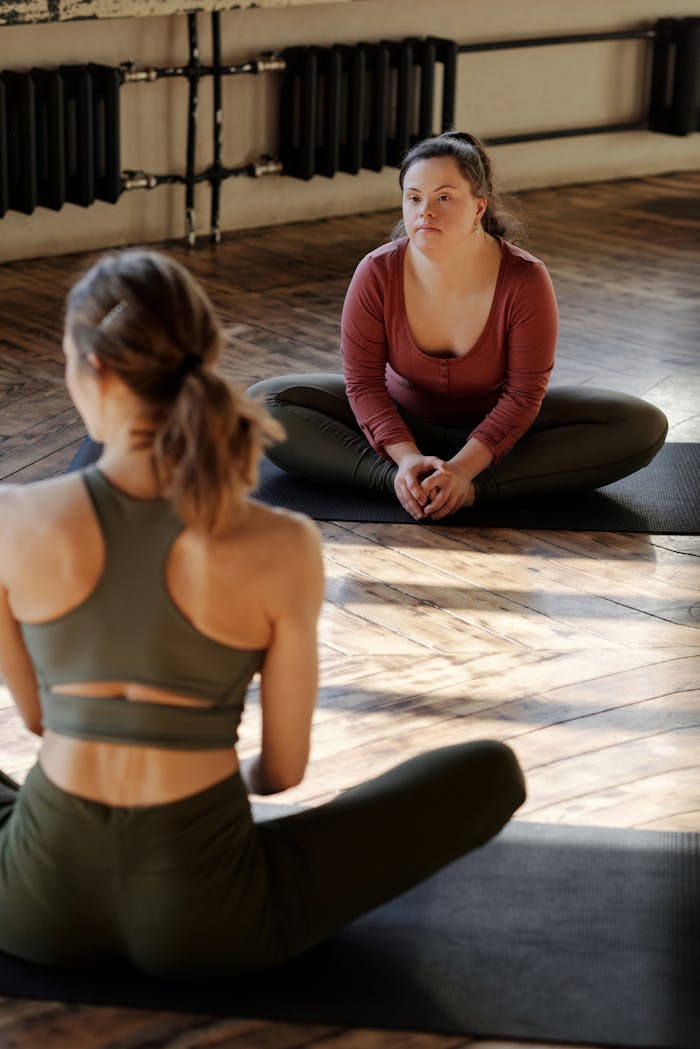
2 people yoga poses offer a welcoming way to move, breathe, and connect with someone you trust. Whether you practice with a friend, partner, family member, or fellow beginner, these shared movements invite you to explore balance without pressure.
Partner yoga is less about creating a perfect shape and more about practicing mindfulness together. As you synchronize your breathing, communicate clearly, and offer mutual support, each pose becomes an opportunity to feel present and connected.
You do not need advanced flexibility or previous yoga experience. The poses in this guide can be adjusted for different bodies, energy levels, and comfort zones. Begin slowly, check in often, and remember that consent matters throughout every movement.
In the spirit of yoga as a practice of community and well-being, approach these poses with curiosity rather than competition. A steady hand, a shared breath, or a moment of laughter can be just as meaningful as holding your balance. Together, you’ll discover approachable ways to build trust, improve stability, and enjoy mindful movement with another person.
Before You Begin: Create a Safe and Supportive Partner Practice
Before exploring these 2 people yoga poses, create a space that feels calm and secure. Practice on a nonslip surface, away from furniture, walls, and other hazards. Wear comfortable clothing, keep water nearby, and add blocks, blankets, or straps if they help you feel supported. If you’re building strength or mobility, these yoga practices that support performance and injury prevention can also complement your routine.
Begin with a few minutes of gentle movement. Try wrist circles, shoulder rolls, cat-cow, and easy lunges. Finish with a simple standing balance, such as standing on one foot while holding your partner’s hand. This warm-up prepares your joints, muscles, and attention for shared movement.
Talk together before each pose. Agree on clear cues like “ready,” “more support,” and “release.” Ask before adding pressure, and remember that either partner can pause at any time. Avoid pulling, lifting, or forcing someone deeper into a shape. Your goal is steady communication, not maximum range of motion.
Move slowly and keep checking in. The supporting partner should offer stable contact without gripping or surprising their partner. For more challenging shapes, stay close to the floor and act as a spotter. Use a wall or blocks when helpful, and choose an easier variation if balance feels uncertain.
If you feel pain, dizziness, strain, or fear, say “release” and come out gently. Rest, breathe, and reset before trying again—or stop for the day. A safe practice makes room for boundaries, laughter, and learning together.
1. Seated Back-to-Back Breathing
Begin with a gentle connection pose that helps both partners settle in. Sit back-to-back on a comfortable mat, choosing a cross-legged position or extending your legs forward. Lengthen through your spine without stiffening, and rest your hands on your thighs, knees, or lap.
Let your backs make light, steady contact. Close your eyes or soften your gaze, then notice how your partner’s breathing creates small movements through their back. You do not need to control, match, or deepen the breath immediately. Simply observe the natural rhythm you share.
Stay here for five to ten slow breaths. As you relax, feel the support of your partner and the stability beneath you. This simple practice can ground the nervous system while building trust and awareness.
Seated back-to-back breathing is an ideal starting point for beginners exploring 2 people yoga poses. It encourages communication without requiring flexibility or balance challenges. When you feel ready, discuss how the pose felt before moving into more active shapes. Even a small adjustment, such as adding a folded blanket beneath the hips, can make the experience more comfortable.
2. Partner Seated Forward Fold
This gentle pose is one of the most accessible 2 people yoga poses for exploring trust, balance, and connection. Sit facing your partner with knees softly bent and the soles of your feet touching. Connect through your hands or forearms, keeping the contact steady without pulling.
Begin with one partner leaning back slightly while the other lengthens forward from the hips. Keep both spines long, and let the forward-moving partner fold only as far as feels comfortable. The partner leaning back offers support, not force. After a few calm breaths, return to center and switch roles so the movement stays reciprocal.
Keep your neck relaxed and your shoulders away from your ears. Think about creating length through the crown of your head rather than rounding deeply into the fold. Stop before you feel hamstring tightness, low-back strain, or pressure in your knees.
Breathe together and communicate throughout the pose. A folded blanket beneath the hips may create more comfort, while softly bent knees make space for easier movement. If either partner feels pain or strain, release the hand connection and return upright slowly.
3. Double Tree Pose
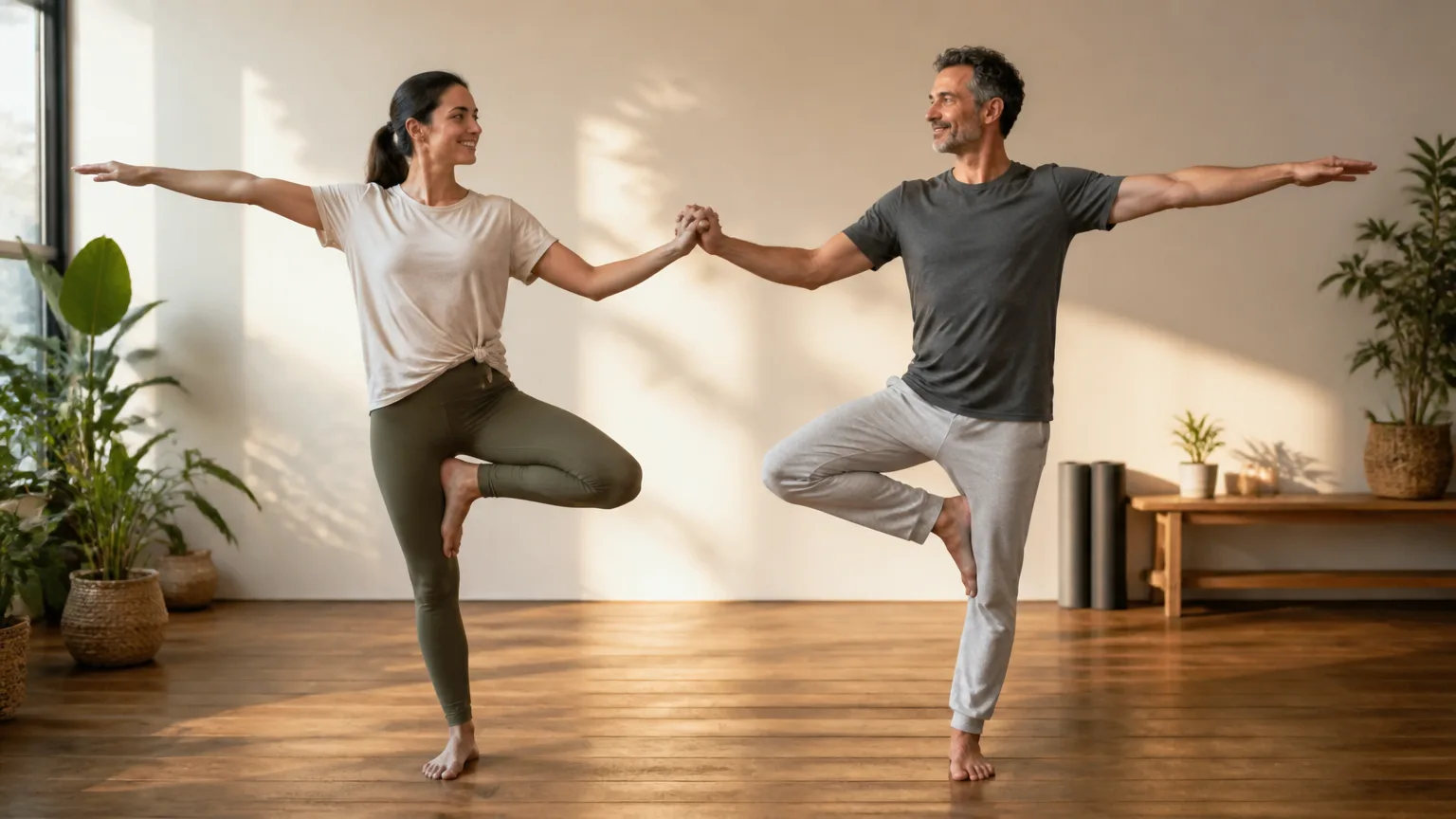
Double Tree Pose is a gentle standing balance that invites trust and shared focus. Stand side by side with both feet grounded, leaving enough space for comfortable movement. Connect your inner hands with fingertips or palms first, using only light support.
Shift your weight into the outside leg. Slowly lift the opposite foot and place its sole against your inner calf or thigh. Keep the raised foot above or below the knee, never directly on the knee joint. Keep your chest open, soften your shoulders, and breathe together.
If balancing feels uncertain, keep the raised foot’s toes touching the floor like a kickstand. You can also practice beside a wall or choose a wider stance for greater stability. Hold for several breaths, then lower the foot with control and switch sides.
Keep the hand connection supportive rather than pulling. Notice how communication and steady breathing make this one of the most approachable 2 people yoga poses. If either partner feels pain, dizziness, or strain, say “release” and return both feet to the floor.
4. Partner Warrior II
Stand side by side or face opposite directions, leaving enough room to extend your arms. Step your feet wide, then turn your front foot outward and bend that knee. Keep your front knee tracking over your ankle and press firmly through your grounded back foot.
Reach your arms in opposite directions, relaxing your shoulders away from your ears. Partners can face each other for gentle eye contact, or look forward while staying aware of one another. Breathe steadily, matching your pace as you settle into the pose.
To make this a coordination exercise, transition into Warrior II together. Bend your front knees at the same time, lift through your chest, and hold the shape for several shared breaths. Notice how synchronized movement builds spatial awareness, lower-body stability, and confidence.
Stay connected through calm communication rather than physical support. If one partner needs to adjust, straighten the front leg or rest briefly. Say “release” if you feel pain, dizziness, or strain, then return upright with control.
5. Double Chair Pose
Double Chair Pose builds lower-body strength and balance while inviting partners to move as one. Stand back-to-back with your feet hip-width apart. Let your backs gently connect, keeping your shoulders relaxed and your spines comfortably tall.
Take a shared breath, then bend your knees and lower gradually. Keep your weight in your heels, and maintain steady contact through your backs. Avoid pressing too firmly, which could cause either partner to slide, lose balance, or collapse.
Hold the supported chair position for two or three calm breaths. Keep your knees tracking toward your toes, and communicate throughout the pose. For an easier version, use only a shallow bend and hold for one breath before rising.
To return to standing, agree on a count. Together, say, “One, two, three,” then press through your heels and straighten your legs slowly. This coordinated movement makes Double Chair one of the most accessible 2 people yoga poses for practicing trust and stability.
If either partner feels knee pain, dizziness, strain, or fear, say “release.” Separate gently, rest, and reset before continuing.
6. Partner Boat Pose
Sit facing your partner with knees bent and toes resting on the floor. Hold hands or wrists gently, then lean back from your hips until both torsos feel supported and steady.
Together, lift one foot at a time. Keep your shins parallel to the floor instead of rushing toward straight legs. Engage your abdominal muscles, relax your shoulders, and breathe slowly as you find balance.
Let the connection between your hands offer steadiness, not pulling. Look at each other or choose a shared focus point, using calm words like “lift,” “lower,” or “pause” to coordinate your movement.
Stay for several breaths, then lower both feet with control and sit upright. Partner Boat Pose builds core awareness and trust while keeping the practice approachable for beginners exploring 2 people yoga poses.
If either partner feels wrist, hip, or low-back discomfort, release the grip and lower the feet. Rest, adjust your distance, or place a folded blanket beneath your hips before trying again.
7. Standing Hand-to-Hand Balance
This simple face-to-face balance builds steadiness, focus, and connection without requiring advanced flexibility. Stand several inches apart with a wide, stable base and both feet grounded. Reach forward to connect palms or fingertips, then gently test how much pressure feels supportive.
Keep the hand connection as a feedback tool, not something to lean heavily into. Maintain an upright posture, soften your knees, and breathe together. One partner can slowly lift one knee toward the chest or extend one foot lightly behind the body.
Hold for a few calm breaths, then lower the foot with control. Switch roles, and repeat on the opposite side. Keep your gaze steady and communicate if you need more space, less pressure, or a pause.
If balance feels uncertain, practice beside a wall for additional security. These beginner-friendly 2 people yoga poses become more comfortable when you move slowly and treat each wobble as useful information. If either partner feels pain, dizziness, strain, or fear, say “release” and return both feet to the floor.
8. Partner Puppy Pose
Partner Puppy Pose offers a gentle way to open the shoulders and lengthen the spine. Both partners begin on hands and knees in a comfortable tabletop position, facing the same direction.
One partner slowly extends their arms forward, keeping the hips stacked over the knees. Lower the chest toward the floor only as far as feels comfortable, creating a long, relaxed line through the spine. The second partner stays beside or slightly behind, maintaining their own tabletop position.
Rather than pressing on the back or shoulders, the assisting partner provides a steady visual reference and breathing rhythm. Match slow inhales and exhales, offering calm reminders such as, “ soften your shoulders.” This supportive setup builds connection without adding body weight. For a playful variation, you might explore puppy yoga in Los Angeles for inspiration.
If your shoulders feel tight, place your elbows on blocks or shorten your reach. You can also practice separately in Child’s Pose, breathing into the back ribs. Stay for three to five breaths, then return to tabletop slowly. If either partner feels wrist, shoulder, or back discomfort, release and rest.
9. Partner Low Lunge with Heart Opener
Face your partner and step into opposite-leg low lunges. Keep your front knee stacked over your ankle, and place your back knee on a folded blanket or mat for cushioning. Settle into a steady base before adding the connection.
Reach toward one another and choose palms, fingertips, or a light forearm-to-forearm touch. Keep the contact gentle and supportive, then lift through your chests as you lengthen your spines. Breathe in together, creating space across the heart, and exhale while softening your shoulders.
Stay for three to five slow breaths. Notice how this shared rhythm supports hip mobility, upright posture, and connection—without turning the pose into a flexibility test. These approachable 2 people yoga poses work best when both partners remain present and comfortable.
Avoid pushing your hips forward or using your partner’s arms to deepen the stretch. The goal is comfortable mobility and steadiness, not intensity. If either partner feels knee, hip, or low-back discomfort, say “release,” separate slowly, and rest before trying again.
10. Double Downward-Facing Dog
Practice this partner variation side by side, without stacking, climbing, or placing weight on each other. Set up separate mats or clearly defined personal areas, leaving enough room for both people’s hands and feet. Face the same direction, with space between you to move comfortably.
Begin in tabletop with hands beneath shoulders and knees beneath hips. On an inhale, tuck your toes; on an exhale, lift your hips into Downward-Facing Dog. Coordinate the transition, moving at a steady pace while keeping your own balance and alignment.
Focus on long spines, grounded hands, and soft knees. There is no need to force your heels toward the floor. Glance toward each other if helpful, then return your attention to your breath and the sensations in your body.
Stay for three to five breaths, inhaling and exhaling together. You might silently count the breaths or agree on a cue before returning to tabletop. The connection comes from shared timing and mindful practice, making this one of the most approachable 2 people yoga poses.
If either partner feels wrist, shoulder, back discomfort, dizziness, or fear, say “release.” Lower your knees gently, rest, and reset before continuing.
11. Partner Supported Bridge
Partner Supported Bridge offers a gentle backbend while keeping each person in control of their own movement. Lie on your backs nearby, with knees bent, feet grounded, and arms resting alongside your body. On an inhale, lift your hips only as high as feels comfortable. Keep your neck relaxed and your weight distributed through your feet, shoulders, and upper back.
For connection, link hands or touch fingertips beside your bodies. Your partner may offer calm verbal encouragement, such as, “Breathe steadily” or “You’re welcome to lower.” Never pull your partner upward or place weight on their neck or spine. Let the shared breath create support without forcing the shape.
Stay for three to five breaths, then lower your hips slowly. For a restorative option, place a yoga block beneath your sacrum and relax your arms. You can also remain in Reclined Bound-Angle Pose together, using a hand connection while breathing quietly. If either partner feels low-back or neck discomfort, say “release” and rest. This mindful variation makes 2 people yoga poses feel supportive, spacious, and beginner-friendly.
12. Partner Savasana and Mindful Closing
End your sequence with Partner Savasana, a shared relaxation practice that asks for no complicated balance or flexibility. Lie side by side, or sit comfortably if that feels better. Choose optional contact, such as holding hands or resting your shoulders together.
Close your eyes or soften your gaze. For several minutes, breathe quietly and notice your body settling into the floor or seat. Feel your breath move naturally, and release any effort from your face, shoulders, and hands.
Bring gentle awareness to the practice you shared. Appreciate your partner’s communication, patience, and support. You might silently acknowledge one moment when you felt especially connected, steady, or encouraged.
A mindful closing helps the nervous system settle after more active 2 people yoga poses. It also gives both partners time to absorb the experience without rushing away. When you feel ready, take a deeper breath, move slowly, and exchange a warm thank-you before sitting up or standing.
How to Build a Balanced Two-Person Yoga Sequence
Create a 20- to 30-minute practice that gradually builds warmth, strength, and trust. Begin with seated breathing, using a gentle hand connection or simply facing each other. Spend two to three minutes noticing your shared rhythm, then move into gentle mobility, such as seated side bends, shoulder rolls, and tabletop variations.
Next, add standing poses that develop balance and communication. Choose shapes such as Partner Tree, Warrior variations, or Double Chair. Hold each pose for three to five breaths, repeat on both sides, and take a neutral rest between demanding movements. Standing outdoors can make the experience feel spacious, much like practicing yoga in the park.
Follow standing work with core-focused poses, then transition to floor-based opening. Try a supported boat variation, seated twists, or a comfortable back and hip stretch. Keep your movements slow, and communicate before changing grip, distance, or direction.
Finish with Savasana for three to five minutes. Partners can lie separately, hold hands, or rest in Reclined Bound-Angle Pose. To adapt the sequence, choose fewer poses, shorten the holds, or keep both partners grounded. A steady, accessible practice is more valuable than completing every pose.
Frequently Asked Questions About Two-Person Yoga
Do both people need the same level of flexibility?
No. Choose 2 people yoga poses with adjustable intensity and minimal weight-sharing. Each partner should move within their own comfortable range rather than matching depth or shape.
Is two-person yoga the same as acro yoga?
Not necessarily. These beginner poses are mainly cooperative and grounded. Acro yoga often includes lifting, spotting, and more advanced skills. Stay with supported variations until both partners feel confident.
What if one person feels unsteady?
Stop and return both feet or knees to the floor. Communicate clearly, then use a wall, block, or other prop if helpful. Avoid gripping harder or trying to “save” the pose through force.
Can friends or family members practice together?
Yes, provided everyone feels comfortable with the level of touch. Ask for consent, respect physical boundaries, and agree on a simple word such as “release.” Partners should feel free to pause or choose a different pose.
How long should beginners hold each pose?
Start with three to five relaxed breaths. Keep breathing steadily and notice whether both partners remain comfortable and coordinated. Increase the hold gradually, only when the pose feels calm and manageable.
How should partners choose one another?
Select someone who listens, communicates, and respects your pace. Similar height can make some shapes easier, but it is not essential. Begin with seated or standing poses before exploring deeper connections.
Should beginners warm up first?
Yes. Spend a few minutes with gentle shoulder rolls, hip movements, and easy breathing. A prepared body and focused mind make practice safer, steadier, and more enjoyable.
Practice Balance Through Trust, Awareness, and Shared Movement
These 12 beginner-friendly 2 people yoga poses make yoga more relational through trust, awareness, and shared movement. Successful partner yoga is measured by communication and presence—not by depth, height, or visual complexity. Honor consent, breathe together, and progress gradually. If something feels painful, unsteady, or uncomfortable, release and reset.
Choose two or three poses rather than attempting everything at once. Practice them consistently, with patience and curiosity. At the end of each session, acknowledge what felt supportive and what you might adjust next time. Over time, shared movement can become a simple, accessible ritual for holistic well-being, connection, and joy.