Couples yoga poses offer more than a shared workout. They invite you and your partner to slow down, listen closely, and discover how movement can deepen trust, balance, and connection. With guidance from Joyous Yoga, this practice can become a gentle space for mindfulness and meaningful time together.
Approach each pose as a cooperative exploration, not a performance goal. You do not need perfect flexibility or advanced experience. Trust grows when you communicate clearly, ask for consent, and adapt to each other’s comfort levels.
Throughout this practice, you will explore ways to coordinate movement, notice body sensations, and settle into shared breathing. Simple adjustments can make each pose more supportive, whether you are brand new to yoga or already have an established practice.
Move slowly and stay curious about what your bodies are communicating. Use steady surfaces, avoid forcing stretches, and pause whenever something feels painful or uncertain. A smile, a check-in, or a relaxed breath can be just as valuable as holding a pose. Together, these moments create a welcoming practice where both partners feel seen, supported, and free to grow.
Before You Begin: Create a Safe and Supportive Practice
Before exploring couples yoga poses, prepare a space that supports ease and focus. Choose a clear, nonslip surface with enough room to move safely. Wear comfortable clothing, keep water nearby, and remove anything that could cause tripping or distraction.
Begin with a brief individual warm-up. Gently move your wrists, shoulders, hips, and hamstrings before adding a partner’s support. A few minutes of easy stretches, joint circles, and steady breathing can help your body feel ready.
Talk together before you start. Agree on simple cues such as “pause,” “less pressure,” and “come out.” Either partner can stop the pose immediately if they feel pain, dizziness, fear, or instability. Consent remains active throughout the practice, not just at the beginning.
Support should feel steady, responsive, and comfortable. Your partner may offer balance or gentle pressure, but should never force your body into a deeper stretch. Breathe smoothly and communicate often. If your breath becomes strained, soften the pose or return to a neutral position.
You do not need matching flexibility, strength, height, or yoga experience. Use folded blankets, blocks, or cushions to adjust height and create more comfort. Partners can also work at different ranges while staying connected. These small adaptations make practice more welcoming for every body.
If you enjoy mindful movement in a spacious, nurturing setting, a restorative yoga retreat experience can offer another way to deepen connection and balance. For now, begin slowly, stay curious, and let mutual trust guide each movement.
1. Seated Partner Breathing
Begin these couples yoga poses with a simple grounding practice. Sit back-to-back on a comfortable, steady surface, such as a folded blanket or yoga mat. Choose an easy cross-legged seat, extend your legs, or sit on a chair if that feels more supportive.
Let your shoulders relax and allow your spine to rest naturally against your partner’s. Close your eyes or soften your gaze. Notice the gentle rise and fall of their breathing without trying to change or control it.
Take five to ten slow breaths together. You may gradually sense a shared rhythm, but there is no need to match each breath perfectly. This quiet awareness builds trust by inviting presence without requiring eye contact, effort, or physical exertion.
Afterward, pause for a brief check-in. Ask how each person feels, whether the pace was comfortable, and what intention you would like to carry forward. One partner may seek steadiness, while the other may want openness or calm. Honoring both experiences creates a supportive foundation for the balance and connection ahead.
2. Partner Seated Twist
This gentle seated twist is one of the couples yoga poses that encourages awareness and coordinated movement. Sit side by side or back-to-back, choosing the position that feels most comfortable and connected.
- Extend both legs forward, or cross them loosely if your hips feel tight. Sit on a folded blanket for extra support. Lengthen your spine by reaching through the crown of your head, then relax your shoulders.
- Inhale and grow taller. As you exhale, slowly turn your torso toward one side. Move only within a comfortable range, keeping both sitting bones grounded and your breath smooth.
- If you are seated side by side, your partner’s hand may rest lightly on your outer thigh or upper back. This contact offers awareness, not leverage. Neither partner should pull or press the torso farther into the twist.
Stay for three to five breaths, then return to center slowly and repeat on the other side. Partners can match their breathing or simply move at a shared pace.
For tight hips or limited spinal mobility, keep the legs bent and feet grounded. You may also skip the twist and practice lengthening together, turning only the head slightly. Small adaptations make practice more welcoming for every body.
3. Double-Tree Pose
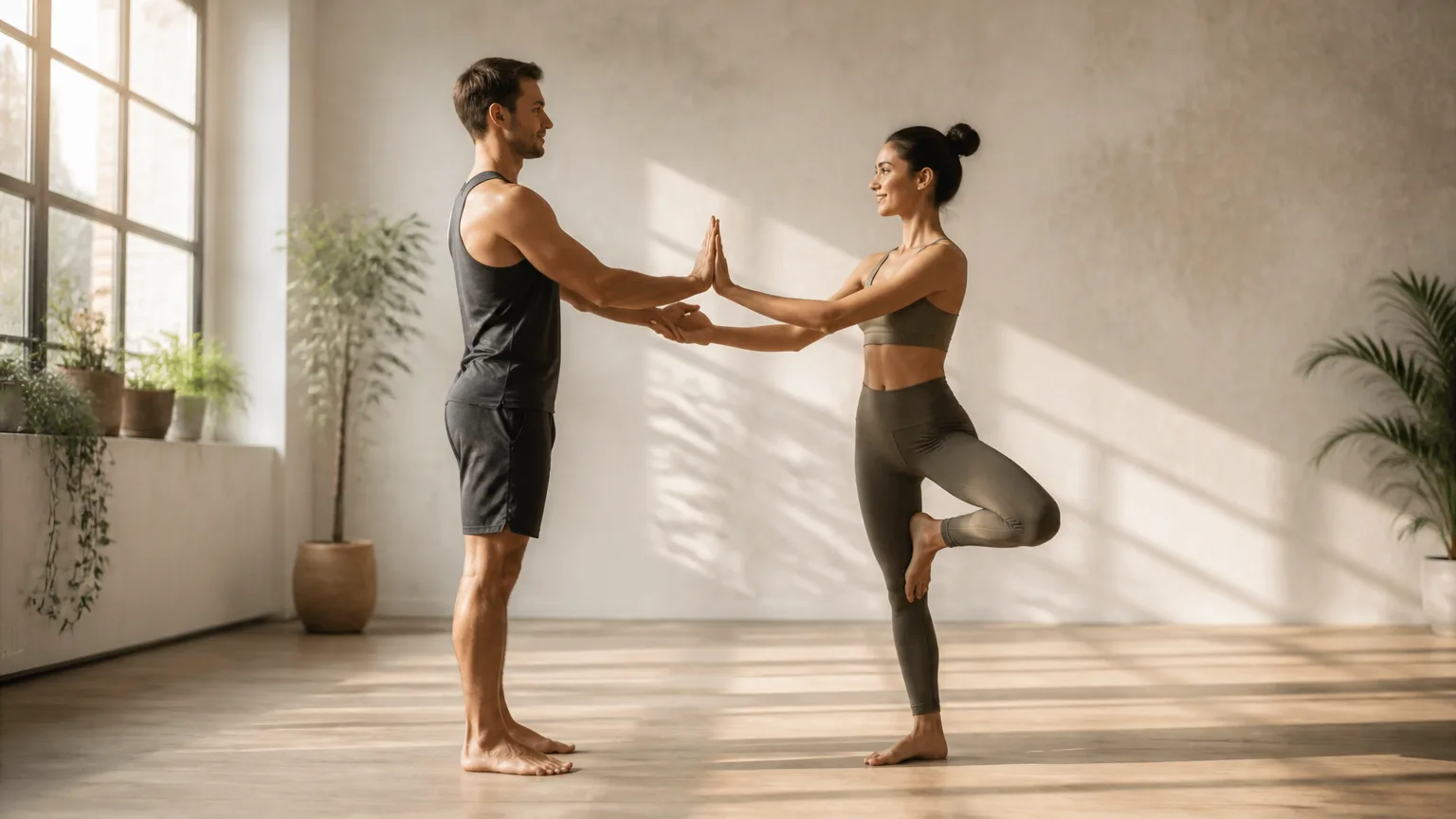
Begin standing side by side, close enough to sense each other’s presence without leaning. Root through your left foot, keep the standing knee soft, and bring your right foot to the inner calf or thigh. Avoid placing it directly on the knee. For a gentler option, keep your toes on the floor with your heel resting near the opposite ankle.
Choose a steady point to gaze at, then lengthen through your spine and breathe slowly. You may bring your inside hands together, lightly touch shoulders, or hold hands for encouragement. Contact is optional; it should feel stabilizing, never necessary or pressured. Keep the outside hand at your heart or reach it overhead.
Each partner remains responsible for their own balance while contributing to a shared sense of steadiness. If one person wobbles, pause, soften your breath, and return the foot to the floor without judgment. Switch sides, noticing how support can come through presence as much as touch. Among couples yoga poses, Double-Tree offers a simple reminder: trust grows when both people stay grounded and make space for one another.
4. Partner Chair Pose
This back-to-back variation of Chair Pose turns one of the classic couples yoga poses into a shared exercise in trust. Stand with your backs touching, feet about hip-width apart, and widen your stance if needed. Take a moment to agree on your pace, depth, and a signal to pause.
As you inhale, lengthen through your spine. Then bend your knees gradually, lowering into a comfortable squat while keeping your backs connected. Maintain enough contact to support one another, but avoid pressing or compressing your partner. Communicate throughout: ask whether the pressure feels steady and whether both people can breathe easily.
Beginners or anyone with knee sensitivity can stay in a shallow squat. You can also practice with your backs against a wall for extra stability. Keep your weight balanced through your feet, and stop before discomfort becomes strain.
When you are ready to rise, agree on a count, such as “three, two, one.” Press into the floor and stand together, moving slowly. If either partner loses stability, soften the knees, communicate calmly, and return to standing or lower safely. The goal is not perfect depth, but shared awareness and dependable support.
5. Partner Boat Pose
Sit facing your partner with knees bent and feet resting on the floor. Move close enough to connect the soles of your feet, then reach forward to hold hands. Take a breath together and find a comfortable seated position with long spines and relaxed shoulders.
Begin by gently pressing your feet into each other’s feet. Lean back slightly while keeping your chests open and your gaze soft. If you both feel steady, gradually extend your legs and lift the feet higher, creating a shared balance point. Keep the extension only as long as you can breathe smoothly and maintain length through your spines.
For a supportive variation, keep your toes touching the floor. You can also hold behind your thighs or place a yoga strap around your feet instead of holding hands. These options reduce strain while preserving the connection.
Among couples yoga poses, Partner Boat Pose highlights communication and coordinated effort. You are not lifting, pulling, or competing with each other. Instead, check in, adjust together, and let each person contribute equally. Lower your feet slowly, release your hands, and pause for a relaxed breath before repeating.
6. Double Downward-Facing Dog
Double Downward-Facing Dog can build trust, but its stacked version is an advanced weight-sharing practice. Begin with the beginner-friendly option: stand side by side in Downward-Facing Dog, with your hands close enough to touch. Match your breathing, or gently tap hands to create connection without adding pressure.
If both partners have strong, pain-free wrists, shoulders, and hamstrings, consider a supported variation with guidance. One partner stays in Downward Dog while the other uses a carefully modified, elevated configuration with support. Never climb onto a partner’s lower back or shoulders, and do not continue if either person feels unstable.
A qualified yoga instructor or spotter should supervise any elevated variation. Keep the base partner’s shoulders stable, fingers spread, and heels lifted if hamstrings feel tight. The upper partner should move slowly, use sturdy support, and communicate throughout. Comfortable yoga activewear can also help you move without distractions.
Skip stacking entirely with wrist pain, shoulder concerns, limited hamstring mobility, pregnancy, or uncertainty. Synchronized Downward Dogs still offer the heart of these couples yoga poses: shared rhythm, clear communication, and mutual respect.
7. Partner Forward Fold
Sit facing your partner with your legs extended and the soles of your feet touching. Hold hands or gently clasp each other’s forearms. Keep your spines tall, then decide who will lean back slightly first while the other partner leans forward from the hips.
Move only a small amount, using steady pressure through your feet and connected hands. After several breaths, switch roles so both partners experience giving and receiving support. Keep communicating with simple cues, such as “more,” “less,” or “pause.” The goal is shared comfort, not reaching the deepest fold.
Let the movement come from the hip creases rather than rounding or pulling through the spine. Bent knees are welcome, especially when the hamstrings feel tight. Folded blankets, cushions, or yoga blocks beneath the knees can make the pose more accessible and relaxed.
Among couples yoga poses, this gentle forward fold offers a meaningful lesson in trust. Neither partner should pull the other deeper. Instead, both people contribute equally, listening through touch and breath while creating length through the back body. Stay for a few calm breaths, then release your hands and return upright together.
8. Partner Warrior II
Partner Warrior II invites you to find strength while staying connected. Stand facing one another or side by side, leaving enough space for both bodies to open comfortably. Step one foot back, turn it slightly outward, and bend the front knee over the ankle.
Keep the front knee tracking toward the second or third toe. Press through both feet, engage the legs, and lift gently through the torso. Relax your shoulders, then extend your arms in parallel lines, reaching confidently in opposite directions.
For an added sense of connection, turn toward your partner and bring your palms together. Keep the contact light enough that neither person shifts, leans, or loses their stance. You can also practice without touch, maintaining a shared visual and energetic focus.
Hold for several calm breaths, noticing the grounding beneath you. Staying together encourages calm endurance, while each person remains responsible for their own alignment. If one partner tires, soften the front knee or rise together. Among couples yoga poses, this variation builds spatial awareness, confidence, and trust through steady presence rather than force.
9. Partner Half Moon Pose
Partner Half Moon Pose transforms a solo balance into a shared practice of focus, openness, and communication. For a complete guide to Half Moon Pose, begin side by side, facing the same direction. Each partner places the inside hand on the floor or a block, while the outside hands connect gently.
Step one foot forward and shift your weight into it. Slowly lift the opposite leg, opening the hips while keeping your chest broad. Let your connected hands offer a point of contact, not a source of support. Neither partner should pull, lean, or rely on the other to hold body weight.
Stay for several steady breaths, checking in about comfort and balance. To exit, lower the lifted leg slowly, bend the standing knee, and return the foot to the floor. Release hands without tugging on your partner’s arm, then pause before switching sides.
Balance naturally changes from day to day. Practice near a wall, use a lower block, or choose a standing version with the lifted toes lightly touching the floor. These thoughtful adaptations keep couples yoga poses safe while nurturing trust, concentration, and connection.
10. Partner Camel Pose
Partner Camel Pose offers a gentle kneeling heart opener with plenty of room for connection. Begin by warming the front body with shoulder rolls, gentle lunges, or a few rounds of Cat-Cow. Then kneel facing your partner, keeping your pelvis stacked over your knees before adding any backbend.
Place your hands on your hips or sacrum and lengthen upward through the crown of your head. If comfortable, reach back gradually while keeping the hips over the knees and the spine spacious. Partners may hold hands for connection, but neither person should pull the other backward or push into the lumbar spine.
You can also face the same direction, with one partner offering light hand support at the upper back or shoulders. Keep the touch steady and reassuring, never forceful. Breathe slowly, and stay within a comfortable range of motion in the hips and spine.
For a lower-intensity option, keep both hands at the sacrum and lift through the chest without leaning back. You might also practice a simple kneeling heart opener, drawing the shoulders gently behind you. Among couples yoga poses, this variation invites trust through patience, communication, and shared breath.
11. Supported Partner Bridge Pose
Begin side by side, lying on your backs with knees bent and feet flat. Place your feet under your knees, hip-width apart, with toes pointing forward. Keep your neck neutral, gaze toward the ceiling, and arms resting comfortably by your sides.
On a shared inhale, press through your feet and lift your hips slowly. Keep your legs active, knees tracking over your ankles, and your thighs parallel. Move at the same pace, using steady breathing rather than lifting as high as possible. Exhale to lower with control, placing your spine down gradually.
Once this synchronized version feels comfortable, add light fingertip or hand contact. Reach one hand toward your partner’s hand, keeping the connection gentle and optional. Do not place weight on each other or pull, unless a qualified teacher has provided clear instruction.
Repeat for a few smooth rounds, noticing the shared rhythm through your breath and movement. Then lower fully and pause in a neutral rest, with legs relaxed and arms soft. Observe the effects of this gentle backbend before moving on. Among couples yoga poses, Supported Partner Bridge encourages strength, openness, and trust without sacrificing individual stability.
12. Partner Savasana and Guided Relaxation
Close your practice with stillness. Choose a comfortable position: lie side by side, sit back-to-back, or rest with your hands lightly touching. No contact is required. Let each person settle in a way that feels supportive, spacious, and relaxed.
If you are lying down, allow your arms to rest beside you. If you are seated, lengthen through the spine without creating effort. Notice the shared quiet, much like the balancing qualities of Sun and Moon Yoga, where complementary energies can coexist.
Begin a gentle guided relaxation: “Soften your jaw and shoulders. Release the effort of the practice. Notice your breath moving in and out. Feel the surface beneath you supporting your body. Appreciate your partner’s cooperation, patience, and presence. There is nothing more to achieve right now.”
Remain here for several breaths, allowing silence to feel comfortable. Connection does not always require challenging shapes or constant conversation. Among couples yoga poses, Partner Savasana reminds you that trust can grow through quiet attention, spaciousness, and simply sharing the moment. When you are ready, move slowly and check in with each other.
Frequently Asked Questions About Couples Yoga
Do we need to be experienced or equally flexible?
Not at all. Couples yoga is not a test of flexibility, strength, or coordination. Begin with side-by-side poses, seated stretches, and synchronized breathing. Props such as blocks, blankets, and straps can make each shape more comfortable.
Stay within your own range rather than trying to match your partner’s depth. You can hold different variations while sharing the same rhythm, intention, or breath.
What if one partner is much stronger or heavier?
Choose practices that do not depend on one person lifting or supporting the other. Avoid weight-bearing acrobatics, and focus on synchronized poses, gentle hand contact, or back-to-back support.
Advanced partner work requires careful technique and clear communication. Consider guidance from a qualified yoga instructor before trying poses that involve balancing, lifting, or significant weight transfer.
How often should couples practice together?
A short, consistent session once or twice a week can be valuable. Even 10 or 20 mindful minutes may create space to reconnect during a busy week.
Quality matters more than duration. Agree on a comfortable pace, listen without judgment, and make room for brief check-ins throughout your practice.
Can couples yoga improve relationship connection?
It can offer meaningful opportunities for attentive breathing, cooperation, and nonverbal communication. Moving together may help you notice trust, patience, and shared support in a fresh way.
Still, couples yoga poses are not a substitute for professional relationship support. If you are experiencing ongoing conflict, fear, or emotional distress, a qualified counselor can provide appropriate guidance.
When should we avoid a pose?
Stop immediately if either person feels sharp pain, dizziness, numbness, restricted breathing, instability, or anxiety. Return to a neutral position and take a few calm breaths before deciding what to do next.
Never force a stretch or continue because a pose looks successful. If you have an injury, pregnancy, or medical condition, consult a qualified healthcare professional before practicing. Clear communication keeps your shared practice safe, respectful, and welcoming.
Build Connection One Breath and One Pose at a Time
These 12 couples yoga poses offer more than physical movement. They invite you to practice balance, trust, communication, and mindful presence together. Whether you are coordinating a breath in Partner Boat or resting quietly in Partner Savasana, each pose creates an opportunity to listen, respond, and feel supported.
Successful couples yoga is not measured by depth, difficulty, or picture-perfect alignment. It is measured by mutual respect, safety, and awareness. Begin with the simplest movements, use steady surfaces, and adapt each pose to your bodies, energy levels, and relationship dynamics. A shared breath, gentle check-in, or helpful modification can be just as meaningful as a challenging shape.
With consistent practice, you can gradually develop a routine that feels natural and nourishing. Move slowly, pause when needed, and let both partners contribute equally. At the end of each session, take a brief moment to reflect: What felt supportive? Which modification worked well? These small conversations strengthen connection beyond the mat.
Let curiosity guide your practice, and remember that every session can look different. Together, one breath and one pose at a time, you can create a more balanced, trusting, and joyful way to connect.