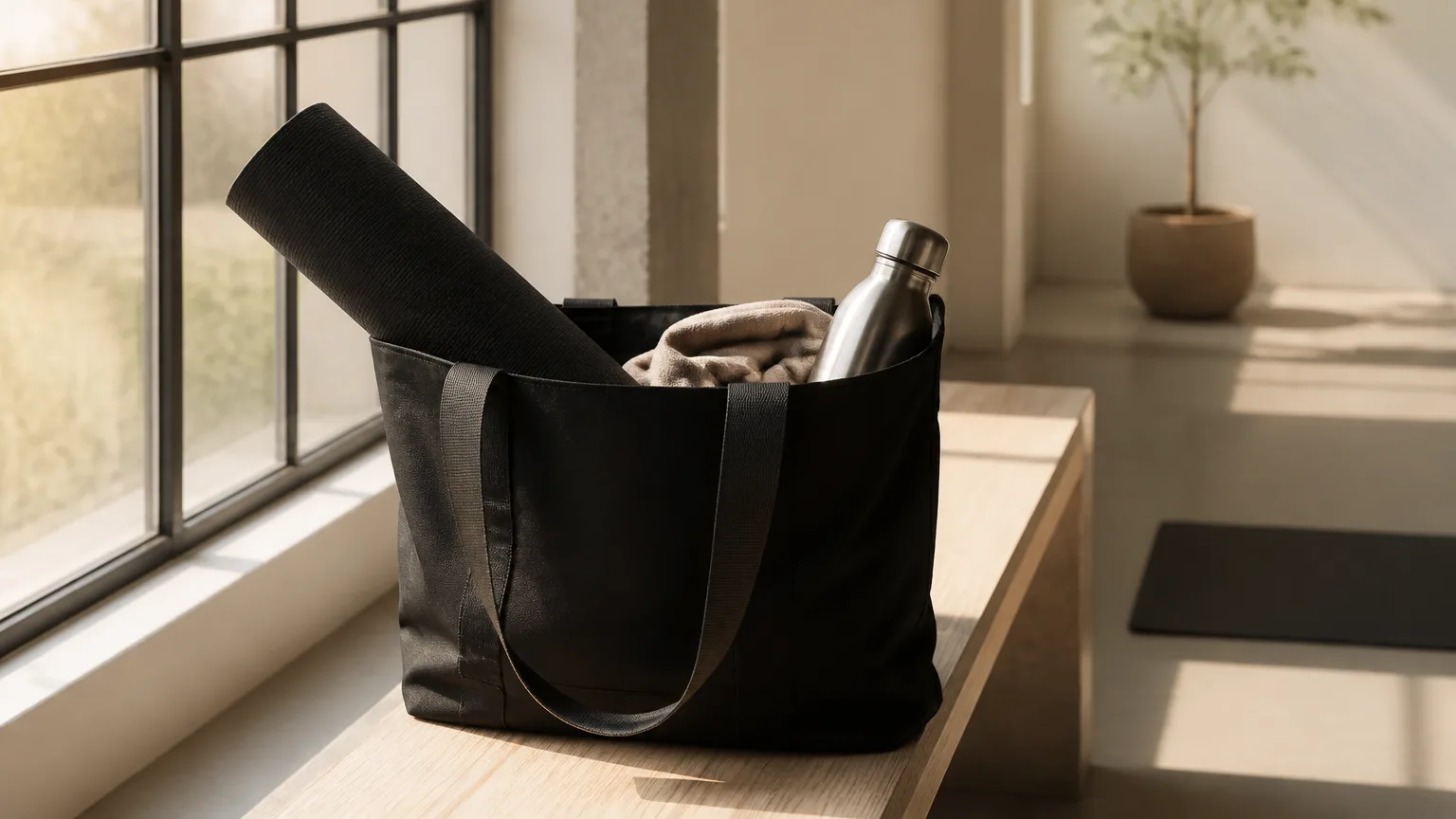
A yoga bag can make the journey to class feel a little calmer. It keeps your mat and everyday essentials together, so you can focus less on what you might have forgotten and more on arriving as you are. The right alo yoga bag isn’t necessarily the largest or most stylish one; it’s the one that supports your real routine.
A quick class before work may call for room for a mat, water bottle, and a change of clothes. For a walkable commute or a studio with limited storage, a lighter, easy-to-carry style may feel more practical. Comfort matters, too: straps, pockets, and access to your essentials can shape how a bag feels throughout the day.
This guide compares Alo Yoga bag options with those everyday needs in mind, including style, mat and gear capacity, carrying comfort, and useful features. For a broader starting point, explore how to choose a yoga mat bag. Product styles, dimensions, and availability can change, so check current details before choosing.
Compare Bag Styles: Open Totes, Mat Carriers, and Roomier Gym Bags
An alo yoga bag may be designed as an open tote, a dedicated mat carrier, or a larger gym bag. Each format supports a different routine, from a quick trip to class to a full day away from home. Consider what you carry, how you travel, and whether you’ll use the bag beyond the studio.
Open totes offer easy access and flexible packing. You can slip in a water bottle, towel, wallet, and other daily items without arranging them around a fixed layout. Some may fit a mat, but the fit and way it’s carried can vary by model. An open top also makes contents more visible and less protected from rain or spills, so a separate pouch can help keep small essentials together.
Purpose-built mat carriers are made to hold a mat more securely, often with straps or a dedicated compartment. That can make them a practical choice for a commute with your mat, especially when you want it to stay in place while walking. Check the product’s stated mat compatibility and closure design: not every carrier fits every mat, and some designs may leave the mat exposed to weather.
Roomier gym bags suit days when practice is one part of a longer schedule. Their extra space can accommodate clothing, a towel, and other gear, and some models may include pockets or separate compartments. More capacity can mean more weight and bulk, though, and the mat may need its own straps or a separate carrier. Review the exact layout rather than assuming every larger bag has a dedicated mat feature.
Your routine can help narrow the choice. For a short walk to class with just a few essentials, an open tote may be convenient. For a commute where carrying the mat securely matters, look for a purpose-built carrier or a bag with verified mat straps. If you’re heading from practice to errands, a larger bag may keep more of your day’s belongings together, provided its size feels comfortable to carry.
Before choosing, check current dimensions, closures, compartments, and carrying options for the specific model. Design details and availability can change, so confirm how the bag handles your mat and everyday items before buying.
Choose a Size That Fits Your Mat and Your Actual Gear
Start with your mat, since it often determines which bag sizes will work. Check its width and thickness, especially if you use a wider or extra-cushioned mat. Then decide whether you want the mat fully inside the bag or secured to the outside with straps.
A bag’s listed length can help you assess fit, but it doesn’t tell the whole story. Compare the product’s interior dimensions with your rolled mat, and look at the opening width too. A bag may be long enough yet still feel difficult to load if its opening is narrow or its shape tapers.
Next, picture what you typically bring to class. You might pack a towel, water bottle, change of clothes, toiletries, and small practice accessories such as blocks or a strap. Not everyone needs room for all of these, so focus on your own routine rather than choosing the biggest option by default.
For example, if you carry only a mat and water bottle, a compact style may feel easy to manage. If you change after practice or bring several accessories, look for extra room and pockets that keep smaller items organized. The right capacity should support your day without making packing feel like a puzzle.
More space can be helpful, but generous capacity may add bulk, even when the bag isn’t full. That extra size can feel cumbersome on a commute or when storing the bag at home. A close fit has its own drawback: squeezing in a towel or retrieving your clothes can become frustrating, especially when the bag is packed.
Before buying an alo yoga bag, review the current product specifications rather than relying on labels like “small” or “large.” Check the overall dimensions, interior capacity if provided, opening style, and how the mat is carried. Product details can vary between styles, so confirm the information for the exact model you’re considering.
If possible, compare those measurements with a bag you already own or measure your rolled mat and usual gear at home. Think about whether you’ll need to reach your water bottle quickly or keep toiletries separate from clothing. A little planning can help you choose a size that feels balanced: roomy enough for your essentials, but comfortable to carry and easy to use.
Check Carry Comfort for the Walk, Commute, and Studio
Once you’ve found a bag with enough room for your mat and everyday essentials, consider how it will feel on the way to class. A bag that works well in the studio may feel different when you’re walking several blocks, catching a bus, or carrying it alongside work items. Try to picture your usual route, not just how the bag looks in a product photo.
Think about whether you prefer carrying your bag by hand, over one shoulder, or across your body. Handles can be convenient for short trips, while a shoulder strap may leave your hands free. If you commute with a laptop or other heavy items, check whether the strap is long enough to sit comfortably and whether it can be adjusted to keep the bag from swinging as you walk.
Strap width and padding can also affect comfort, especially when the bag is loaded. Narrow straps may press into your shoulder, while a wider strap can spread the weight more evenly. Still, comfort depends on more than appearance: inspect the stitching, strap material, and attachment points to see how securely they’re built. If possible, try the bag with the items you usually bring to class.
Notice how the weight sits against your body. A bag that pulls to one side or bumps against your hip can become tiring during a longer commute. Keep heavier items close to your body, and consider how the bag balances when you add a water bottle, towel, or change of clothes. A well-sized alo yoga bag should feel manageable when packed for your actual routine, not only when empty.
Some bags may not have a dedicated way to secure a yoga mat, or you may prefer not to fit your mat inside. In that case, a separate yoga mat strap can work on its own or alongside your bag. It lets you carry the mat independently while keeping your other belongings together, which may feel more balanced on a walk or crowded commute.
Before choosing, check how the handles and straps work together and whether the bag’s closure stays accessible while you carry it. A quick test with your usual gear can reveal whether the strap slips, the bag shifts, or the load feels awkward. Small details like these can make the trip to the studio feel easier, leaving more attention for settling into practice.
Look for Everyday Features That Keep Practice Gear Organized
Once you’ve considered size and carrying comfort, look at how the bag handles the smaller details of your routine. Pockets, closures, and compartments can make studio trips feel smoother—but only when they solve a packing problem you actually have.
A secure pocket can keep your keys, phone, and wallet together instead of loose among your practice gear. Check whether it closes with a zipper or another fastening that feels reliable, especially if you’ll carry valuables while walking or commuting. A separate quick-access pocket can be handy for items you reach for often, such as headphones, hand sanitizer, or a transit pass.
Think about what you bring to class. If you pack a water bottle, snacks, or toiletries, make sure there’s room for them without crowding your mat or making the bag awkward to carry. A bag with many pockets isn’t automatically more useful; an easy-to-reach pocket in the right place may serve you better than several small ones you rarely use.
If you sometimes bring damp towels or clothes, separation can help keep the rest of your belongings dry and fresh. But don’t assume a compartment is ventilated or water-resistant just because it’s labeled for wet items. Check the product details, and consider whether the material, lining, and closure suit what you plan to pack.
A simple packing check can help you decide which features matter:
- Where will your keys, phone, and wallet stay secure?
- Which essentials do you want to reach without unpacking?
- Do you need a separate space for damp items?
- Will your usual gear still fit comfortably with everything closed?
Your storage choices can also reflect the compact set of items you bring to practice. For ideas on planning a well-organized yoga practice kit, consider which essentials you use regularly and which can stay at home. A bag can help carry your kit, but it doesn’t replace a dedicated place to organize it.
When comparing an Alo Yoga bag, picture a real trip from home to class and back. The best features are the ones that make your routine simpler, whether that means a secure pocket, a quick-access space, or room to separate a damp towel. Check current product details before buying, since compartments and materials can vary by style.
Consider Materials, Cleaning, and Long-Term Wear
Once you’ve considered the features that support your routine, look closely at how a bag is made. The right choice depends on how often you’ll use it and what it needs to carry. A bag for frequent studio trips may need sturdier construction than one used occasionally for travel.
Fabric weight can offer clues about how a bag might feel and hold up, but heavier isn’t always better. A lighter fabric may be easier to carry, while a more substantial one may feel reassuring with regular use. Check the lining, too: a smooth lining can make items easier to place and remove, while a separate interior may help keep smaller essentials together.
Pay attention to seams, zippers, and hardware where the bag opens or bears weight. Neat, secure stitching can help support straps and corners through repeated use. Zippers should move smoothly, and buckles or clips should feel appropriate for the items you plan to carry. These details are worth checking in person or through current product photos and descriptions, since construction can vary by style.
Think about the conditions your bag will encounter. Does it need to handle a rainy walk, regular contact with a rolled mat, or occasional damp gear after class? Some fabrics may resist light moisture, but water resistance is not the same as waterproofing. If keeping belongings dry matters, check the manufacturer’s description rather than assuming a fabric or closure offers full protection.
Care needs matter just as much as initial durability. Before cleaning an Alo Yoga bag, check its care label and the manufacturer’s instructions for its fabric, lining, and hardware. Avoid assuming that a method suitable for one material will work for another. Gentle spot cleaning may be appropriate for some fabrics, but follow the specific guidance for your bag.
After class, let damp towels or clothing dry separately when possible. Allow used gear and the bag’s interior to air out before storing everything away. This simple habit can support freshness and help reduce lingering moisture over time.
Finally, consider how easy the bag will be to maintain across your usual week. If you travel often, choose a style whose fabric and hardware feel suited to being packed and handled. For regular studio trips, prioritize construction and care requirements you can comfortably manage. A little attention to materials now can help your bag stay useful through many routines.
Match the Bag to Your Practice, Wardrobe, and Daily Routine
Once you’ve checked a bag’s size, carrying options, and storage, think about how it fits into your actual day. The right choice depends less on having every feature and more on making your usual trip to practice feel straightforward. Consider what you carry, how far you walk, and whether the bag needs to do more than hold yoga gear.
If you’re a minimal studio visitor, a compact style may be enough for your mat, water bottle, and a few small essentials. Look for a comfortable strap and a closure you can manage easily. Extra pockets and space may add bulk without helping your routine.
If you commute with extra layers, prioritize capacity and comfortable carrying. Room for a change of clothes, a towel, and daily items can make the trip easier, especially when you’re walking or using public transit. Check how the bag feels when loaded; a roomy design should still sit steadily against your body.
If you combine practice with errands or travel, versatility may matter most. A bag with useful compartments can help keep your mat separate from everyday belongings, while a secure pocket gives small valuables a place to stay. For an alo yoga bag you’ll use beyond the studio, consider whether its size and carrying style suit those other plans, too.
Let function guide your decision before color or styling. Once the bag meets your needs for fit, comfort, and storage, choose a look that feels like you and works with the clothes you wear most. Personal style can make a bag more enjoyable to carry, but it shouldn’t come at the cost of a practical fit.
Your clothing is part of the same routine. Well-fitting, comfortable yoga outfits can help you move without distraction, and a bag suited to the day can make getting out the door simpler. For ideas on choosing clothes for practice, explore comfortable yoga outfits.
These small comforts won’t remove every obstacle, but they can reduce little points of friction: a slipping strap, a crowded bag, or clothes that need adjusting. When your gear supports your routine, it’s easier to arrive with attention left for practice. Let your own habits—not a feature list alone—shape the choice.
Frequently Asked Questions
How do I know what size bag I need?
Start with the gear you bring most often: your rolled mat, clothing, towel, and any small essentials. Measure your mat and compare it with the current dimensions of the specific bag. Check the closure and strap details too, then consider whether the loaded bag will feel comfortable to carry.
Can a yoga bag hold a mat and clothes?
Some styles may fit both, but capacity varies by model. Compare the product’s current dimensions with your mat and folded clothes, and review the closure to see whether it can secure your usual load. Check the strap details for comfort, and read the care instructions before packing damp or sweaty items.
Is a tote or dedicated mat carrier better?
A tote may suit you if you want one bag for studio gear and everyday items. A dedicated mat carrier may be more convenient if carrying your mat is the main priority. For either style, compare current dimensions, closure and strap details, and care instructions against your gear and routine.
What should I check before ordering online?
Review the specific alo yoga bag listing for current dimensions, closure type, strap design, and care instructions. Make sure the measurements work for your mat and other belongings, and consider how you’ll carry the bag when full. Don’t assume that different styles share the same capacity, features, or materials.
Choose the Bag That Makes Your Practice Easier to Reach
A useful yoga bag should fit the way you actually practice and travel. Start by confirming that your mat fits and there’s enough capacity for your usual gear. Next, assess carry comfort, especially when the bag is fully loaded. Then weigh organization, materials, and style against what matters in your routine.
For example, you may value a quick-access pocket for keys or a separate space for a damp towel. If you walk to class, a comfortable strap may matter more than extra compartments. The right alo yoga bag is the one whose real features make your trip easier, not simply the one with the longest feature list.
Before buying, review the specific product’s current dimensions, compartments, closures, and carrying options. Check its return and care policies too, so you know what to expect if the fit or upkeep doesn’t suit you. A little comparison can help you choose with confidence.
No bag can guarantee a more consistent practice, but comfortable, practical gear can remove small everyday obstacles. Choose a bag that supports your routine, and let your own needs guide the rest.