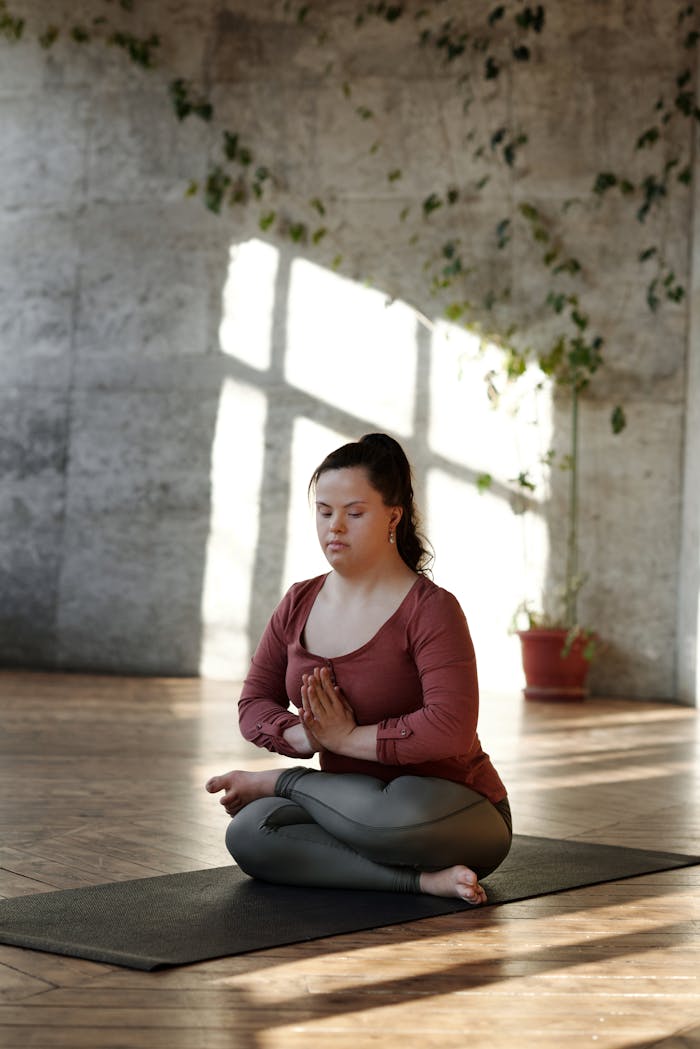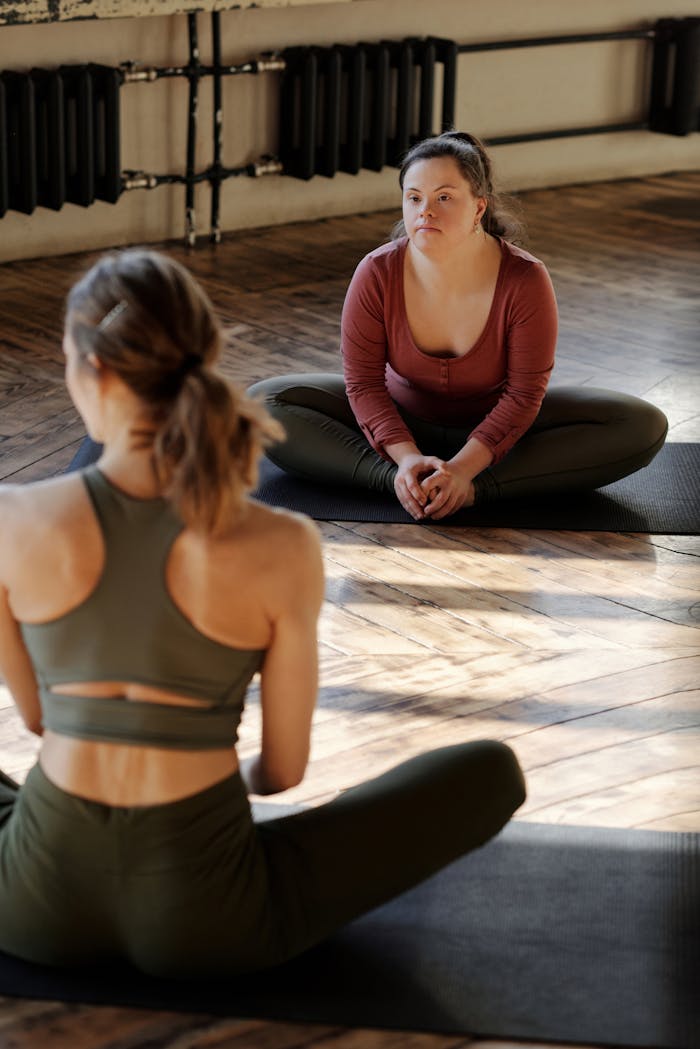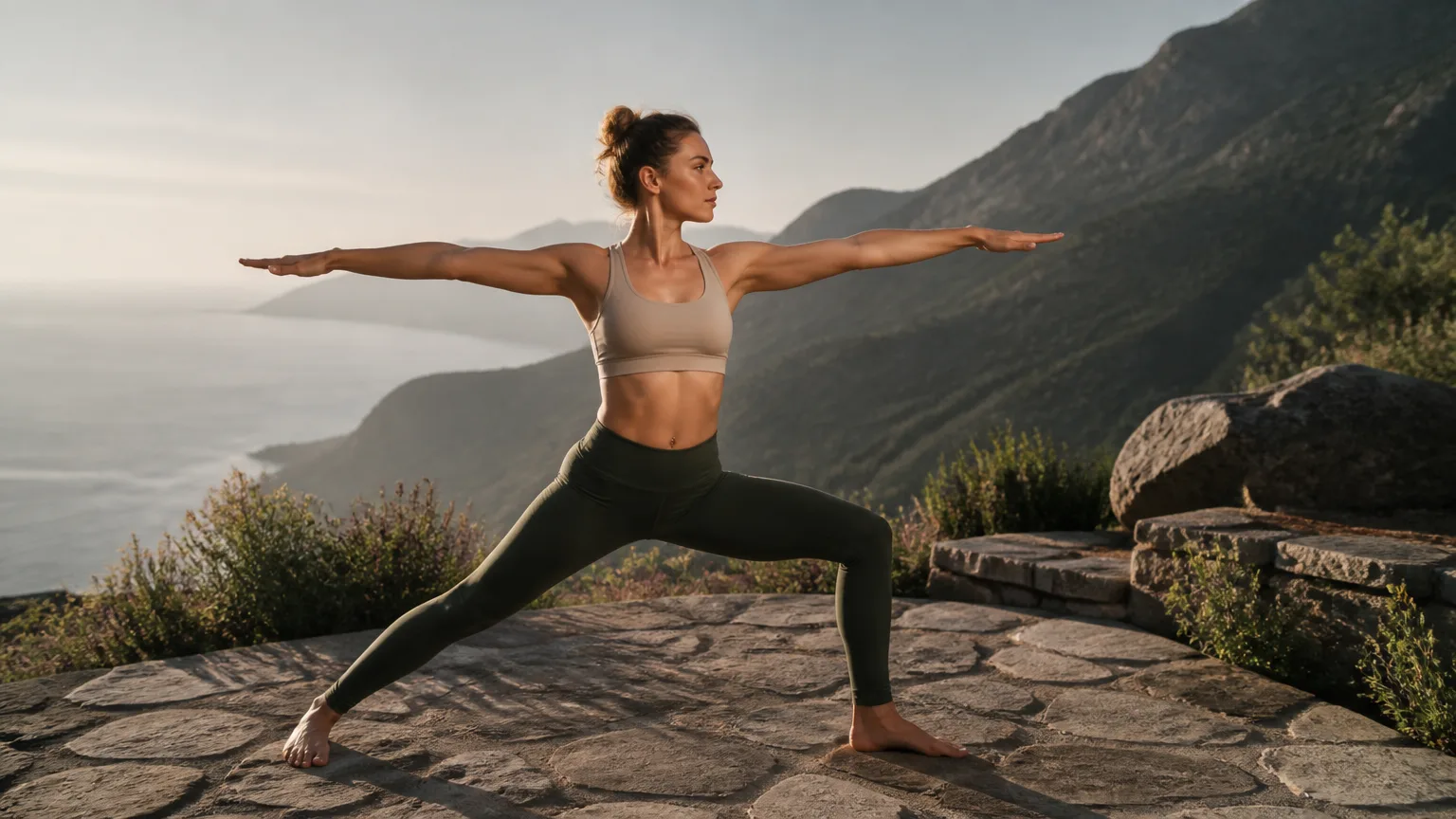
Standing yoga poses build grounded strength while inviting you to notice how your body moves and breathes. They can also support balance—but balance is a skill that shifts from day to day, not a test you need to pass.
In this guide, you’ll explore 12 poses that strengthen your legs and core, improve stability, and encourage focused breathing. Try practicing near a wall or sturdy chair for support, and adapt each pose to your experience and range of motion. Move without pain, and prioritize steady breathing over reaching deeper.
Let each pose meet you where you are. With patience and regular practice, small moments of steadiness can help you feel more present on and off the mat. For more ways to explore yoga and mindfulness, visit Joyous Yoga.
Before You Begin: Foundations for Steady, Safe Standing Poses
Before exploring these standing yoga poses, warm up gently with a few easy movements and prepare a clear, nonslip space. If you have an injury, balance concerns, or a health condition that may affect your practice, seek individualized guidance from a qualified professional.
Begin each pose by noticing how your feet meet the floor. Spread your weight across the heels and the base of each toe, then soften your knees rather than locking them. Let your spine feel long, and adjust your stance until it feels stable and comfortable.
Keep your breath unforced. A steady, easy breath can help you notice tension and move with care. When changing poses, take your time: pause, find your footing, and step smoothly instead of rushing from one shape to another.
You don’t need to reach the floor to practice well. Yoga blocks are optional supports that can bring the floor closer or help you maintain comfortable alignment. If you’re choosing one for your practice, explore how to choose a yoga block. Use support whenever it helps you feel more grounded and at ease.
1. Mountain Pose (Tadasana): Find Your Grounded Starting Point
Mountain Pose may look like simply standing, but it offers a chance to notice how you meet the ground. Stand with your feet parallel or comfortably apart, choosing a position that feels steady. Let your weight spread across your feet rather than leaning heavily into your heels or toes. Keep your arms relaxed by your sides.
Let your spine feel long and your shoulders easy. There’s no single rigid posture that suits every body, so make small adjustments until you feel both upright and comfortable. Notice how your head rests over your shoulders and how your feet support you.
Take a few unhurried breaths. As you breathe, observe any subtle shifts in balance or tension without needing to correct them right away. This simple practice can build foot awareness and calm attention before you move into other standing yoga poses.
Because it asks for no elaborate movement, Mountain Pose can be useful at every level. Beginners can use it to explore stable standing, while experienced practitioners can return to it as a mindful pause between poses.
2. Chair Pose (Utkatasana): Build Leg and Core Strength
From Mountain Pose, shift into Chair Pose, or Utkatasana, to challenge your thighs and core. Bend your knees and send your hips back, as if you were about to sit in a chair. Keep your weight steady through your feet, with your chest lifted and trunk gently engaged.
Reach your arms overhead if that feels comfortable, or bring your hands to your hips or together at your chest. You can also rest your hands lightly on your thighs and choose a shallower bend. Let your knees track naturally in line with your feet, and ease out of the pose if they feel uncomfortable.
Hold for a few steady breaths, then slowly straighten your legs and return to Mountain Pose. Even a brief hold can build strength when you breathe evenly and stay attentive to your footing. Rather than pushing for a deeper bend, focus on controlled weight-bearing and a shape you can sustain. In a sequence of standing yoga poses, Chair Pose offers a practical way to build strength while keeping balance and comfort in view.
3. Warrior I (Virabhadrasana I): Stabilize a Strong, Forward-Facing Stance
After Chair Pose, Warrior I offers another way to build leg strength while practicing balance. Step one foot forward and turn the back foot outward, adjusting the angle until your stance feels stable. Bend the front knee so it tracks over the foot, while the back leg roots firmly into the mat.
Lift your torso upright and let your breath stay smooth. Your hips and feet do not need to point in a perfectly straight line. Allow them to angle as needed, and avoid forcing your hips square or pressing your back heel down if either causes strain.
Choose a stance that suits your body today. Shorten the distance between your feet if balance feels uncertain, or keep your hands at your hips to make it easier to steady yourself and relax your shoulders. These adjustments are part of a mindful practice, not a step backward.
Among standing yoga poses, Warrior I can feel strong without needing to feel rigid. Notice how your feet connect with the floor, and make small changes until you can hold the shape with steady breathing and ease.
4. Warrior II (Virabhadrasana II): Strengthen the Legs and Widen Your Base
Warrior II builds on the grounded attention of Warrior I with a wider stance and open-arm shape. It can strengthen the legs and support balance without asking you to reach a particular depth.
Step your feet apart, then turn your front foot outward and angle your back foot slightly in. Bend your front knee within a comfortable range, keeping it generally aligned over the ankle. Extend your arms at shoulder height if that feels comfortable, with palms facing down.
Let both legs share the work. Press through your feet and notice the steady effort in your front thigh and back leg, rather than sinking lower than feels right. Keep your jaw relaxed, shoulders soft, and breath even as you look over your front hand or straight ahead.
If the wide stance feels challenging, bring your feet closer together. You can also bend your front knee less, or keep your hands on your hips. These adjustments help you stay stable and attentive while exploring this standing yoga pose. Over time, Warrior II can offer a steady way to practice strength and balance together.
5. Warrior III (Virabhadrasana III): Practice Single-Leg Stability)
Warrior III adds a new balance challenge: standing on one leg while reaching the other leg behind you. This pose develops coordination and single-leg strength, but there’s no need to lift your back leg high. A small lift can be enough to explore the shape steadily.
From a standing position, hinge your torso forward as your back leg lifts. Keep your hips level where comfortable, and extend through your fingertips and lifted heel only as far as your back and standing leg feel at ease. A long line through the body is an option, not a requirement.
For support, place your hands on a wall, the back of a sturdy chair, or yoga blocks. These supports can help you focus on steady breathing and foot awareness without forcing a hands-free balance. You might also keep your torso more upright or let your back toes touch the floor.
Among standing yoga poses, Warrior III is a reminder that balance can grow through small, supported steps. Choose a variation that feels secure, and come out of the pose if you feel pain or strain.
6. Tree Pose (Vrksasana): Improve Focus and One-Legged Balance
After Warrior III, Tree Pose offers another way to explore balance, this time with your torso upright. Begin in Mountain Pose and shift your weight into one foot. Place the sole of your other foot at your ankle, inner calf, or inner thigh, avoiding direct pressure on the knee joint.
If lifting your foot feels unsteady, keep your toes on the floor beside your standing foot like a kickstand. You can also practice near a wall and rest a hand on it for support. Choose a steady point to gaze at, and let your breath remain smooth and relaxed.
Bring your hands together at your chest or raise them only if that feels comfortable. Wobbling is normal; it’s part of learning how your body responds. Lower your lifted foot whenever you need, then try the other side. There’s no need to hold the pose for long—begin with a few steady breaths and build gradually.
Among standing yoga poses, Tree Pose can invite focus without requiring perfect stillness. Adjust the position to suit your mobility and steadiness today, and notice how small, supportive choices help you feel grounded.
7. Extended Side Angle (Utthita Parsvakonasana): Connect Leg Strength and Side-Body Length
Extended Side Angle brings leg strength and side-body length into one grounded shape. From Warrior II, bend your front knee comfortably over your foot and keep your back foot firmly connected to the floor. Reach your torso forward, then rest your forearm lightly on your front thigh, or place your lower hand on a block inside or outside the foot.
Let your legs support you rather than leaning heavily into the front arm. Press gently through your feet and keep your chest open, making small adjustments if you feel your shoulder collapsing or your breath becoming strained. The block can bring the floor closer without asking you to force the pose.
If it feels comfortable, extend your top arm overhead, reaching through your fingertips to lengthen the side of your body. This reach is optional; keep your top hand on your hip if lifting your arm creates neck or shoulder tension. You might also turn your gaze forward or down instead of looking up.
Among standing yoga poses, Extended Side Angle offers a chance to explore strength and spaciousness together. Stay for a few steady breaths, then rise with control and repeat on the other side.
8. Triangle Pose (Trikonasana): Develop Grounded Alignment and Spaciousness
Triangle Pose invites you to feel the connection between your feet, legs, and torso while creating space through your side body. From a wide stance, turn one foot outward and extend your arms. Keep both legs straight but not locked, and soften your knees if that feels more comfortable.
Hinge gently at the hip toward your front leg, lengthening your torso rather than reaching lower toward the floor. Rest your lower hand on your shin or a yoga block, choosing a height that lets you breathe easily. Your hand does not need to touch the floor for the pose to feel complete.
As you settle, notice both feet pressing steadily into the mat and your spine extending through the crown of your head. Open your chest only as far as feels comfortable; there is no need to force your shoulders into a deeper twist. Look forward or down if looking up strains your neck.
Among standing yoga poses, Triangle can build awareness of alignment as well as stability. Stay for a few comfortable breaths, then press through your feet to rise and repeat on the other side.
9. High Lunge (Anjaneyasana variation): Build Strength in a Dynamic Stance
High Lunge brings balance and leg strength together in a steady, active stance. From standing, step one foot back and lift the back heel, keeping your feet on separate tracks rather than a tightrope. A wider base can make it easier to feel grounded.
Bend your front knee within a comfortable range, aiming it in the same direction as your toes. Keep your back leg active, with a soft knee rather than locking it. Hands can rest on your hips, or you can stand near a wall and use it for light support.
Your stance length changes the challenge. A shorter stance may feel easier to balance in, while a longer one can ask more of your legs and stability. Begin with a length that lets you breathe steadily and keep both feet grounded.
You can keep your hands at your hips to focus on your footing. When you feel steady, reach your arms overhead, keeping your shoulders relaxed. Among standing yoga poses, High Lunge offers a chance to explore strength and balance without rushing. Pause for a few breaths, then step forward with control and switch sides.
10. Eagle Pose (Garudasana): Challenge Balance with a Compact Shape
Eagle Pose asks you to balance on one leg while drawing your arms and legs toward your midline. This compact shape challenges focus and core engagement, but a full wrap is not needed to explore the pose. Start standing tall, then soften both knees and keep your torso upright.
Shift your weight into one foot and cross the other thigh over it. If your balance or hip mobility makes the wrap uncomfortable, touch the lifted toes lightly to the floor as a kickstand. You can also cross your legs without hooking the lifted foot behind your calf. Keep your gaze steady on one spot and breathe evenly.
For the arms, reach them forward and cross one over the other, bending your elbows if that feels comfortable. Alternatively, bring your hands together at your heart and focus on steady footing. These variations let you work with the pose without forcing flexibility.
Eagle’s balance and core demands may complement a mindful practice focused on confidence. Explore solar plexus yoga poses for confidence and core strength for related ideas; chakra traditions offer a reflective framework, not medical claims. Among standing yoga poses, Eagle is a reminder that stability can come from choosing a shape that suits you today.
11. Dancer Pose (Natarajasana): Explore Control and Extension
Dancer Pose combines a one-legged balance with a gentle backbend and shoulder opening. It can feel expressive, but there’s no need to lift your foot high. Move gradually, keeping your breath smooth and your movements controlled.
Begin near a wall or sturdy chair. Stand tall, shift your weight into one foot, and bend the other knee so your heel moves toward your seat. If it feels accessible, hold the wall or chair with one hand and take hold of your lifted foot or ankle with the other.
Keep your standing leg steady, with a soft bend in the knee if that feels more comfortable. Press your lifted foot gently into your hand as you draw your chest forward; lift only as far as your back and shoulder remain comfortable. Avoid pulling your foot toward your head.
A strap may help you reach your foot, but use one only if you’ve received appropriate instruction or can hold it without pulling forcefully. Stay for a few steady breaths, then release with control and repeat on the other side. Like other standing yoga poses, Dancer Pose is an invitation to explore balance at your own pace.
12. Goddess Pose (Utkata Konasana): Finish with Grounded Lower-Body Strength
After the one-legged balances, Goddess Pose offers a different kind of steadiness. Its wide stance invites you to feel supported by both feet while building strength and endurance in your legs.
Stand with your feet wide apart and turn your toes outward only as much as your knees can comfortably follow. Bend your knees within a manageable range, keeping them aligned with your toes. Place your hands on your hips, or stay higher in the stance if that feels more comfortable. There’s no need to sink lower to match an idealized shape.
As you hold, notice the contact between your feet and the floor. Let your breath stay steady, and soften your shoulders rather than bracing through your upper body. If your knees feel strained or your breathing becomes difficult, ease the bend or come out of the pose.
To exit, slowly straighten your legs, then turn your toes forward and step your feet closer together. Among standing yoga poses, Goddess Pose is a grounded way to practice lower-body strength while staying attentive to your comfort.
How to Combine the 12 Poses into a Balanced Practice
Begin in Mountain Pose and take a few easy breaths to notice your footing and settle your attention. Move through the standing poses at an unhurried pace, practicing both sides wherever a pose has a left and right side. You don’t need to follow one fixed order; let each transition feel steady and comfortable.
For a balanced session, alternate grounded shapes and strength-building poses with balance challenges. For example, you might move from Warrior II to Triangle, then pause in Mountain Pose before exploring Tree Pose. Rest between demanding balances whenever you need to regain steady breathing or feel more secure.
You don’t have to practice all 12 poses in one session. Choose a few that suit your energy and available time, and build gradually as the sequence becomes familiar. Beginners looking for more accessible ideas can explore these yoga exercises for beginners.
Leave time to cool down with gentle movement or a comfortable rest. Before you finish, notice how your body feels and whether your breath has changed. This quiet check-in can help you carry a sense of balance beyond your standing yoga poses.
Frequently Asked Questions
As you explore standing yoga poses, practical questions may come up. Let these answers help you find a steady, comfortable way to practice.
Which standing yoga pose is easiest for beginners?
Mountain Pose is a simple place to begin. It helps you notice your feet, posture, and breathing without adding much movement. When you feel ready, try Tree Pose with a hand on a wall or chair, or explore a shallow Warrior variation. Move at a pace that feels manageable.
How can I improve balance in standing yoga poses?
Balance often grows through consistent practice, not by holding perfectly still. Choose a steady point to look at, and keep a wall or chair nearby for support. Your balance can vary from day to day, so use the support you need without judging yourself.
How long should I hold a standing pose?
Start with a few comfortable breaths, then come out while you can still breathe steadily and feel stable. The right length depends on the pose and your effort that day. Adjust as needed, and follow guidance from a qualified teacher if you’re unsure.
Can I practice standing poses if I have knee or balance concerns?
Modifications, such as bending your knees less or standing near a support, may make a pose feel more accessible. Still, if you have pain, an injury, or significant balance concerns, seek individualized advice from a healthcare professional or qualified yoga teacher before practicing. Stop if a pose causes pain or feels unsafe.
Build Stability One Steady Breath at a Time
Standing yoga poses offer a flexible way to cultivate strength, balance, and mindful attention. You don’t need to practice all 12 at once. Choose a few that suit your body today, and move through them patiently, with steady breathing.
Props and modifications are thoughtful parts of practice, not lesser versions of a pose. A hand on a wall or a smaller range of motion can help you feel grounded and comfortable. Notice small changes in your steadiness or confidence rather than measuring progress by how deep you move or how long you hold a pose.
Let each practice meet you where you are. Move gently, and stop if a pose causes pain or dizziness.