Couples yoga isn’t about matching flexibility or moving in perfect sync. It’s a chance to slow down together, notice how each of you feels, and build connection one small choice at a time. Listening, asking before adjusting, and respecting a partner’s limits are all ways to practice trust.
You don’t need to be romantic partners to enjoy the practice. Friends and family members can share these poses, too. The eight beginner-friendly options ahead offer simple ways to breathe, balance, and support one another, with room to make each movement your own.
Every pose can be modified or skipped. If a position feels uncomfortable, pause, change it, or choose another; the goal is to feel connected, not to create a particular shape. Clear communication matters more than how a pose looks.
If you’re exploring mindful movement for the first time, you can find more gentle guidance at Joyous Yoga. Bring curiosity, take things at your own pace, and let your shared practice begin with being present.
Before You Begin: Set Up a Comfortable, Consent-First Practice
A welcoming setup can help your couples yoga practice feel steady and relaxed. Choose a quiet area with enough room to move without bumping into furniture, and use a nonslip surface. Wear comfortable clothing, keep water nearby, and have blocks or folded blankets ready to make poses more accessible.
The surface beneath you can affect your comfort and balance. If you’re comparing options, this guide to choosing a yoga mat can help you find one that suits your practice.
Before you begin, agree on a few simple check-ins, such as “more support,” “less pressure,” and “pause.” Either person can stop or leave a pose at any time, without needing to explain why. These phrases make it easier to share what feels good, especially when you’re still learning how to move together.
Approach each pose as an invitation, not a goal. Move slowly, notice your own comfort, and ask before offering physical support. Never pull or push your partner to deepen a stretch or reach a shape. If either of you feels pain, dizziness, strain, or uncertainty, ease out carefully and take a break.
Deciding whether to continue, modify, or stop can be simple. Continue when both partners feel comfortable and can breathe easily. Modify by using a block or blanket, reducing the range of motion, or choosing a gentler version. Stop if discomfort persists, balance feels unsafe, or either person asks to pause.
If you have an injury, pregnancy-related concerns, or a medical limitation, seek guidance from a qualified health professional before practicing. A yoga teacher with relevant experience can also suggest suitable adjustments. Starting with care helps you build trust through attention, clear communication, and respect for each other’s boundaries.
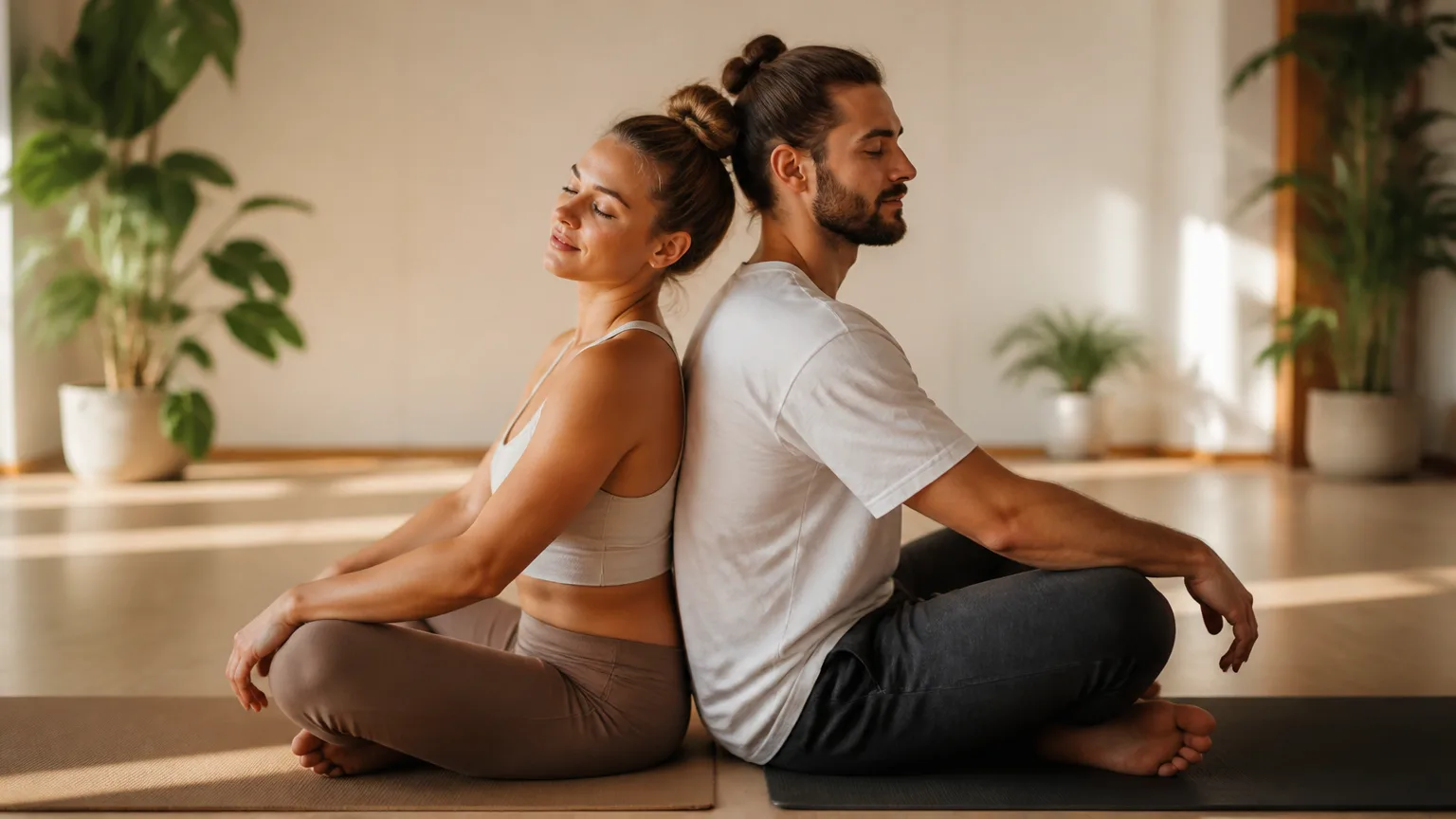
1. Seated Back-to-Back Breathing
This gentle opening helps you arrive together without needing to balance, stretch deeply, or make a particular shape. In couples yoga, simply sharing a quiet moment can be a meaningful way to build trust.
Sit back-to-back on the floor, with your legs crossed or extended in front of you. Adjust your distance until you can both sit upright comfortably, without leaning or straining. If sitting on the floor doesn’t feel supportive, try chairs placed back-to-back or sit with your backs supported by a wall.
Take a few moments to notice your own breathing. Feel where each inhale and exhale moves through your body, and let your breath find its natural pace. There’s no need to make your breathing match your partner’s.
If it feels comfortable, notice the gentle movement of your partner’s back against yours. Keep the contact light, and check in about pressure: a small adjustment can make the pose feel more relaxed for both of you. You can also choose to sit close without touching.
Stay for several breaths, allowing quiet to feel like a shared experience rather than something to get right. If either of you feels uncomfortable, shift your position or pause. This simple practice offers a chance to listen, communicate, and begin your time together with care.
2. Seated Partner Twist
From your shared breathing practice, move into a gentle seated twist. Sit back-to-back with enough space to feel comfortable, and let your arms rest naturally. Before moving, check in with each other: a small range is enough, and you can pause at any time.
Inhale to lengthen your spine, sitting tall without forcing your shoulders back. As you exhale, turn gently in the same direction. Use the floor or your own thigh for light support, and keep the movement easy to breathe through. You might notice your partner’s breath beside you, helping you move at a calm, steady pace.
Let the twist come from your own body. Avoid pulling on your partner’s arm or torso, or using their body to deepen the pose. In couples yoga, trust grows through respecting each person’s comfortable range—not through matching shapes or stretching further.
Stay for a few breaths, keeping your jaw and shoulders relaxed. Then unwind slowly and return to center before twisting to the other side. Notice whether one direction feels different, tighter, or easier. There’s no need to make both sides feel the same; simply share what you notice and adjust accordingly.
If either of you feels discomfort, ease out of the twist or sit in a neutral position. Moving with care and communicating clearly can make this simple pose a supportive way to practice together.
3. Partner Seated Forward Fold
This gentle pose invites you to explore a little movement while staying connected. Sit facing each other with your legs comfortably open or bent. If you both agree, hold hands or forearms lightly; you can also practice without touching.
Choose who will lean back first. As one partner gradually reclines, the other hinges forward from the hips, keeping the spine long and the movement modest. Think of your contact as a steady point of connection, not something to pull against. This should never become a tug-of-war.
Check in as you move. You might ask, “Does this feel comfortable?” or “Would you like less movement?” The partner leaning forward should stop well before strain, while the partner leaning back stays supported and avoids dropping suddenly. After a few easy breaths, return to sitting upright slowly and switch roles.
Small adjustments can make the pose more welcoming. Bend your knees if your hamstrings feel tight, or sit on a folded blanket to make it easier to hinge forward. If holding hands feels uncomfortable, rest your hands on your own legs and simply mirror each other’s movement.
There’s no need to match your partner’s range or go deeper with each breath. In couples yoga, trust grows through listening and adjusting together. Pause or come out of the pose whenever either of you feels discomfort, and let comfort guide how far you move.
4. Partner Tree Pose
After practicing a twist together, you can bring that same attentiveness into a simple standing balance. Partner Tree Pose makes teamwork visible, but neither person needs to carry the other’s weight. Stand side by side, close enough to offer light support through your inside arms or fingertips.
Root into your standing foot and keep that leg soft, with a gentle bend in the knee. Place the sole of your other foot at your ankle or calf—never directly on the knee. You can also keep your toes on the floor, with your heel resting against your ankle. Choose a foot position that feels steady; partners don’t need to match.
Use a wall or sturdy chair nearby for extra support, especially if balance work is new. Keep your gaze on one still point, and notice how a light touch can help you feel connected without asking either partner to lean or pull.
Wobbling is normal, even when you practice regularly. If balance shifts, lower your lifted foot or step out safely, then pause and reset. Stepping out isn’t a failure; it’s part of listening to your body and responding with care.
Stay for a few easy breaths, checking in about what feels comfortable. In couples yoga, practicing together doesn’t mean holding the same shape. It can mean offering gentle support while each person finds their own balance.
5. Double Downward-Facing Dog
This optional variation is only for partners who are comfortable in downward-facing dog and have no relevant wrist, shoulder, or back concerns. If you’re new to the pose, practicing side by side is a supportive alternative—and still gives you space to share the movement.
One partner settles into a steady, comfortable downward-facing dog, with hands and feet grounded. The other stays on the floor nearby, offering encouragement or a calm presence. Don’t step onto your partner or press down on them; this variation is not about adding weight or making the pose more challenging.
Before you begin, agree on a simple way to pause or stop. Check in as you move, and let the person holding the pose come out whenever they need. Neither partner needs to prove trust by staying in a position that feels uncertain.
If either of you feels unsure, use a wall for individual support or skip the partner variation entirely. You might each practice your own downward-facing dog, adjusting your stance and taking breaks as needed. In couples yoga, being together can mean choosing a version that feels safe for both of you.
6. Supported Warrior II
Warrior II offers a familiar standing pose that partners can practice side by side. Its steady shape invites shared focus without asking either person to balance on the other or match their range.
Stand facing the same direction, or mirror each other so you can see your partner. Take a comfortable, stable stance with your feet apart. Turn your front foot outward and bend that knee only as far as it can track comfortably over your ankle.
You can keep your arms in a traditional Warrior II position, or rest your hands on your hips. If you’d like a point of connection, lightly touch fingertips with your partner. No touch is needed; simply noticing each other’s presence can make the pose feel shared.
Stay for a few easy breaths, softening your shoulders and keeping your breath relaxed. Check in with yourself and your partner: does the stance feel steady, and is the knee comfortable? This isn’t a strength challenge. In couples yoga, support can mean giving each other space to find a version that feels right.
If the stance feels too wide or the bend feels intense, shorten your stance or reduce the bend. You can also come out of the pose and rest between sides. Switch the front leg when you’re ready, adjusting independently rather than trying to make both shapes identical.
7. Partner Boat Pose Variation
After exploring standing poses, try a playful seated balance that brings your attention back to coordination. Sit facing each other with knees bent and feet resting on the floor. Hold hands lightly, then lean back just enough to feel steady. Keep your spines long and your shoulders relaxed.
Take a moment to notice how the shared handhold feels. You might agree to lean back together on a slow exhale, then return upright as you inhale. Move gently rather than pulling against each other. The aim is to find a comfortable rhythm, not to create a perfect shape.
If you both feel ready, try lifting one foot at a time while keeping your knees bent. One partner can lift a foot first, giving the other time to follow, or you can take turns. Keep the movement small and steady, and lower your feet whenever you need a break. Both partners can remain grounded throughout; the seated version still offers a chance to practice timing and communication.
Release hands immediately if either of you feels strain, and reset with both feet on the floor. Avoid jerking or using your partner’s arms to hold your balance. In couples yoga, trust can grow through small, clear choices: checking in, adjusting together, and honoring each person’s comfort.
8. Supported Partner Child’s Pose
After the more active poses, close with a shape that brings attention back to rest and mutual care. Place your mats side by side, leaving enough space for each person to move comfortably.
Come onto your hands and knees, then ease your hips toward your heels and fold forward into child’s pose. Rest your forehead on the mat, or place a bolster or folded blanket under your torso or forehead for support. Adjust your knees and arms until the position feels easy to maintain.
Let this be an individual pose practiced together, rather than a shape you need to match. If either of you feels discomfort, come out or choose another resting position. In couples yoga, making space for different needs is part of caring for one another.
If you both actively want gentle contact, one partner may rest a hand lightly on the other’s upper back. Ask first, and keep the touch soft; don’t lean your body weight onto your partner. No touch is equally supportive, and either person can change their mind at any time.
Stay for a quiet pause and notice how your body feels. When you’re ready, share one thing that felt supportive during your practice, such as a steady breath or a clear check-in. You can also choose silence. Resting together, with or without contact or conversation, is a simple way to honor each person’s comfort.
How to Make the Practice Feel Connected, Not Performative
You don’t need to practice all eight poses each time. Choose three or four for a short session, based on how you both feel that day. Begin with a few easy breaths, move through your selected poses, and finish with rest. This simple rhythm can make couples yoga feel welcoming and easy to return to.
Before you start, check in: Do you want a gentle stretch, a little movement, or a quiet practice? Take turns choosing poses so both partners help shape the session. If one pose doesn’t feel right, skip it or try a more comfortable version. The goal is not to complete a sequence, but to stay present and responsive to each other.
After resting, share one thing that felt good, such as a steady breath or a helpful moment of support. You can also name one adjustment you’d like to try next time, like adding more space or moving more slowly. Keep feedback kind and specific, and remember that either partner can choose silence instead.
As your confidence grows, you might explore other safe group yoga poses for new ways to move together. Treat them as optional inspiration, not a challenge to master. A shared practice can change with your energy, comfort, and needs; showing up with curiosity is enough.
Frequently Asked Questions
Starting a couples yoga practice can bring up practical questions. Remember, the goal isn’t to perform poses perfectly or move in exactly the same way. You can adapt each practice to your comfort, energy, and experience.
Do we need the same flexibility or yoga experience?
No. You can practice together whether one of you is new to yoga or more experienced, and whether your bodies move differently. Each person should stay within a comfortable range instead of stretching farther to match a partner.
For example, in a seated twist, one person might turn a little farther while the other keeps the movement gentle. Check in with each other, and let both versions count as practicing together.
How often should we practice?
Start with a short session once or twice a week. Even a few minutes of breathing and gentle movement can help you make space for connection without adding pressure to your schedule.
Notice how you feel during and after each session. If you’re enjoying the practice and recovering comfortably, you can continue or add time. If you feel tired or sore, take a break or choose gentler movement next time.
Do couples yoga poses require touching?
No. Touch can be part of some partner poses, but it’s never required. You can sit side by side, mirror each other’s movements, or practice the same pose with comfortable space between you.
Connection doesn’t depend on constant physical contact. A shared breath, a kind check-in, or simply being present in the same room can make the practice feel meaningful.
What if we have different abilities, or one person feels uncomfortable?
Choose an alternative that feels supported for both of you. You might use a wall or chair, reduce the range of a movement, or practice separate versions of the same pose. For instance, one partner could try a standing balance while the other keeps both feet grounded.
Either person can pause, change position, or stop at any time—without pressure to explain or continue. A clear “let’s rest” is useful communication, not a setback. In couples yoga, trust grows when you respect each other’s needs and let comfort guide the practice.
Make Room for Trust, One Breath at a Time
A shared yoga practice doesn’t need to be long, polished, or full of advanced partner poses to feel meaningful. Consistency, curiosity, and mutual respect matter more than how a shape looks. Choose one accessible pose, then begin with an open conversation about what feels comfortable and what you’d like to try.
Keep checking in as you move, and let the practice evolve with your needs. You might share a few breaths on the mat or pause whenever either of you wants. A calm, personal space can support mindfulness, but special equipment or décor isn’t necessary; if you’d like inspiration, explore mindful yoga art or ways to connect yoga with the changing seasons.
In couples yoga, small moments of listening and adjusting can build trust over time. Start simply, stay open to one another, and let each breath be enough.