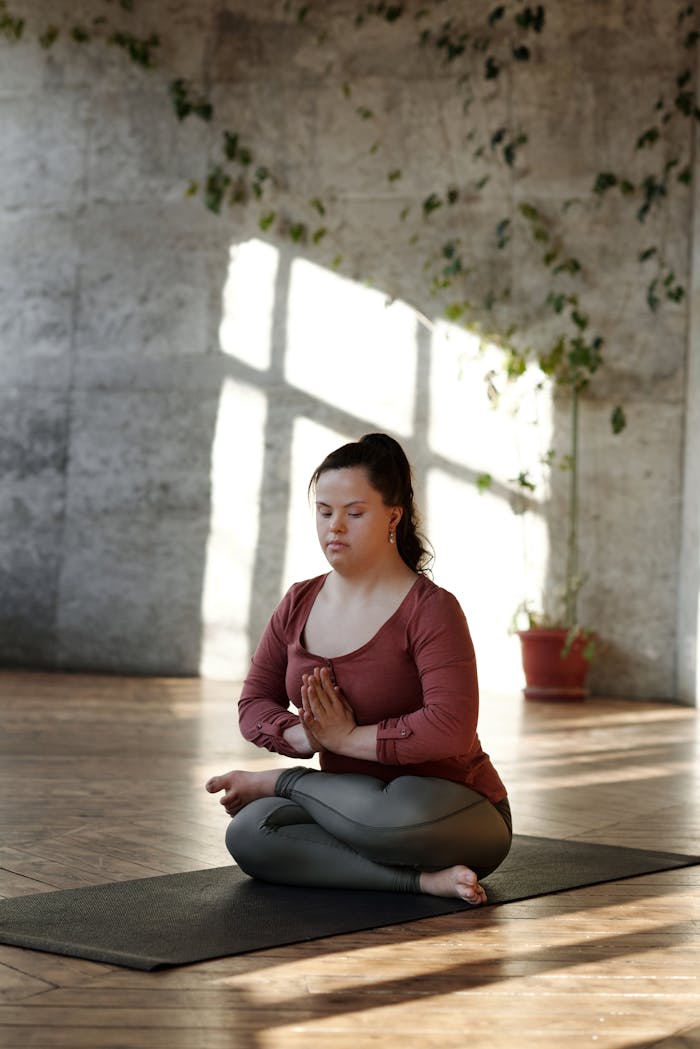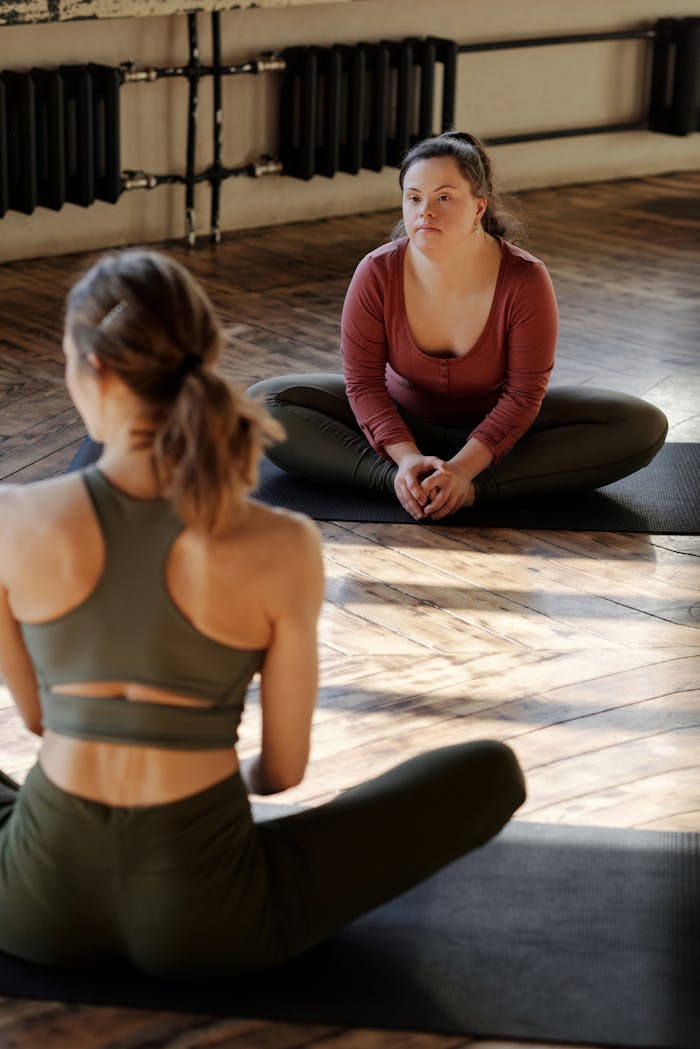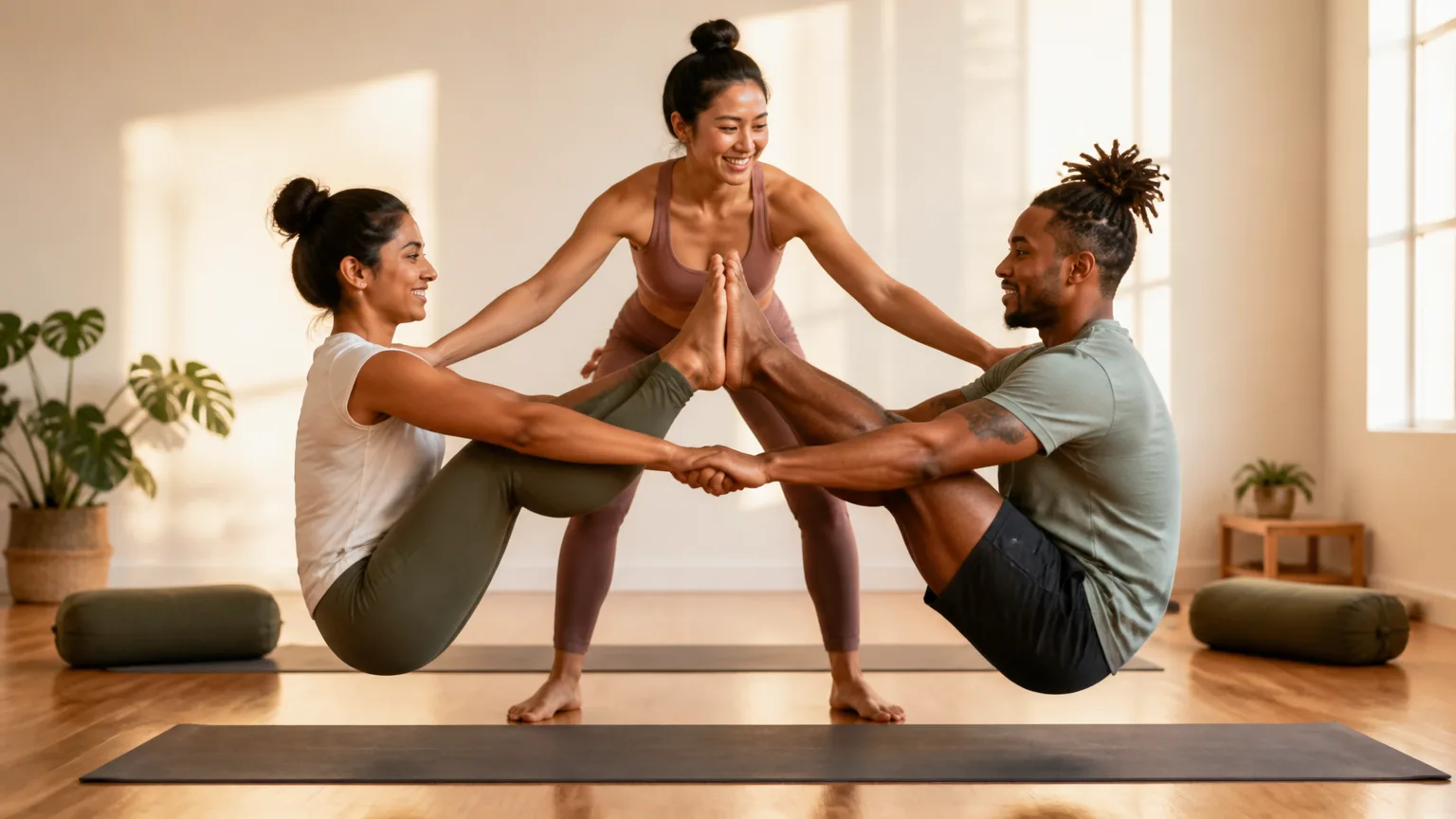
3 people yoga poses offer a playful extension of partner practice, inviting three people to move, breathe, and balance together. These collaborative shapes are less about advanced strength or flexibility and more about shared awareness, clear communication, and enjoying the moment.
Think of this practice as mindful teamwork rather than a performance. Each person brings a different body, comfort level, and experience, so the shape can be adjusted with props, smaller movements, or extra support. The goal is connection—not creating the most dramatic pose.
Before you begin, choose an open space and agree on simple cues such as “ready,” “pause,” and “come down.” Move slowly, listen closely, and check in often. A supportive group makes it easier to explore while respecting everyone’s boundaries.
This guide begins with accessible seated and standing patterns that help you build trust and coordination. As you grow more comfortable, you’ll explore supported balances that require greater focus without demanding perfection. Along the way, you’ll find ideas inspired by the three people yoga pose, with practical ways to make each sequence feel welcoming.
Whether you practice with friends, family, or classmates, these nine sequences create space for laughter, presence, and discovery. Meet one another where you are, stay curious, and let teamwork shape the experience.
Before You Begin: Create a Safe Setup for Three-Person Yoga
Before exploring 3 people yoga poses, create an environment where everyone feels supported and heard. Choose a clear, nonslip practice area with enough room to move, dismount, and recover. A suitable yoga mat can improve traction and comfort, especially during seated or weight-sharing sequences.
Begin with an honest check-in. Each person should share injuries, balance concerns, pregnancy, recent surgery, or other limitations. This information helps the group choose thoughtful modifications. Agree that anyone may pause or stop at any time, without needing to explain or apologize.
Simple communication keeps movement predictable. Before beginning, choose clear cues such as “ready,” “pressure,” “stop,” and “come down.” Everyone should understand that “stop” means immediate stillness, while “come down” signals a controlled exit. No one should bear unexpected weight or pull another person into position.
Treat each sequence as a shared experiment rather than a test of strength. Practice the entry and exit separately before holding the shape. This allows everyone to learn where hands, feet, and knees belong without managing balance at the same time.
The strongest or most experienced participant does not automatically need to serve as the base. Comfort, body proportions, confidence, and familiarity with the movement matter just as much. Rotate roles when appropriate, and use a spotter if someone feels uncertain during transitions.
Move slowly, breathe steadily, and keep checking in. If a pose creates pain, strain, fear, or pressure to perform, return to a simpler version. You can widen your stance, lower the height, keep more body parts connected to the floor, or practice the shape side by side instead. These adjustments preserve the teamwork while respecting each person’s unique needs.
Sequence 1: Seated Triangle Breath Circle
Begin with the gentlest of these 3 people yoga poses. Have each person sit cross-legged or on a folded blanket, forming a triangle and facing inward. Leave comfortable space between everyone’s knees and feet.
Rest your palms on the floor or thighs. Close your eyes, if that feels comfortable, and take several slow breaths together. One person can gently count the inhale and exhale, helping the group find a shared rhythm without forcing it.
As you breathe, notice the quiet support of the circle. You can sense one another’s pace without holding, lifting, or leaning on anyone. This simple arrangement builds trust and group awareness while keeping weight-bearing and fall risk minimal.
For an optional variation, inhale and reach one arm overhead. Add a mild side bend away from the center, keeping your spine long and your movement independent. Avoid leaning into another person. You might also place one hand behind you for a supported twist, turning only as far as your breath remains easy.
Tight hips may benefit from extra blanket height or a chair. If your knees feel sensitive, extend your legs comfortably or sit on a chair with feet grounded. Those with limited shoulder mobility can keep both hands at the heart center or rest them on their thighs.
Move slowly between sides, pausing to breathe and check in. A simple “How does that feel?” keeps the practice collaborative, welcoming, and joyful.
Sequence 2: Three-Way Cat–Cow Wave
Create a gentle rhythm with this three-person tabletop sequence. It’s a playful addition to your 3 people yoga poses practice, yet it requires no physical contact. The focus is shared breathing, steady timing, and staying aware of one another.
Arrange yourselves on hands and knees in a small triangle or staggered formation. Leave enough space for elbows, heads, and knees to move freely. Before beginning, look around and confirm that everyone feels comfortable with the spacing.
Start slowly. On an inhalation, soften your belly and lengthen into a gentle cow shape. On an exhalation, round your spine into cat. Move together at first, following the group’s pace rather than rushing to match perfectly.
Visual connection makes this sequence both accessible and engaging. Keep your gaze softly toward the center or glance at the other participants to sense the shared rhythm. Mixed experience levels work well here because each person can choose a smaller or fuller range of motion.
Once the basic wave feels coordinated, try an optional alternating hand lift. As you return to a neutral spine, lift one hand a few inches, then lower it before the next person moves. Keep your spine steady and avoid reaching toward anyone else.
If timing becomes confusing, pause in a neutral tabletop and take one shared breath. Then begin again with smaller movements, letting connection—not perfection—guide the practice.
Sequence 3: Linked Warrior II Triangle
Begin by arranging three practitioners in a wide triangle. Depending on your space, everyone can face outward or turn toward the center. Before connecting, each person establishes steady foot placement and an independent Warrior II shape.
Step one foot back, bend the front knee, and extend your arms in opposite directions. Keep the front knee tracking toward the toes, your back foot grounded, and your torso centered between your legs. Once everyone feels stable, bring only light contact into the formation. Fingertips might meet at the center, or forearms can gently touch without pressing.
This is one of the 3 people yoga poses that builds connection without asking anyone to surrender control. The wide stance develops leg endurance, while the shared shape strengthens lateral awareness. Light, respectful contact also gives the group a chance to practice clear boundaries. No one should pull, lean, or use another person for balance.
Breathe together for three to five breaths. Then release the contact, straighten the legs, and switch sides at your own pace. Check in before moving: “Are your feet steady?” or “Would more space feel better?”
For an optional transition into Triangle pose, first shorten your stance. Place a block outside the front foot for each practitioner. Straighten the front leg and hinge from the hip, lowering one hand to the block instead of reaching toward a partner.
Keep the chest open only as far as comfortable. Avoid twisting, stretching to match someone else, or depending on the group for support. Return to Warrior II slowly, then rest in a neutral standing position.
Sequence 4: Three-Person Chair Pose Circle
Begin standing in a small circle, facing inward, with feet hip-width apart. Before joining the group, practice Chair pose individually: bend your knees, send your hips back, and keep your chest lifted. Notice how far you can lower while maintaining comfort and steady breath.
When everyone feels ready, stand close enough for light hand contact, but never depend on one another for support. You may gently touch fingertips or let your hands hover toward the center. Keep your weight in your own feet, and avoid stacking or leaning body weight onto anyone else.
Use a slow count to move together. On an inhale, lengthen through the crown of your head; count down for three as everyone lowers into Chair pose. Pause for one breath, then count up together. The goal is shared timing, not matching depth.
Lower only as far as you can maintain knee tracking over your toes, a long spine, and smooth breathing. If one person stays higher, let that be part of the sequence. This makes the circle one of the most adaptable 3 people yoga poses for mixed experience levels.
For added balance, practice beside a wall or place a sturdy chair behind you. You can lightly touch the wall or use the chair as a height guide, reducing knee load while staying included. If timing feels unclear, rise, reset, and try again with smaller movements.
Sequence 5: Partnered Boat Pose Trio
This playful arrangement brings three individual Boat poses together through mindful teamwork. Begin seated in a small triangle, facing one another with knees bent and feet grounded. Take time to establish a steady seated base before lifting one foot at a time.
Place your hands beside your hips or hold behind your thighs. Lengthen through the spine, open the chest, and gently engage your core. When everyone feels stable, lift one foot, then the other, keeping the knees bent.
Participants may create light contact with a neighbor’s soles or hands. Use contact only when everyone can maintain an open chest without rounding through the low back. The goal is connection, not pulling, bracing, or forcing a fully extended shape.
A bent-knee Boat pose is a complete version of this sequence. You can also keep one foot grounded, or hold behind your thighs for extra support. These options make the pose more accessible while preserving the shared rhythm found in many 3 people yoga poses.
Each person manages their own balance while responding to the group’s pace. Breathe together, move slowly, and communicate before changing the shape. If someone wobbles, everyone can lower their feet, reset their posture, and begin again without pressure.
Keep the arrangement spacious enough for comfortable movement. Exit by lowering both feet, releasing any contact, and resting upright for a breath. Pause if you feel pain, strain, or tension in your back, hips, or neck.
Sequence 6: Three-Way Supported Downward Dog
This three-person variation creates connection without stacking, climbing, or placing weight on another person. Set up three parallel mats or arrange them in a wide triangle, leaving generous clearance around each participant. Rehearse Downward-Facing Dog individually first, checking shoulder and hamstring comfort.
From hands and knees, tuck your toes and lift your hips into Downward Dog. Keep your palms and feet grounded on your own mat. Partners may connect with fingertip contact or share a brief reach, but no one should lean into another person or destabilize the shoulders.
Try alternating arm reaches to create a flowing visual pattern. One person can lift the right hand while the others stay grounded, then switch sides in a slow rhythm. This simple timing keeps the sequence playful and coordinated without turning it into an unsafe stunt.
Bend your knees or lift your heels if tight hamstrings make the pose uncomfortable. You can also place your hands on a yoga ball only if it feels stable and appropriate; sturdy blocks are often the safer choice for elevating the hands.
Keep breathing steadily, and communicate before reaching or changing sides. If balance feels uncertain, skip contact and practice three matching Downward Dogs side by side. This supportive approach makes 3 people yoga poses accessible across different experience levels. To exit, lower your knees gently and rest in Child’s Pose or tabletop.
Sequence 7: Three-Person Supported Plank Line
This moderate-strength sequence turns three individual planks into a shared rhythm. Arrange yourselves in a line or loose triangle, leaving enough space to move comfortably without touching.
Begin on hands and knees. Step back one foot at a time into plank, checking that your wrists are under your shoulders and your core feels active. Keep your head, shoulders, hips, and heels aligned without lifting or dropping the hips.
Each person must support their own body with their hands and feet. Never sit, step, or lie on another person’s back. The group connection comes from shared timing and encouragement, not from using one another as equipment.
Hold the plank for three to five steady breaths. Then lower your knees for recovery and take one shared breath. If everyone feels stable, return to plank and try alternating shoulder taps, lifting one hand at a time to touch the opposite shoulder.
Keep the hips as still as possible during each tap. Move slowly, and stop the shoulder taps if anyone begins rocking, holding their breath, or losing wrist and core support. You can also practice the plank without taps while the others move, creating an inclusive option for different strength levels.
For a synchronized transition, lower your knees together, pause in tabletop, and then step back into plank on the same count. Treat this as a lesson in pacing and honest self-assessment, not a competition to hold the longest plank. These mindful 3 people yoga poses feel strongest when everyone can participate safely and reset without pressure.
Sequence 8: Three-Person Flying V Variation
Bring a playful partner-yoga feeling to the floor with this grounded variation. Sit or kneel in a V formation, facing inward, with enough space to move comfortably. Join hands or connect forearms gently, keeping your elbows soft and your own posture supported.
Begin by finding a steady breath together. Each person can lean back slightly while keeping their sitting bones or knees grounded. This creates a supported balance, not an acrobatic lift. Nobody should act as a base unless trained supervision and appropriate preparation are present.
When the group feels stable, extend one leg at a time. One participant might lengthen a leg forward while the others maintain the connection. Lower it slowly, reset your breath, and let the next person try. Avoid attempting simultaneous full-leg lifts, especially if this is your first time practicing couples yoga poses.
Maintain individual control throughout the sequence. Return to the starting position whenever your grip, breath, or balance becomes strained. If someone says “stop,” release the connection immediately and lower your legs or hands safely.
Expect a few wobbles—and perhaps some laughter. Pause, reconnect, and try again with smaller movements or lighter contact. These 3 people yoga poses are most enjoyable when everyone feels heard, included, and free to reset.
To exit, release hands or forearms first, then lower any extended legs. Return to a comfortable seated or kneeling position and take one shared breath before moving on.
Sequence 9: Three-Person Balance Tree
Close your practice with a steady, uplifting formation that celebrates individual balance and group connection. Stand in a small triangle, leaving enough space for each person to move comfortably.
Begin by establishing Tree pose independently near a wall. Shift your weight into one foot, then place the other foot at the ankle, calf, or inner thigh. Choose the height that feels right for you, and never press your foot into your knee.
Once everyone feels stable, turn toward the group. Connect fingertips or lightly join palms, keeping your shoulders relaxed and your gaze steady. The contact should offer connection, not support or pulling.
Breathe together for three to five slow cycles. Notice the shared rhythm while each person maintains their own alignment and balance. If someone wobbles, soften the connection or return the lifted foot to the floor.
For a welcoming variation, keep one hand on a wall or sturdy chair. You can also practice with a toe tap, resting the lifted toes lightly beside the standing foot. These options make 3 people yoga poses accessible across different balance abilities.
To dismount, release one hand first, then lower the lifted foot separately. Avoid dropping both at once, which can create a collective stumble. Return to Mountain Pose, take one shared breath, and switch sides if desired. Let the ending feel unhurried, mindful, and joyful.
Frequently Asked Questions About Three-Person Yoga Poses
Do we need to be experienced?
No. Beginners can enjoy 3 people yoga poses by starting with seated shapes, tabletop movements, and individually supported standing poses. Skip any sequence that involves lifting, stacking, or relying on another person to hold your weight.
Are three-person yoga poses safe for beginners?
They can be, when the group creates a clear safety plan. Ask for consent before touch, keep your own weight supported, communicate throughout each movement, and practice on a level, non-slip surface.
Move slowly and agree on simple cues, such as “ready,” “pause,” and “release.” If anyone feels pain, strain, fear, or pressure to perform, stop and return to an easier shape.
Can people with different heights, weights, or flexibility levels practice together?
Yes. A welcoming group adapts the pose instead of asking everyone to match. Use blocks, folded blankets, chairs, or extra space to adjust height and alignment.
You can also reduce the range of motion, widen your stance, or change the spacing between partners. Choose versions where nobody depends on another person’s body for balance or stability.
What should we do if someone loses balance?
Stop the movement immediately. If possible, lower slowly, protect the head and neck, and create space around the person.
Do not try to catch or yank a falling partner. Instead, keep your own footing, offer calm verbal guidance, and let the person return to the floor safely. Once everyone is steady, pause and check in before continuing.
How long should each sequence last?
Begin with one to three calm breaths or a few gentle repetitions. Rest between attempts rather than chasing a longer hold.
Short practices help everyone notice changing energy, balance, and comfort. If timing becomes confusing, return to seated, tabletop, or another neutral position and take one shared breath.
What if physical contact feels uncomfortable?
Contact is never required. Ask before touching, name where contact will happen, and accept “no” without explanation.
You can practice matching shapes side by side, use props for support, or maintain a comfortable distance. The strongest group practice is one where everyone feels heard, included, and free to reset.
Build Connection One Breath at a Time
These nine sequences invite you to communicate, move mindfully, and share a little playful energy. Each of these 3 people yoga poses can become a chance to listen closely, notice timing, and celebrate what your group creates together.
The most successful group pose is one everyone can enter, hold, and exit with comfort and consent. Choose one accessible shape first, then progress gradually. Rotate roles so each person can support, move, observe, or rest, and celebrate modifications as thoughtful choices—not lesser versions.
Keep checking in with simple questions such as, “How does that feel?” Make space for pauses, props, lower shapes, and side-by-side options. When you finish, gather for a shared breathing exercise or relaxed seated cool-down, allowing the practice to settle.
Remember, meaningful yoga does not require advanced acrobatics. Connection grows through attention, kindness, and the freedom to reset. For more welcoming ideas to support your ongoing practice, explore Joyous Yoga and continue discovering ways to nurture mindfulness, balance, and community together.