Yoga gear can support your practice without defining it. A mat, comfortable clothing, or a simple cushion may help you feel steadier, safer, and more present, but meaningful yoga can begin with very little. What matters most is creating space to connect with your breath, body, and intentions.
The right equipment can make that connection easier. A supportive mat may improve stability, while blocks and straps can make poses more accessible to different bodies and mobility levels. Clean, well-chosen items can also add comfort and hygiene, whether you are practicing in your living room or joining a studio class.
This checklist will help you make practical choices without pressure to chase trends. You will learn which essentials are worth prioritizing, which upgrades may serve your practice, and when borrowing or using household substitutes makes sense. We will also consider how to pack thoughtfully for studio sessions and create a welcoming setup at home.
Your ideal setup may look different from someone else’s. A beginner working with a small budget needs different solutions than an experienced practitioner exploring restorative yoga, heated classes, or advanced movement. Throughout the guide, Joyous Yoga encourages a balanced approach: choose tools that support your comfort, consistency, and holistic well-being—not your appearance or anyone else’s expectations.
1. The Yoga Mat: Your Foundation for Every Practice
A yoga mat is more than a soft surface. It creates a personal space for movement, focus, and connection, whether you practice in your living room or a busy studio. The right mat should help you feel steady and supported without distracting you from your breath.
Start with grip, but look for traction rather than extreme stickiness. A grippy mat helps your hands and feet stay secure during Downward-Facing Dog, lunges, and transitions. However, excessive stickiness can restrict natural movement and make flowing practices feel awkward. Your hands should stay planted while still allowing controlled adjustments.
Cushioning also deserves careful thought. A thicker mat can ease pressure on sensitive wrists, knees, and hips, especially on hard home floors. Yet too much softness may make balancing poses unstable, particularly for Tree Pose or standing sequences. Choose enough cushioning to support your joints while preserving a firm, grounded feel.
Materials offer different benefits and trade-offs. Natural rubber usually provides excellent traction and cushioning, though it may have a noticeable scent and can be unsuitable for people with latex sensitivities. PVC mats are durable, affordable, and often very grippy, but they are less environmentally friendly. TPE is lightweight and flexible, with a softer feel, while cork offers a firm, naturally textured surface that becomes grippier with moisture.
Your practice setting can guide your priorities. At home, consider whether your floor is hardwood, tile, or carpet, and choose cushioning accordingly. In shared studios, a durable, easy-to-clean mat can make regular setup more comfortable. For hot yoga, select a mat that maintains traction when wet, and consider pairing it with a yoga towel. Restorative practitioners may prefer extra support, while travelers often benefit from a lightweight, foldable mat that fits inside luggage.
Before buying, use this practical fit test:
- Check your height and mat length, especially if you practice extended poses.
- Match the surface to your practice style, from gentle restoration to vigorous flow.
- Consider how much you sweat and whether you need a towel layer.
- Think about your floor type, storage space, and cleaning routine.
- Weigh durability and portability if you carry your yoga gear often.
A towel can absorb sweat during heated classes and protect the mat’s surface. A thin secondary mat may help create extra cushioning on firm floors or provide a cleaner barrier in shared spaces. Neither should replace a stable foundation, so check that added layers do not slide.
Clean your mat regularly according to its material. Wipe it with a gentle, diluted cleaner after sweaty sessions, avoiding harsh chemicals that can damage grip. Let it air-dry fully before rolling it with the practice surface facing outward or following the manufacturer’s storage guidance. Complete drying helps prevent odors, bacteria, and premature wear, preserving both hygiene and traction.
2. Supportive Props: Blocks, Straps, Bolsters, and Blankets
Supportive props can make your yoga gear more versatile and your practice more welcoming. They bring the floor closer, extend your reach, support alignment, and reduce strain. Rather than forcing your body into a shape, props help you meet each pose safely where you are today.
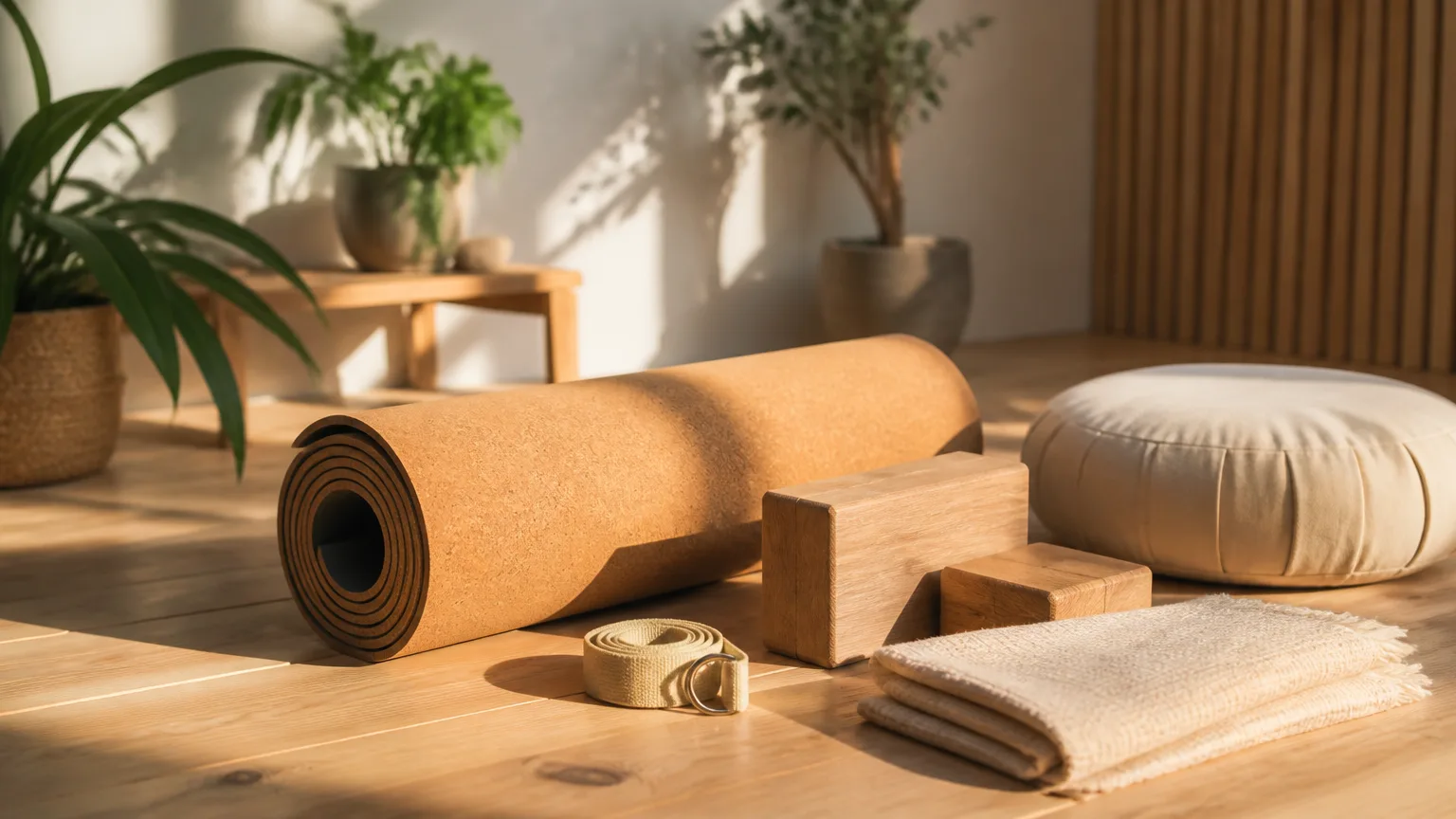
Yoga blocks are useful in standing poses, balances, twists, and seated stretches. Place one beneath your hand in Triangle Pose when the floor feels too far away. You can also sit on a block to lift your hips and create more comfort for meditation or forward folds.
Foam, cork, and wooden blocks each offer a different experience. Foam blocks are lightweight and gently cushioned, making them helpful for restorative poses, travel, and anyone who prefers softer support. Cork blocks are moderately firm, stable, and grippy, which suits standing poses and active practices. Wooden blocks provide the firmest foundation, though they may feel less comfortable beneath sensitive areas.
A yoga strap extends your reach without asking you to force flexibility. Loop it around your feet during hamstring stretches, or hold it between your hands to explore shoulder mobility. A strap can also help maintain alignment in poses such as Cow Face Arms, keeping your shoulders relaxed while your hands gradually move closer.
Use the strap as a guide rather than a tool for pulling harder. It can create space in a pose, support steady breathing, and make longer holds feel more accessible. This is especially helpful when practicing yoga for sacral chakra, where ease and mindful movement matter more than reaching a specific shape.
Bolsters, blankets, and cushions bring comfort to restorative yoga, meditation, and supported seated poses. A bolster beneath the knees can soften the lower back during Savasana. Placing one along the spine can open the chest gently, while a cushion beneath the hips may make sitting upright more sustainable.
Blankets are wonderfully adaptable. Fold one beneath your hips, knees, wrists, or head to adjust height and reduce pressure. During Savasana, place a blanket over your body to help maintain warmth as your muscles relax and your temperature naturally drops.
Consider keeping these essentials nearby:
- Two blocks for balanced support
- One strap with a secure buckle
- A bolster or firm cushion
- One or two washable blankets
Props are not signs of weakness or limited ability. They are adaptable tools that encourage patience, precision, and self-awareness. Whether you practice at home or in a studio, the right support can help you move with greater confidence and care.
3. Clothing and Personal Comfort Essentials
The right clothing helps you move freely, breathe comfortably, and stay present. Choose breathable, nonrestrictive fabrics that feel gentle against your skin and allow a full range of motion. Secure waistbands and supportive underlayers can prevent distractions during inversions, forward folds, and flowing sequences.
Tops should stay in place as you move. A fitted tank, supportive sports bra, or comfortable T-shirt can offer coverage without limiting your breath. Look for leggings, shorts, or joggers that remain secure without digging into your waist. If you are comparing options, an Alo Yoga women sale may help you find practical pieces within your budget.
Layers make yoga gear more adaptable across settings. Keep a lightweight sweatshirt, long-sleeved top, or wrap nearby for cool studios and slower practices. At home, breathable layers can help during warm sessions or changing temperatures. A removable layer is also useful when you travel between practice, errands, and other daily activities.
Most yoga is practiced barefoot for balance and connection with the mat. Still, grippy socks can provide warmth or extra confidence in a cool room. Slip-on shoes or sandals are helpful for moving through the studio, especially when shared spaces require footwear outside the practice area.
Small personal items can make your practice feel smoother. A sweat towel helps with perspiration during vigorous or heated sessions, while a soft headband keeps hair away from your face. Bring a water bottle, and consider packing a change of clothes if you will continue with work, errands, or social plans afterward.
Comfort also includes sensory details. Check whether seams rub, waistbands roll, fabric traps heat, or tags irritate your skin. Durable pieces that wash well often serve you better than clothing chosen only for a logo or changing trend. Your yoga clothing should help you feel secure, focused, and confident in your own practice.
Before class, take a moment to check your personal essentials. Pack any medication, hair ties, glasses case, or menstrual care products you may need. Preparing these items in advance reduces last-minute stress and leaves more space for mindfulness when practice begins.
4. Hygiene, Hydration, and Safety Gear
A thoughtful yoga gear checklist includes more than mats and props. Water, a clean towel, and a few hygiene supplies help you feel comfortable while caring for your body and your practice space.
Bring a refillable water bottle, especially for heated or high-sweat sessions. Hydration needs and heat tolerance vary from person to person, so listen to your body rather than copying someone else’s routine. If you are new to hot yoga for beginners, learn what to expect and allow yourself time to adapt.
A clean hand towel helps manage sweat and keeps your hands, face, and practice area more comfortable. For hot yoga, a nonslip grip towel can add traction over your mat and absorb moisture during flowing sequences. Pack shower essentials, such as soap, shampoo, a change of clothes, and sandals, if you plan to rinse off after class.
At home or in a shared studio, hygiene supports the wider community. Keep mat cleaner nearby and choose a product suitable for your mat’s material. Avoid harsh chemicals that may damage its surface or reduce grip. Hand sanitizer is also useful before and after class, particularly when you share blocks, straps, bolsters, or other equipment.
A washable equipment bag makes cleanup easier. Store damp towels and sweaty clothing separately when possible, then empty and wash the bag regularly. Let mats and towels dry fully before storing them to help prevent lingering odors and bacterial growth.
Safety checks deserve the same attention as cleanliness. Replace a mat that is peeling, cracking, or losing traction. Inspect straps for fraying and blocks for splits, dents, or unstable edges. At home, keep walkways clear and place props where you can reach them without twisting or stepping over clutter.
If a prop feels unfamiliar, ask your instructor to demonstrate safe positioning. Props should support mindful movement, not encourage you to force a deeper shape. People managing injuries, medical conditions, pregnancy, or heat sensitivity may need to modify practice and should consult an appropriate healthcare professional or qualified instructor when needed.
5. Home Practice Setup: Creating a Calm, Functional Space
A thoughtful home practice area can make yoga feel easier to begin and more inviting to return to. You do not need an entire room. A clear section of floor with enough room to extend your arms and legs may be all the yoga gear and space you need.
Start with the floor surface. Choose a level, non-slip area that supports steady movement and comfortable transitions. Hardwood, cork, or low-pile carpet can work well with a suitable yoga mat. Avoid loose rugs, uneven flooring, or surfaces that shift beneath you.
Check the ceiling height before practicing overhead movements. You should have enough clearance for standing stretches, blocks, straps, and any balance work. Leave adequate space around all sides of your mat, especially near walls, furniture, lamps, and sharp corners.
Lighting can shape the mood of your practice. Natural light may help you feel energized, while softer lamps can support evening yoga or restorative poses. Keep lighting bright enough to see your surroundings clearly, and avoid glare that makes it difficult to focus.
Good ventilation also matters. Open a window or use a fan when appropriate, but avoid strong drafts that make muscles feel cold. Aim for a comfortable temperature that suits your practice, whether you are moving gently or building heat through a vigorous flow.
Consider sound and privacy, too. Choose a quieter area when possible, silence phone notifications, and let household members know when you need uninterrupted time. Headphones, a small speaker, or calming music can help, but silence may be the most supportive option for mindfulness.
Keep your yoga gear visible and easy to reach without allowing it to take over the room. A woven basket can hold blocks and blankets, while wall hooks can store straps. A rolling cart or dedicated shelf keeps frequently used items together and can move aside after practice.
Optional items should support awareness rather than create clutter. An eye pillow, meditation cushion, timer, journal, or small altar may help you settle and reflect. Choose only what feels meaningful, and give each item a clear home.
Before every session, scan the space for hazards. Check for slippery surfaces, unstable furniture, pets, loose cords, and objects that could interrupt movement. This brief pause helps create a safer, calmer setting for both short daily practices and longer classes.
6. Studio Practice and the Ideal Yoga Bag Checklist
Studio practice becomes easier when your yoga gear has a simple, repeatable system. Build your bag around the essentials you use most, then add only what supports your comfort, safety, and class experience.
A streamlined studio checklist includes:
- Yoga mat, if the studio does not provide one
- Small towel or full-size mat towel
- Reusable water bottle
- Clean, comfortable clothing
- Personal hygiene items, such as deodorant, wipes, or hand sanitizer
- Hair ties, glasses case, and menstrual care products, as needed
- Any personal prop or accessibility tool you rely on
- Medication or other essential personal items
Before packing, check the studio’s current policies. Some locations provide mats, blocks, straps, blankets, and bolsters. Others expect students to bring their own equipment or charge a rental fee.
Knowing what is available prevents an overfilled bag and avoids surprises at the front desk. It also helps you bring familiar tools when comfort, mobility, or accessibility matters.
Your class format can guide a few small adjustments. For vinyasa, pack a towel with good grip and clothing that allows steady movement. A water bottle is especially helpful during longer or more active sessions.
Restorative classes may use several bolsters, blankets, blocks, and an eye pillow. Many studios provide these props, but you may prefer to bring a clean personal eye pillow or small blanket.
Prenatal classes often offer supportive props, though personal cushions or accessibility tools can make certain positions more comfortable. Chair yoga may require little beyond comfortable clothing and any prescribed mobility aid. Confirm the room setup if you use a wheelchair, walker, or other support.
Heated classes call for breathable clothing, extra water, and a larger towel. Consider a change of clothes, shower items, and a sealed bag for damp garments. Do not assume heat is suitable for every body; follow your healthcare provider’s guidance and tell the instructor about relevant concerns.
Create a reusable packing routine by keeping your studio bag ready between sessions. Place frequently used items in consistent pockets, and restock water, towels, and hygiene supplies after class.
This small habit reduces decision fatigue and helps you arrive feeling prepared instead of rushed. Your yoga gear does not need to be elaborate. It simply needs to support a welcoming, mindful transition into practice.
7. Building a Practical Gear Kit on Any Budget
A thoughtful yoga gear collection begins with the essentials. Start with a reliable mat and comfortable clothing that allows you to move, breathe, and practice without distraction. These two items support nearly every style, whether you practice gentle stretches at home or attend energetic studio classes.
Add props based on your actual needs and preferred styles. Blocks may help with balance, alignment, or reaching the floor. A strap can support mobility work, while a bolster or blanket may make restorative poses more comfortable. You do not need every prop at once. Let your practice show you what would be useful.
Household items can provide safe, temporary substitutes while you decide what to buy. Firm books can raise your hands in standing poses, and folded towels can add gentle support beneath knees or wrists. A firm cushion may replace a bolster for seated practices, while a sturdy belt can offer light assistance in stretches.
Use substitutes carefully and avoid anything slippery, unstable, sharp, or likely to collapse. Books should be stacked securely, and belts should not be used to pull forcefully into a pose. If an item shifts or causes discomfort, stop and choose a more stable option.
When purchasing new equipment, consider value rather than the lowest price or the newest design. Ask whether the item is durable, repairable, made from quality materials, and covered by a useful warranty. Also consider how easily it stores and how often you expect to use it.
A practical buying framework can help you prioritize:
- Buy essentials first: Choose a dependable mat and comfortable clothing.
- Add targeted support: Purchase props that address recurring needs in your practice.
- Test before upgrading: Borrow, rent, or try equipment in class when possible.
- Review long-term value: Consider durability, maintenance, storage, and frequency of use.
- Replace thoughtfully: Upgrade only when an item no longer supports comfort, safety, or consistency.
Online popularity does not always reflect personal usefulness. A trendy mat, matching set, or advanced prop may look appealing, but it can become clutter if it rarely leaves the closet. The best checklist is personal, sustainable, and aligned with steady practice.
If you teach or qualify for savings, a yoga teacher discount may make quality gear more accessible. Still, mindful spending matters more than collecting every available option. Build slowly, care for what you own, and allow your yoga gear to grow alongside your practice.
Frequently Asked Questions About Yoga Gear
What yoga gear does a beginner actually need?
A beginner can start with a yoga mat, comfortable clothing, and a water bottle. A towel can help during sweaty practices, while blocks or a strap may offer helpful support. You can borrow props from a studio or substitute firm books, a belt, or folded blankets at home. Begin simply, then add yoga gear as your practice becomes more consistent.
Is an expensive yoga mat worth it?
Price does not guarantee quality. Consider the mat’s grip, cushioning, durability, and how often you practice. A higher-priced mat may be worthwhile for frequent or heated practice if it stays stable and lasts longer. For occasional sessions, an affordable mat may meet your needs comfortably. Choose based on support and value, not branding alone.
Do I need to bring props to a yoga studio?
First, check the studio’s website or ask what equipment it provides. Many studios offer mats, blocks, straps, and blankets, though supplies may vary by class or location. Personal props can still be worthwhile if you prefer familiar hygiene standards, specific cushioning, or a certain level of support. Bring only what helps you feel prepared.
How often should yoga equipment be cleaned or replaced?
Wipe your mat after sweaty sessions, using a suitable cleaner that will not damage its surface. Let it dry completely before rolling or storing it. Deep-clean mats and washable items according to the manufacturer’s instructions. Replace equipment when it develops a persistent odor, visible cracking, weakened stitching, or unsafe loss of grip.
What should I wear for yoga?
Choose clothing that allows comfortable movement and easy breathing. Stretchy, breathable layers work well for flowing classes, while warmer clothing may suit restorative practice. A secure fit helps prevent waistbands or tops from shifting during inversions and transitions. For heated classes, lightweight moisture-wicking fabrics can improve comfort. Most importantly, wear what helps you feel at ease.
How should I choose props for my practice?
Let your body guide you. Blocks can bring the floor closer, straps can support reach, and blankets can add warmth or cushioning. Use props to create steadiness rather than force a deeper shape. With mindful use, supportive yoga gear can encourage patience, confidence, and a more comfortable practice.
A Yoga Gear Checklist That Supports Your Practice
The best yoga gear supports a steady, comfortable, and mindful routine. Start with the smallest useful setup: a reliable mat, comfortable clothing, water, and any personal essentials you need. Notice what your body and schedule actually require before adding more.
From there, build gradually. Blocks, straps, blankets, bolsters, towels, and supportive cushions can improve comfort, alignment, warmth, and safety. Choose each item for a clear purpose, rather than collecting equipment to match a studio aesthetic or create a complete-looking shelf.
A calm, sustainable practice matters more than owning every accessory. Your gear should make it easier to show up, move with awareness, and adapt to changing energy, space, and experience. Keep items clean, store them where they are easy to reach, and replace worn essentials when they no longer provide dependable support.
Before your next session, review this checklist with a practical mindset. Prepare one ready-to-use home setup or pack a studio bag with your mat, props, towel, water, and personal necessities. When everything has a place, beginning becomes simpler—and each session has more room for presence, balance, and connection.