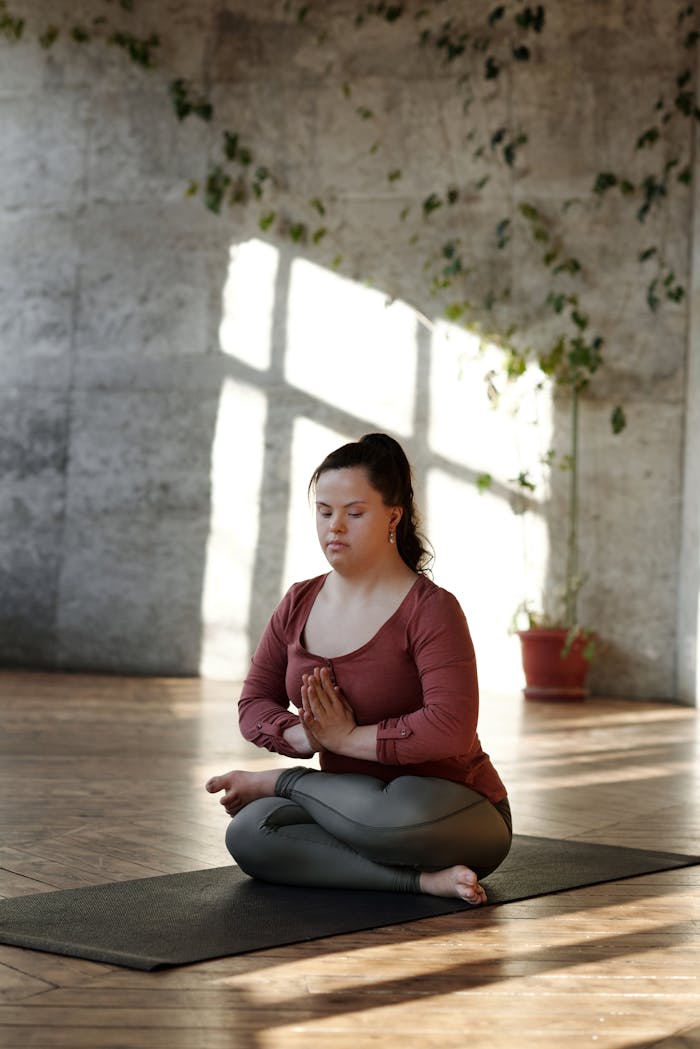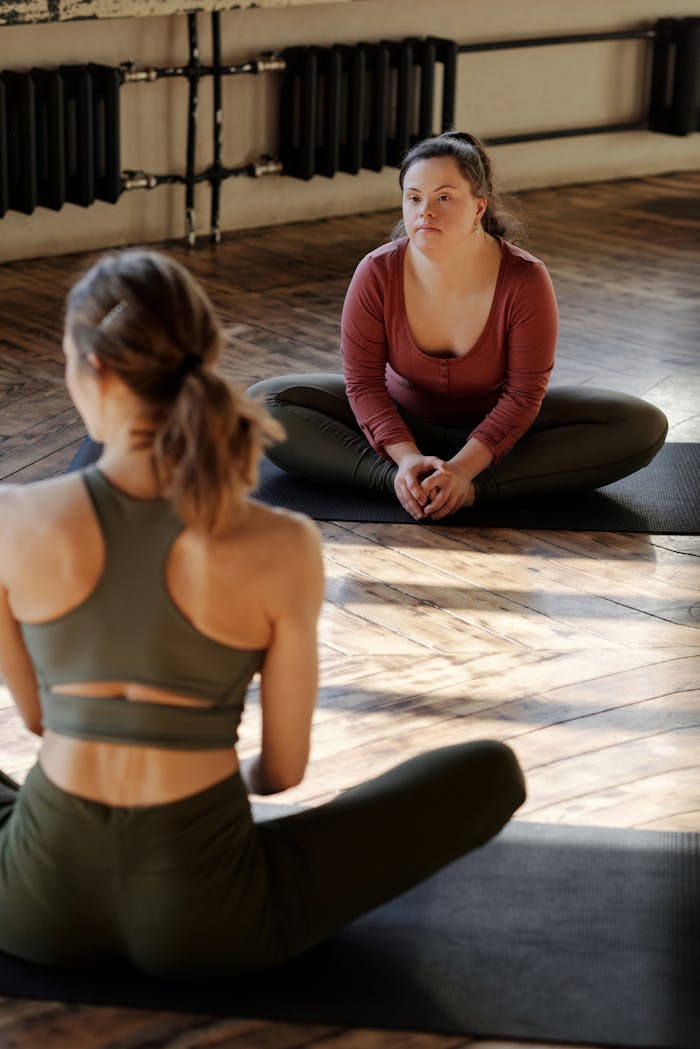
Yoga for root chakra practices invites you to slow down and reconnect with stability, safety, and the physical body. In traditional chakra teachings, Muladhara rests at the base of the spine and relates to the earth element and feelings of security. While these ideas are symbolic rather than medical treatment, they can offer a meaningful focus for mindful movement.
As you explore these grounding poses, move gently and breathe steadily. Feel your feet and legs supporting you, and use a wall or props whenever needed. Beginners can start with a short beginner yoga routine at home before building toward this calming practice.
1. Mountain Pose (Tadasana): Find Your Center
Mountain Pose offers a steady starting point for yoga for root chakra practices. Stand with your feet hip-distance apart, knees relaxed, and heels grounded. Lengthen your spine without stiffening, then breathe naturally and easily.
Notice how your weight spreads across each sole. Avoid gripping your toes or locking your knees. Imagine roots extending from your feet into the earth, or simply picture yourself becoming more stable with each breath.
This standing awareness builds calm before more active poses. For an alignment-focused Anusara yoga approach, let stability feel supportive rather than rigid. Stay for five to ten breaths.
2. Garland Pose (Malasana): Connect With the Earth
Garland Pose invites you into a deep squat that awakens lower-body strength, hip mobility, and a steady connection with the ground. As part of your yoga for root chakra practice, let the earth support you rather than treating the pose as a flexibility test.
Stand with your feet slightly wider than hip-width, then lower slowly. Keep your knees tracking in the same direction as your toes. Avoid forcing depth or aggressively rounding your spine. If your heels lift, place a folded blanket beneath them. You can also sit on a yoga block for added support. Breathe steadily for five to ten breaths, noticing your stability and calm.
3. Warrior I (Virabhadrasana I): Create Steady Strength
From a stable standing base, step one foot back and turn it slightly outward. Bend your front knee over the ankle, keeping it aligned with your toes. Press firmly through both feet, especially the outer edge of your back foot, while lifting your torso with ease.
Let your legs provide a steady foundation as your chest and arms rise. Hold for several breaths, repeating, “I am steady” or “I am supported.” This grounded strength makes Warrior I a meaningful pose in yoga for root chakra practices.
For less intensity, shorten your stance or keep your hands on your hips. Switch sides and notice how purposeful presence grows from a firm connection to the mat.
4. Chair Pose (Utkatasana): Build Rooted Energy
Chair Pose builds steady, rooted energy through the thighs, glutes, and core. Stand with feet hip-width apart, then cue your hips back as if sitting into a chair. Keep your weight toward your heels, chest broad, and breath calm rather than collapsing forward.
Hold for three to five breaths, then stand and rest before repeating. Beginners or anyone with knee sensitivity can use shorter holds and fewer repetitions. This grounding strength supports the root chakra’s stability, unlike the upward, fiery quality often explored through yoga poses for the solar plexus chakra. Notice how controlled heat can coexist with inner calm.
5. Tree Pose (Vrksasana): Practice Balance and Presence
Tree Pose builds physical balance and mental steadiness while keeping you connected to your standing leg. Begin with your lifted toes lightly touching the floor, or place one hand on a wall for support. As you feel ready, bring the sole to your calf or inner thigh—never directly onto your knee.
Choose a fixed point ahead and breathe slowly. If you wobble, notice it without judgment and gently return your attention to your breath and standing foot. Stability does not require perfect stillness; each adjustment becomes part of the grounding practice. Stay for five to eight breaths, then switch sides.
6. Bridge Pose (Setu Bandha Sarvangasana): Support the Base of the Body
Bridge Pose creates a steady, grounding backbend that strengthens the posterior chain. It also draws awareness to your pelvis, legs, and breath, making it a supportive choice for yoga for root chakra practices.
Lie on your back with your knees bent and feet hip-width apart. Press through your feet, engage your glutes moderately, and lift your hips as you inhale. Rise only as high as your neck and lower back remain comfortable, prioritizing steadiness over height.
Keep your arms alongside your body, or place a block beneath your sacrum for a supported, restorative variation. Exhale as you slowly release, noticing your connection to the floor. Repeat for five to eight breaths, moving with calm, unhurried attention.
7. Child’s Pose (Balasana): Rest, Release, and Feel Supported
Close this yoga for root chakra sequence in Child’s Pose, a quiet invitation to soften effort. Kneel, fold forward, and let the floor support your body. Choose wide knees for more space, or rest your chest on a bolster or pillows for comfort.
Relax your forehead and lengthen each exhale. Notice your knees, hands, belly, and forehead meeting the mat or support beneath you. If your hips or knees feel sensitive, adjust your position or come out gently.
Return to Child’s Pose between any of the other six poses whenever you need rest. This pause can complement a mindful practice such as sun and moon yoga, helping you settle your nervous system and reconnect with calm.
Create a Simple Root-Chakra Practice for Everyday Calm
Create a 10- to 20-minute sequence by beginning in Mountain Pose. Move through the standing poses, practice your balancing pose, then finish with Bridge Pose and Child’s Pose. In Child’s Pose, take several quiet breaths and notice the support beneath you.
Consistency matters more than intensity. When appropriate, practice barefoot on a stable surface, and adapt around injuries or medical concerns. You can also explore yoga for flexibility and ease of movement as your practice grows.
Carry this grounding awareness into daily routines. Yoga for root chakra is a reflective wellness practice: stability can grow through breath, body awareness, restorative rest, and dependable everyday rhythms.