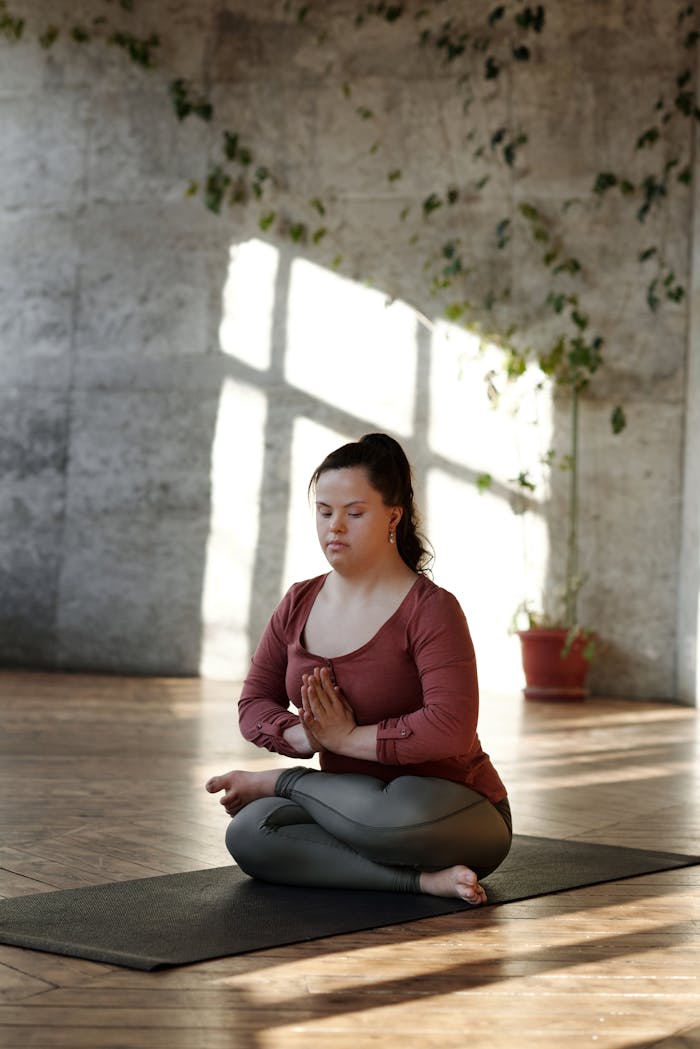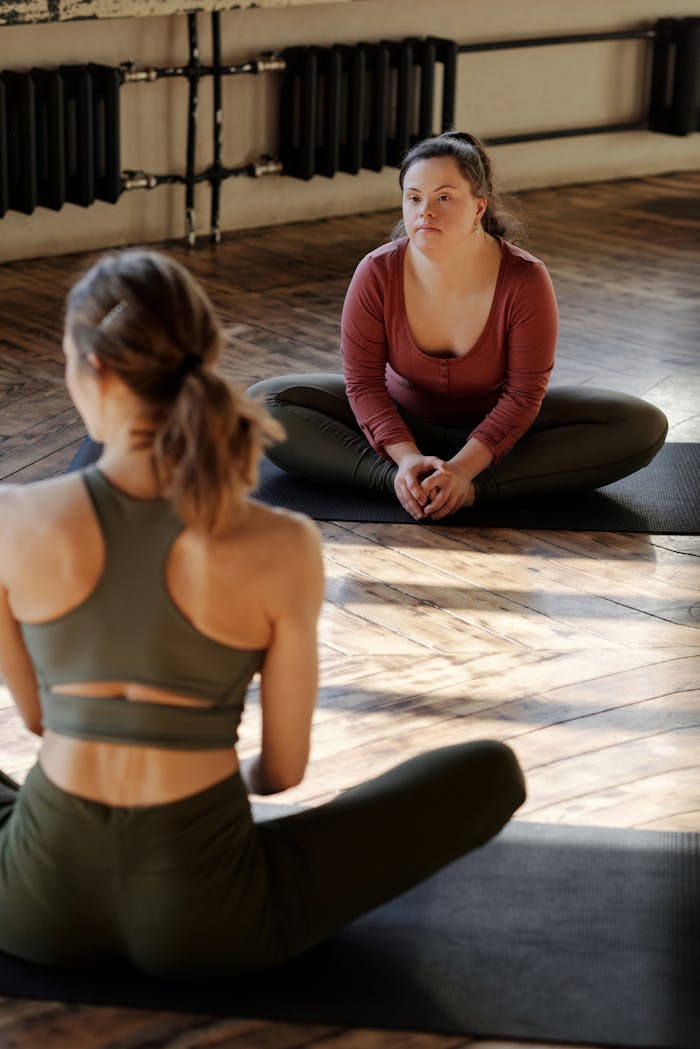
Jnana Yoga, often translated as “the yoga of wisdom” or “the path of knowledge,” is one of the classical paths of yoga. The Sanskrit word jnana means “knowledge,” but not ordinary information gathered from books or opinions. It points to a deep, direct knowing of our true nature.
In simple words, Jnana Yoga asks: Who am I, really?
Am I only this body, which changes from childhood to old age? Am I only my thoughts, which rise and fall like waves? Am I my emotions, my name, my roles, my success, my pain? Or is there something deeper—silent, aware, steady, and sacred—beneath all these changing experiences?
Jnana Yoga is the sincere inquiry into this deepest truth.
In the Bhagavad Gita, a beloved scripture of yoga, Lord Krishna teaches that true wisdom helps us see beyond the temporary and recognize the eternal. He says that the wise see with equal vision, recognizing the same divine essence in all beings. This is not merely a philosophy. It is a way of living with humility, compassion, and clarity.
Jnana Yoga is not cold intellectualism. It is not about feeling superior because one has studied many scriptures. True wisdom softens the heart. It makes us more patient, more loving, and less attached to ego. In this way, Jnana Yoga and bhakti—the path of devotion—are not enemies. They are dear companions.
Wisdom without love can become dry. Love without wisdom can become confused. Together, they help the soul walk steadily toward freedom.
Jnana: Knowledge That Liberates
In yoga, there are many kinds of knowledge. We may know how to cook, work, drive, speak, build, teach, or care for others. These are useful and honorable forms of knowledge.
But Jnana Yoga focuses on liberating knowledge—knowledge that frees us from ignorance, fear, and false identity.
This ignorance is called avidya in Sanskrit. Avidya means “not seeing clearly.” It is the root misunderstanding that says, “I am only this limited body and mind.” From this misunderstanding arise fear, pride, jealousy, craving, and sorrow.
Jnana Yoga gently removes avidya through reflection, contemplation, and direct experience.
Atman: The Inner Self
A key Sanskrit word in Jnana Yoga is Atman. Atman means the true Self—the inner essence, the witnessing consciousness, the light of awareness within us.
The Upanishads, ancient spiritual texts of India, declare that the Atman is not born and does not die. It is not harmed by the changes of life. It is pure, peaceful, and whole.
This does not mean we ignore the human experience. We still care for the body, honor emotions, fulfill duties, and serve others. But we slowly learn that our deepest identity is not limited by these changing layers.
To know the Atman is the heart of Jnana Yoga.
Why Practice Jnana Yoga? The Need for Wisdom in Daily Life
Many people come to yoga seeking peace, healing, strength, or balance. These are beautiful reasons. Yet as we continue, deeper questions may arise.
Why do I suffer even when life seems outwardly good?
Why do I feel incomplete?
Why do I repeat patterns that do not serve me?
Who is the “I” that experiences all of this?
Jnana Yoga helps us explore these questions with sincerity.
It does not demand that we accept beliefs blindly. Instead, it invites careful inquiry, direct observation, and inner honesty. This makes Jnana Yoga practical for people of many backgrounds—religious, spiritual, philosophical, or simply curious.
Wisdom Reduces Suffering
Much of our suffering comes from misidentification. We say:
“I am a failure.”
“I am my anxiety.”
“I am my anger.”
“I am what others think of me.”
“I am my past.”
Jnana Yoga invites us to pause and ask: Is this truly who I am? Or is this something passing through awareness?
When sadness arises, wisdom says, “Sadness is present, but I am the witness of sadness.”
When fear arises, wisdom says, “Fear is here, but awareness is also here.”
When praise or blame comes, wisdom says, “These experiences change, but my deeper Self remains.”
This does not make us emotionless. Rather, it gives us space. In that space, we can respond with grace instead of reacting from old wounds.
Wisdom Supports Devotion
In the spirit of bhakti, we may say: “O Divine, help me see clearly. Help me remember who I truly am. May this knowledge not make me proud, but make me humble.”
Jnana Yoga can deepen devotion because it removes false separateness. When we begin to see the same sacred presence in all beings, our heart naturally becomes more loving.
The Bhagavad Gita teaches that among all seekers, the wise one who is devoted with steady love is very dear to the Divine. This is a beautiful reminder: true jnana is not dry debate. It flowers as devotion.
Wisdom Brings Freedom from Ego
The ego is the sense of “I” built around body, mind, status, memory, and desire. It is not evil; it is a functional tool. We need a healthy sense of self to live in the world.
But when ego becomes our master, we suffer. We defend ourselves constantly. We compare, compete, and crave recognition. We become trapped in the story of “me” and “mine.”
Jnana Yoga helps us see the ego as a passing structure—not the whole truth of who we are. With this insight, humility becomes natural. We do not need to prove ourselves so much. We can serve more freely.
The Scriptural Roots of Jnana Yoga
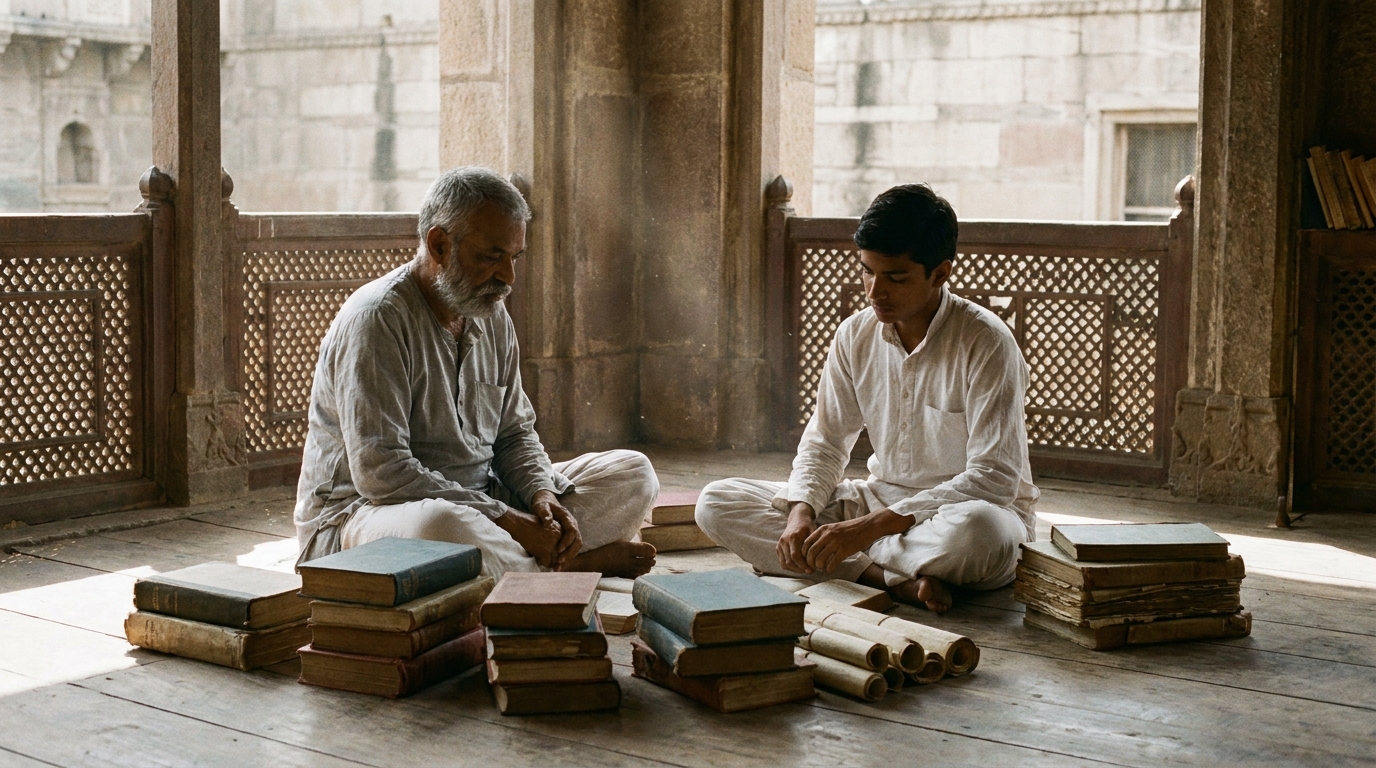
Jnana Yoga is deeply rooted in the wisdom tradition of India. While its insights can be appreciated universally, its classical teachings are preserved in sacred texts such as the Upanishads, the Bhagavad Gita, and later works like the Vivekachudamani, traditionally attributed to Adi Shankaracharya.
These scriptures are not meant only for scholars. They are mirrors for the heart.
The Upanishads: Listening to the Inner Truth
The Upanishads are among the most profound spiritual teachings of the world. The word Upanishad can be understood as “sitting near” a teacher to receive wisdom. This image is tender: a student comes with humility, sits close, and listens.
One of the great declarations of the Upanishads is “Tat Tvam Asi,” meaning “That Thou Art” or “You are That.” In simple terms, it points to the unity of the individual Self with the Supreme Reality.
Another declaration is “Aham Brahmasmi,” meaning “I am Brahman.” Brahman is the infinite, absolute reality—the divine ground of all existence. This statement is not an ego claim. It does not mean, “My personality is God.” It means that beyond the limited personality, the true Self is not separate from the infinite.
Such teachings should be approached with reverence, not arrogance. They are not slogans for self-importance. They are invitations to dissolve the false self and awaken to sacred unity.
The Bhagavad Gita: Wisdom in the Midst of Life
The Bhagavad Gita takes place on a battlefield, where Arjuna, a sincere but troubled warrior, is overwhelmed by confusion. Lord Krishna guides him through paths of action, devotion, meditation, and knowledge.
This setting is meaningful. Wisdom is not only for caves, temples, or quiet retreats. It is for the battlefield of daily life—family responsibilities, moral choices, grief, work, uncertainty, and inner conflict.
Krishna teaches Arjuna to discern between the eternal and the temporary. The body changes, but the Self is not destroyed. Pleasure and pain come and go, but the wise learn to remain steady.
For modern seekers, this means we can practice Jnana Yoga while caring for children, working jobs, navigating relationships, and serving our communities. The path of wisdom belongs in real life.
Viveka and Vairagya: Discernment and Non-Attachment
Two important qualities in Jnana Yoga are viveka and vairagya.
Viveka means discernment—the ability to distinguish between the real and the unreal, the lasting and the temporary, the helpful and the harmful.
Vairagya means non-attachment or dispassion. It does not mean rejecting life or becoming cold. It means enjoying what comes with gratitude, while remembering that nothing temporary can give permanent fulfillment.
For example, a loving relationship is precious. But if we demand that another person be the source of our entire identity and happiness, suffering follows. Vairagya helps us love more purely, without clinging.
Discernment and non-attachment together make the mind peaceful and ready for deeper realization.
Check out the latest yoga guides on yoga guides for helpful tips and advice.
How to Practice Jnana Yoga: A Practical Guide

Jnana Yoga may sound lofty, but it can be practiced in simple, steady ways. Like all yoga, it requires sincerity, patience, and grace.
Traditionally, Jnana Yoga includes three main steps: shravana, manana, and nididhyasana.
Shravana: Listening to Wisdom
Shravana means “listening” or “hearing.” This is the first step. We listen to teachings that point toward truth.
This may include reading the Upanishads, studying the Bhagavad Gita, listening to a qualified teacher, joining satsang, or reflecting on sacred wisdom from your own tradition.
Satsang means “company of truth” or “gathering with the wise.” It can be a formal spiritual gathering, but it can also be any environment that uplifts your consciousness and reminds you of your highest self.
Practical ways to practice shravana:
- Read a few verses of the Bhagavad Gita each morning.
- Listen to a thoughtful teaching while walking or commuting.
- Study with humility, not to win arguments, but to become free.
- Keep a notebook of insights that touch your heart.
- Pray before study: “May I understand what is true and live it with love.”
The attitude matters. In bhakti, we approach wisdom as a sacred gift, not as a possession.
Manana: Reflecting Deeply
Manana means reflection. After hearing the teachings, we think deeply about them. We ask: Is this true in my experience? How does this apply to my life? What assumptions am I carrying?
For example, if a scripture teaches, “You are not the body,” we do not simply repeat it. We reflect.
The body has changed since childhood. Yet something in us says, “I was there.” Thoughts change. Emotions change. Roles change. But awareness remains present through all changes.
Manana turns borrowed wisdom into personal understanding.
Practical reflection questions:
- What in my life is changing?
- What is aware of these changes?
- Am I my thoughts, or am I aware of my thoughts?
- What do I cling to for identity?
- What would remain if praise and blame both passed away?
- How can this insight make me kinder today?
Manana should be honest but gentle. We are not trying to force realization. We are preparing the mind to see clearly.
Nididhyasana: Meditation on Truth
Nididhyasana means deep contemplation or meditation. It is the quiet resting in truth after listening and reflecting.
In this practice, we sit calmly and turn attention inward. We may contemplate a statement such as:
“I am the witness of thoughts.”
“I am awareness.”
“The Self is peaceful and whole.”
“Not this, not this.”
The phrase “Neti, Neti” means “not this, not this.” It is a classical method from the Upanishads. We observe whatever appears—body sensation, thought, memory, emotion—and gently recognize: this is observed, so it is not the ultimate Self.
Not this body alone.
Not this thought alone.
Not this emotion alone.
Not this role alone.
What remains? Silent awareness.
This awareness is not something we create. It is already present. Jnana Yoga helps us notice it.
Self-Inquiry: Asking “Who Am I?”
A central practice of Jnana Yoga is Self-inquiry, often associated with the sage Ramana Maharshi. The question “Who am I?” is not meant to produce a verbal answer. It is meant to turn the mind back toward its source.
When a thought arises, ask: To whom has this thought appeared?
The answer may come: To me.
Then ask: Who am I?
Again and again, gently return to the sense of “I.” Not the story of I, not the biography of I, but the felt sense of being.
This practice can be subtle. It is best approached with patience and humility. If it becomes dry or tense, soften with prayer, breath, or chanting.
Living Jnana Yoga in the Modern World
The path of wisdom is not separate from ordinary life. Every day gives us opportunities to practice discernment, non-attachment, and remembrance of the Self.
Jnana Yoga becomes powerful when it leaves the meditation cushion and enters speech, relationships, work, and service.
Practicing Wisdom in Relationships
Relationships are sacred classrooms. They reveal our attachments, fears, expectations, and ego patterns.
When conflict arises, Jnana Yoga invites us to pause and ask:
“What identity am I defending?”
“What story am I believing?”
“Can I see this person as more than their behavior?”
“What response would come from the deeper Self?”
This does not mean tolerating harm or avoiding boundaries. Wisdom includes clarity. Sometimes love says yes; sometimes love says no. Jnana Yoga helps us act from truth rather than reactivity.
In devotional spirit, we may silently pray: “May I see the Divine in this person, even if I must respond firmly.”
Practicing Wisdom at Work
Work often strengthens identification with achievement. We may believe, “I am my job title,” “I am my productivity,” or “I am my success.”
Jnana Yoga reminds us that work is an offering, not our ultimate identity.
The Bhagavad Gita teaches karma yoga, the yoga of selfless action: perform your duty with sincerity, but release attachment to the results. This teaching supports Jnana Yoga beautifully. When we let go of outcome-obsession, the ego loosens, and wisdom grows.
Before beginning work, you might pause and say:
“May this work be useful. May I serve through my actions. May I remember that my worth is deeper than success or failure.”
This simple practice can transform daily labor into yoga.
Practicing Wisdom with Emotions
Some people misunderstand Jnana Yoga as denying emotions. But true wisdom does not suppress the heart. It witnesses emotions with compassion.
If anger arises, we do not say, “I am spiritual, so I should not feel anger.” Instead, we observe: “Anger is present.” We breathe. We listen. We ask what the anger is protecting. Then we choose a wise response.
If grief arises, we do not rush to say, “The Self is eternal, so grief does not matter.” Grief is part of human love. We allow tears, while also remembering the deeper presence that holds them.
Jnana Yoga gives us both tenderness and perspective.
Common Misunderstandings About Jnana Yoga
Because Jnana Yoga deals with knowledge and inquiry, it can be misunderstood. Let us gently clarify a few common confusions.
Misunderstanding 1: Jnana Yoga Is Only for Intellectuals
Jnana Yoga is not reserved for philosophers, monks, or scholars. It is for anyone who sincerely wants truth.
A person with little formal education may have deep wisdom. A person with many degrees may still be trapped in ego. The real qualification is humility, sincerity, and longing for liberation.
Scriptures can guide us, but the heart must digest their meaning.
Misunderstanding 2: Jnana Yoga Rejects Devotion
Some imagine that Jnana Yoga and Bhakti Yoga are separate and opposed. Yet many great teachers have shown that wisdom and devotion enrich each other.
When we inquire deeply, we discover that the separate ego is not our true nature. This discovery opens the heart. We become grateful for the mystery of existence. We bow inwardly.
Bhakti says, “I belong to the Divine.”
Jnana says, “My true Self is not separate from the Divine.”
These are two ways of approaching the same sacred truth.
Misunderstanding 3: Non-Attachment Means Not Caring
Vairagya, or non-attachment, does not mean indifference. It means freedom from clinging.
A non-attached person can love deeply, serve sincerely, and care responsibly. In fact, because they are less controlled by fear and possessiveness, their love may become more spacious and compassionate.
Non-attachment says: “I will love, but I will not imprison. I will serve, but I will not demand control. I will act, but I will surrender the fruits.”
Misunderstanding 4: “I Am Awareness” Means I Can Avoid Responsibility
True Jnana Yoga never supports spiritual bypassing. Spiritual bypassing means using spiritual ideas to avoid emotional healing, ethical responsibility, or compassionate action.
If someone says, “I am not the body, so I do not need to care for my health,” that is not wisdom. If someone says, “Everything is one, so my actions do not matter,” that is not wisdom.
Authentic realization makes us more responsible, not less. If the same Self shines in all beings, then kindness, honesty, and service become natural.
A Simple Daily Jnana Yoga Practice
The path of wisdom grows through regular practice. Even ten or fifteen minutes a day can begin to transform the mind.
Here is a simple daily structure you can adapt to your life.
Morning: Begin with Remembrance
Sit quietly for a few minutes after waking. Place one hand on the heart if that feels natural.
Take three slow breaths.
Offer a simple prayer:
“May I see clearly today. May my thoughts, words, and actions be guided by truth. May wisdom make me humble and loving.”
Then reflect:
“I am aware of the body. I am aware of thoughts. I am aware of emotions. I rest as awareness.”
Do not force anything. Simply notice.
Midday: Practice Discernment
During the day, pause when you feel stress or reactivity.
Ask:
“What am I believing right now?”
“Is this thought absolutely true?”
“What is changing, and what is aware of the change?”
“What action would be aligned with truth and compassion?”
This brings Jnana Yoga into practical life. Wisdom becomes a living companion.
Evening: Reflect and Release
Before sleep, spend a few minutes reviewing the day.
Where did ego take over?
Where did wisdom shine?
Where did you remember the deeper Self?
Where did you forget?
Do this without harsh judgment. The path is walked gently.
You may close with:
“All actions of this day, I offer to the Divine. May any mistakes become learning. May all beings be blessed.”
This devotional attitude protects Jnana Yoga from becoming self-centered.
How Else Can Jnana Yoga Be Integrated with Other Paths?
Yoga is generous. It offers many doors for different temperaments. Jnana Yoga can be practiced alongside Bhakti Yoga, Karma Yoga, Raja Yoga, and Hatha Yoga.
Each path supports the others.
Jnana and Bhakti Yoga: Wisdom with Love
Bhakti Yoga is the path of devotion—loving surrender to the Divine. This may take the form of prayer, chanting, worship, gratitude, or heartfelt remembrance.
For some seekers, Self-inquiry may feel too abstract at first. Devotion softens the mind and opens the heart. Chanting a mantra, singing kirtan, or praying to a beloved form of the Divine can prepare us for deep wisdom.
A mantra is a sacred sound or phrase used for meditation. For example, Om is considered a primordial sound pointing to the wholeness of reality.
Through bhakti, we learn humility. Through jnana, we learn clarity. Together, they guide us like two wings of a bird.
Jnana and Karma Yoga: Wisdom in Action
Karma Yoga is the path of selfless action. It teaches us to act with sincerity while offering the results to the Divine.
This is very helpful for Jnana Yoga because ego often hides in spiritual practice. We may think, “I am becoming wise,” or “I understand more than others.” Karma Yoga purifies this pride through service.
Serving others reminds us that wisdom is not for personal decoration. It is for the healing of life.
You can practice Karma Yoga by:
- Helping someone without expecting praise.
- Doing your work as an offering.
- Volunteering in your community.
- Caring for family members with patience.
- Speaking kindly when it would be easier to be harsh.
When action is purified, the mind becomes clearer for knowledge.
Jnana and Raja Yoga: Meditation and Mental Discipline
Raja Yoga, often associated with the Yoga Sutras of Patanjali, emphasizes meditation, ethical living, concentration, and mastery of the mind.
Jnana Yoga requires a calm and steady mind. If the mind is constantly restless, inquiry becomes difficult. Practices such as breath awareness, meditation, and ethical disciplines help prepare the inner field.
Patanjali describes yoga as the stilling of the fluctuations of the mind. When the mind becomes quiet, the seer rests in its true nature. This teaching harmonizes beautifully with Jnana Yoga.
Jnana and Hatha Yoga: Embodied Wisdom
Hatha Yoga includes physical postures, breathing practices, and energetic balance. While Jnana Yoga focuses on inquiry, the body can support the journey.
A tense, unhealthy, or agitated body may make meditation harder. Gentle asana, or yoga postures, can help release restlessness. Pranayama, or breath practice, can calm the nervous system.
Embodied practice also prevents Jnana Yoga from becoming too mental. As we move, breathe, and observe sensations, we learn: “I am aware of the body, yet I am more than the body.”
The body becomes a temple, not a prison.
The Inner Qualities Needed for Jnana Yoga
Jnana Yoga is simple, but not always easy. It asks for honesty and steadiness. Traditional teachings often describe certain qualifications that prepare the seeker.
These qualities are not meant to discourage anyone. They are like seeds we can water over time.
Humility
Humility is essential. Without humility, knowledge becomes ego’s ornament.
A humble seeker does not pretend to know what they do not know. They are willing to learn, question, bow, and grow. They honor teachers, scriptures, and fellow seekers without losing discernment.
In the devotional mood, we remember: whatever wisdom comes is grace.
Patience
Jnana Yoga may challenge deep habits of identity. We have believed in the separate self for a long time. Naturally, the mind may resist.
Be patient. Insight often comes gradually. Sometimes there are glimpses of peace; sometimes confusion returns. This is normal.
Keep returning.
Sincerity
Sincerity means we truly want freedom, not merely spiritual appearance. We are willing to see our attachments, fears, and self-deceptions.
A sincere seeker asks not only, “What is the truth?” but also, “Am I willing to live it?”
Compassion
As wisdom deepens, compassion should grow. If our practice makes us judgmental, something is unbalanced.
Seeing the same Self in all beings, we become more tender toward the struggles of others. Everyone is seeking happiness. Everyone is trying, in their own way, to come home.
Obstacles on the Path of Wisdom
Every path has obstacles. Knowing them helps us walk with awareness.
Overthinking
Because Jnana Yoga uses inquiry, the mind may turn it into endless analysis. But Self-realization is not reached through thought alone. Thought can point, but silence must reveal.
If you find yourself trapped in mental loops, return to the breath. Chant a mantra. Walk in nature. Serve someone. Let wisdom become embodied.
Spiritual Pride
Spiritual pride is subtle. It may whisper, “I know more than others,” or “I am beyond ordinary people.”
This is a sign to return to humility. True wisdom bows before the mystery. The more deeply we see, the less we need to prove.
Emotional Avoidance
Some seekers use the idea “I am not the mind” to avoid healing emotional wounds. But unprocessed pain can continue influencing behavior.
Jnana Yoga does not forbid therapy, honest conversation, or emotional work. These can support the path. The witness can lovingly include all parts of our humanity.
Lack of Guidance
Scriptures on non-duality and Self-inquiry can be profound and subtle. Without guidance, misunderstanding may arise.
When possible, study with a trustworthy teacher or community. A good teacher does not create dependency. They point you back to truth, humility, and direct seeing.
The Fruit of Jnana Yoga: Freedom, Peace, and Loving Vision
The fruit of Jnana Yoga is moksha, liberation. Moksha means freedom from ignorance and bondage. It is the recognition of the true Self beyond the changing body-mind identity.
This freedom may not always appear as dramatic visions or mystical experiences. Often, it appears quietly.
Less fear.
Less clinging.
Less need to control.
More peace.
More compassion.
More spaciousness.
More trust in the Divine order of life.
The wise person still lives in the world, but inwardly they are free. Pleasure and pain may come, but they do not completely shake the foundation. Praise and blame may arise, but they do not define the Self.
Seeing the Divine in All
One of the most beautiful fruits of Jnana Yoga is equal vision. The Bhagavad Gita describes the wise as seeing the same reality in a learned person, a cow, an elephant, a dog, and one who is socially outcast.
This teaching is radical and deeply compassionate. It asks us to look beyond social labels and honor the sacred essence in all beings.
In daily life, this may mean speaking respectfully to everyone, caring for animals, serving the vulnerable, and questioning prejudices within ourselves.
Wisdom becomes love in action.
Resting in the Witness
As practice deepens, we begin to rest more naturally as the witness—the awareness in which experiences arise and pass.
This witness is not distant or uncaring. It is spacious presence. It allows life to unfold while remaining rooted in peace.
We may still laugh, cry, work, love, and grieve. But we know, even faintly, that we are held by something deeper than all passing waves.
Walking the Path with a Soft Heart
Jnana Yoga is the path of wisdom, but its fragrance is humility. It invites us to question false identity, discern the eternal from the temporary, and awaken to the Self that is peaceful, luminous, and free.
Yet we do not need to rush. We do not need to pretend realization. We begin where we are.
Read one verse.
Sit for one breath.
Ask one honest question.
Release one false belief.
Serve one person with love.
Remember, just once more, that you are more than the changing mind.
The path of Jnana Yoga is not about becoming special. It is about seeing what has always been true. Beneath the noise, beneath the fear, beneath the many names and forms, there is awareness. There is presence. There is the sacred.
May this wisdom not harden us, but soften us.
May it not separate us, but unite us.
May it not inflate the ego, but dissolve it in truth.
May all seekers, of every background and path, be blessed with clarity, compassion, and inner freedom.
FAQs
What is Jnana Yoga?
Jnana Yoga is one of the four main paths of yoga, focusing on the path of knowledge and wisdom. It involves the study and contemplation of philosophical and spiritual texts to gain self-realization and understanding of the true nature of the self.
What are the key principles of Jnana Yoga?
The key principles of Jnana Yoga include self-inquiry, discrimination between the real and the unreal, detachment from worldly desires, and the pursuit of knowledge and wisdom through study and contemplation.
How is Jnana Yoga practiced?
Jnana Yoga is practiced through the study of sacred texts, such as the Bhagavad Gita, Upanishads, and other philosophical and spiritual writings. It also involves self-reflection, meditation, and contemplation to gain a deeper understanding of the self and the nature of reality.
What are the benefits of practicing Jnana Yoga?
Practicing Jnana Yoga can lead to self-realization, inner peace, and a deeper understanding of the true nature of the self and the universe. It can also help individuals develop a more discerning and philosophical outlook on life.
Who can practice Jnana Yoga?
Jnana Yoga is suitable for individuals who have a strong intellectual and philosophical inclination, and who are drawn to the pursuit of knowledge and wisdom. It is open to people of all backgrounds and belief systems who are interested in self-inquiry and spiritual growth.