Partner yoga poses invite you to slow down, listen closely, and move together. Rather than practicing alone, you share each breath, adjustment, and moment of balance with someone else. The result can be a playful, grounding experience that strengthens trust and mindful connection.
This practice is not a performance or a test of flexibility. You do not need to achieve the deepest shape or match your partner perfectly. The goal is cooperation: communicating clearly, respecting boundaries, and noticing how your movements affect each other.
In this guide, you’ll explore ten accessible poses for couples, friends, family members, or any trusted practice partner. Each pose includes practical modifications and safety cues to help you find a comfortable starting point. Keep your movements steady, agree on signals for pausing, and remember that support should always feel mutual.
Partner yoga can also deepen a romantic relationship, but it is not limited to couples. If you’re specifically looking for practices to share with a partner, explore these couples yoga poses for more ideas. Wherever you begin, approach this practice with curiosity and patience. Every wobble, laugh, and successful transition becomes part of the connection you’re building together.
How to Practice Partner Yoga Safely and Mindfully
Before exploring partner yoga poses, create a setting that supports focus and ease. Choose a clear, level surface with enough room to move without bumping into furniture. Wear comfortable clothing that allows free movement, and keep optional props nearby. A yoga gear checklist can help you prepare without overcomplicating your practice.
Begin with a few minutes of shared breathing. Notice each other’s rhythm without trying to make it match. Then add gentle joint movements, such as shoulder rolls, wrist circles, and ankle rotations. Finish with simple solo stretches, allowing the body to warm gradually before adding support, weight, or balance.
Clear communication is central to practicing together. Before each pose, agree on simple cues, including “ready,” “more pressure,” “less,” “stop,” and “come out.” Speak calmly and listen closely. Either partner can pause or end the pose at any time, without needing to explain or apologize.
Consent should remain active throughout the practice. Check in before increasing pressure, changing positions, or adding a new challenge. A quiet hesitation, tense breath, or uncertain response is a reason to pause and reconnect.
Move slowly, especially when one partner supports the other. Never force a range of motion, pull suddenly, or balance on an unstable base. Keep your weight grounded and make transitions deliberate. If a pose feels unsteady, return to a simpler version or come out together.
Finally, treat pain as information, not proof that a pose is working. Stop with sharp, pinching, or persistent pain, and rest when either partner feels tired or overwhelmed. Trust grows through patience, respect, and the freedom to practice at each person’s pace.
1. Seated Partner Breathing
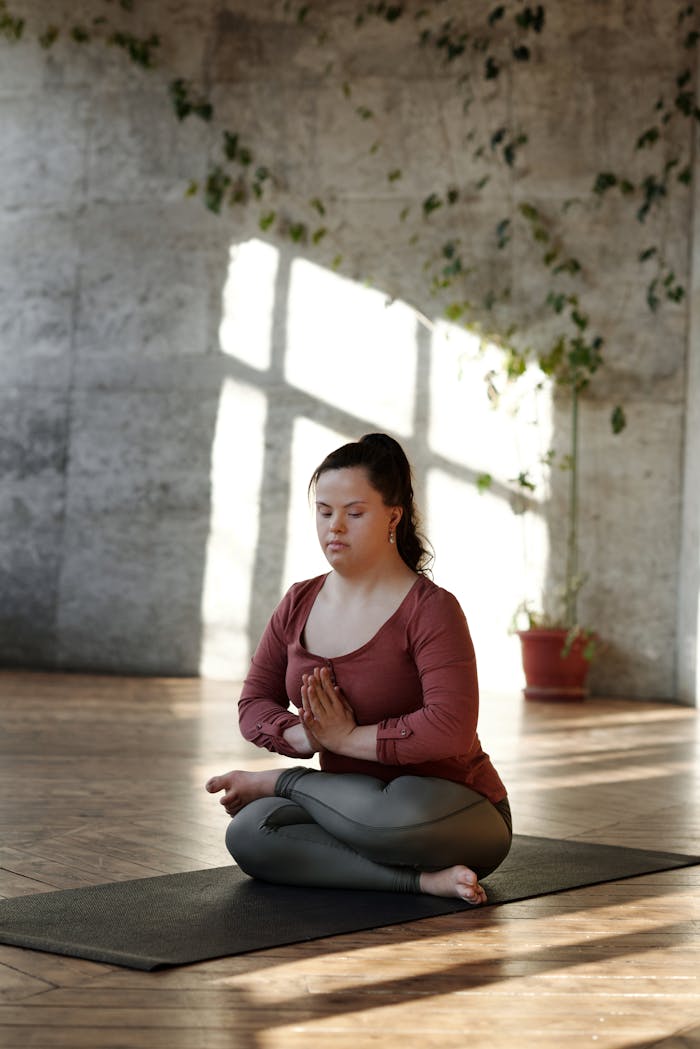
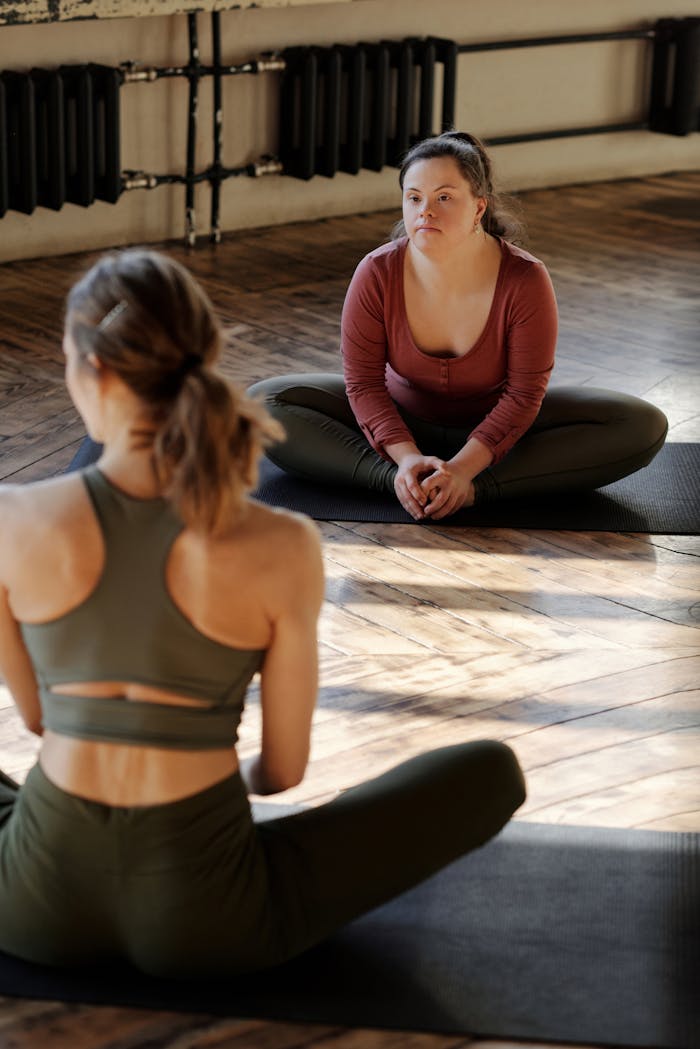
Begin with a simple grounding exercise before exploring more active partner yoga poses. Sit back-to-back or face-to-face in a comfortable cross-legged position. Lengthen your spine, relax your shoulders, and let your hands rest easily.
Notice your own breathing first. If you’re sitting back-to-back, feel the gentle movement of your partner’s breath through their spine. If you’re facing one another, soften your gaze and observe each other’s rhythm without trying to change it.
After a few natural breaths, gradually settle into shared inhales and exhales. One partner might quietly lead the pace, while the other follows. Keep the rhythm comfortable, allowing your breathing to shift naturally rather than forcing perfect synchronization.
Pause for a brief check-in. Ask how the pace feels, whether the position is comfortable, and what physical sensations each person notices. This simple conversation helps both partners feel heard and supported.
Seated breathing establishes trust through presence rather than performance. It offers a calm transition into movement, helping you notice one another before balance and coordination become part of the practice. Stay here for one to three minutes, or longer if you both feel relaxed and connected.
2. Partner Seated Forward Fold
After seated breathing, turn toward one another and extend your legs comfortably. Let the soles of your feet touch, or keep a little space between you if that feels better. Hold hands or gently connect at the forearms, then lean back gradually to create a supportive counterbalance.
As one partner leans back, the other may naturally fold forward from the hips. Move slowly and use nonverbal feedback, such as softening your grip or pausing, to communicate what feels comfortable. The goal is to lengthen the spine and hamstrings, not to pull, yank, or compete for greater flexibility.
Keep your chest broad and your breath steady. Avoid rounding aggressively through the back or forcing your partner deeper. In these partner yoga poses, patience matters more than range of motion. A small, shared movement can build more trust than a dramatic stretch.
If either of you has tight hamstrings or lower-back sensitivity, bend your knees and stay more upright. You can also hold a strap between you instead of reaching for hands or forearms. Support the movement with your core, and come out together by releasing the connection slowly. Stop with sharp, pinching, or persistent pain, and rest whenever either partner feels tired or overwhelmed.
3. Double-Tree Pose
Double-Tree Pose invites you and your partner to practice balance side by side. Stand close together, facing the same direction, and connect your nearest hands. Keep your other arm relaxed by your side or place it on your hip.
Shift your weight into your outer foot. Then place the sole of your opposite foot against your inner calf or ankle. Avoid pressing into the knee joint. Your connected hands should offer light support, not hold each other up completely.
Fix your gaze on a steady point ahead. Breathe slowly and notice how your balance changes with each breath. Your joined hands become a communication point, helping you make small adjustments without pulling or leaning heavily.
If standing on one leg feels challenging, keep both feet grounded. Stay tall, soften your shoulders, and practice matching your breathing. This accessible version still builds shared focus and connection, making it one of the most welcoming partner yoga poses for beginners.
Hold for three to five breaths, or longer if both partners feel steady. Lower your raised foot gently, pause, and switch sides so the practice remains even. Wobbling is natural; respond with patience rather than tension. If either partner feels tired, return to both feet on the floor and rest.
4. Partner Chair Pose
Partner Chair Pose is a supported strength exercise that builds trust through shared timing and steady effort. Stand back-to-back, with your heels a comfortable distance from your partner’s feet. Slowly walk both feet slightly forward, keeping your backs gently connected.
Agree on a clear count before moving. Together, bend your knees and lower toward an imaginary chair, keeping your spines supported and your weight distributed evenly. Move gradually rather than dropping into the pose. Keep both feet active, with the heels grounded and the toes relaxed.
As you lower, guide your knees in line with your toes. Avoid letting them collapse inward or drift too far forward. Your partner’s back can offer useful feedback, but it should not carry all your weight. Communicate if the pressure feels uneven or uncomfortable.
Hold the pose for two to five breaths, or choose a shorter stay while you build strength. If balance feels uncertain, place a wall behind one partner for extra support. You can also stop at a higher position before the thighs become fatigued enough to compromise control.
When you are ready to rise, count together and press through both feet. Straighten your legs slowly while maintaining gentle back contact. Pause upright before stepping your feet back, giving each partner time to reset. Among partner yoga poses, this one reminds you that connection grows through listening, pacing, and shared support.
5. Double Warrior II
Double Warrior II brings a familiar standing pose into a shared practice. Stand beside your partner with enough space to extend your arms safely. Match a wide stance, then bend your front knee while keeping your back leg strong. You can face opposite directions or the same direction, depending on your space and comfort.
Set up slowly and notice how your alignment supports the pose. Keep your front knee tracking toward your toes, rather than collapsing inward. Ground the outer edge of your back foot and distribute your weight evenly. Relax your shoulders, then extend your arms without forcing the reach.
Once you feel steady, begin matching your breath. Inhale as you lengthen through the spine, and exhale as you soften into the stance. You might offer a quiet word of encouragement, such as “steady” or “you’ve got this,” while honoring each person’s pace.
If it feels comfortable, meet your partner’s eyes briefly. Let that moment create connection, then return your attention to your breath and personal alignment. Among partner yoga poses, Double Warrior II shows that support does not require constant contact. Sometimes, simply moving together and staying present is enough.
Hold for three to five breaths, then straighten your front leg slowly. Turn or step carefully before repeating on the opposite side. If either partner feels strain, shorten the stance, reduce the bend, or rest with both feet grounded.
6. Partner Boat Pose
Partner Boat Pose brings both partners into a shared seated balance. It strengthens the core while inviting honest communication about grip, leg extension, and effort.
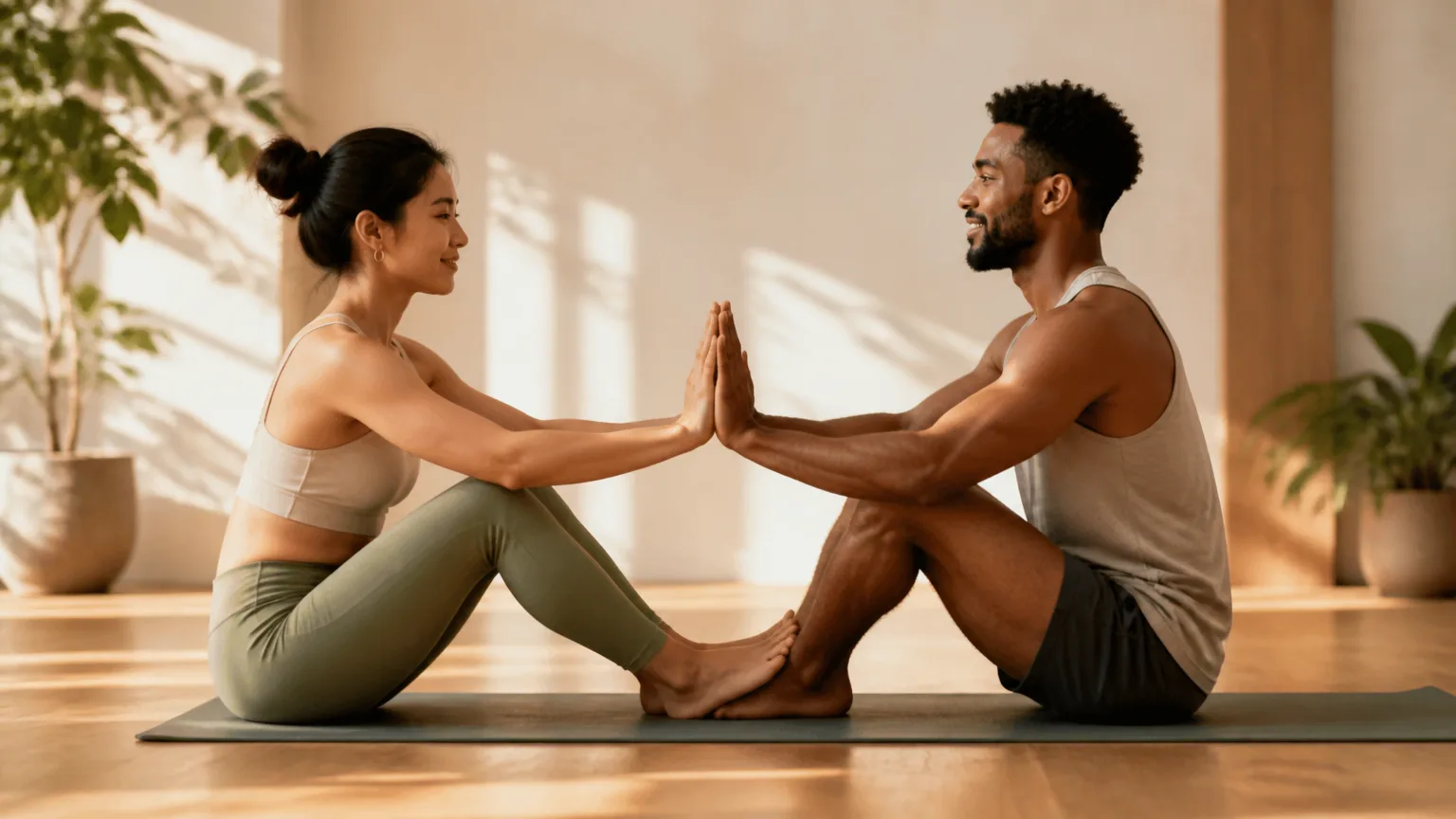
Sit facing each other with your knees bent. Connect the soles of your feet, then hold hands or wrists with a comfortable, steady grip. Check in before moving: Is the connection supportive? Does either partner need more space?
Together, gradually extend your legs and lift your feet. Keep your chests open and your spines long as you balance. Your legs do not need to become completely straight. A bent-knee version is still effective, especially while you learn the timing.
Focus on steady breathing rather than creating a perfect shape. One partner may naturally have tighter hamstrings or less balance. Adjust the angle of your legs, soften your grip, or keep one foot closer to the floor when needed. In partner yoga poses, shared awareness matters more than matching every detail.
Hold for three to five breaths, or less if your bodies begin to strain. Speak clearly if you need to lower your feet, change your grip, or pause. Stop with sharp, pinching, or persistent pain, and rest if either partner feels tired or overwhelmed.
To exit, bend your knees together and lower your feet slowly. Release the hand or wrist connection only after both partners feel stable. Pause in a comfortable seated position instead of dropping suddenly, and notice the calm, grounded feeling you created together.
7. Double Downward-Facing Dog
Double Downward-Facing Dog can create a playful sense of teamwork, but it requires careful preparation. Begin with the side-by-side version, where both partners practice Downward-Facing Dog next to each other. Keep your hands aligned, press evenly through your palms, and match your breathing without touching.
This version suits many practitioners and helps you learn the pose’s shape together. Keep your feet hip-distance apart, lengthen your spines, and soften your knees as needed. Notice how shared timing can build connection without adding physical risk.
The stacked variation is much more advanced. One partner holds a strong Downward-Facing Dog while the other carefully places their feet on the supporting partner’s lower back or hips. Attempt this only with adequate strength, stability, clear communication, and close supervision from a qualified yoga teacher.
Never jump into position. The top partner should approach slowly, placing one foot at a time only after the supporting partner confirms they are ready. The supporting partner should communicate continuously, especially if the pressure feels uneven or uncomfortable.
Avoid this variation if either partner has wrist, shoulder, neck, or blood-pressure concerns unless a qualified professional has cleared the practice. When in doubt, stay with the side-by-side version. Among partner yoga poses, this one should prioritize trust and control over performance.
To exit, the top partner steps down slowly, one foot at a time. Both partners then lower their knees and rest. Stop immediately with pain, dizziness, shaking, or uncertainty, and choose a simpler version whenever needed.
8. Partner Plank and Supported Tabletop
Face each other in high plank, with hands beneath your shoulders and feet comfortably apart. For a gentler beginning, lower both knees into tabletop while keeping your spine long and your hips steady.
Once you feel stable, try a controlled hand tap. Lift one hand, tap your partner’s opposite hand, and return it to the floor before switching sides. You can also reach opposite hands forward without touching. Add this movement only when both partners can maintain steady hips and shoulders.
This strength-focused pose builds trust through predictable timing. Each partner learns to move with awareness, rather than rushing to match every shift exactly. Sometimes one person needs a wider stance, a slower reach, or more support. Adapting together is part of the connection.
Hold the plank or tabletop for three to five breaths, resting whenever needed. Keep your movements small and deliberate, and breathe steadily through the effort. If either partner feels tired, return both hands to the floor and pause.
For less intensity, practice from knees-down tabletop or shorten the hold to one or two breaths. You can also explore the opposite-hand reach while standing, tapping hands gently at chest height. In all partner yoga poses, choose stability over challenge and communication over performance. Stop with sharp, pinching, or persistent pain, and rest if either partner feels tired or overwhelmed.
9. Partner Supported Camel or Heart Opener
This gentle heart opener invites trust without requiring deep spinal extension. Begin kneeling side by side or facing one another, with hips resting above the knees. Keep your spines tall, place your hands on your own hips, and slowly draw your shoulders back.
For a mirrored variation, reach toward one another and lightly touch palms or fingertips. Keep the contact mutual and steady rather than pulling either partner backward. Breathe into the chest as you soften the jaw and notice the support of your shared rhythm.
If you both want more support, ask for explicit consent before touching. A partner may place a steady hand on the other person’s upper back or shoulders, using gentle, non-directive contact. Never press into the spine or guide someone deeper than they choose.
Stay upright if you have back or neck sensitivity. You can also interlace your hands behind your back and gently draw the knuckles downward, without forcing the shoulders. For extra comfort, place a bolster between your heels and pelvis for seated support.
Hold for three to five relaxed breaths, then return to neutral together. Release any hand connection slowly and pause before changing positions. Among partner yoga poses, this shape reminds you that openness feels safest when it includes choice, communication, and patience. Stop with sharp, pinching, or persistent pain, and rest if either partner feels tired or overwhelmed.
10. Partner Savasana and Guided Relaxation
Close your sequence with stillness instead of moving immediately into your next activity. Partner Savasana gives your bodies and nervous systems time to absorb the practice.
Choose a position that feels genuinely comfortable. Lie side by side, sit back-to-back, or rest with only a gentle hand connection. Contact is always optional; releasing touch and taking individual space are equally valid ways to finish.
Once settled, soften your gaze or close your eyes. Breathe quietly together for several rounds, noticing the rise and fall of your bodies. Then guide a slow progressive relaxation, releasing your feet, legs, hips, bellies, shoulders, hands, and faces.
Remain still for three to five minutes, or longer if both partners feel at ease. When you are ready, reflect silently or share a few words: What communication helped this practice feel safe? When did an adjustment, pause, or change in pressure support you?
End slowly. Wiggle your fingers and toes, stretch gently, and sit up at your own pace. Offer gratitude for your partner’s presence, while remembering that quiet separation can also be a caring finish. Among partner yoga poses, this restorative ending reinforces calm, trust, and connection without requiring further effort.
Frequently Asked Questions About Partner Yoga
Do I need to practice with a romantic partner?
No. A friend, family member, classmate, or trusted practice partner can enjoy partner yoga poses with you. The most important qualities are mutual consent, clear communication, and respect for each person’s boundaries.
What if our flexibility or height is different?
Differences can make the practice more creative, not less accessible. Try bent knees, blocks, straps, shorter holds, staggered stances, or side-by-side variations. Avoid forcing symmetrical shapes. A comfortable, supported version is more valuable than matching perfectly.
Which poses are best for complete beginners?
Start with seated breathing, Double-Tree with support, mirrored Warrior II, and Partner Savasana. These options build awareness without requiring much weight-sharing or elevation. Once you feel steady, explore more challenging partner yoga poses gradually.
Can partner yoga replace individual yoga or physical therapy?
Partner yoga can complement an individual practice by adding connection, playfulness, and shared encouragement. However, it should not replace personalized medical care, physical therapy, or rehabilitation guidance. If you have an injury, chronic condition, or movement concern, ask a qualified professional how to adapt your practice.
How can we build trust if one person feels nervous?
Begin with non-contact poses and agree on a stop signal before moving. You might use “pause,” a hand gesture, or simply stepping away. Move slowly, check in often, and treat opting out as successful communication rather than failure.
How do we practice safely in a small space?
Clear loose objects and choose a stable, nonslip surface. Keep enough room to step out of every pose without bumping into furniture or walls. One partner can observe while the other practices, then switch roles.
What should we do if something feels uncomfortable?
Differentiate between gentle effort and warning signs. Stop with sharp, pinching, or persistent pain, dizziness, shaking, or fear. Release connections slowly, rest, and choose a simpler variation before continuing. Your shared practice should support trust, not test endurance.
Practice Connection One Breath and One Adjustment at a Time
Partner yoga is less about mastering advanced shapes and more about how you meet each moment together. These ten partner yoga poses move from breath and grounding into balance, shared strength, supported openness, and final relaxation. Each stage invites mindfulness, steady communication, and a willingness to adapt.
Choose two or three poses for your next practice. Before each one, discuss support, boundaries, and how you will communicate during movement. Move at a shared pace, make small adjustments, and treat wobbling as information rather than failure. If something feels uncomfortable, pause and choose a gentler variation.
End with a brief gratitude ritual or check-in. You might thank one another, name a moment that felt supportive, or simply share one quiet breath. These small gestures help trust continue beyond the mat.
For more ways to explore yoga, mindfulness, and holistic wellness, visit Joyous Yoga. Wherever your practice leads, let attention, consent, and kindness guide every breath and adjustment.