Trying 3 person yoga poses can turn a familiar practice into a joyful opportunity for connection. With two supportive partners beside you, each movement invites communication, shared breathing, and plenty of laughter. You do not need advanced flexibility or perfect balance to take part.
Three-person yoga is less about creating impressive shapes and more about moving together with care. Before each pose, discuss how you will enter and exit. Use simple cues, check in often, and adjust the shape whenever someone feels strain, pressure, or uncertainty.
This practice also offers a welcoming way to explore mindfulness in community. At Joyous Yoga, we believe wellness can meet you where you are, making space for different bodies, comfort levels, and experience. Group practice reminds us that support and belonging are meaningful parts of a healthy yoga journey.
The poses ahead progress from grounded, low-risk shapes to options that ask for more balance and coordination. Start slowly, keep your movements steady, and treat every person’s comfort as the priority. If a pose feels challenging, you can pause, return to breathing, or stop for the day.
Bring a playful mindset, a clear practice area, and perhaps a few folded blankets for extra comfort. Together, you will discover how thoughtful teamwork can make yoga feel more connected, mindful, and fun.
Before You Begin: A Safe Setup for Three-Person Yoga
Before trying these 3 person yoga poses, create a calm, supportive practice space. Choose a flat, uncluttered, nonslip surface with enough room for everyone to extend their arms and legs. Wear comfortable clothing, keep water nearby, and remove furniture or objects that could cause trips.
Begin by agreeing on simple safety language. Words such as “pause,” “come down,” and “I need support” should always be respected immediately. No one should be lifted, pulled, or placed into a pose without their clear, spoken consent. Remember, teamwork means listening as carefully as moving.
Take time for a gradual warm-up before attempting partner shapes. Practice several steady breaths, shoulder rolls, cat-cow movements, gentle squats, and simple wrist circles or weight shifts. This helps prepare your joints and gives the group a chance to notice different energy levels.
Decide who will take each role, then switch when appropriate. One person might provide a stable base, another may support balance, and the third may guide alignment. However, roles should remain flexible. A person with less experience can participate from the floor while others explore a more active position.
Move slowly and keep communication ongoing. Ask, “Does this feel steady?” or “Would you like less pressure?” Use folded blankets for comfort, and choose a smaller range of motion whenever needed. If balance changes, anyone can return to the floor without apology.
Different bodies may need different pathways into the same pose. Adaptive yoga approaches such as viniyoga can help groups adjust movement, pacing, and breath to varied experience levels. The goal is shared awareness, not perfect symmetry.
Anyone managing an injury, pregnancy, dizziness, or a relevant medical concern should consult a qualified professional before participating. Stop immediately if you feel sharp pain, numbness, faintness, or fear. A safe practice leaves everyone feeling respected, supported, and ready to reconnect with their breath.
1. Three-Person Seated Circle
Begin with this gentle, grounded shape before exploring more complex 3 person yoga poses. Sit together in a small triangle or circle, leaving enough space for comfortable movement. Each person can bend their knees or cross their legs, keeping both feet grounded and the spine relaxed rather than rigid.
Once everyone feels settled, connect through your hands or forearms. You might hold hands lightly, touch fingertips, or place your hands on the floor instead of leaning into one another. Choose the option that feels most natural, and keep your shoulders soft.
Take a few quiet breaths together. Try inhaling slowly for one count, then exhaling at the same pace. One person can gently guide the rhythm, while the others follow without trying to breathe perfectly in sync.
When the group feels ready, add small movements. On an inhale, lengthen through the crown of your head. On an exhale, explore a gentle side bend, keeping both sitting bones grounded. Move only as far as you can while breathing comfortably.
You can also practice a shared seated twist. Turn slightly toward the person beside you, pause for one breath, and return to center before moving in the other direction. Keep the movement small, and avoid pulling on a partner’s hands or forearms.
This pose is a low-pressure way to learn names, check in, and notice how your group communicates. Before beginning, agree on simple cues such as “pause,” “slower,” or “release.” Anyone can use them at any time.
Stay here for several breaths, smiling or making eye contact if that feels comfortable. This simple connection helps build trust before attempting shapes that involve balance or weight-sharing. If anyone feels strained, return hands to the floor, relax the legs, and pause together.
2. Three-Person Supported Triangle
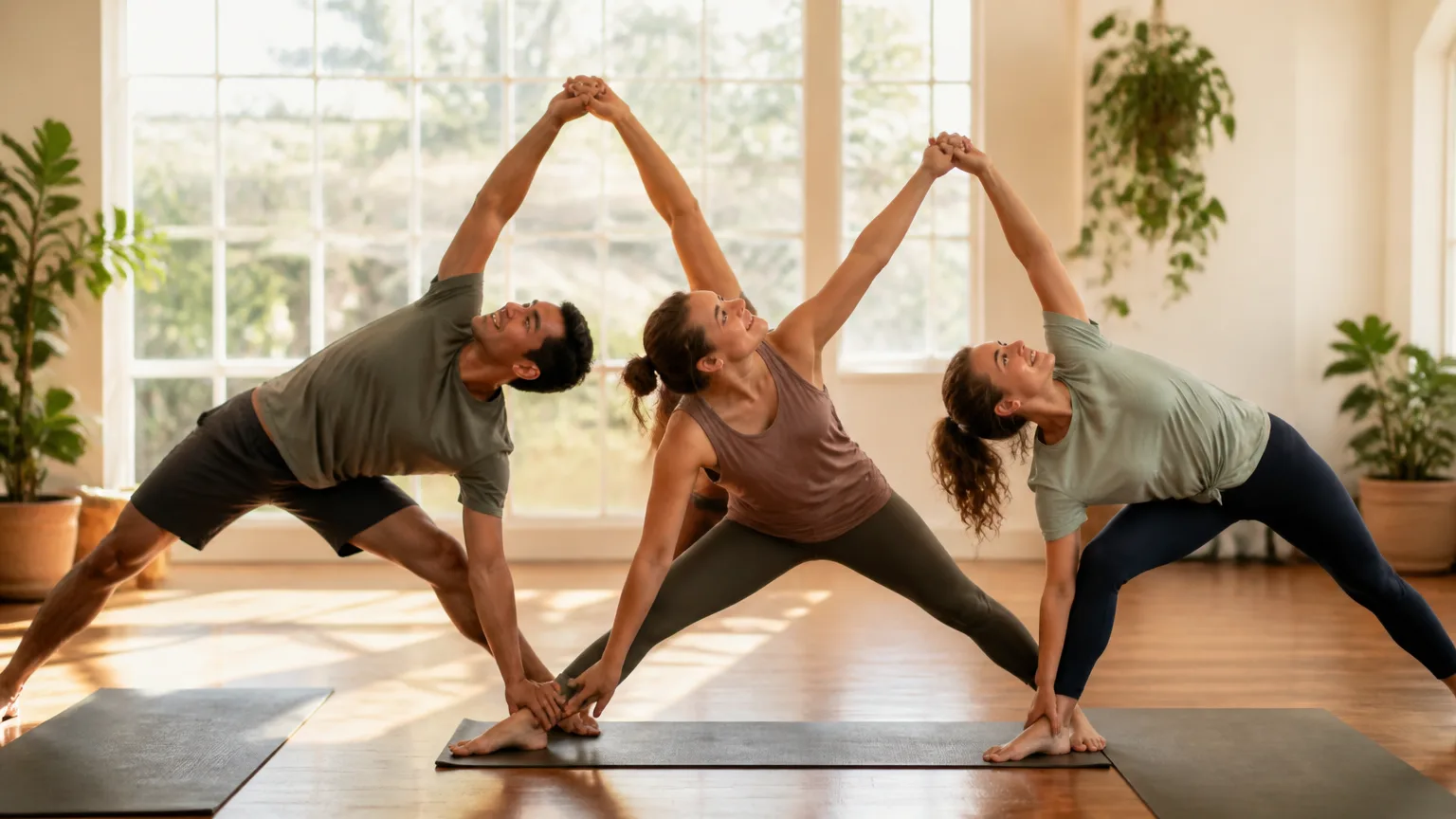
Build on that shared awareness with a gentle standing shape. Begin by standing in a small triangle, with everyone facing inward. Leave enough space between bodies, then step into a wide, comfortable stance that feels steady rather than extreme.
Reach toward the person beside you and connect with fingertips or open palms. You might touch hands at shoulder height or rest a hand lightly near a partner’s shoulder. This contact is only a balance reference, not something to lean heavily into. Keep your own feet grounded and your weight centered.
Together, begin a triangle-inspired shape. Soften your front knees, lengthen through your spine, and let your backs stay broad. You may gently hinge or reach one arm upward while the other hand maintains light contact. Focus on long, easy breaths instead of reaching for depth.
Move slowly and communicate throughout. One person can say, “Steady,” “More space,” or “Pause,” so the group stays coordinated. In these 3 person yoga poses, teamwork matters more than creating a perfect shape. Hold for three to five breaths, then rise together with control.
If the stance feels unstable, bring your feet closer together. You can also keep one hand on a wall for extra support. Another accessible option is to have all three participants face the same direction, standing in a line with gentle fingertip contact.
Watch for common alignment mistakes. Avoid locking your knees, collapsing into a partner, or twisting your neck to look upward. Keep your gaze soft and comfortable, perhaps toward the floor or straight ahead. Most importantly, move no faster than the least stable participant.
To come out, release the connection first, then slowly bring your feet together. Notice how shared support can improve balance without taking away personal stability. Take a breath before repeating on the other side.
3. Three-Person Standing Balance Triangle
This gentle balance is one of the most approachable 3 person yoga poses for building focus and connection. Stand in a small circle, leaving enough space to move comfortably without bumping into one another.
Begin with both feet grounded and your spine tall. Each person places one foot down securely, then brings the opposite foot to the ankle or calf of the standing leg. Avoid pressing the foot against the knee joint, which can create unnecessary strain.
Before lifting the foot, connect with the group through light fingertip contact. You might touch the fingertips of the people beside you or gently reach toward the center of the circle. Keep your shoulders relaxed, choose a shared focal point, and breathe slowly together.
For an even steadier beginning, keep the toes of your lifted foot touching the floor like a kickstand. This still develops balance while giving you a reliable point of support. When everyone feels ready, gradually lift the toes while maintaining soft, steady breaths.
Enter the pose one person at a time. The first participant can settle into their balance, followed by the second, and then the third. This approach prevents everyone from shifting at once and helps the circle remain stable.
Stay for three to five breaths, or less if anyone feels tired. If the group begins to wobble, keep breathing and lower the lifted foot gently. Wobbling is a normal part of balance practice, not a failure.
To exit, release the shape one person at a time. Lower each lifted foot carefully, then return both feet to the floor before relaxing the fingertip connection. Repeat on the opposite side, perhaps switching the order so everyone experiences different kinds of support. The goal is not perfect stillness, but shared awareness and a confident return to center.
4. Three-Person Partner Boat Pose
This seated pose brings three people together for gentle core and hamstring work. Begin with the safest version, focusing on connection rather than lifting or intensity.
Sit in a triangle, facing one another with enough space to move comfortably. Keep your knees bent and your feet resting on the floor. You can connect hands in the center or lightly touch the soles of your feet. Breathe slowly and notice how each person’s movement affects the group.
Stay here for several breaths before adding any challenge. The connection should offer feedback, not force. Never yank a partner’s arms or push your feet against someone else’s body. If the shape feels uneven, release the connection and reset.
When everyone feels steady, try lifting one foot at a time. Keep the other foot grounded and maintain long, upright spines. You might also create a partial boat shape, with bent knees, lifted chests, and relaxed shoulders. This gentle progression makes these 3 person yoga poses accessible while still engaging the abdominal muscles.
Move gradually and communicate throughout the pose. Ask, “Does this feel comfortable?” before changing the shape. The least stable participant should set the pace, and anyone can lower their feet or return to an upright seat.
If your hamstrings feel tight, keep both knees deeply bent. You can also sit with your back near a wall for extra support. For a sensitive lower back, stay upright and avoid leaning behind the hips. Another option is practicing individual boat pose beside the group, matching the breathing rhythm without sharing weight.
To come out, lower any lifted feet carefully and release the hand or foot connection. Rest with your hands behind you, or sit comfortably and take a few relaxed breaths. Let the pose remind you that teamwork works best when everyone stays present, supported, and free to choose their own level.
5. Three-Person Downward Dog Connection
This gentle variation turns Downward-Facing Dog into a shared shape without stacking, lifting, or balancing on one another. Each person practices independently while staying connected through sight, touch, and steady breathing.
Arrange three mats in a row or triangle, leaving enough space for everyone to stretch safely. Begin in tabletop, then lift your hips into Downward Dog. You might face the center, maintain eye contact, or reach one fingertip toward a neighbor’s fingertip.
For another option, place the mats in a wide line and touch opposite hands briefly. Together, your bodies can create a wide group arch. You can also alternate the movement: one person bends the knees while the others hold steady, then switch. These choices create teamwork without placing body weight on another participant.
Keep the pose comfortable and spacious. If your wrists feel tender, spread your fingers, press through your knuckles, or lower to your forearms for a supported variation. Those with tight hamstrings can bend their knees generously and focus on lengthening the spine.
Hold for three to five breaths at first. Between rounds, lower to Child’s Pose or rest in a comfortable seat. Shorter holds help everyone remain attentive to alignment, breath, and changing energy.
Clear communication makes this one of the most approachable 3 person yoga poses. Agree on a shared cue before moving, and let the least comfortable person set the pace. Speak up immediately if you feel pressure, strain, or uncertainty.
For safety, never walk under another person, climb onto backs, or attempt unsupported weight transfers. There is no need to create a more dramatic shape. The connection comes from coordinated breathing, gentle gestures, and respecting each person’s space.
To finish, lower your knees slowly and rest together. Notice how three independent Downward Dogs can still feel like one mindful, welcoming practice.
6. Three-Person Supported Warrior II
Three-Person Supported Warrior II brings grounded strength and shared rhythm to your group practice. It is one of the more accessible 3 person yoga poses because each participant maintains their own balance while practicing coordinated alignment.
Begin by standing with plenty of space between you. Face the same direction, or arrange yourselves in a triangle. Widen your stances, then turn one foot outward and gently bend that front knee. Keep the knee tracking toward the second toe and aim for knee-over-ankle alignment.
Extend your arms in opposite directions without locking the elbows. Relax your shoulders away from your ears, soften your hands, and keep your chest open. Breathe steadily as everyone settles into the shape together.
For spatial awareness, neighboring participants may lightly touch palms or fingertips. Keep this contact gentle and optional. It should help you sense the group’s position, not pull, brace, or replace your own balance.
Choose one person to guide the timing. Together, inhale as you lengthen through the crown of your head, then exhale as you soften into the bent front knee. Hold for three to five calm breaths, checking that no one is sinking deeper than feels comfortable.
The person with the shortest stance or least stable balance sets the group’s pace. If your front knee moves inward, reduce the bend and realign it toward the second toe. Keep your breathing smooth, and come out immediately if you feel pain, strain, or dizziness.
For limited mobility, shorten the stance or reduce the knee bend. You can also practice beside a sturdy chair for support. A seated version works well too: sit tall, extend one leg to the side, and mirror the arm shape without forcing the range.
To release, straighten the front leg slowly, lower the arms, and bring the feet together. Pause before switching sides, noticing how mindful timing can turn three individual movements into one connected experience.
7. Three-Person Supported Group Bridge
Close your sequence with a gentle, floor-based shape that brings everyone together without lifting or stacking. This supported group bridge is one of the most approachable 3 person yoga poses because each person controls their own movement and support.
Begin by lying on your backs with knees bent and feet grounded. Leave enough space between mats for comfortable movement. Keep your shoulders and heads resting on the floor, then coordinate a small bridge lift as you inhale. Press evenly through both feet and lift only as high as feels steady.
You can hold hands overhead if that feels natural, but keep the connection light. Never pull, tug, or use another person’s arms for leverage. Alternatively, place your palms near one another without touching, or practice parallel bridges side by side while matching your breathing.
Hold the shape for only a few comfortable breaths. Then lower slowly, bringing your spine back to the mat one section at a time. Rest in constructive rest with your knees bent and feet grounded before repeating once or twice. For additional comfort, explore restorative yoga techniques such as using folded blankets beneath the head or knees.
Keep the movement small and coordinated rather than trying to create a dramatic group shape. Come down immediately if anyone notices neck discomfort, cramping, lower-back strain, dizziness, or pressure in the knees. After resting, take a few relaxed breaths and notice the warmth of moving together. This quiet ending reinforces an important practice: connection grows through shared awareness, not through forcing a pose.
Frequently Asked Questions About Three-Person Yoga
Do all three people need the same yoga experience?
Not at all. Three-person yoga works best when the group follows the least experienced participant’s pace. Choose grounded variations, move slowly, and let each person modify independently. One person might bend their knees while another keeps the legs straighter.
Are three-person yoga poses safe for complete beginners?
The poses in this guide can be approached safely with patience and clear communication. Practice on an uncluttered, nonslip surface, avoid forced weight-sharing, and keep holds short. Advanced lifts and acrobatic shapes should remain with trained practitioners and experienced spotters. For more inspiration, explore these three-person yoga poses for fun with friends.
What should we do if someone loses balance?
Agree on a stop word before beginning, such as “release” or “pause.” If someone feels unstable, say the word and let everyone release contact without pulling. Step down or lower calmly, then reset your footing and breathing before trying again. A calm response helps everyone feel secure.
Can people with limited flexibility or mobility participate?
Yes. Participation does not require matching the group’s shape or range of motion. Use a chair, wall, cushions, bent knees, or seated versions for extra support. You can also practice parallel individual poses, staying connected through shared breathing rather than physical contact.
What equipment do we need?
Start with three yoga mats and enough clear space for each person to move comfortably. Folded blankets, cushions, blocks, and a sturdy chair can make transitions gentler. Avoid unstable furniture or slippery surfaces, especially when practicing balance-based 3 person yoga poses.
How can we make the practice welcoming for different abilities?
Ask before offering physical support, and never assume someone wants hands-on assistance. Invite each person to name their preferred range, support, or stopping signal. Celebrate steady breathing, thoughtful choices, and returning to balance—not how dramatic the final shape looks.
How long should a beginner group session last?
Aim for 20–30 minutes, including a gentle warm-up, pauses, the poses, and brief relaxation. Choose shorter holds instead of pushing for endurance. Leave time to check in between poses, drink water, and notice how everyone feels. A shorter, joyful practice is often more sustainable than a tiring one.
Practice Connection, Not Perfection
Begin with the seated circle and other grounded variations before exploring balances or weight-sharing. Every modification is a valid form of practice, so choose the version that helps everyone feel steady and supported.
As you try these 3 person yoga poses, remember that listening, consent, patience, and synchronized breathing matter more than creating a dramatic group shape. Move at the pace of the least stable participant, check in often, and welcome pauses whenever needed.
Finish with a shared breath, brief relaxation, or moment of gratitude. Returning to these poses consistently, rather than competitively, can strengthen balance, mindfulness, trust, and community. Gather your group, honor each person’s unique path, and repeat the sequence with curiosity and care.