Choosing the right iyengar yoga south bay studio can shape your entire practice. The right space offers more than convenient class times or a nearby address. It provides thoughtful guidance, a welcoming community, and an approach that supports your goals, whether you want better alignment, greater strength, improved mobility, stress relief, or more mindful self-care.
Iyengar Yoga can meet you where you are. Beginners and experienced practitioners can both benefit from detailed instruction, careful pacing, and props that adapt poses to each body. If you are new to this method, our Iyengar Yoga guide can help you understand its foundations and benefits.
As you compare South Bay studios, look beyond the schedule. Teaching quality, class structure, accessibility, and the overall atmosphere all influence how supported you feel. It is also worth considering whether the studio’s values and teaching style fit your long-term path. In this guide, you will learn how to evaluate these details with confidence, so your choice feels practical, personal, and encouraging.
Understand What Makes Iyengar Yoga Different
Before comparing studios, learn what authentic Iyengar Yoga feels like in practice. The method emphasizes precise alignment, thoughtful sequencing, stability, breath awareness, and sustained attention. Instead of moving quickly between poses, students explore each position with care and purpose.
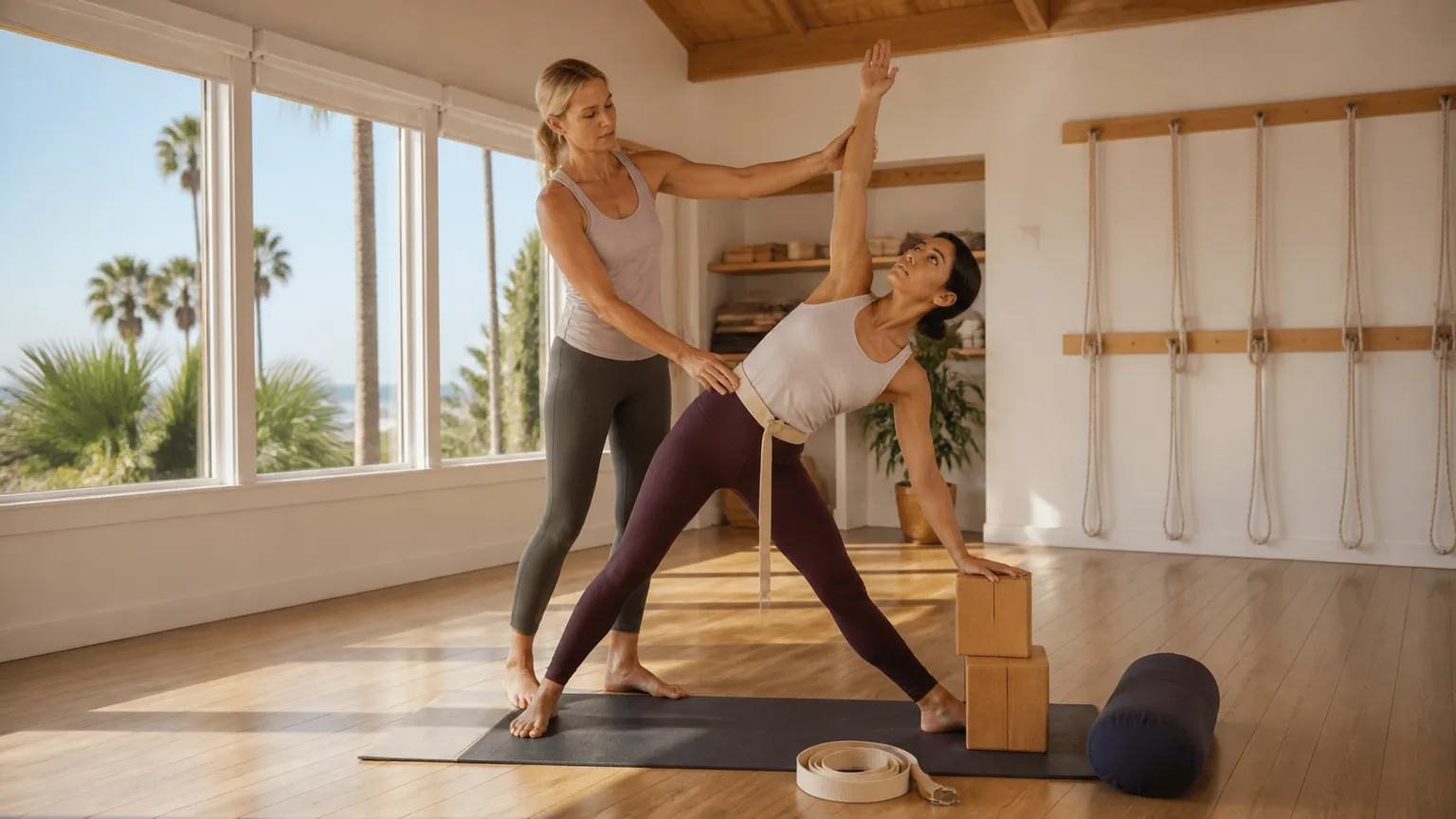
Props are an important part of this approach. Blocks, straps, bolsters, blankets, chairs, and wall ropes can make poses more accessible. They also help refine body awareness, support healthy alignment, and reveal where you may be holding unnecessary tension.
When exploring Iyengar Yoga South Bay studios, ask how teachers use these tools. In a genuinely alignment-focused class, the instructor offers specific guidance about foot placement, spine position, muscle action, and breath. Students may remain in one pose for several breaths while making small, meaningful adjustments.
A general yoga class may use the Iyengar name while focusing mainly on stretching or broad alignment cues. Look for teachers who explain why a pose is sequenced, how props support different bodies, and when modifications are appropriate. Clear instruction should feel educational, patient, and responsive rather than focused on performance.
Remember that a slower pace does not mean an easy practice. Careful positioning can create a meaningful physical challenge while also strengthening concentration. Over time, this steady attention can help you notice patterns in your body and mind, both on the mat and in daily life.
Evaluate Teacher Training, Instruction, and Personal Attention
A knowledgeable teacher can make your Iyengar Yoga South Bay experience safer, clearer, and more rewarding. Before enrolling, research each instructor’s Iyengar-specific training, certifications, teaching experience, and continuing education. Look for teachers who welcome different ability levels rather than assuming every student has the same needs.
Strong instruction often begins with precise verbal cues and thoughtful demonstrations. Teachers should explain how alignment supports stability, breathing, and ease—not simply ask you to copy a shape. Hands-on adjustments may also be helpful, but they should always be offered with your consent and communicated respectfully.
Class size can greatly affect the attention you receive. Beginners, students returning after an injury, and people managing mobility limitations may benefit from smaller groups or additional support. Ask whether the teacher can observe your form, suggest props, and offer alternatives when a pose does not suit your body that day.
A supportive instructor will also explain modifications without making anyone feel singled out. Contact the studio before registering and ask how teachers respond to injuries, adapt poses, and guide students who feel intimidated by a formal practice. Their answer can reveal whether the environment feels genuinely welcoming.
As you compare options, consider both credentials and teaching presence. A highly trained teacher who gives clear feedback can help you build confidence gradually, while a warm, attentive approach can make consistent practice feel possible. For more guidance on how to compare yoga studios and classes, notice how class structure, personal attention, and instructor communication work together.
Match Class Levels and Scheduling to Your Wellness Goals
Once you understand a studio’s teaching style, compare its class structure with your current needs. Many Iyengar yoga studios begin with introductory sessions, then offer Level 1, continuing, intermediate, restorative, or therapeutic classes. Names vary, so ask how students typically progress and whether observation or teacher approval is required.
Your goals can guide the best starting point. Beginners often benefit from foundational classes that emphasize alignment, breathing, and the safe use of props. Active students may prefer continuing or intermediate sessions that develop strength, mobility, balance, and body awareness. Restorative classes use supported poses to encourage relaxation and stress management.
Therapeutic formats may suit students managing injuries, chronic conditions, or movement limitations. Older adults can also benefit from careful instruction, supportive modifications, and slower transitions. Explore these safe yoga practices for seniors when evaluating whether a studio understands age-related needs.
Be open with the teacher about relevant health concerns, pregnancy, surgeries, pain, or other limitations before class begins. Do not assume that every session is appropriate for your situation. Ask whether the studio offers modifications, private guidance, or specialized options; this guidance on choosing a class for specific needs can help you ask more informed questions.
Finally, consider logistics honestly. A convenient South Bay location and a class time that fits your week can support steady attendance. The perfect class is less helpful when traffic, distance, or scheduling makes it difficult to attend. Whether you are exploring iyengar yoga south bay options near home or work, choose a realistic commitment. Consistent practice usually creates more progress than occasional attendance at an ideal but inconvenient class.
Inspect the Studio Environment, Props, and Accessibility
Once a studio feels convenient and the teaching approach seems aligned, look closely at the physical space. Iyengar Yoga depends on careful observation, so a clean, well-maintained room can make a meaningful difference. The space should feel calm and organized, with enough room to move safely without feeling crowded.
Props are an important part of this method, not an optional extra. Ask whether the studio provides clean, sturdy mats, blocks, straps, blankets, bolsters, chairs, and other Iyengar-specific equipment. A strong prop inventory allows teachers to adapt poses, support alignment, and help students experience the practice with greater clarity.
Pay attention to practical details before registering. Is parking available, or can you reach the studio easily by public transit? Check for stairs or elevator access, changing areas, good ventilation, and reasonable class capacity. A room that is too full may make it harder to receive individual guidance or use props comfortably.
Accessibility also includes the studio’s attitude. A welcoming iyengar yoga south bay space should support different bodies, ages, experience levels, and mobility needs. Notice whether teachers offer thoughtful modifications and explain how to use support, rather than suggesting that everyone force the same shape.
If possible, visit before booking a series of classes. Notice how the staff greet you, whether equipment is stored safely, and how students seem to move through the room. You might also ask how the studio accommodates injuries, limited mobility, or beginners. These details can reveal whether the environment will help you stay curious, focused, and at ease as your practice develops.
Compare Trial Classes, Pricing, Policies, and Studio Culture
Before choosing among Iyengar yoga South Bay studios, try an introductory class or ask about first-visit offers. A firsthand experience can reveal the teacher’s style, class pacing, feedback, and your overall comfort level. For additional guidance, review what to look for before a first yoga class.
As you compare costs, look beyond the advertised drop-in rate. Check class packages, memberships, beginner series, expiration dates, and equipment fees. Ask whether the studio offers make-up classes, and review cancellation or late-booking policies. A lower package price may not help if its expiration period does not fit your schedule.
Notice the studio culture, too. Do teachers offer attentive guidance without making students feel singled out? Do students seem welcomed across ages, body types, and experience levels? An inclusive environment should feel focused and encouraging, rather than competitive, appearance-focused, or overly sales-driven.
Finally, create a short list of priorities before deciding. You might rank teacher quality, commute, schedule, affordability, class level, and atmosphere. Then consider which studio best supports your personal wellness goals. The right choice is not necessarily the most popular option; it is the one that makes steady, meaningful practice feel realistic.
Choose the South Bay Studio You Can Practice With Consistently
The best iyengar yoga south bay studio combines qualified teaching, thoughtful adaptations, useful props, accessible classes, fair cost, and genuine community. It should help you develop body awareness and confidence over time, rather than pressure you toward advanced poses immediately.
Shortlist two or three studios and ask focused questions about instruction, class fit, and support. Attend a trial class, then choose the setting where regular practice feels realistic, welcoming, and sustainable.