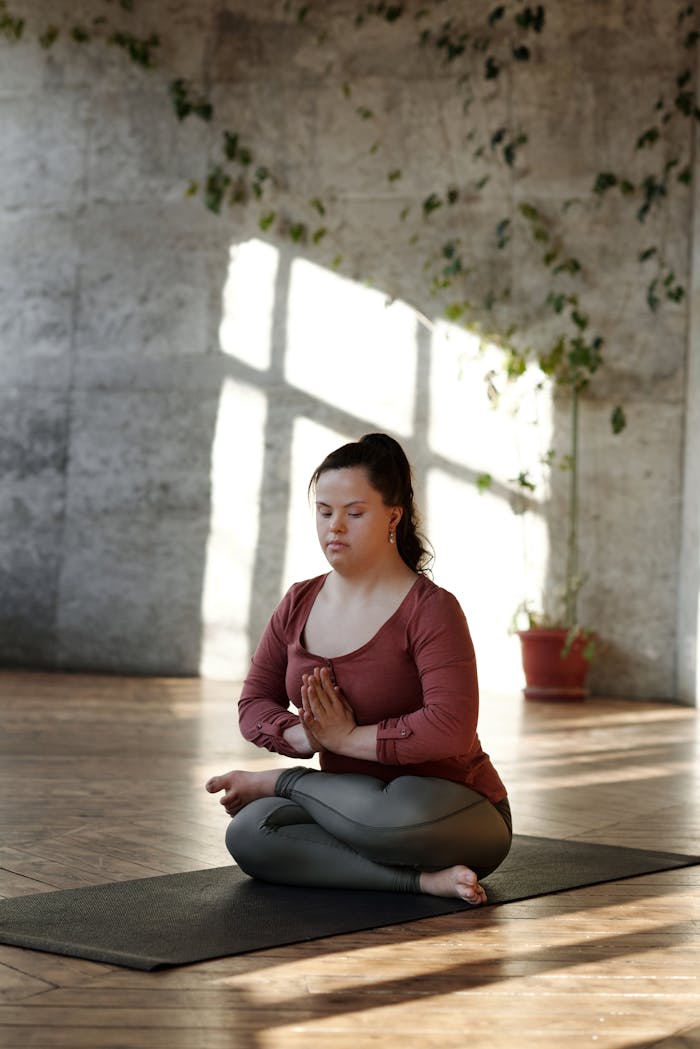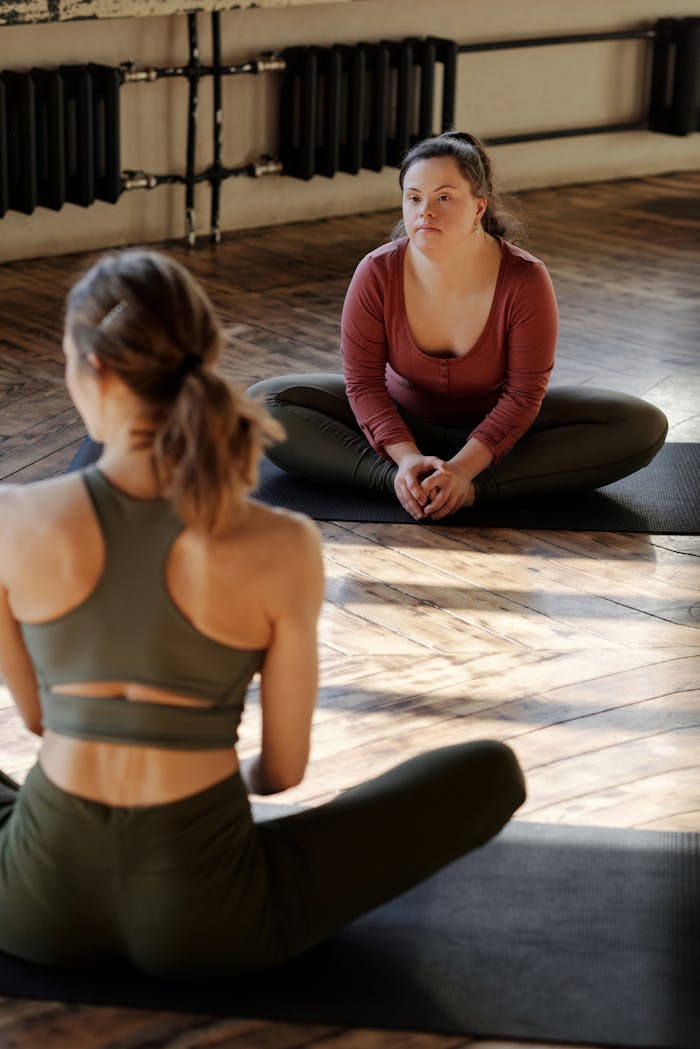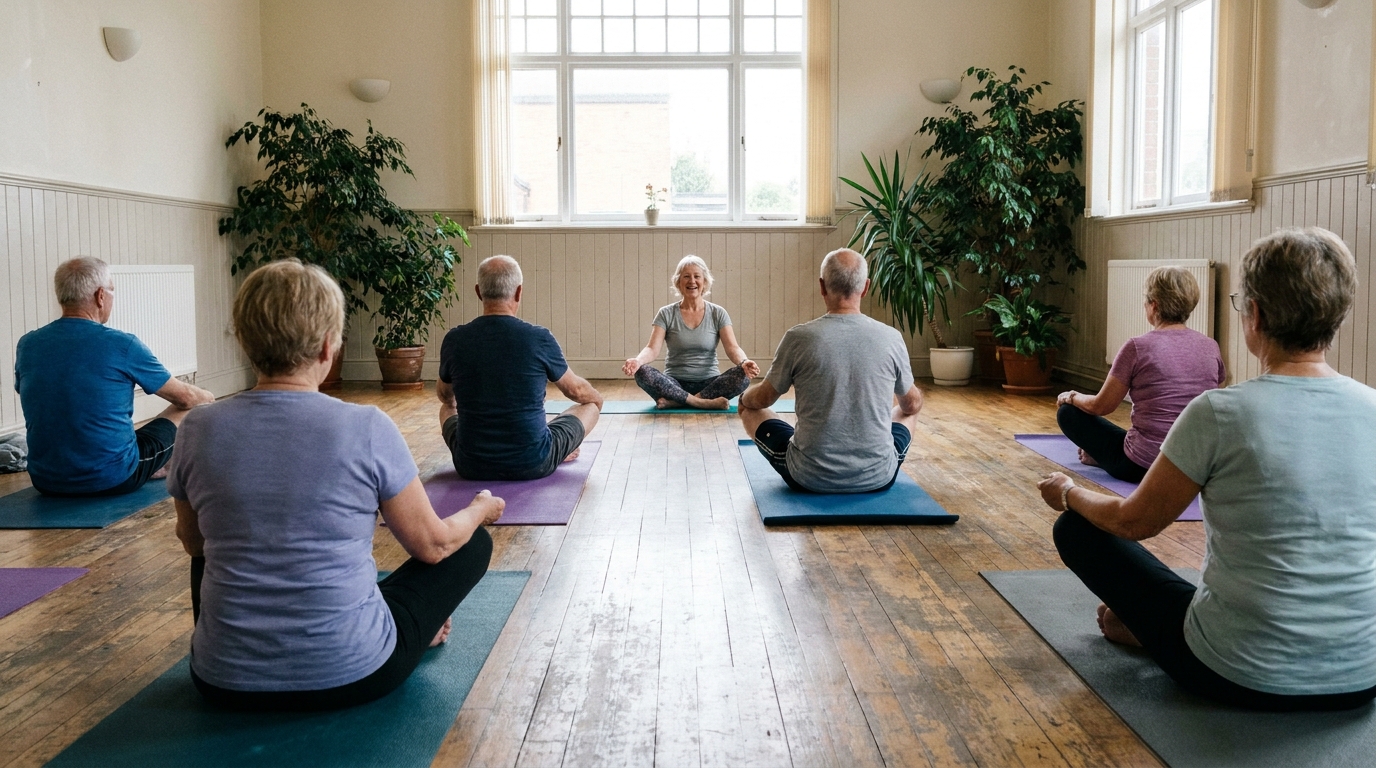
As we grow older, the body changes, the mind gathers many memories, and the heart often becomes more tender. Senior yoga meets this sacred season of life with kindness. It does not ask anyone to perform difficult postures or become someone else. Rather, it invites each person to come home to the breath, to move gently, to steady the mind, and to remember the quiet dignity already present within.
Yoga, in its deepest sense, is not merely exercise. The Sanskrit word “yoga” means union: union of body and breath, mind and heart, individual life and the Divine. Whether one approaches yoga spiritually, physically, or simply as a way to feel better, senior yoga can become a practical path to health and wellness.
With humility, we may say that yoga is for every stage of life. It can be practiced in a chair, beside a bed, on a mat, or even through mindful breathing while resting. The doorway is always open.
Senior yoga is a gentle, accessible form of yoga designed to support the needs of older adults. It often includes slow movements, chair yoga, balance exercises, breathing practices, relaxation, and simple meditation.
The goal is not to “master” yoga poses. The goal is to support well-being in a compassionate way.
A Gentle Practice for Aging Bodies
Aging bodies deserve respect. Joints may be less flexible. Muscles may feel weaker than before. Balance may feel uncertain. Some people may live with arthritis, osteoporosis, high blood pressure, heart conditions, joint replacements, or limited mobility.
Senior yoga honors all of this.
Instead of forcing the body, senior yoga teaches us to listen. In the Yoga Sutras of Patanjali, a foundational yoga text, we find the principle of “ahimsa,” which means non-harming. In practice, ahimsa means we do not push through pain. We do not compare. We do not criticize the body for what it cannot do. We move with care.
This is especially important for seniors. A yoga pose should feel steady, supportive, and kind. If something feels sharp, unsafe, or overwhelming, it is not the right variation for that moment.
Yoga Beyond the Mat
For older adults, yoga can be much more than stretching. It can support daily life.
Senior yoga may help with:
- Getting up from a chair more easily
- Improving balance while walking
- Reducing stiffness in the shoulders, hips, and spine
- Supporting better breathing
- Calming stress and anxiety
- Encouraging restful sleep
- Creating a sense of community and connection
Yoga also teaches awareness. This awareness can make everyday movements safer and more mindful, such as climbing stairs, reaching for something on a shelf, or turning the body while walking.
A Practice for All Backgrounds
You do not need to follow any particular religion or belief system to practice yoga. Yoga welcomes sincere seekers, curious beginners, and people simply looking for better health.
In the devotional spirit of bhakti, which means loving devotion, we can approach practice with gratitude. For some, that gratitude may be directed toward God. For others, it may be gratitude for life, breath, family, nature, or the body’s wisdom.
The essence is humility: “May I practice with care. May this body be supported. May this mind become peaceful. May my heart remain open.”
Why Senior Yoga Is Important for Health and Wellness
Senior yoga is important because it addresses the whole person. It supports physical health, emotional balance, mental clarity, and spiritual nourishment.
Modern life often encourages speed, productivity, and independence at all costs. But aging reminds us of interdependence. We need support, patience, and gentleness. Yoga offers these qualities in a very practical way.
Supporting Strength and Flexibility
As we age, muscle mass and flexibility naturally decline. This can affect posture, mobility, and independence. Gentle yoga poses help maintain strength and range of motion without aggressive strain.
Simple movements such as seated leg lifts, gentle spinal twists, shoulder rolls, and standing balance poses can help keep the body active. Even small movements, practiced regularly, can bring meaningful benefits.
Flexibility in senior yoga does not mean touching the toes. It means being able to move with greater ease in daily life.
Can you turn your head more comfortably while driving? Can you reach behind your back with less stiffness? Can you stand a little taller? These are beautiful signs of progress.
Improving Balance and Reducing Fall Risk
Falls are a serious concern for many older adults. Senior yoga can help improve balance, coordination, and body awareness.
Standing poses may be practiced near a wall or chair. Chair yoga can also include balance-building movements while seated. Over time, the nervous system becomes more confident.
Balance is not only physical. Yoga also teaches inner balance. When the breath is calm, the mind becomes less reactive. When the mind is steady, the body often moves with more confidence.
The Bhagavad Gita, a beloved yoga scripture, describes yoga as “samatvam,” meaning evenness or balance. In daily life, this balance may look like patience during discomfort, steadiness during change, and courage during uncertainty.
Helping the Breath and Nervous System
Breathing practices are among the most powerful tools in senior yoga. In Sanskrit, breathwork is called “pranayama.” “Prana” means life energy, and “ayama” means expansion or regulation. Simply put, pranayama helps us work with the breath to support the body and mind.
Many seniors experience shallow breathing due to posture, stress, respiratory conditions, or lack of movement. Gentle breathing practices may help improve awareness of the lungs, relax the nervous system, and reduce tension.
A simple practice is to breathe in slowly through the nose and breathe out gently for a little longer than the inhale. This can signal safety to the body and help quiet the mind.
Supporting Emotional Wellness
Aging can bring great wisdom, but also grief. One may experience the loss of loved ones, changes in identity, health concerns, or loneliness. Senior yoga creates space for these realities with compassion.
A regular practice can become a steady friend. It offers rhythm, presence, and inner quiet.
In bhakti yoga, the path of devotion, emotions are not rejected. They are offered. Joy, sadness, fear, longing, gratitude—all can be placed gently before the Divine, or held in the compassionate space of awareness.
Senior yoga does not promise that life will be free of pain. But it can help us meet life with a softer heart and a steadier breath.
How to Begin a Senior Yoga Practice Safely
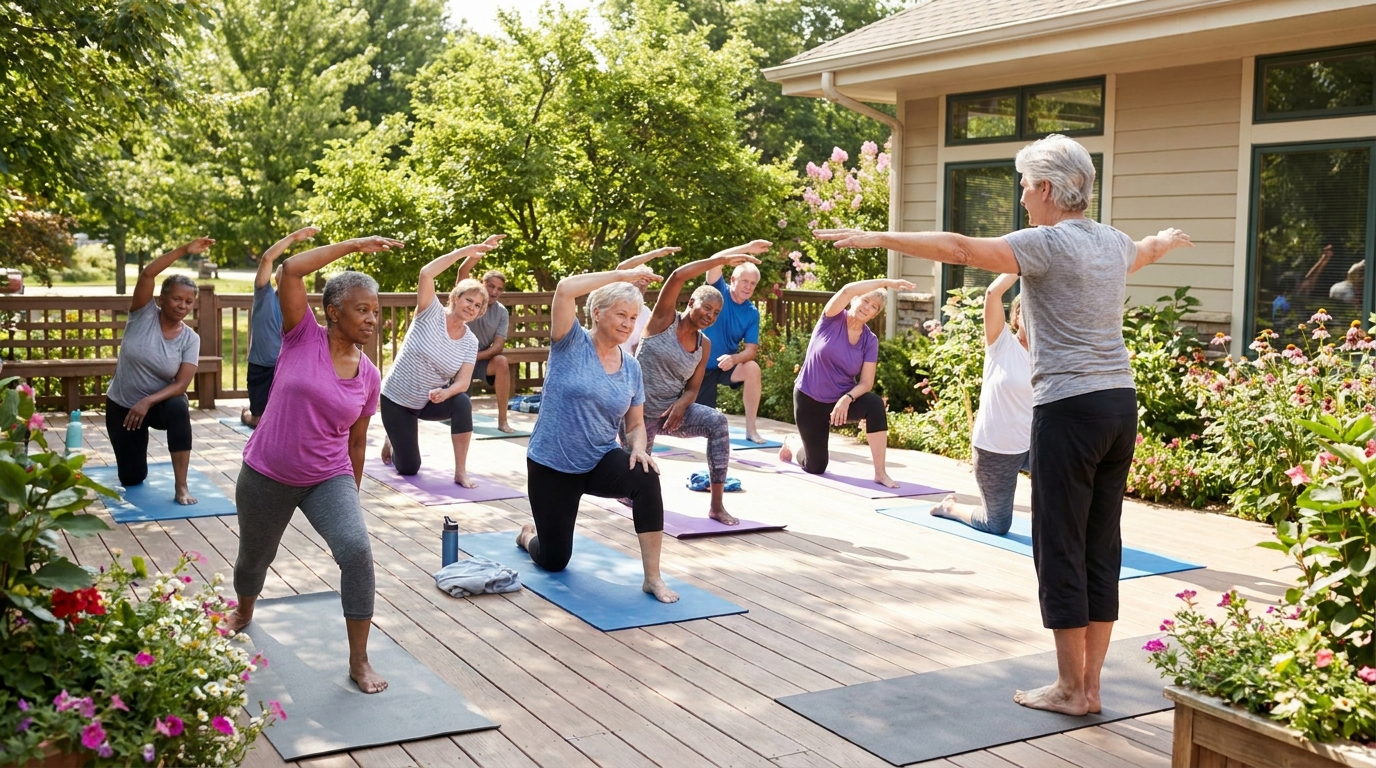
Beginning senior yoga should feel welcoming, not intimidating. The first step is not a difficult posture. The first step is listening.
Before starting, seniors with medical conditions should speak with a healthcare provider, especially if they have heart disease, uncontrolled blood pressure, osteoporosis, recent surgery, severe balance issues, or chronic pain.
A qualified yoga teacher with experience in senior yoga, chair yoga, or therapeutic yoga can offer safe modifications.
Start Where You Are
One of the most healing teachings of yoga is acceptance. Start with the body you have today, not the body you had 30 years ago.
If you can practice for five minutes, begin with five minutes. If standing poses are not comfortable, practice in a chair. If movement is limited, begin with breath and gentle hand movements.
Yoga is not measured by outer appearance. A person sitting quietly and breathing with awareness may be practicing very deeply.
Choose the Right Style
Not all yoga classes are suitable for seniors. Some styles are fast, heated, or physically demanding. For older adults, the following may be more appropriate:
- Chair yoga
- Gentle yoga
- Restorative yoga
- Senior yoga
- Therapeutic yoga
- Slow Hatha yoga
“Hatha” is a Sanskrit term often used for physical yoga practices. Traditionally, it refers to balancing energies in the body. In modern settings, Hatha yoga often means a slower class with postures and breathing.
When choosing a class, look for words like gentle, accessible, beginner-friendly, chair-based, or senior-focused.
Use Props for Support
Props are not signs of weakness. They are expressions of wisdom.
Helpful yoga props for seniors include:
- A sturdy chair
- A wall
- Yoga blocks
- A strap or towel
- A blanket
- A cushion
- Non-slip mat
A chair can support standing balance poses. A strap can help stretch the legs without strain. A blanket can cushion sensitive joints. The wall can offer stability.
In yoga, support allows relaxation. When the body feels safe, the breath becomes easier.
Practice with Ahimsa: Non-Harming
Ahimsa, or non-harming, is essential in senior yoga. Pain is not a badge of honor. Straining is not devotion. Gentle consistency is more beneficial than force.
A helpful guideline is: sensation is okay, pain is not. A mild stretch, warmth, or muscular effort may be appropriate. Sharp pain, dizziness, numbness, or breathlessness means stop and rest.
Each practice can begin with a simple prayer or intention:
“May this practice support healing. May I move with patience. May I honor this body as a sacred gift.”
Check out the latest yoga guides on yoga guides for helpful tips and advice.
Simple Senior Yoga Practices for Daily Wellness
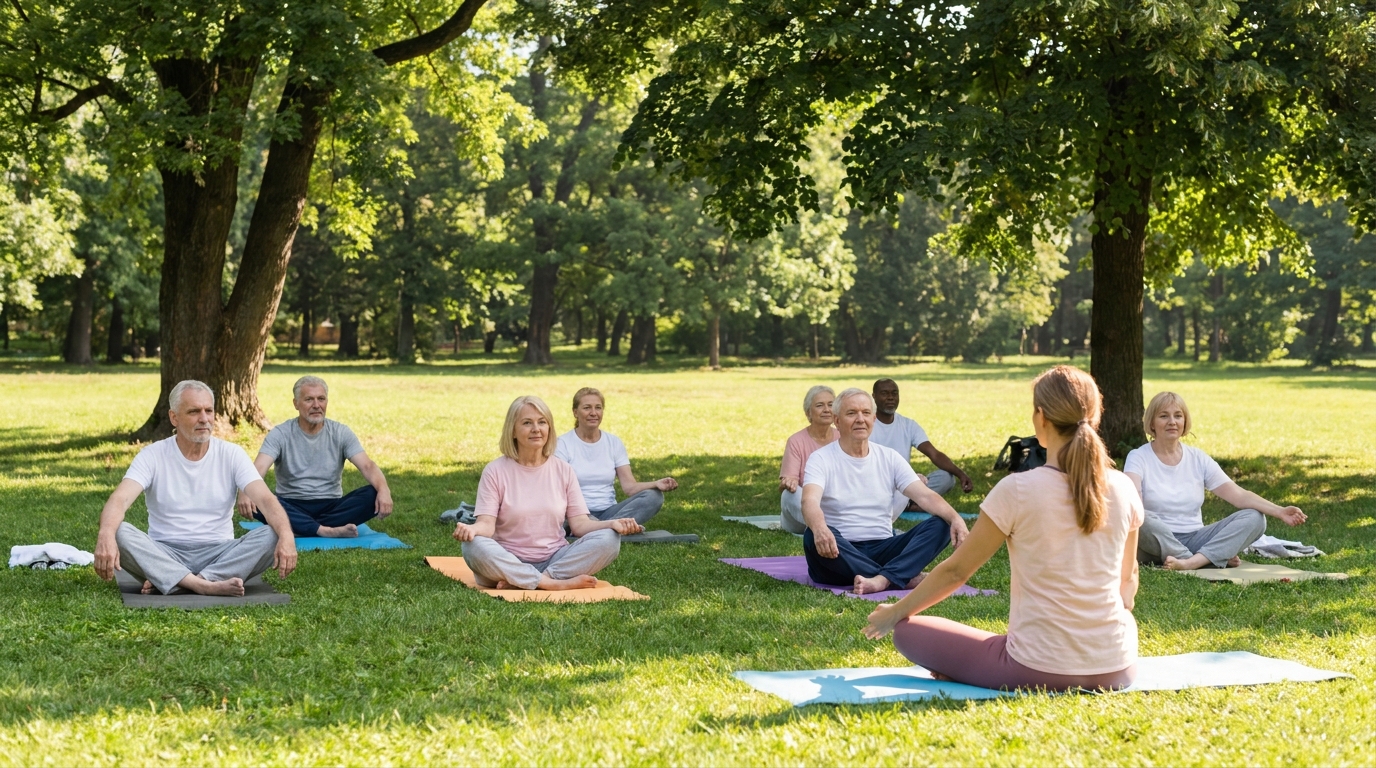
A senior yoga routine does not need to be long. Even 10 to 20 minutes can make a difference when practiced regularly.
Below are gentle practices that can be adapted to many levels. Move slowly, breathe naturally, and rest whenever needed.
Seated Mountain Pose
Sit toward the front of a sturdy chair with both feet flat on the floor. Let the knees point forward. Rest the hands on the thighs.
Lengthen the spine gently. Relax the shoulders. Imagine the crown of the head rising toward the sky while the sitting bones settle into the chair.
This is a seated version of “Tadasana,” or Mountain Pose. “Tada” means mountain. The posture teaches steadiness, dignity, and grounded presence.
Take 5 to 10 slow breaths.
This simple pose can improve posture and breathing awareness. It also reminds us that stillness can be powerful.
Gentle Neck and Shoulder Movements
From seated Mountain Pose, slowly turn the head to the right, then back to center. Turn to the left, then back to center.
Next, inhale and lift the shoulders toward the ears. Exhale and release them down. Repeat 5 times.
Move with kindness. If the neck is sensitive, keep the movements small.
These movements may help reduce tension from reading, computer use, driving, or sleeping positions.
Seated Cat-Cow
Sit tall with hands resting on the thighs.
As you inhale, gently arch the spine, lift the chest, and look slightly upward. As you exhale, round the spine, draw the belly gently inward, and lower the chin slightly.
Repeat 5 to 8 times.
This movement supports spinal mobility. It is a chair-based version of a traditional yoga movement often called Cat-Cow. It can be helpful for stiffness in the back and shoulders.
Seated Twist
Sit tall. Place the right hand on the left thigh and the left hand on the side or back of the chair. Inhale to lengthen the spine. Exhale and gently turn to the left.
Stay for 2 to 3 breaths. Return to center. Repeat on the other side.
Twists should be gentle, especially for those with osteoporosis or spinal concerns. Avoid forcing or pulling.
This practice may help maintain spinal mobility and support digestion.
Chair-Supported Standing Balance
Stand behind a sturdy chair, holding the back of the chair with both hands.
Shift weight gently into the left foot. Lift the right heel, keeping the toes on the floor. If steady, lift the right foot slightly. Hold for 2 to 3 breaths.
Repeat on the other side.
This simple balance exercise can build confidence. Over time, it may support safer walking and standing.
Remember: the chair is your friend. Use it fully.
Legs and Ankles for Circulation
Sit in a chair with feet on the floor.
Lift one heel and lower it. Then lift the toes and lower them. Repeat several times. Make gentle ankle circles in each direction.
These small movements are useful for circulation and ankle mobility, especially for those who sit for long periods.
Relaxation Practice
At the end of practice, sit comfortably or lie down if safe and comfortable.
Close the eyes or soften the gaze. Let the hands rest. Feel the breath moving in and out.
Silently repeat:
“Breathing in, I receive peace. Breathing out, I release tension.”
Rest for 3 to 5 minutes.
In Sanskrit, deep relaxation is often called “Savasana,” meaning Corpse Pose. The name may sound unusual, but the teaching is profound. We practice letting go. We release effort. We remember that rest is also sacred.
Breathwork and Meditation for Seniors
Senior yoga is not complete without the breath. The breath is a bridge between the body and mind. When we breathe with awareness, we return to the present moment.
Meditation may seem difficult at first, but it does not require an empty mind. It simply asks us to come back, again and again, with kindness.
Simple Belly Breathing
Sit comfortably. Place one hand on the belly and one hand on the chest.
As you inhale, feel the belly gently expand. As you exhale, feel it soften. Do not force the breath. Let it become smooth and easy.
Practice for 1 to 3 minutes.
This can be calming for the nervous system and helpful during moments of stress.
Lengthened Exhale Breathing
Inhale gently for a count of 3. Exhale gently for a count of 4 or 5.
Repeat for several rounds.
A longer exhale can help activate the body’s relaxation response. If counting creates tension, simply breathe out a little more slowly than you breathe in.
Avoid holding the breath unless guided by a qualified teacher and approved by a healthcare provider.
Mantra Meditation
A “mantra” is a sacred sound, word, or phrase repeated to focus the mind. The Sanskrit root suggests a tool for the mind. Mantra can be spiritual or simple.
Some may repeat “Om,” a sacred sound in yoga traditions. Others may repeat “peace,” “thank you,” “I am safe,” or a prayer from their own tradition.
In bhakti yoga, mantra is often practiced with devotion. It is less about perfect pronunciation and more about sincerity.
Sit comfortably. Breathe naturally. Repeat your chosen word or phrase silently with the breath.
For example:
Inhale: “I am held.”
Exhale: “I am at peace.”
Practice for 3 to 5 minutes.
Loving-Kindness Practice
Loving-kindness meditation can soften loneliness and open the heart.
Silently repeat:
“May I be peaceful.
May I be healthy.
May I be safe.
May I live with ease.”
Then offer the same wishes to a loved one, a caregiver, a neighbor, or all beings.
This practice beautifully reflects bhakti, the yoga of love. It reminds us that wellness is not only personal. Our peace can become a blessing to others.
The Spiritual Heart of Senior Yoga
Senior yoga can be practiced purely for health, and that is completely valid. Yet for those who feel drawn, yoga also offers spiritual nourishment.
The later years of life often bring deep questions. What truly matters? What remains when roles change? How do we meet uncertainty? How do we live with grace?
Yoga does not give shallow answers. It offers practices that help us sit with life honestly and lovingly.
The Wisdom of the Bhagavad Gita
In the Bhagavad Gita, Krishna teaches Arjuna about yoga in the middle of life’s struggle. This is important. Yoga is not only for peaceful mountaintops. It is for real life, including confusion, duty, grief, and change.
One teaching from the Gita is to act with sincerity while releasing attachment to the results. For seniors, this can be deeply meaningful.
We practice yoga not to become young again, but to care for life as it is. We breathe, stretch, pray, and rest—not because we control everything, but because each loving action matters.
The Yoga Sutras and a Peaceful Mind
The Yoga Sutras of Patanjali describe yoga as the calming of the fluctuations of the mind. In simple words, yoga helps the mind become less restless.
For seniors, this may be especially helpful when facing worry about health, family, finances, or the future.
A calm mind does not mean life is perfect. It means we are less tossed about by every wave. Through breath, movement, meditation, and devotion, we learn to return to center.
Bhakti: The Path of Love
“Bhakti” means devotion, love, and heartfelt offering. It is one of the most accessible forms of yoga because it does not depend on physical ability.
A person can practice bhakti by singing, praying, serving, remembering the Divine, expressing gratitude, or offering daily actions with love.
For seniors who cannot move much, bhakti can be a complete yoga practice.
Preparing tea with love can be yoga. Smiling at a caregiver can be yoga. Whispering a prayer before sleep can be yoga. Remembering a loved one with gratitude can be yoga.
The heart has no age limit.
How Senior Yoga Supports Daily Living
The value of senior yoga is seen not only during class but throughout the day. A good practice helps life feel more manageable, graceful, and connected.
Better Posture and Breathing
Many seniors experience rounded shoulders or forward head posture. Gentle yoga can strengthen awareness of alignment and open the chest.
Improved posture may support easier breathing, better digestion, and reduced strain in the neck and back.
Even a simple reminder—“sit tall and soften the shoulders”—can change the quality of the breath.
More Confidence in Movement
When seniors practice mindful movement, they often become more aware of how they stand, walk, reach, and sit. This awareness supports independence.
Confidence grows slowly. Perhaps at first one holds the chair with both hands. Later, one hand. Perhaps walking feels a little steadier. Perhaps getting out of bed feels less stiff.
These are not small victories. They are blessings.
A Healthier Relationship with the Body
Many people feel frustration as the body changes with age. Yoga offers another way.
Instead of seeing the body as a problem, we begin to see it as a companion. It has carried us through childhood, work, family, service, sorrow, joy, and countless ordinary days.
Senior yoga teaches gratitude for the body, even with limitations.
A devotional attitude may say: “This body is not perfect, but it is sacred. Let me care for it with reverence.”
Connection and Community
Senior yoga classes can reduce isolation. Practicing with others creates a gentle sense of belonging.
There is something beautiful about a room of people breathing together. No competition. No need to impress. Just shared presence.
Community itself is healing. A yoga class may become a place where seniors feel seen, respected, and encouraged.
How Else Can Seniors Practice Yoga?
Yoga is wonderfully adaptable. If traditional classes are not possible, there are many other ways to bring yoga into daily life.
Chair Yoga at Home
Chair yoga is one of the best options for seniors with limited mobility, balance concerns, or fatigue.
A simple home practice might include:
- Seated Mountain Pose
- Shoulder rolls
- Seated Cat-Cow
- Gentle twist
- Ankle circles
- Simple breathing
- Quiet relaxation
This can be done in 10 minutes.
Consistency matters more than length. A little practice every day is often better than a long practice once in a while.
Bed Yoga for Low-Energy Days
Some days the body may feel tired or unwell. On those days, yoga can happen in bed.
Gentle bed yoga may include:
- Deep breathing
- Wrist and ankle circles
- Gentle knee bends
- Relaxing the jaw and face
- Gratitude meditation
Yoga adapts to the day. There is no failure in resting.
Walking as Yoga
Walking can become yoga when joined with breath and awareness.
Walk slowly and feel each step. Notice the contact of the feet with the ground. Breathe naturally. Offer gratitude for the ability to move, even if the walk is short.
A simple walking meditation:
“Step by step, I am here.
Breath by breath, I am grateful.”
This is practical yoga. It brings mindfulness into ordinary life.
Yoga with Caregivers or Family
Senior yoga can be shared with caregivers, spouses, children, or grandchildren. Practicing together can strengthen bonds.
A caregiver might join in breathing exercises or seated stretches. A grandchild might enjoy doing simple movements with a grandparent.
Yoga then becomes not only personal wellness but shared love.
Devotional Practices for Limited Mobility
For seniors who cannot practice physical postures, yoga remains fully available.
Devotional yoga may include:
- Listening to sacred music
- Repeating a mantra or prayer
- Reading a verse from a scripture
- Practicing gratitude
- Offering blessings to loved ones
- Sitting quietly with the breath
The body may be still, but the heart can be radiant.
Practical Safety Tips for Senior Yoga
Safety is an expression of respect. A wise practice protects the body while nurturing health.
Speak with a Healthcare Provider
Before beginning senior yoga, consult a doctor or physical therapist if there are serious health concerns. This is especially important for conditions such as osteoporosis, glaucoma, vertigo, joint replacements, heart conditions, or recent surgery.
Yoga teachers are helpful, but they do not replace medical professionals.
Avoid Pain and Strain
Never force a posture. Avoid holding the breath during effort. Move slowly when changing positions, especially from lying down to sitting or standing.
If dizziness, chest pain, severe shortness of breath, or sudden weakness occurs, stop immediately and seek medical guidance.
Modify for Osteoporosis
Those with osteoporosis may need to avoid deep forward folds, strong twisting, and sudden spinal movements. Gentle extension, posture awareness, balance work, and supported strength may be safer.
A trained teacher can offer appropriate options.
Protect the Knees and Hips
Use chairs, cushions, and blocks. Avoid kneeling if it causes pain. For hip replacements, certain movements may not be recommended, depending on the type of surgery and medical advice.
In senior yoga, comfort and stability come first.
Practice at the Right Time
Choose a time when energy is steady. Avoid practicing immediately after a heavy meal. Wear comfortable clothing. Keep water nearby.
Make the practice space safe by removing tripping hazards, using a non-slip surface, and keeping a chair or wall close.
A Simple 20-Minute Senior Yoga Routine
This gentle routine can be practiced at home with a sturdy chair. Move slowly and rest as needed.
Minutes 1–3: Arrival and Breath
Sit comfortably. Place both feet on the floor. Rest the hands on the thighs.
Take slow breaths. Notice how the body feels today. Set an intention, such as:
“May I practice with kindness.”
Minutes 4–7: Neck and Shoulders
Turn the head gently side to side. Lift and lower the shoulders. Make slow shoulder circles.
Let the jaw soften. Let the face relax.
Minutes 8–11: Seated Spinal Movement
Practice seated Cat-Cow for several rounds. Then practice a gentle seated twist to each side.
Move with breath. Inhale to lengthen. Exhale to soften.
Minutes 12–15: Legs and Balance
While seated, lift one knee at a time. Move the ankles. Then stand behind the chair for supported balance if safe.
Lift one heel, then the other. If steady, try lifting one foot briefly.
Minutes 16–18: Gentle Stretch
Return to sitting. Extend one leg forward with the heel on the floor. Keep the spine long. Lean slightly forward only if comfortable.
Switch sides.
Minutes 19–20: Relaxation and Gratitude
Sit quietly. Feel the breath. Place one hand on the heart if comfortable.
Silently say:
“Thank you for this breath.
Thank you for this body.
Thank you for this moment.”
End slowly.
The Deeper Gift of Senior Yoga
Senior yoga is not about becoming younger. It is about becoming more present, more compassionate, and more at ease in the life we have now.
The true key to health and wellness is not only strong muscles or flexible joints, though these are valuable. It is also a peaceful mind, a grateful heart, and a loving relationship with the body.
Yoga teaches that every breath can be a beginning. Every gentle movement can be an offering. Every moment of stillness can reveal quiet grace.
For seniors, this path can be especially beautiful. After many years of living, giving, working, loving, losing, and learning, yoga becomes a way to honor the journey.
Come as you are. Sit, breathe, move gently, rest deeply. Whether your practice is on a mat, in a chair, beside a bed, or in the temple of your own heart, yoga is available.
May senior yoga support your health and wellness. May it bring steadiness to your body, calmness to your mind, and sweetness to your spirit. May your practice be gentle, humble, and filled with love.
FAQs
What is senior yoga?
Senior yoga is a gentle form of yoga designed to accommodate the needs and abilities of older adults. It typically focuses on gentle movements, stretching, and breathing exercises to improve flexibility, strength, and balance.
What are the benefits of senior yoga?
Senior yoga can help improve flexibility, strength, and balance, which can reduce the risk of falls and injuries. It can also help alleviate joint pain, improve posture, and promote relaxation and stress reduction.
Is senior yoga safe for older adults with health conditions?
Senior yoga can be safe for older adults with health conditions, but it’s important for individuals to consult with their healthcare provider before starting a new exercise program. A qualified yoga instructor can also provide modifications to accommodate specific health concerns.
What should older adults look for in a senior yoga class?
Older adults should look for senior yoga classes that are specifically designed for their age group and abilities. Classes should be led by a qualified instructor who has experience working with older adults and can provide modifications as needed.
Are there any specific precautions older adults should take when practicing senior yoga?
Older adults should listen to their bodies and avoid pushing themselves too hard. It’s important to start slowly, use props for support if needed, and communicate any concerns or limitations with the instructor. Staying hydrated and wearing comfortable clothing are also important considerations.