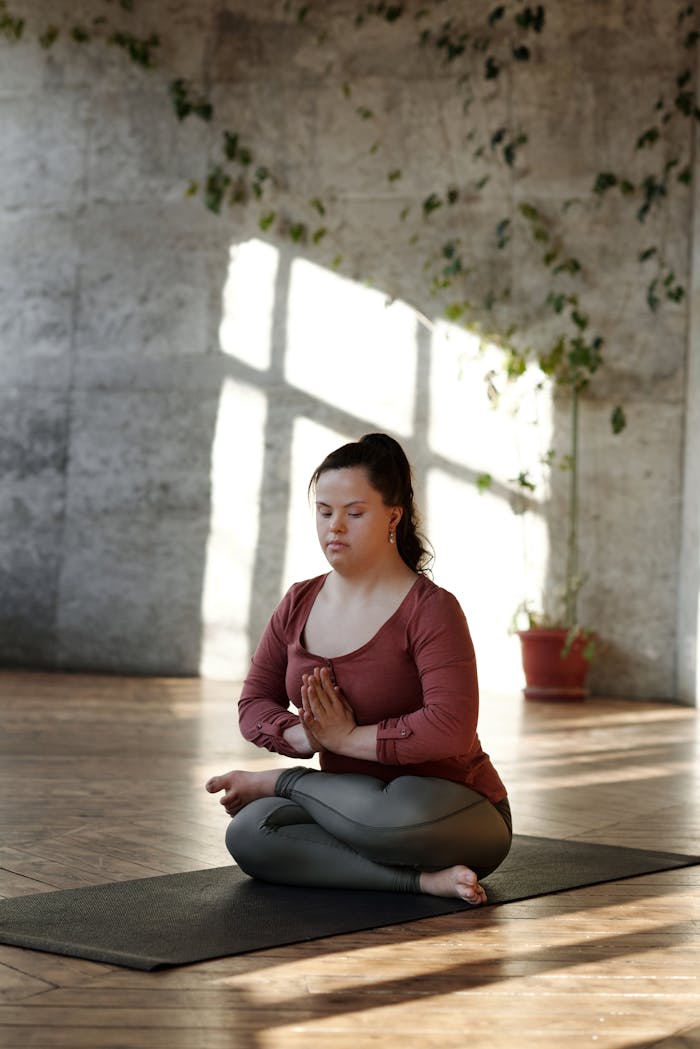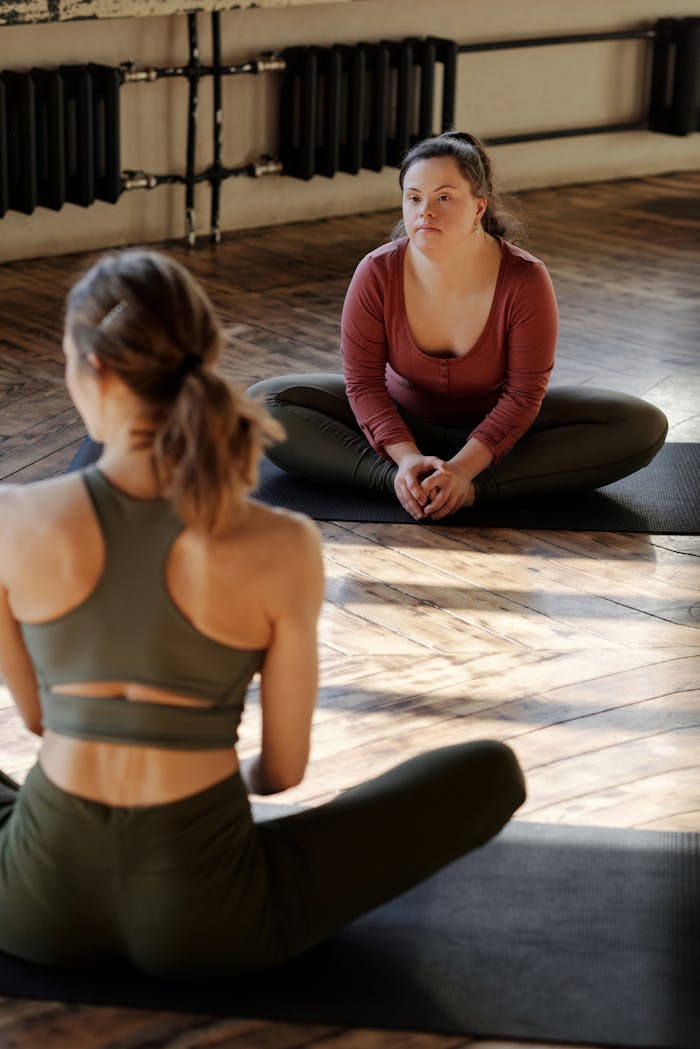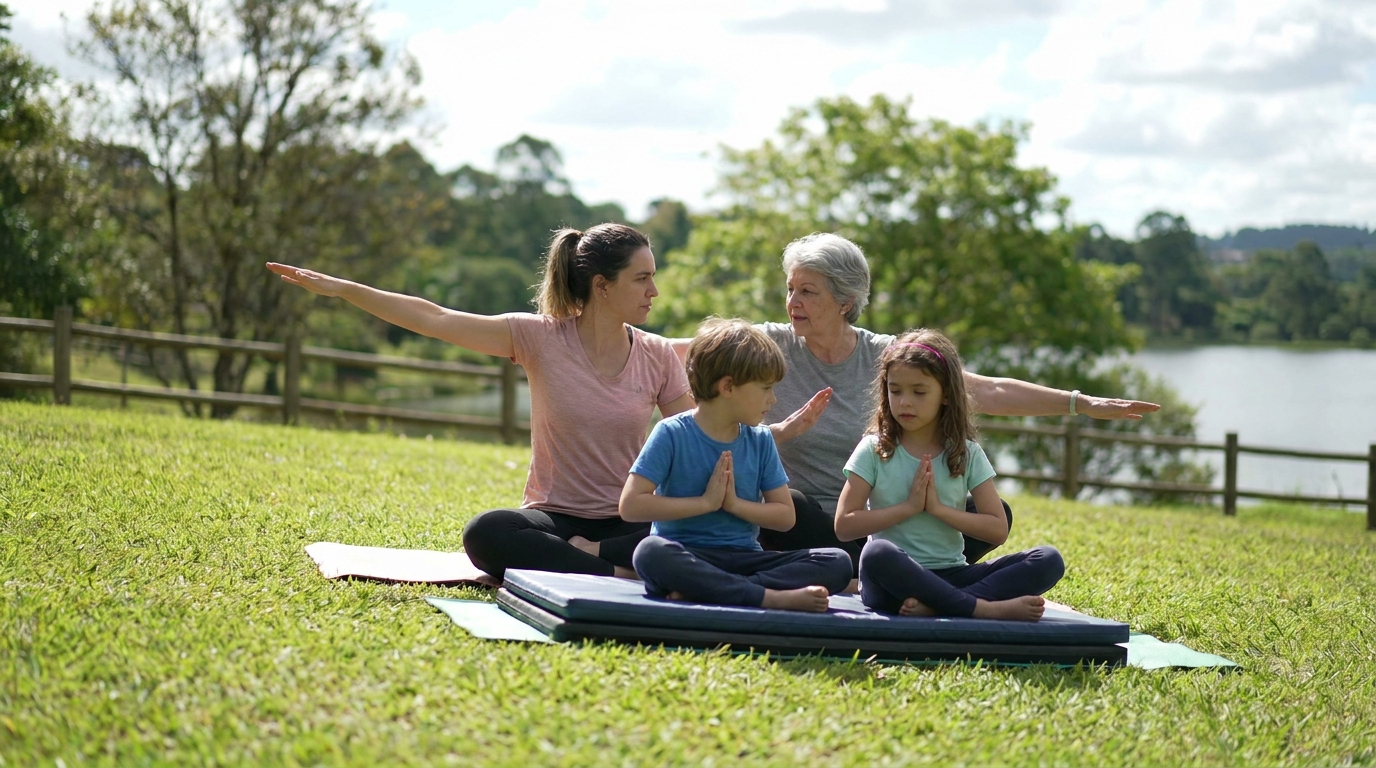
Family yoga is the simple, joyful practice of doing yoga together as a family. It may include gentle yoga poses, breathing exercises, mindful movement, relaxation, chanting, storytelling, games, or quiet reflection. It can be practiced by parents and children, grandparents and grandchildren, siblings, caregivers, chosen family, or any group of loved ones who want to connect in a healthy and meaningful way.
In Sanskrit, the word yoga means “union” or “to join.” It points to the beautiful possibility of bringing body, mind, heart, and spirit into harmony. When practiced as family yoga, this union becomes something we can share. We learn not only to stretch our bodies, but also to stretch our patience, kindness, listening, and love.
Family yoga does not require everyone to be flexible, calm, spiritual, or experienced. It is not about perfect poses or picture-worthy moments. It is about showing up together with sincerity. In the spirit of bhakti, the yoga of devotion, even a small practice offered with love becomes meaningful.
Whether your family is energetic, quiet, busy, blended, traditional, nontraditional, religious, spiritual, or simply curious, yoga can meet you where you are. Like a gentle friend, it offers tools for daily life: breathing when emotions are big, moving when the body feels restless, pausing when the mind is crowded, and resting when the heart is tired.
Family Yoga Is for Every Kind of Family
One of the most beautiful benefits of family yoga is that it welcomes diversity. Every body can practice. Every age can participate. A toddler may enjoy pretending to be a frog or a tree. A teenager may appreciate stress relief and privacy within shared practice. A parent may find a moment of calm in the middle of a demanding day. A grandparent may benefit from gentle stretching and chair yoga.
Yoga reminds us that we do not need to be the same in order to belong together. Each person comes with their own body, personality, and needs. Family yoga honors this. It gives space for laughter, silence, movement, stillness, effort, and rest.
A Practical Path, Not a Performance
In the Yoga Sutras of Patanjali, one of the foundational texts of yoga, yoga is described as the calming of the movements of the mind: yogas chitta vritti nirodhah. In simple words, yoga helps us quiet the busy waves of thought so we can respond to life with more clarity.
For families, this is deeply practical. Children have big feelings. Adults carry responsibilities. Homes can become noisy, rushed, and emotionally full. Family yoga gives everyone a shared way to pause, breathe, and return to steadiness.
It is not about escaping life. It is about learning how to live more lovingly within it.
Why Family Yoga Matters
In many homes, family members are together often but not always truly connected. Devices, schedules, school, work, chores, and stress can pull attention in many directions. Family yoga creates intentional time to be present with one another.
This presence is sacred in its own quiet way. In bhakti, devotion is not limited to temples, rituals, or songs. Devotion can be found in how we listen to a child, how we care for an elder, how we speak gently after a hard day, and how we offer our attention to the people near us.
Family yoga helps transform ordinary moments into opportunities for connection.
Building Emotional Connection
One of the greatest benefits of family yoga is emotional bonding. When families breathe together, move together, and rest together, they create a felt sense of safety.
Children often understand love through presence. A parent or caregiver sitting beside them, trying a silly pose, laughing gently, or breathing slowly with them can communicate, “I am here with you.” This kind of connection supports emotional security.
For adults, family yoga can soften the pressure to always manage, correct, or rush. It offers a different way to relate: through play, patience, and shared experience.
Supporting Mental Health and Stress Relief
Yoga is widely known for helping reduce stress. Gentle movement, mindful breathing, and relaxation can support the nervous system, helping the body shift from “fight or flight” into a more settled state.
For children, this may look like fewer meltdowns, better self-regulation, or improved sleep routines. For teens, yoga may help with anxiety, academic pressure, body awareness, and emotional balance. For adults, it may offer relief from tension, fatigue, and mental overload.
The Bhagavad Gita, a beloved scripture of yoga, teaches the value of balance. In Chapter 6, Krishna explains that yoga is supported by moderation in eating, sleeping, recreation, and effort. This wisdom is very practical for family life. Yoga is not about forcing the body or mind. It is about finding a steady rhythm that supports well-being.
Encouraging Healthy Habits Early
When children grow up seeing yoga as normal, they learn that caring for the body and mind is part of life. They begin to understand that rest is important, breath is powerful, and movement can be joyful.
Family yoga can help children build:
- Body awareness
- Balance and coordination
- Confidence
- Focus and attention
- Emotional vocabulary
- Compassion for themselves and others
These benefits can continue into adulthood. A child who learns to take three deep breaths when upset has received a lifelong gift.
The Physical Benefits of Family Yoga
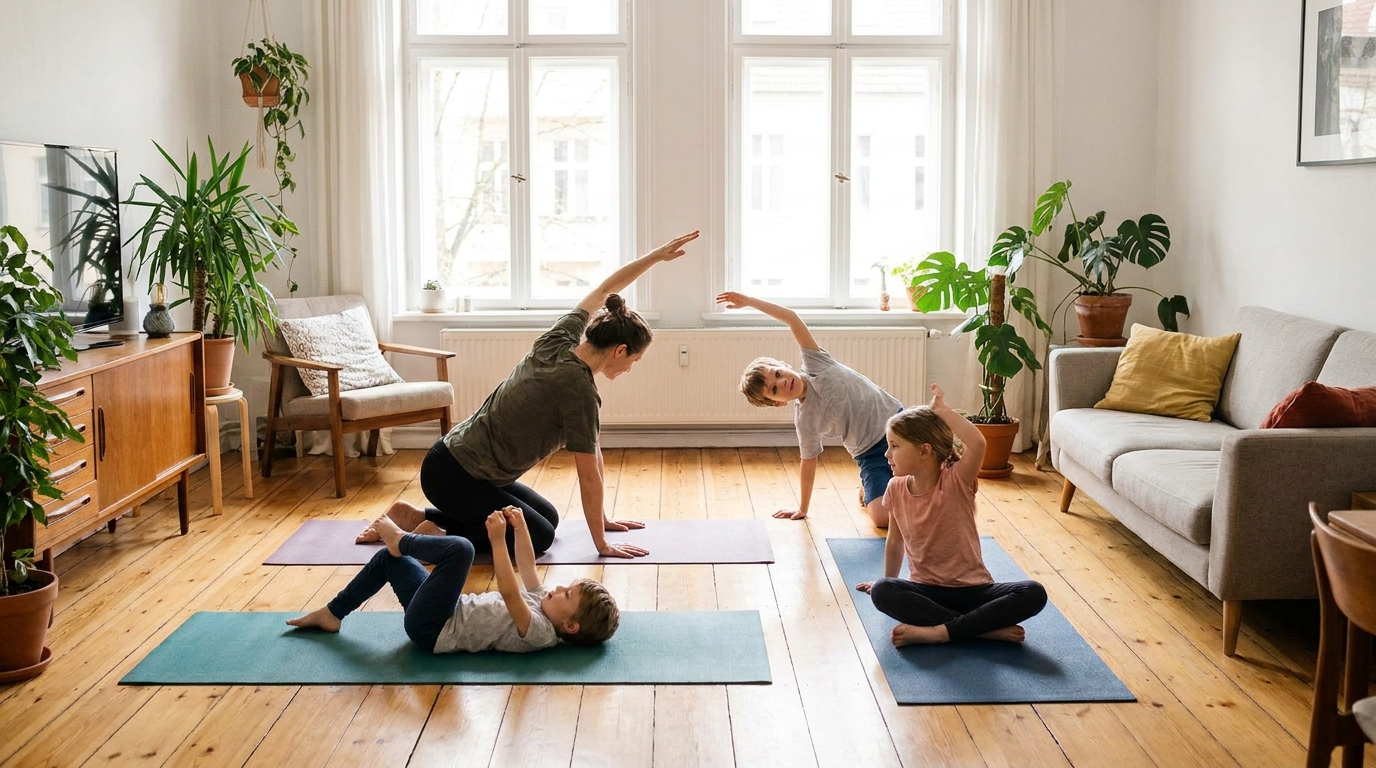
Family yoga supports the body in gentle and accessible ways. It can be energizing, calming, strengthening, or restorative depending on the needs of the family.
Unlike competitive sports or structured fitness routines, family yoga can be adapted to many bodies and abilities. There is no need to compare. Each person practices in a way that is safe and respectful.
Improving Flexibility and Strength
Yoga poses, called asanas in Sanskrit, help stretch and strengthen the body. Asana simply means “seat” or “posture.” In modern yoga, it refers to the physical poses we practice.
Family yoga might include simple postures such as:
- Tree Pose for balance
- Cat-Cow Pose for spine mobility
- Downward-Facing Dog for strength and stretching
- Butterfly Pose for opening the hips
- Child’s Pose for rest and comfort
Over time, regular practice may improve flexibility, posture, core strength, and coordination. For children, this supports healthy physical development. For adults, it can ease stiffness from sitting, working, driving, or carrying stress in the body.
Helping Children Develop Coordination
Young children are still learning how their bodies move through space. Yoga gives them a playful way to explore balance, right and left sides, big movements, small movements, and body control.
A child pretending to be a cobra, lion, mountain, or star is not only having fun. They are developing motor skills, focus, and confidence. Family yoga can be especially helpful because children learn through imitation and connection. When they see adults moving with curiosity rather than perfection, they feel free to try.
Supporting Rest and Better Sleep
Many families struggle with bedtime. Children may feel overstimulated. Adults may carry the stress of the day. A short family yoga routine in the evening can help everyone transition toward rest.
Gentle forward folds, slow breathing, legs up the wall, or guided relaxation can become part of a peaceful bedtime ritual. Even five minutes of calm breathing together can change the atmosphere of the home.
In yogic language, relaxation practices may be connected to pratyahara, which means drawing the senses inward. Simply put, it is the practice of turning down the noise of the outer world so the inner world can become peaceful.
Check out the latest yoga guides on yoga guides for helpful tips and advice.
The Emotional and Spiritual Benefits of Family Yoga
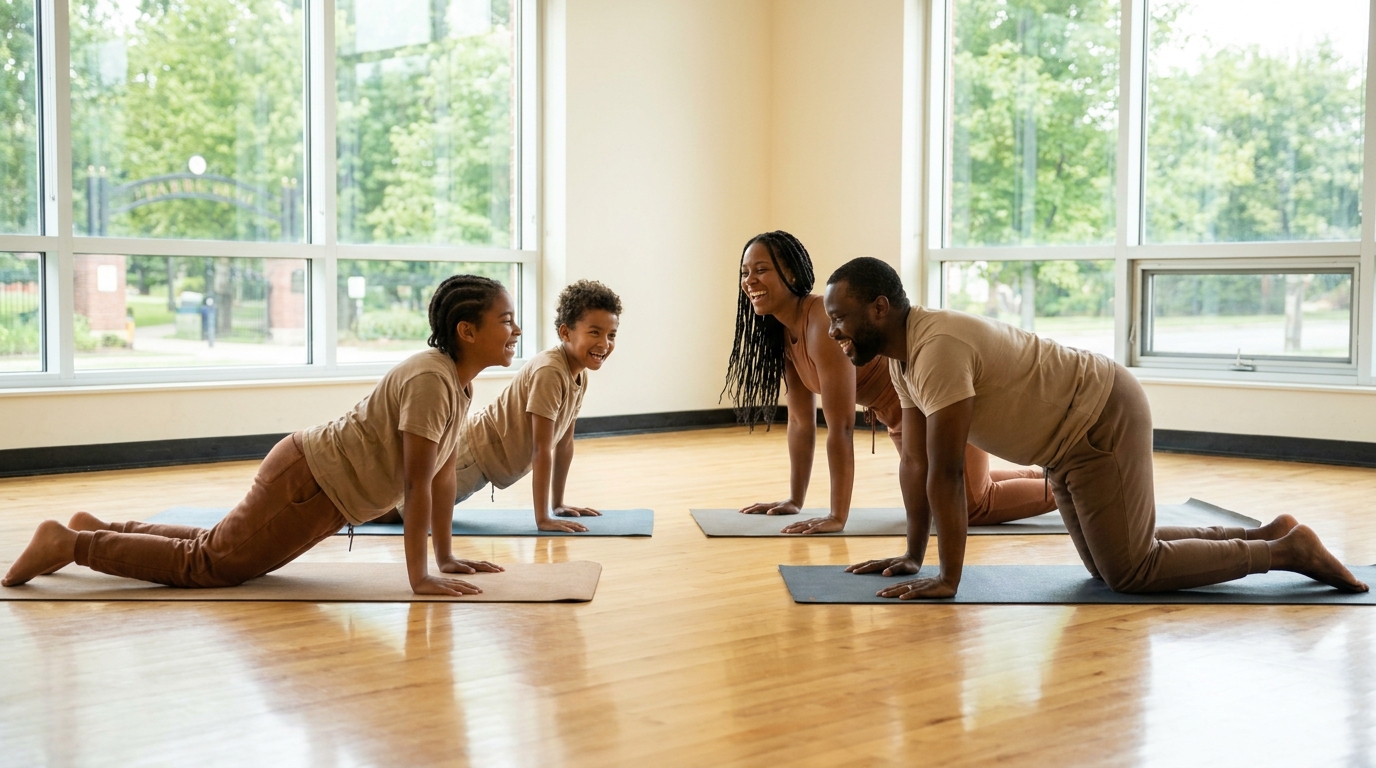
Family yoga is not only physical exercise. At its heart, yoga is a path of awareness, love, and inner harmony. Families do not need to follow any particular religion to benefit from this. The deeper teachings of yoga can be practiced in universal ways: kindness, truthfulness, patience, gratitude, and compassion.
These qualities are part of yoga’s ethical foundation. In the Yoga Sutras, Patanjali describes the yamas and niyamas, or guiding principles for living. The yamas include values like non-harming, truthfulness, and non-greed. The niyamas include contentment, self-discipline, self-study, and devotion.
For family life, these teachings are very real. They show up in how we speak, share, forgive, and care for one another.
Practicing Ahimsa: Kindness in Action
Ahimsa means non-harming. It is often translated as nonviolence, but in daily family life it can mean kindness in thought, word, and action.
In family yoga, ahimsa may look like:
- Not forcing a child into a pose
- Listening when someone says they need rest
- Avoiding comparison between siblings
- Speaking gently about our own bodies
- Making room for mistakes and laughter
This is a powerful teaching. When children experience yoga as a safe and kind space, they learn that their bodies are worthy of respect.
Practicing Santosha: Contentment Together
Santosha means contentment. It is the practice of appreciating what is present rather than always reaching for more.
Family yoga supports santosha when we pause and say, “This moment is enough.” Maybe the practice is short. Maybe someone giggles during relaxation. Maybe the baby crawls across the mat. Maybe the dog joins in. Instead of seeing these as interruptions, we can welcome them as part of real life.
Contentment does not mean everything is perfect. It means we can meet life with a softer heart.
Practicing Bhakti: Love as the Offering
Bhakti means devotion or loving dedication. In bhakti yoga, the heart becomes the path. We offer our actions, words, songs, and service with love.
Family yoga can become a bhakti practice when we dedicate it to harmony in the home, healing in relationships, or peace for all beings. A simple moment of gratitude at the beginning or end of practice can bring this devotional spirit alive.
For example, your family might place hands over the heart and say:
“May our home be filled with kindness. May we care for ourselves and each other. May all beings be peaceful.”
This is not complicated. It is humble and sincere. That is enough.
How to Start a Family Yoga Practice at Home
Starting family yoga does not require a perfect room, expensive props, or long sessions. Begin simply. The best family yoga practice is one that your family can actually enjoy and repeat.
A living room, bedroom, backyard, or quiet corner can become your yoga space. A few mats or blankets are helpful, but not necessary. Comfortable clothes are enough.
Choose a Realistic Time
For family yoga to become a habit, choose a time that fits naturally into your day. You might practice:
- In the morning before school
- After work or school to reset
- Before dinner to release energy
- Before bedtime to calm down
- On weekends as a family ritual
Start with 10 to 15 minutes. If your children are very young, even five minutes can be beautiful. Let the practice grow naturally.
Create a Simple Family Yoga Sequence
A balanced family yoga session can include four parts:
- Arrive – Sit together and take a few breaths.
- Move – Practice simple poses or playful movements.
- Breathe – Try one calming breathing exercise.
- Rest – End with quiet relaxation or gratitude.
Here is an easy beginner-friendly sequence:
Mountain Pose
Stand tall with feet on the ground. Feel steady like a mountain. Take three deep breaths.
Sun Reach
Inhale and reach the arms up. Exhale and bring the hands down. Repeat five times.
Tree Pose
Stand on one foot and place the other foot on the ankle or calf. Hold hands with someone if needed. Switch sides.
Cat-Cow Pose
Come to hands and knees. Inhale, lift the chest gently. Exhale, round the back like a cat.
Butterfly Pose
Sit with the soles of the feet together. Gently flap the knees like butterfly wings.
Child’s Pose
Rest the body forward with knees bent. Breathe into the back.
Resting Pose
Lie down or sit comfortably. Close the eyes or soften the gaze. Rest for one to three minutes.
Add Breathwork for Calm
Breathing practices are called pranayama in Sanskrit. Prana means life energy, and ayama means expansion or regulation. Pranayama helps us work with the breath to support the body and mind.
For families, breathwork should be simple and gentle. Avoid forcing or holding the breath, especially with children.
Try these family-friendly breathing exercises:
Balloon Breathing
Place hands on the belly. Inhale through the nose and feel the belly expand like a balloon. Exhale slowly and feel it soften. Repeat five times.
Flower and Candle Breath
Pretend to smell a flower as you inhale. Pretend to blow out a candle as you exhale. This is wonderful for young children.
Bumblebee Breath
Inhale gently. Exhale with a soft humming sound like a bee. This can be calming and fun. If comfortable, place hands over the ears to feel the vibration.
Keep It Playful and Flexible
Children often learn best through play. Family yoga may include animal poses, storytelling, music, partner poses, or imagination. If the practice becomes too serious, children may lose interest.
Let them help choose poses. Invite them to create a yoga story: “We are walking through a forest. We see a tree. We meet a frog. We rest under the moon.”
Remember, the goal is connection, not control.
Family Yoga Poses to Try Together
Partner and group poses can make family yoga especially meaningful. They encourage trust, communication, and teamwork. Always practice safely and avoid pushing or pulling. Move slowly and listen to one another.
Partner Tree Pose
Stand side by side. Each person balances on the outer leg and places the inner foot on the ankle or calf. Put one arm around each other’s back or touch palms together.
This pose teaches balance and support. It reminds us that we can stand strong individually and together.
Double Downward Dog
One person comes into Downward-Facing Dog. Another person, usually a child, carefully places hands on the floor in front and feet near the adult’s lower back or hips, forming a smaller dog shape. This should only be done if everyone feels safe and comfortable.
This pose brings laughter and strength. Keep it light and optional.
Back-to-Back Breathing
Sit back-to-back with a family member. Close the eyes if comfortable. Feel the movement of the other person’s breath. Breathe slowly together.
This is a beautiful practice for connection. It can be especially soothing for a parent and child after a difficult moment.
Family Circle Stretch
Sit in a circle with legs crossed or extended. Hold hands or simply face one another. Inhale and sit tall. Exhale and lean gently to one side. Come back to center and switch.
This creates a sense of unity and shared rhythm.
Gratitude Rest
Lie down in a circle with heads toward the center, or simply rest side by side. Invite each person to name one thing they are grateful for.
Gratitude can soften the heart. It turns attention toward what nourishes us.
How Family Yoga Strengthens Communication
Family yoga gives loved ones a new language. Not only words, but body language, breath, eye contact, and presence become part of communication.
Sometimes families get stuck in patterns of instruction, correction, or reaction. Yoga offers another way: observe, breathe, respond, and reconnect.
Learning to Listen
In yoga, listening is essential. We listen to the body. We listen to the breath. We listen to the heart. In family yoga, we also listen to each other.
If a child says, “I don’t want to do that pose,” we can honor their voice. If a parent says, “I need a quiet moment,” the family can learn respect. If a sibling wants to lead a pose, others can practice receiving.
This kind of listening builds trust.
Encouraging Positive Touch and Boundaries
Partner yoga may involve holding hands, leaning back-to-back, or supporting one another. This can teach healthy, respectful touch. It also creates opportunities to practice consent.
Before a partner pose, ask:
“Is it okay if I hold your hand?”
“Does this feel comfortable?”
“Would you like to stop?”
These simple questions teach children that their bodies matter and that other people’s boundaries matter too.
Repairing After Conflict
Every family has conflict. Yoga will not make a home free from disagreements, but it can help family members repair more gently.
After an argument, a short breathing practice can help everyone settle. A parent might say, “Let’s take three breaths together, and then we can talk.” This does not erase feelings. It creates a calmer space to understand them.
The Bhagavad Gita teaches that the mind can be both a friend and a challenge. Through practice, we learn to guide it. Family yoga gives practical tools for this inner training.
How Else Can Families Practice Yoga Beyond the Mat?
Yoga does not end when the mat is rolled up. In truth, the deepest benefits of family yoga appear in daily life. The way we eat, speak, listen, clean, forgive, and rest can all become part of yoga.
This is where yoga becomes a living path.
Practice Mindful Meals
Before eating, take one quiet breath together. Offer gratitude for the food, the hands that prepared it, and the earth that provided it.
This simple ritual can help children slow down and appreciate nourishment. It can also bring a devotional feeling into daily life without needing elaborate ceremony.
Create a Peace Corner
A peace corner is a small space where family members can go to calm down. It might include a pillow, blanket, calming pictures, a journal, or a few yoga cards.
This is not a punishment space. It is a place for self-regulation and care. A child can learn, “When I feel overwhelmed, I have tools.”
Use Mantra or Affirmation
A mantra is a sacred sound, word, or phrase repeated to focus the mind and open the heart. Some families may enjoy traditional Sanskrit mantras, while others may prefer simple affirmations.
A universal family affirmation might be:
“I am safe. I am loved. I can breathe.”
Or:
“May I be kind. May I be calm. May I be brave.”
If using Sanskrit, one simple mantra is Om Shanti, which means “peace.” Om is considered a sacred sound in yoga, and shanti means peace. Families may chant it softly three times at the end of practice.
Serve Together
In bhakti yoga, service is a form of devotion. Families can extend yoga into the world through acts of kindness.
You might:
- Make a meal for someone in need
- Donate gently used clothes or toys
- Care for a garden
- Write kind notes
- Help a neighbor
- Volunteer together
This teaches children that yoga is not only about personal calm. It is also about love in action.
Tips for Making Family Yoga Sustainable
A family yoga practice grows through gentleness, not pressure. Like watering a small plant, consistency matters more than intensity.
Some days the practice will feel peaceful. Other days it may be messy. Both are part of the path.
Let Go of Perfection
The desire for a perfect family yoga session can create frustration. Children may wander. Someone may complain. A pose may fall apart. The room may be noisy.
This is okay.
Yoga invites us to return again and again. The practice is not ruined by imperfection. In fact, imperfection is where patience and compassion become real.
Invite, Don’t Force
Family yoga works best when it is an invitation. If someone does not want to join, allow them to watch or rest nearby. Over time, curiosity may grow.
Forcing yoga can create resistance. Offering it with warmth creates trust.
Rotate Leadership
Let different family members lead. A child might choose animal poses. A teen might choose music. A grandparent might guide breathing. A parent might lead relaxation.
Rotating leadership gives everyone ownership and helps each person feel valued.
Celebrate Small Moments
A single shared breath is meaningful. A five-minute stretch counts. A bedtime gratitude practice is yoga. A moment of apologizing with humility is yoga.
When families recognize these small moments, yoga becomes less like a task and more like a way of living.
Common Questions About Family Yoga
Many families wonder how to begin, what to expect, and whether they are “doing it right.” Here are simple answers to common questions.
What Age Is Best for Family Yoga?
Family yoga can begin at almost any age. Babies can enjoy gentle movement and songs. Toddlers love playful poses. School-age children can follow stories and sequences. Teens may appreciate stress relief and strength-building. Adults and elders can adapt poses to their needs.
The key is to keep the practice age-appropriate, safe, and enjoyable.
Do We Need Yoga Experience?
No experience is needed. Beginners are welcome. In fact, learning together can be part of the joy. When children see adults trying something new with humility, they learn courage and openness.
If there are injuries, medical concerns, pregnancy, or mobility limitations, it is wise to consult a qualified yoga teacher or healthcare professional.
How Often Should We Practice?
Start with once or twice a week. Even short practices can help. If your family enjoys it, you can add simple daily rituals, such as three breaths before bedtime or a morning stretch.
Consistency is helpful, but kindness is more important. Let the practice support your family, not become another source of pressure.
What If My Child Won’t Sit Still?
That is completely normal. Children are naturally energetic. Family yoga does not require perfect stillness. Begin with movement, songs, or animal poses before trying quiet breathing.
Over time, children often become more comfortable with stillness when it is introduced gently.
The Deeper Gift of Family Yoga
The benefits of family yoga reach far beyond flexibility and fitness. Family yoga can become a sacred pause in the middle of modern life. It helps families breathe together, laugh together, rest together, and remember what matters.
In a world that often encourages hurry, yoga teaches presence. In a culture that often encourages comparison, yoga teaches acceptance. In stressful seasons, yoga teaches steadiness. In family life, where love is deep but not always easy, yoga teaches patience and forgiveness.
The scriptures of yoga remind us that practice is a path. In the Yoga Sutras, Patanjali speaks of abhyasa, meaning steady practice, and vairagya, meaning non-attachment. For families, this means we keep showing up with love, while letting go of the need for perfect results.
This is a humble and beautiful way to practice.
A family that practices yoga together does not become perfect. Rather, it becomes more aware. More tender. More able to pause before reacting. More willing to listen. More open to joy.
At the end of a family yoga practice, you might sit together, place hands at the heart, and bow the head slightly. This gesture, often paired with the word Namaste, means something like, “The light in me honors the light in you.”
For families, this is a powerful remembrance. Beneath the busy schedules, strong emotions, and daily responsibilities, there is light in each person. Family yoga helps us notice it again.
May your practice be simple. May your home be peaceful. May your family discover, breath by breath, the quiet blessing of being together.
FAQs
What is family yoga?
Family yoga is a practice that involves parents and children participating in yoga together. It is a way for families to bond, connect, and promote physical and mental well-being.
What are the benefits of practicing family yoga?
Practicing family yoga can help improve communication, build trust, and strengthen the family bond. It also promotes physical fitness, flexibility, and relaxation for both parents and children.
What age groups can participate in family yoga?
Family yoga is suitable for children of all ages, from toddlers to teenagers, as well as parents and grandparents. The practice can be adapted to accommodate different age groups and abilities.
What are some common family yoga poses and activities?
Common family yoga poses and activities include partner poses, group poses, breathing exercises, and relaxation techniques. These activities are designed to be fun and engaging for the whole family.
Do you need prior yoga experience to participate in family yoga?
No prior yoga experience is necessary to participate in family yoga. The practice is designed to be accessible to all levels, including beginners. The focus is on spending quality time together as a family while exploring the benefits of yoga.