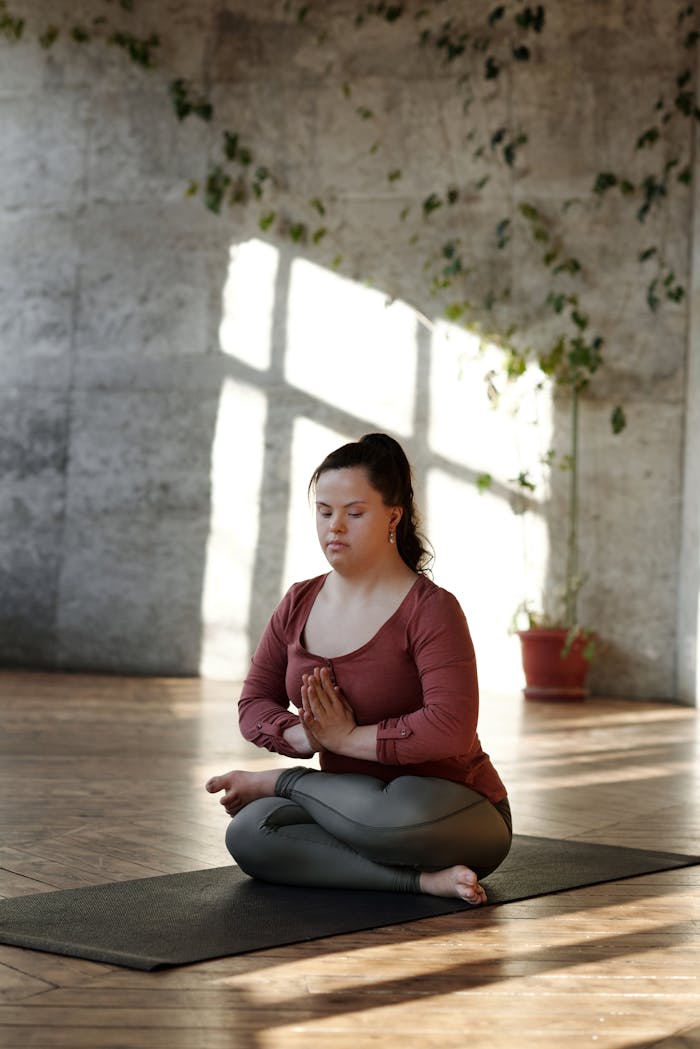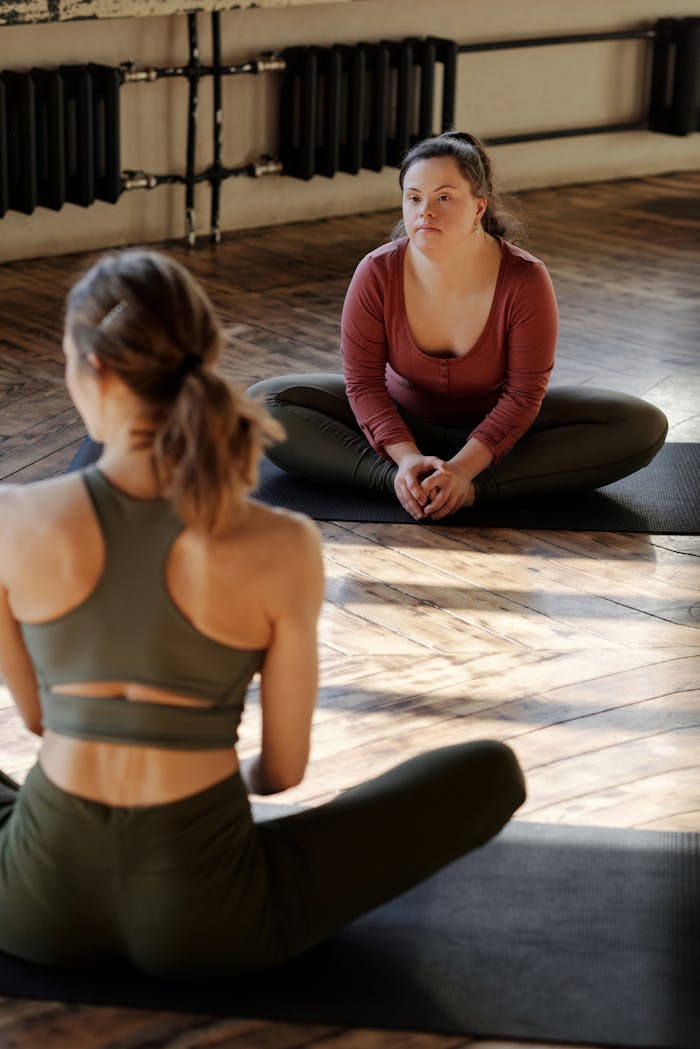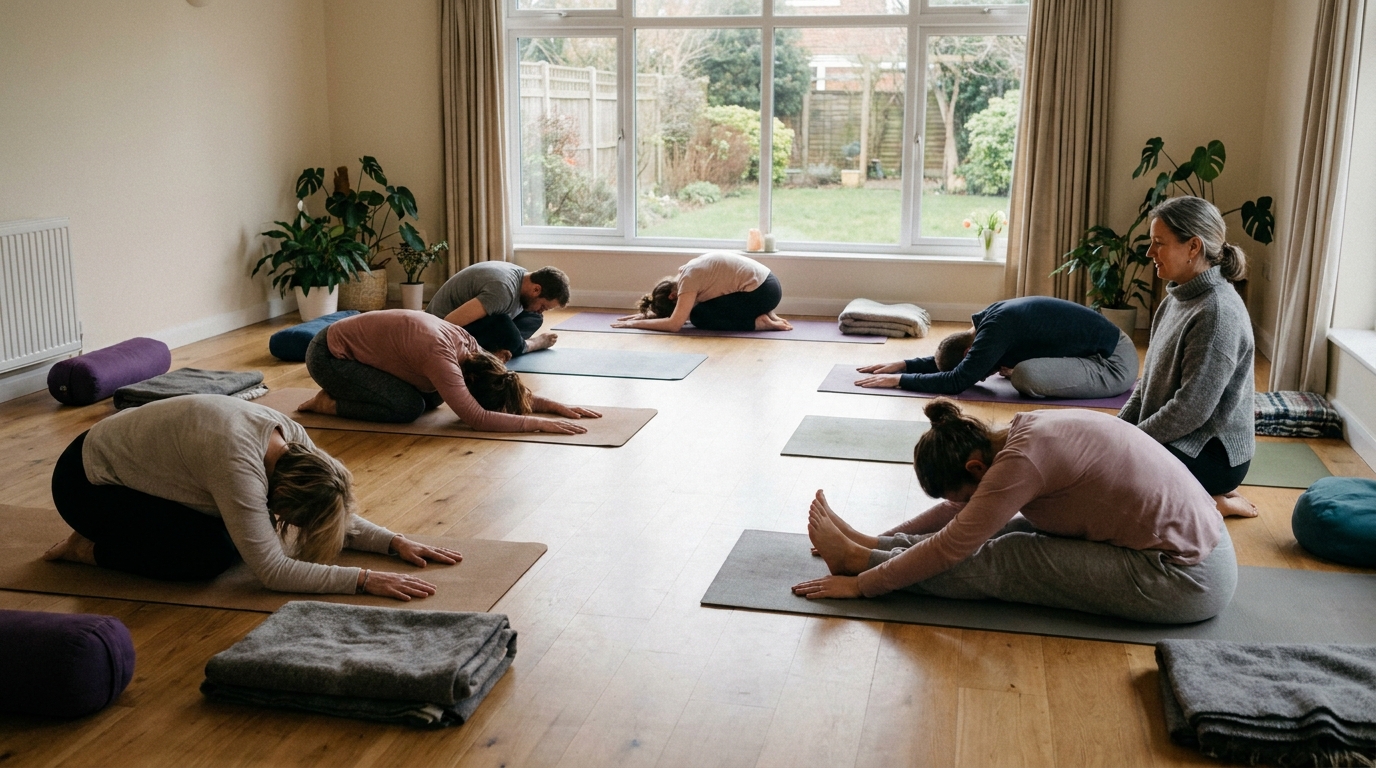
Trauma-informed yoga is a compassionate way of practicing yoga that recognizes how trauma can affect the body, mind, emotions, breath, and sense of safety. It is not a special “type” of yoga as much as it is a caring approach. The teacher, practitioner, and community honor the truth that each person’s body carries a unique story.
In this path, yoga is offered as an invitation, not a demand. There is no pressure to perform, achieve, or “fix” oneself. Instead, trauma-informed yoga creates a space where choice, safety, gentleness, and self-awareness are central.
The word “yoga” comes from the Sanskrit root yuj, meaning “to unite” or “to connect.” In practical terms, yoga helps us reconnect—with the breath, the body, the present moment, and the deeper Self. For someone who has lived through trauma, this reconnection must happen slowly, respectfully, and with great tenderness.
Trauma-informed yoga welcomes everyone: survivors of personal trauma, people living with anxiety or grief, those recovering from chronic stress, and anyone seeking a kinder relationship with their body. You do not need to be flexible, spiritual, athletic, or experienced. You only need to arrive as you are.
Trauma Is Not Only in the Mind
Trauma is often understood as something that happened in the past. Yet its effects may remain alive in the nervous system. A person may feel easily startled, emotionally numb, disconnected from the body, exhausted, tense, or overwhelmed.
The body may stay in survival patterns long after danger has passed. These patterns can include fight, flight, freeze, or fawn responses. Trauma-informed yoga does not judge these responses. It sees them as intelligent ways the body tried to protect itself.
In this way, the practice begins with humility. We do not force healing. We listen.
Yoga as a Path of Remembering Wholeness
In the Yoga Sutras of Patanjali, one of the foundational texts of yoga, yoga is described as yogas chitta vritti nirodhah—often translated as “yoga is the calming of the fluctuations of the mind.” This does not mean suppressing thoughts or denying pain. Rather, it points toward a steadier inner awareness beneath the waves of experience.
Trauma-informed yoga helps us approach that steadiness gently. A practitioner may begin by simply noticing the feeling of the feet on the ground. This small moment of awareness can become a doorway back to presence.
In bhakti, the devotional path of love, healing is not a cold or mechanical process. It is relational. We heal through care, trust, prayer, compassion, and connection. Whether one understands the Divine as Krishna, God, Spirit, Love, Nature, or simply the quiet wisdom within, trauma-informed yoga can become a humble offering toward wholeness.
Why Trauma-Informed Yoga Matters
Trauma can make the body feel unsafe. For some people, closing the eyes, holding certain postures, being touched without consent, or being told what to do can feel overwhelming. Traditional yoga classes, even when well-intentioned, may accidentally activate trauma responses if they emphasize correction, intensity, or obedience.
Trauma-informed yoga matters because it places safety before performance.
It teaches that the practitioner is the expert of their own body. The teacher is not there to control, diagnose, or push. The teacher is there to offer choices and support a person’s inner agency.
Restoring Choice and Agency
One of the painful effects of trauma is the loss of choice. Trauma-informed yoga helps restore choice in simple, embodied ways.
A teacher might say:
“You are welcome to keep your eyes open or softly lower your gaze.”
“You may stay in this shape, adjust it, or rest.”
“If this movement does not feel right today, you can choose another.”
These phrases may seem small, but they are powerful. They remind the nervous system: “I have options. I can choose. I am here now.”
This restoration of agency is central to healing. The practice becomes not about doing the “perfect pose,” but about rebuilding trust with oneself.
Creating Safety in the Nervous System
The nervous system is always scanning for safety or danger. Trauma-informed yoga supports the nervous system through predictability, grounding, breath awareness, and compassionate pacing.
Grounding practices may include feeling the weight of the body supported by the floor, noticing points of contact, or orienting to the room by looking around slowly. These practices help communicate to the body: “In this moment, I am supported.”
This is not about pretending life is always safe. It is about helping the body recognize moments of relative safety when they are available.
Moving from Shame to Compassion
Many trauma survivors carry shame. They may wonder, “Why can’t I relax?” or “Why does my body react this way?” Trauma-informed yoga offers another message: “Your body is not broken. Your body has been protecting you.”
This shift is deeply healing. It transforms the practice from self-improvement into self-compassion.
In the Bhagavad Gita, Sri Krishna teaches Arjuna with great patience. Arjuna is overwhelmed, trembling, and confused on the battlefield of life. Krishna does not shame him. He guides him with wisdom, presence, and love.
This sacred dialogue reminds us that spiritual practice begins exactly where we are—even in fear, grief, and uncertainty.
The Spiritual Heart of Trauma-Informed Yoga
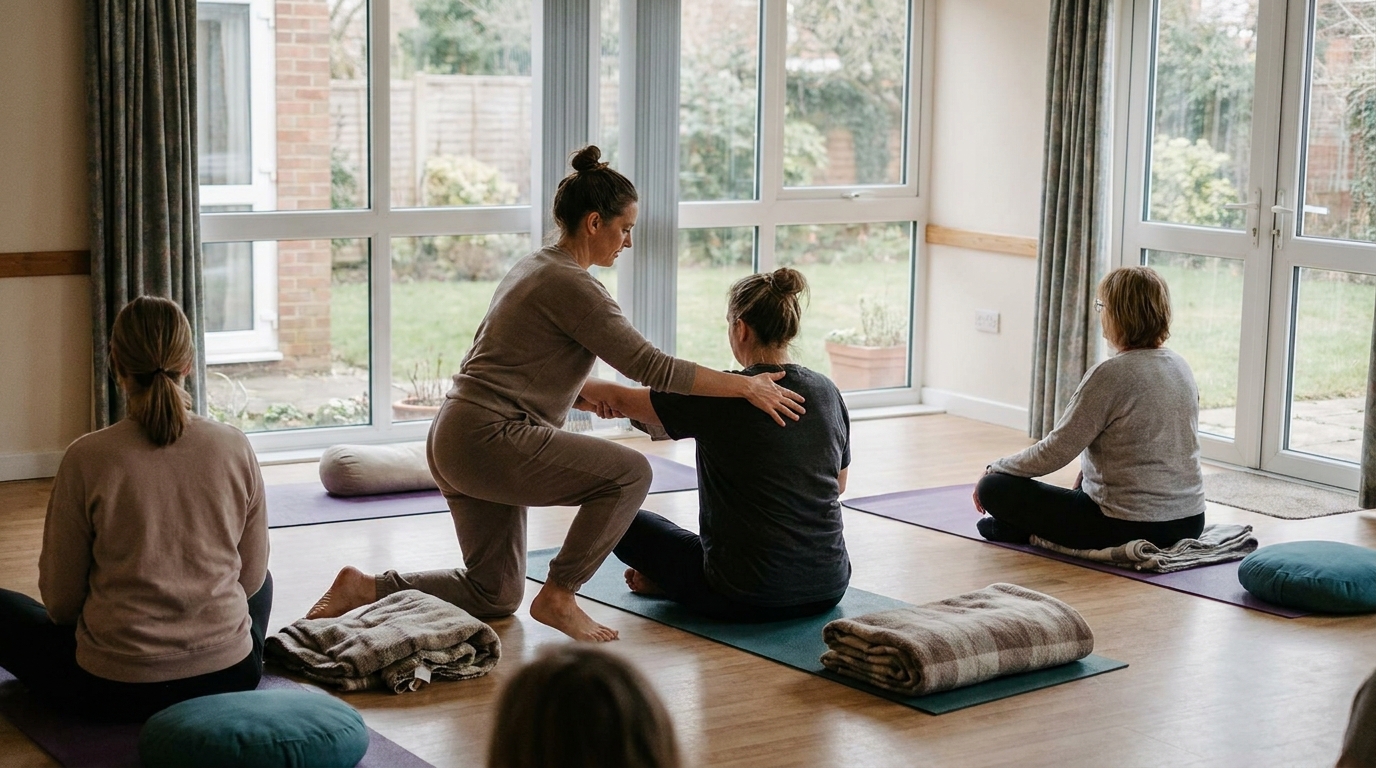
Trauma-informed yoga can be practiced in secular settings, clinical settings, community spaces, temples, studios, or at home. It can be deeply spiritual or simply practical. Its heart is compassion.
From the perspective of bhakti yoga—the yoga of devotion—every body is worthy of reverence. The body is not an obstacle to spiritual life. It is a sacred field where healing, awareness, and devotion can unfold.
Ahimsa: The Practice of Non-Harming
One of the first ethical principles in yoga is ahimsa, a Sanskrit word meaning “non-harming” or “non-violence.” In trauma-informed yoga, ahimsa is essential.
Ahimsa means we do not force the body into shapes. We do not shame ourselves for needing rest. We do not compare our healing journey to someone else’s.
A trauma-informed practice asks:
Is this kind?
Is this supportive?
Is this too much, too soon?
Can I soften my effort?
Ahimsa teaches us that healing does not grow well in harshness. It grows in the soil of patience.
Santosha: Finding Enoughness in the Present Moment
Santosha means contentment. It does not mean pretending everything is fine. It means gently discovering that, even in difficulty, there may be one breath, one sensation, one small moment that is enough for now.
For someone healing from trauma, santosha might sound like:
“This breath is enough.”
“This small movement is enough.”
“Resting today is enough.”
This is a profound practice. Many people come to yoga thinking they must become more. Trauma-informed yoga whispers, “Beloved, begin by knowing you are already worthy.”
Ishvara Pranidhana: Surrender with Trust
Ishvara pranidhana means surrender to the Divine, or offering oneself to a higher wisdom. For some, this may mean God. For others, it may mean life, love, truth, or the healing intelligence of the body.
In trauma-informed yoga, surrender does not mean giving up personal boundaries. It does not mean tolerating harm. True surrender is not helplessness. It is the softening of the illusion that we must carry everything alone.
A simple devotional reflection might be:
“May this practice be guided by compassion.”
“May I be held in love.”
“May healing unfold at the pace that is right for me.”
This kind of surrender is humble, wise, and safe.
Sure, here is the sentence with the clickable link:
Check out the latest yoga guides at yoga guides.
How Trauma-Informed Yoga Works in Practice
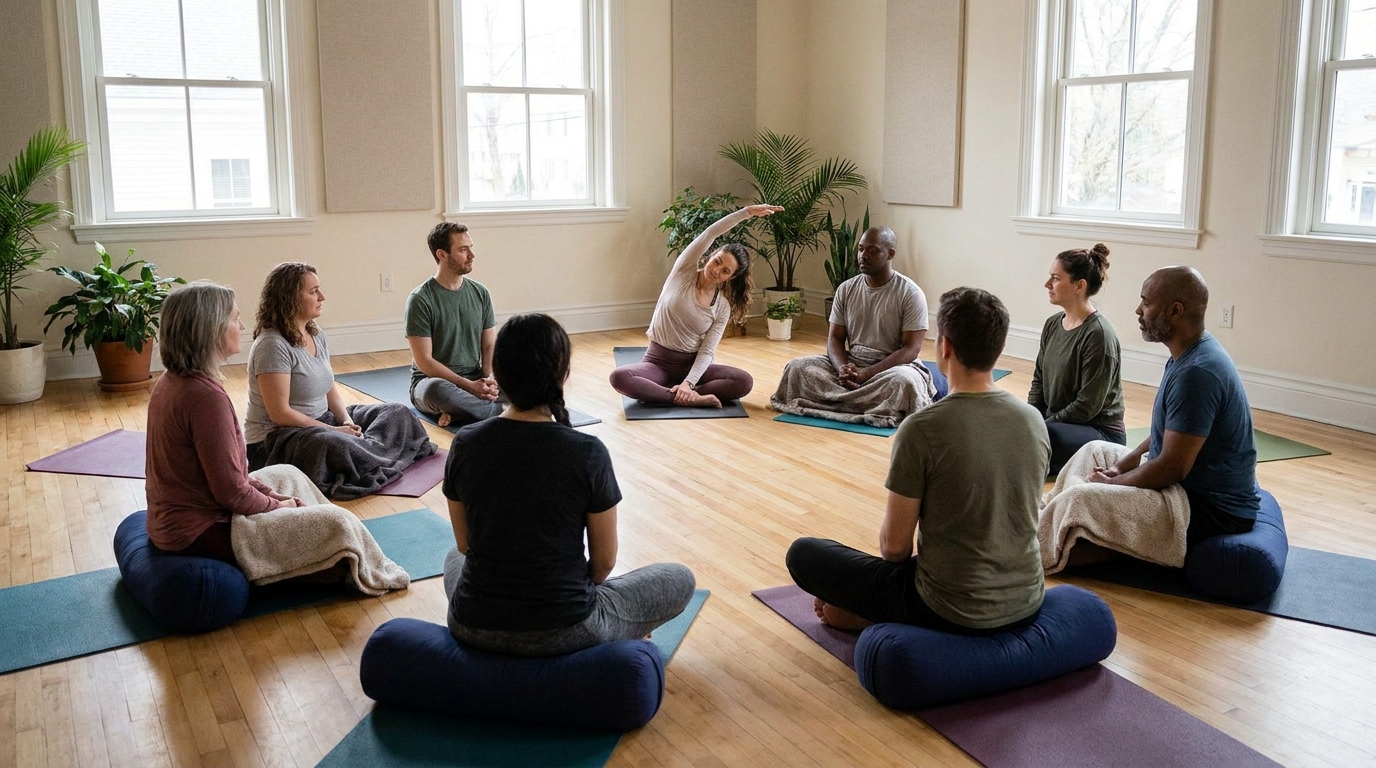
Trauma-informed yoga supports healing through body awareness, breath, movement, grounding, and rest. It works best when practiced slowly and consistently, with respect for each person’s needs.
It is important to say clearly: trauma-informed yoga is not a replacement for therapy, medical care, or crisis support. It can be a beautiful complement to trauma therapy, counseling, somatic work, or other healing modalities. If you are experiencing severe distress, flashbacks, self-harm thoughts, or ongoing danger, please seek support from a qualified mental health professional or emergency service in your area.
Yoga can support healing, but you do not have to heal alone.
A Choice-Based Approach
In a trauma-informed yoga class, language is invitational. Instead of saying, “Do this,” a teacher may say, “If you would like, you might explore…”
This matters because trauma can make direct commands feel unsafe. Choice-based language helps practitioners remain connected to their own inner guidance.
For example:
“You may bring one hand to your heart, or you may let your hands rest wherever they feel comfortable.”
“You might notice the breath, or if that feels uncomfortable, you can notice the feeling of your feet.”
“You are welcome to pause at any time.”
This approach honors the dignity of the practitioner.
Gentle Movement and Sensation
Trauma can cause disconnection from bodily sensation. Some people feel too much; others feel very little. Trauma-informed yoga does not rush this process.
Gentle movements can help rebuild the bridge between awareness and sensation. Examples include:
Rolling the shoulders slowly
Pressing the feet into the floor
Turning the head gently from side to side
Moving the hands open and closed
Rocking slightly while seated
These movements are simple, but they can be powerful. They allow the body to experience movement without overwhelm.
Breath Awareness Without Pressure
Breath practices, called pranayama in Sanskrit, are often used in yoga to guide energy and calm the mind. Prana means life force or vital energy, and ayama can mean expansion or regulation.
However, for some trauma survivors, focusing on the breath may feel uncomfortable or triggering. Trauma-informed yoga respects this.
Instead of forcing deep breathing, practitioners may be invited to notice the breath indirectly:
“Perhaps notice the movement of your shirt as you breathe.”
“You might feel the air near the nostrils, or you might simply feel your hands resting.”
“If breath awareness feels like too much, you can look around the room and notice colors or shapes.”
Over time, breath may become a friend again. But friendship cannot be forced.
How to Begin a Trauma-Informed Yoga Practice
Beginning does not require a mat, special clothing, or a long class. Healing can begin with one gentle moment of presence.
The key is to start small. In trauma recovery, “less is more” is often wise. A practice that feels manageable is more supportive than one that feels intense.
Step 1: Choose a Supportive Space
Before practicing, consider your environment. Is there enough privacy? Do you feel physically safe? Is the lighting comfortable? Would you like the door open or closed? Would having a blanket nearby feel supportive?
You may also choose to practice near a wall, chair, or bed. Props are not signs of weakness. They are expressions of care.
In yoga, support is sacred.
Step 2: Begin with Grounding
Grounding helps bring awareness to the present moment. You might begin seated, standing, or lying down.
Try this:
Notice where your body touches the ground or chair.
Feel the support beneath you.
Look around the space slowly.
Name three things you can see.
Notice one sound.
Feel your feet, hands, or back body.
There is no need to feel calm immediately. Grounding is not a performance. It is a gentle invitation to arrive.
Step 3: Practice Gentle Movement
You may explore a few simple movements:
Shoulder circles
Slow wrist rolls
Seated cat-cow movement
Gentle side stretch
Standing with feet grounded
Slow walking meditation
As you move, ask yourself:
“Would I like more, less, or something different?”
This question is at the heart of trauma-informed yoga. It brings authority back to the practitioner.
Step 4: Include Rest in a Safe Way
Rest is not always easy for trauma survivors. Stillness can sometimes bring up difficult sensations or memories. So rest should be offered with options.
Instead of lying flat in savasana—the final resting pose—you might choose:
Sitting against a wall
Lying on your side
Keeping knees bent
Covering with a blanket
Keeping eyes open
Holding a pillow or cushion
Savasana means “corpse pose,” but in trauma-informed yoga, it can be reimagined simply as a resting shape. You are not required to become still in any particular way. Rest can be active, alert, and supported.
A Simple Trauma-Informed Yoga Sequence
This short practice can be done in 10 to 20 minutes. Please adapt it to your body and needs. You are welcome to skip anything.
Move slowly. Keep your eyes open if that feels better. Pause whenever you wish.
1. Arrival and Orientation
Find a comfortable position—seated, standing, or lying down.
Let your gaze move around the room. Notice colors, shapes, light, and space. Perhaps name silently: “I am here.” If it feels supportive, notice the date, time, and place.
Feel one point of contact with support beneath you.
Take your time.
2. Hands and Feet Awareness
Gently press your feet into the floor, if they are touching the ground. Notice the pressure. Release.
Open and close your hands slowly. Feel the fingers move. If you wish, rub the palms together and notice warmth.
This simple practice can help bring awareness to the edges of the body, which may feel grounding.
3. Seated or Standing Cat-Cow
If seated, place your hands on your thighs. As you inhale naturally, you might gently lift the chest. As you exhale naturally, you might round the back slightly.
If standing, place hands on a wall or chair and gently move the spine.
There is no need to match breath and movement perfectly. Let the movement be small and kind.
4. Side Stretch with Choice
Reach one arm gently upward or place a hand on the hip. Lean slightly to one side if that feels welcome. Return to center.
Try the other side.
You can choose a big stretch, a tiny stretch, or no stretch. The purpose is not intensity. The purpose is listening.
5. Supported Rest or Stillness
Choose a resting position. You might sit with your back supported, lie on your side, or rest your hands on your lap.
If breath awareness feels okay, notice one natural breath. If not, notice the feeling of support beneath you.
You may silently offer:
“May I be gentle with myself.”
“May I be safe in this moment.”
“May healing unfold with compassion.”
When ready, look around the room again. Move fingers and toes. Return slowly.
How Else Can Healing Be Supported?
Trauma-informed yoga is one doorway among many. Healing is often like tending a garden. Different seeds may be needed: therapy, community, prayer, movement, rest, creativity, nutrition, nature, and meaningful relationships.
No single practice must carry the whole burden of healing.
Pairing Yoga with Therapy and Somatic Care
Many people benefit from combining trauma-informed yoga with trauma therapy, somatic experiencing, EMDR, cognitive therapies, group support, or other professional care.
Yoga can help build body awareness and nervous system regulation. Therapy can help process memories, beliefs, grief, and relational wounds. Together, they may support deeper integration.
A trauma-informed yoga teacher should stay within their scope. They can guide movement and awareness, but they should not act as a therapist unless they are licensed and working in that role.
Healthy boundaries are part of ahimsa.
Journaling After Practice
After a gentle practice, journaling can help integrate what was noticed. Keep it simple.
You might write:
What helped me feel supported today?
Was there any moment of ease?
Did I notice a boundary?
What choice did I make for myself?
What do I need now?
There is no need to analyze everything. Sometimes one sentence is enough.
Devotional Practices for the Heart
For those who feel drawn to devotion, bhakti practices may support trauma healing with tenderness. These can include chanting, prayer, sacred music, mantra, or offering gratitude.
A mantra is a sacred sound, word, or phrase used to steady the mind and open the heart. One simple Sanskrit mantra is:
Om Shanti Shanti Shanti
Om is a sacred sound representing wholeness or the vibration of life. Shanti means peace. Repeating “shanti” three times is often understood as a prayer for peace in body, mind, and spirit—or peace within oneself, with others, and in the world.
If Sanskrit does not feel comfortable, you may use English:
“May peace be here.”
“I am held.”
“May I be guided.”
Bhakti is not about religious labels. It is about love. It is the humble turning of the heart toward what is sacred.
Common Concerns in Trauma-Informed Yoga
Many people feel uncertain when beginning trauma-informed yoga. This is natural. It is wise to ask questions and move carefully.
“What if I Feel Emotional During Practice?”
Emotions may arise during yoga because the body and mind are connected. If tears, anger, fear, or numbness appear, it does not mean you are doing something wrong.
You can pause. Open your eyes. Look around. Feel your feet. Change positions. Stop the practice. Reach out to a trusted person or professional support if needed.
Trauma-informed yoga honors the pause. Stopping is not failure. It is self-respect.
“Do I Have to Close My Eyes?”
No. You never have to close your eyes.
Many trauma-informed teachers encourage soft eyes, a downward gaze, or simply looking around the room. Closing the eyes can feel vulnerable. Keeping them open can support safety and orientation.
Your comfort matters more than any traditional instruction.
“Can Yoga Trigger Trauma?”
Yes, it can, especially if the practice is too intense, too fast, overly directive, or lacking choice. Certain poses, breathwork, touch, or silence may be activating for some people.
This is why trauma-informed yoga is important. It reduces risk by emphasizing consent, choice, pacing, and grounding.
If something feels wrong, trust that information. Your body’s response deserves respect.
“Is Trauma-Informed Yoga Only for Trauma Survivors?”
No. While it is designed with trauma awareness in mind, this approach can benefit everyone. Choice-based, compassionate yoga supports nervous system health, emotional resilience, and self-trust for people of all backgrounds.
In truth, a trauma-informed approach makes yoga more humane.
Guidance for Yoga Teachers and Space Holders
If you teach yoga, meditation, or movement, trauma-informed principles can make your offerings safer and more inclusive. This is sacred work and should be approached with humility.
A teacher does not need to know everyone’s history. In fact, many students will never share their trauma. The responsibility is to create a space where people do not need to disclose their pain in order to be respected.
Use Invitational Language
Offer options rather than commands. Avoid language that implies students must obey or push through discomfort.
Instead of:
“Close your eyes.”
“Go deeper.”
“Don’t come out of the pose.”
Try:
“You may close your eyes or keep them open.”
“You might explore a little more sensation, or you might soften.”
“You are welcome to come out whenever you need.”
This language helps return power to the practitioner.
Ask for Consent Before Touch
Hands-on adjustments can be triggering, even when offered kindly. In trauma-informed yoga, touch should never be assumed.
Use clear consent practices. Better yet, consider teaching without physical adjustments unless you have specific training and a strong consent process.
Remember: silence is not consent. Stillness is not consent. A smile is not always consent.
Respecting boundaries is yoga.
Avoid Spiritual Bypassing
Spiritual bypassing means using spiritual ideas to avoid real pain. Phrases like “everything happens for a reason” or “just let it go” may hurt trauma survivors, even if intended kindly.
Yoga philosophy is not meant to dismiss suffering. It is meant to accompany us through suffering with wisdom.
In the Bhagavad Gita, Krishna does not tell Arjuna to pretend there is no battle. He helps him see clearly, act wisely, and remember his deeper nature.
Trauma-informed teaching does the same. It does not deny pain. It brings compassion to it.
The Fruits of Practice: What Healing May Look Like
Healing through trauma-informed yoga is not always dramatic. Often, it is quiet.
It may look like noticing tension before it becomes overwhelming. It may look like choosing rest without guilt. It may look like feeling the feet again, breathing with a little more ease, or saying no when something does not feel right.
These are not small things. They are sacred milestones.
Rebuilding Trust with the Body
Trauma can make the body feel like an enemy. Trauma-informed yoga slowly invites the body to become a place of relationship again.
Not always comfortable. Not always simple. But worthy of care.
Over time, a practitioner may begin to feel:
“I can listen to my body.”
“I can respond to my needs.”
“I can feel sensation and remain present.”
“I can choose.”
This is profound healing.
Growing Capacity, Not Forcing Calm
The goal is not to be calm all the time. Life includes grief, anger, fear, joy, and uncertainty. Trauma-informed yoga helps grow capacity—the ability to stay connected to oneself through changing experiences.
A regulated nervous system is not a frozen, silent system. It is flexible. It can respond, recover, and return.
Yoga supports this flexibility through practice, patience, and compassion.
Remembering Our Sacred Worth
In the devotional heart of yoga, every person is seen as sacred. Not because they are healed, strong, flexible, or peaceful. But because life itself is sacred.
The Bhagavad Gita teaches that the true Self is not destroyed by the changes of the body and mind. This teaching must be offered with great care to trauma survivors—not to dismiss pain, but to remind us gently that beneath the wounds, there is still a light untouched by harm.
Trauma may shape a person’s experience, but it does not define their deepest essence.
Bringing Trauma-Informed Yoga into Daily Life
Yoga is not only what happens on the mat. It is how we meet ourselves throughout the day.
Trauma-informed yoga becomes a way of living when we practice choice, compassion, grounding, and presence in ordinary moments.
Micro-Practices for Everyday Regulation
Try one of these short practices during the day:
Feel both feet on the ground before answering a difficult message.
Look around and name five colors in the room.
Place a hand on your heart or belly, if comforting.
Take a slow walk and notice each step.
Pause before saying yes, and ask, “Do I truly have capacity?”
Drink water slowly and feel the cup in your hands.
These small practices can help the nervous system feel supported.
Creating Rituals of Safety
Rituals can be simple and deeply healing. A morning ritual may include lighting a candle, stretching gently, or offering one prayer. An evening ritual may include turning off screens, resting with a blanket, or writing one thing you are grateful for.
In bhakti, even the smallest act can become an offering. Folding a blanket with care, preparing tea, taking medicine, attending therapy, or resting when tired—all can be sacred when done with love.
Community and Connection
Trauma often isolates. Healing often requires safe connection.
A trauma-informed yoga community should be welcoming, non-competitive, and respectful of boundaries. No one should be pressured to share, touch, chant, believe, or participate beyond their comfort.
True spiritual community does not demand that we become someone else. It helps us come home to ourselves.
A Closing Reflection: Healing at the Pace of Love
Healing through trauma-informed yoga is a path of patience. It asks us to honor the body, respect the nervous system, and trust small steps. It reminds us that yoga is not about mastering poses. It is about restoring relationship—with breath, body, heart, community, and the sacred.
Some days, practice may feel peaceful. Other days, it may feel difficult or distant. Both belong. The path is not linear. There is no need to rush.
In the spirit of bhakti, we can approach healing as an offering. Not an offering of perfection, but of sincerity.
One breath offered with honesty.
One boundary honored with courage.
One moment of rest received with gratitude.
One hand placed gently over the heart.
May trauma-informed yoga be a compassionate companion for all who seek healing. May it be practiced with humility, wisdom, and care. May every person who comes to the mat—or simply to a quiet breath—remember that they are not broken beyond repair.
May all beings feel safe.
May all beings be held in compassion.
May all beings know peace.
FAQs
What is trauma-informed yoga?
Trauma-informed yoga is an approach to yoga that recognizes the widespread impact of trauma and aims to create a safe and supportive environment for individuals who have experienced trauma. It emphasizes the principles of safety, choice, and empowerment, and seeks to avoid triggering or re-traumatizing participants.
How does trauma-informed yoga differ from traditional yoga?
Trauma-informed yoga differs from traditional yoga in its focus on creating a safe and supportive environment for individuals who have experienced trauma. It emphasizes the importance of choice, empowerment, and self-regulation, and avoids physical adjustments or hands-on assists that may be triggering for trauma survivors.
What are the benefits of trauma-informed yoga?
The benefits of trauma-informed yoga include improved self-regulation, reduced symptoms of anxiety and depression, increased body awareness, and a sense of empowerment and control. It can also help individuals develop coping skills and tools for managing stress and emotional triggers.
Who can benefit from trauma-informed yoga?
Trauma-informed yoga can benefit individuals who have experienced trauma, including survivors of abuse, violence, and other traumatic events. It can also be helpful for individuals with PTSD, anxiety, depression, and other mental health challenges.
How can I find trauma-informed yoga classes or instructors?
You can find trauma-informed yoga classes or instructors by searching online for trauma-informed yoga studios or teachers in your area. You can also inquire at local yoga studios or wellness centers to see if they offer trauma-informed classes or workshops. Additionally, many trauma-informed yoga teachers offer virtual classes or private sessions.