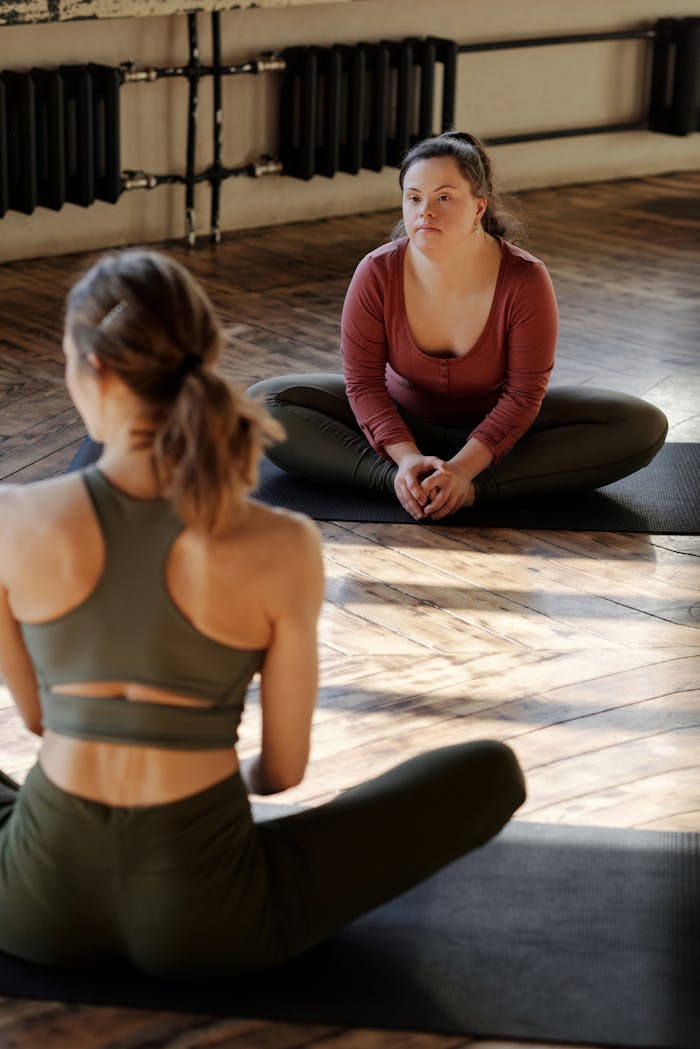
In the quiet space between one breath and the next, healing can begin.
Therapeutic yoga is not about touching the toes, standing on the head, or achieving a perfect pose. It is about returning, gently and honestly, to the body, breath, heart, and inner Self. It is yoga offered as care—adapted to the needs of real people with real bodies, real pain, real stress, and real lives.
Whether you are living with chronic pain, anxiety, fatigue, injury, grief, aging, or simply the weight of modern life, therapeutic yoga invites you to slow down and listen. It welcomes all backgrounds, faiths, body types, ages, and levels of experience. You do not need to be flexible. You do not need to know Sanskrit. You do not need to “perform” spirituality.
You only need a willingness to begin where you are.
In the spirit of bhakti—devotion, humility, and loving remembrance—therapeutic yoga becomes more than a wellness method. It becomes a compassionate relationship with yourself and with life.
Therapeutic yoga is the thoughtful use of yoga practices to support healing, balance, and well-being. It may include gentle movement, breathwork, relaxation, meditation, mindfulness, sound, lifestyle reflection, and spiritual contemplation.
Unlike a general yoga class, therapeutic yoga is often personalized. The teacher or yoga therapist considers your physical condition, emotional state, energy level, medical history, and personal goals. The practice is then adapted to serve you safely.
Yoga as a Path of Wholeness
The Sanskrit word “yoga” comes from the root yuj, meaning “to join” or “to unite.” In simple terms, yoga is the practice of reconnecting what has become separated: body and breath, mind and heart, effort and rest, the individual self and the deeper presence of life.
The ancient sage Patanjali describes yoga in the Yoga Sutras as:
“Yogaś citta-vṛtti-nirodhaḥ”
“Yoga is the calming of the movements of the mind.”
This teaching is deeply relevant to therapeutic yoga. Many forms of suffering are intensified by the restless mind—fear, tension, resistance, and constant inner noise. Therapeutic yoga helps calm the nervous system so the body’s natural intelligence can function more harmoniously.
A Gentle, Practical Approach
Therapeutic yoga may be helpful for people experiencing:
- Back pain, neck pain, or joint discomfort
- Stress, anxiety, or emotional overwhelm
- Sleep difficulties
- Fatigue or burnout
- Recovery from injury or illness
- Limited mobility
- High blood pressure or stress-related conditions
- Grief, trauma sensitivity, or nervous system dysregulation
- Aging-related changes in strength, balance, and flexibility
It is important to say humbly: therapeutic yoga does not replace medical care. It works best alongside appropriate medical treatment, mental health support, physical therapy, and other healing resources. Yoga can be a beautiful companion on the journey, not a demand to reject other forms of help.
Why Therapeutic Yoga Supports Healing
Healing is not always the same as curing. A cure may remove a condition. Healing restores relationship—with the body, with breath, with meaning, with hope, with the Divine or the sacredness of life.
Therapeutic yoga supports healing because it works with the whole person. It does not see you as a diagnosis. It sees you as a living being with body, mind, emotions, energy, and spirit.
The Nervous System and the Breath
One of the most powerful tools in therapeutic yoga is the breath.
In Sanskrit, breath and life force are connected through the word prana. Prana means vital energy—the subtle life movement that animates the body and mind. When we are stressed, our breathing often becomes shallow, fast, or restricted. This can signal danger to the nervous system.
Slow, steady breathing can help shift the body from a stress response toward a calmer state. This is sometimes called activating the parasympathetic nervous system, or the “rest and digest” mode.
A simple practice like lengthening the exhale can soften tension and bring a sense of safety. No complicated technique is required. Even three mindful breaths can become a doorway.
Movement That Respects the Body
Many people come to yoga carrying pain or fear of movement. Therapeutic yoga does not force the body into shapes. Instead, it asks: What movement is useful? What feels supportive? What helps restore strength, mobility, stability, and ease?
Gentle movement can increase circulation, lubricate joints, release muscular tension, improve posture, and rebuild confidence. When practiced with awareness, movement becomes a conversation rather than a command.
This is part of ahimsa, a Sanskrit word meaning non-harming. Ahimsa is one of yoga’s foundational ethical teachings. In therapeutic yoga, ahimsa means we do not bully the body. We listen. We adapt. We honor limits.
The Mind Learns Safety
Pain, stress, and trauma can teach the mind to expect danger. Therapeutic yoga offers repeated experiences of safety: a calm breath, a supported posture, a moment of stillness, a choice to pause.
Over time, these small experiences can change how we relate to discomfort. We may learn: “I can feel sensation without panic. I can rest. I can ask for support. I can come back to myself.”
In the Bhagavad Gita, Krishna teaches:
“Yogaḥ karmasu kauśalam”
“Yoga is skill in action.”
Therapeutic yoga is skillful action. It is not passive. It is wise, compassionate participation in your own healing.
How Therapeutic Yoga Works in Practice

Therapeutic yoga is practical. It can be done on a mat, in a chair, in bed, at a desk, or during daily life. It is not limited to a studio or a particular body type.
The heart of the practice is awareness joined with kindness.
Assessment: Beginning Where You Are
A therapeutic yoga session often begins with gentle inquiry. A teacher may ask:
- What are you experiencing physically?
- What movements feel difficult or painful?
- How is your sleep?
- What is your stress level?
- What helps you feel safe and grounded?
- What do you hope to receive from practice?
This is not to judge you. It is to understand your needs.
In devotional terms, this beginning is an act of humility. We do not impose an idea of yoga onto the body. We bow to reality as it is.
Breath Practices: Simple and Steady
Breathwork is called pranayama in Sanskrit. Prana means vital energy, and ayama can mean expansion or regulation. Pranayama is the practice of guiding the breath to support balance.
A simple therapeutic breath practice:
- Sit or lie down comfortably.
- Place one hand on the belly and one hand on the chest.
- Inhale gently through the nose if comfortable.
- Exhale slowly, allowing the shoulders to soften.
- Continue for 2 to 5 minutes.
- Do not strain or hold the breath.
If anxiety increases, return to natural breathing. Therapeutic yoga always respects your response.
Another calming practice is extended exhale breathing:
- Inhale for a count of 3.
- Exhale for a count of 4 or 5.
- Continue gently for several rounds.
The longer exhale can invite the nervous system to settle.
Gentle Postures: Healing Through Support
Yoga postures are called asana. The word asana originally means “seat” or “posture.” In therapeutic yoga, asana is not about dramatic flexibility. It is about creating a stable, comfortable relationship with the body.
A few common therapeutic yoga postures include:
Supported Child’s Pose
This posture can calm the nervous system and release the back.
Use pillows or a bolster under the chest and belly. Kneel if comfortable, bring the big toes together, and widen the knees. Rest forward onto support. If kneeling is not comfortable, skip this pose.
Legs on a Chair
Lie on your back with calves resting on a chair. Let the knees bend at about 90 degrees. This can ease the lower back and invite relaxation.
Stay for 5 to 10 minutes, breathing naturally.
Cat-Cow Movement
Come to hands and knees, or practice seated in a chair. Inhale and gently lift the chest. Exhale and round the spine slightly. Move slowly.
This supports spinal mobility and breath awareness.
Mountain Pose at the Wall
Stand with your back near a wall. Feel your feet on the ground. Let the spine lengthen. Relax the jaw and shoulders.
This posture builds grounding, balance, and postural awareness.
Deep Rest: The Medicine of Stillness
Rest is not laziness. Rest is sacred repair.
In yoga, deep relaxation is often practiced in shavasana, meaning “corpse pose.” The name may sound unusual, but it points to surrender: releasing control, letting the body be held by the earth.
For therapeutic yoga, shavasana can be adapted with:
- A pillow under the knees
- A blanket under the head
- A weighted blanket if comforting
- Side-lying support
- A chair variation
Deep rest helps the body integrate the benefits of practice. It may reduce stress hormones, soften muscle tension, and calm mental agitation.
Sure, here is the sentence with the clickable link:
Check out the latest yoga guides at yoga guides.
Therapeutic Yoga for Common Conditions

Every person is unique, and yoga practices should be adapted carefully. Still, certain therapeutic yoga principles may support common conditions.
Therapeutic Yoga for Stress and Anxiety
For stress and anxiety, the aim is not to “stop thoughts” by force. The aim is to create steadiness.
Helpful practices may include:
- Slow breathing with longer exhales
- Grounding postures
- Gentle forward bends with support
- Restorative yoga
- Guided relaxation
- Repetition of a calming word or mantra
A mantra is a sacred sound or phrase used to steady the mind. For people from any background, a mantra can be as simple as silently repeating “peace,” “I am safe,” or “let go.” In bhakti traditions, names of the Divine may be repeated with love, such as “Rama,” “Krishna,” or “Om.” Choose what feels sincere and respectful to your heart.
Therapeutic Yoga for Back Pain
For back pain, therapeutic yoga focuses on safety, stability, and gentle mobility. The goal is not aggressive stretching.
Helpful elements may include:
- Breath awareness to reduce guarding
- Pelvic tilts
- Gentle core strengthening
- Supported rest positions
- Hip mobility
- Postural awareness
- Slow transitions
If pain is sharp, radiating, or worsening, seek medical guidance. Yoga should not increase suffering.
Therapeutic Yoga for Better Sleep
Sleep improves when the nervous system feels safe. Evening therapeutic yoga can help release the day.
A simple bedtime routine:
- Dim lights and reduce screens.
- Practice 5 minutes of gentle movement.
- Do 5 minutes of slow breathing.
- Rest with legs on a chair or pillows under knees.
- Repeat a calming phrase.
The Bhagavad Gita encourages moderation in food, recreation, activity, sleep, and waking. This practical wisdom reminds us that balance in daily rhythm supports inner steadiness.
Therapeutic Yoga for Grief and Emotional Healing
Grief lives in the body. It may appear as heaviness in the chest, fatigue, restlessness, or numbness. Therapeutic yoga does not rush grief away. It creates a compassionate container.
Helpful practices may include:
- Hand on heart breathing
- Gentle chest-opening with support
- Restorative postures
- Journaling after practice
- Soft chanting or humming
- Walking meditation
In bhakti, tears are not seen as weakness. They can be offerings. They can cleanse the heart. A devotional approach allows us to bring our full humanity to the mat.
The Spiritual Heart of Therapeutic Yoga
Therapeutic yoga can be practiced in a completely secular way, and it can also be a deeply spiritual path. Both are welcome.
For those who feel drawn to the sacred, yoga offers a way to experience the body as a temple, the breath as prayer, and healing as grace.
Bhakti: Healing Through Devotion
Bhakti means devotion, loving connection, or heartfelt participation in the sacred. It is not limited to one religion or culture. At its essence, bhakti is the softening of the heart.
In therapeutic yoga, bhakti may appear as:
- Gratitude for the breath
- Kindness toward the body
- Prayer before practice
- Chanting with humility
- Offering the fruits of practice for the well-being of all
- Remembering that we are not alone
This devotional attitude can transform even a simple movement into worship.
Lifting the arms with awareness becomes an offering. Resting becomes trust. Breathing becomes remembrance.
Ishvara Pranidhana: Surrender with Trust
In the Yoga Sutras, Patanjali teaches Ishvara pranidhana, often translated as surrender to the Divine or dedication to a higher reality. Ishvara can mean the Lord, the Divine, or a special presence of pure consciousness. Pranidhana means devotion, surrender, or placing oneself before.
For people who do not use the word “God,” this can be understood as surrendering to life, truth, love, or the wisdom greater than the small ego.
In healing, surrender does not mean giving up. It means releasing the illusion that we must control everything. It means doing our part with sincerity, while allowing grace to do what we cannot.
The Body as a Sacred Companion
Many people have a difficult relationship with their bodies. Pain, illness, trauma, aging, or cultural pressure can create shame or frustration.
Therapeutic yoga invites a new relationship: the body is not an enemy. The body is a companion. It has carried you through every season. It deserves respect.
The Taittiriya Upanishad, one of the ancient wisdom texts, describes different layers of the human being, including the physical body, energy, mind, wisdom, and bliss. This reminds us that we are multi-layered. Healing may happen through the muscles, the breath, the thoughts, the emotions, and the quiet joy beneath them all.
How to Begin a Therapeutic Yoga Practice at Home
A home practice does not need to be long. Consistency matters more than intensity. Even 10 minutes a day can create meaningful change.
Begin gently, especially if you have medical conditions. If possible, work with a qualified yoga therapist or experienced therapeutic yoga teacher.
Create a Healing Space
Your space does not need to be perfect. A corner of a room is enough.
You may include:
- A yoga mat or blanket
- A chair
- Pillows or cushions
- A folded towel
- Soft lighting
- A meaningful object, such as a candle, flower, prayer bead, or photo
Let the space remind you: “Here, I do not need to prove anything.”
A 20-Minute Therapeutic Yoga Sequence
This simple sequence is gentle and accessible for many people, but please adapt it to your needs.
1. Arrival – 2 Minutes
Sit comfortably or lie down. Notice the points of contact with the ground or chair. Let the face soften.
Silently say: “I am here.”
2. Breath Awareness – 3 Minutes
Place one hand on the belly and one on the heart. Feel the breath move naturally. Do not force it.
On each exhale, soften the shoulders.
3. Gentle Neck and Shoulder Release – 3 Minutes
Slowly turn the head right and left. Lift and lower the shoulders. Make small circles if comfortable.
Move with kindness.
4. Seated Cat-Cow – 3 Minutes
Sit on a chair. Inhale and lift the chest slightly. Exhale and round the upper back. Repeat slowly.
Let the breath guide the movement.
5. Supported Forward Rest – 3 Minutes
Sit in a chair with feet grounded. Place pillows on your thighs and fold forward slightly, resting on support. If this does not feel good, stay upright.
Breathe into the back body.
6. Legs on Chair or Resting Pose – 5 Minutes
Lie down with legs on a chair, or rest in any comfortable position. Support the knees and head.
Let the body receive the ground.
7. Closing Gratitude – 1 Minute
Bring hands to the heart if comfortable. Offer gratitude for one thing: breath, body, support, courage, or simply the chance to begin again.
Practice with Ahimsa
Remember ahimsa, non-harming. In practice, this means:
- Do not push through sharp pain
- Move slowly
- Rest when needed
- Use support
- Stop if symptoms worsen
- Let go of comparison
- Honor your body’s wisdom
The most advanced yoga is not the hardest pose. It is the deepest kindness.
How Else Can Therapeutic Yoga Support Daily Life?
Therapeutic yoga does not end when the mat is rolled up. Its true power appears in daily living—in the way we sit, breathe, speak, eat, rest, and respond to difficulty.
Mindful Transitions
Many injuries and stress reactions happen during transitions: getting out of bed, standing from a chair, lifting bags, rushing between tasks.
Practice moving with awareness:
- Before standing, feel your feet.
- Before lifting, exhale and engage gently.
- Before speaking in anger, pause for one breath.
- Before sleep, place a hand on the heart.
These small pauses are yoga.
Yoga at Work
If you sit for long hours, therapeutic yoga can help reduce strain.
Try this simple desk practice:
- Place both feet on the floor.
- Lengthen the spine.
- Roll shoulders back and down.
- Take five slow breaths.
- Turn the head gently side to side.
- Stretch the hands and fingers.
- Look away from the screen and soften the eyes.
This takes less than two minutes, yet it can reset the body and mind.
Healing Through Sound
Sound is a gentle tool in yoga. Humming, chanting, or soft vocal toning can lengthen the exhale and soothe the nervous system.
Try humming on the exhale for a few rounds. Feel the vibration in the face, throat, or chest.
The sound “Om” is considered sacred in yoga traditions. It represents wholeness, the vibration of creation, and the unity of all life. If Om feels meaningful to you, chant it softly. If not, hum or use a word like “peace.”
Compassion as a Daily Practice
Therapeutic yoga teaches us to listen inwardly. Over time, this listening can become compassion outwardly.
When we become gentler with our own pain, we may become more patient with others. When we honor our own limits, we may respect the limits of those around us. When we find peace in the breath, we may carry peace into our families and communities.
This is healing beyond the individual. This is yoga as service.
Choosing a Therapeutic Yoga Teacher or Yoga Therapist
Finding the right guide matters. A skilled therapeutic yoga teacher should be compassionate, well-trained, and willing to adapt practices to your needs.
Qualities to Look For
Consider a teacher who:
- Asks about your health history
- Encourages modifications
- Does not push intense postures
- Understands basic anatomy and contraindications
- Respects medical advice
- Creates a safe, inclusive environment
- Welcomes questions
- Honors your boundaries
- Uses trauma-sensitive language when needed
If you have complex medical or mental health concerns, look for a certified yoga therapist or someone with specialized training in your area of need.
Questions to Ask
Before beginning, you might ask:
- What is your experience with therapeutic yoga?
- Have you worked with people who have my condition?
- How do you adapt practices?
- Do you offer private sessions?
- Can you coordinate with my healthcare provider if needed?
- What should I avoid?
A humble teacher will not promise miracles. They will support your process with care, patience, and honesty.
A Devotional Reflection on Healing
Healing is not always linear. Some days the body feels open; other days it feels heavy. Some days the mind is peaceful; other days old fears return. This does not mean you are failing.
In yoga, we practice returning.
Returning to the breath.
Returning to the body.
Returning to kindness.
Returning to the sacred presence that quietly holds all things.
The Bhagavad Gita teaches that even a little practice of this path can protect us from great fear. This is a comforting reminder. You do not need to do everything. Begin with one breath, one gentle movement, one sincere moment of awareness.
Therapeutic yoga is healing not because it makes us perfect, but because it helps us become present. And in presence, we discover that something within us is already whole.
The body may need care.
The mind may need rest.
The heart may need comfort.
But deep within, there is a light that has never been broken.
May your practice help you touch that light.
May your breath become a friend.
May your body feel respected.
May your healing unfold with patience, courage, and grace.
And may the benefits of your practice extend outward, bringing peace to your life and to all beings.
FAQs
What is therapeutic yoga?
Therapeutic yoga is a type of yoga practice that focuses on using yoga poses, breathing techniques, and meditation to improve physical and mental health. It is often used as a complementary therapy for various medical conditions.
What are the benefits of therapeutic yoga?
Therapeutic yoga can help reduce stress, improve flexibility, build strength, and promote relaxation. It has also been shown to be beneficial for managing chronic pain, anxiety, depression, and other health conditions.
Who can benefit from therapeutic yoga?
Therapeutic yoga can benefit people of all ages and fitness levels. It is particularly helpful for individuals dealing with chronic pain, stress-related conditions, and those looking to improve their overall well-being.
Is therapeutic yoga safe for everyone?
Therapeutic yoga can be safe for most people, but it is important to consult with a healthcare professional before starting a new yoga practice, especially if you have any medical concerns or physical limitations.
How can I find a therapeutic yoga class or instructor?
You can find therapeutic yoga classes at yoga studios, wellness centers, and community centers. It’s important to look for a certified yoga instructor with experience in therapeutic yoga and to communicate any specific health concerns or goals before starting a class.