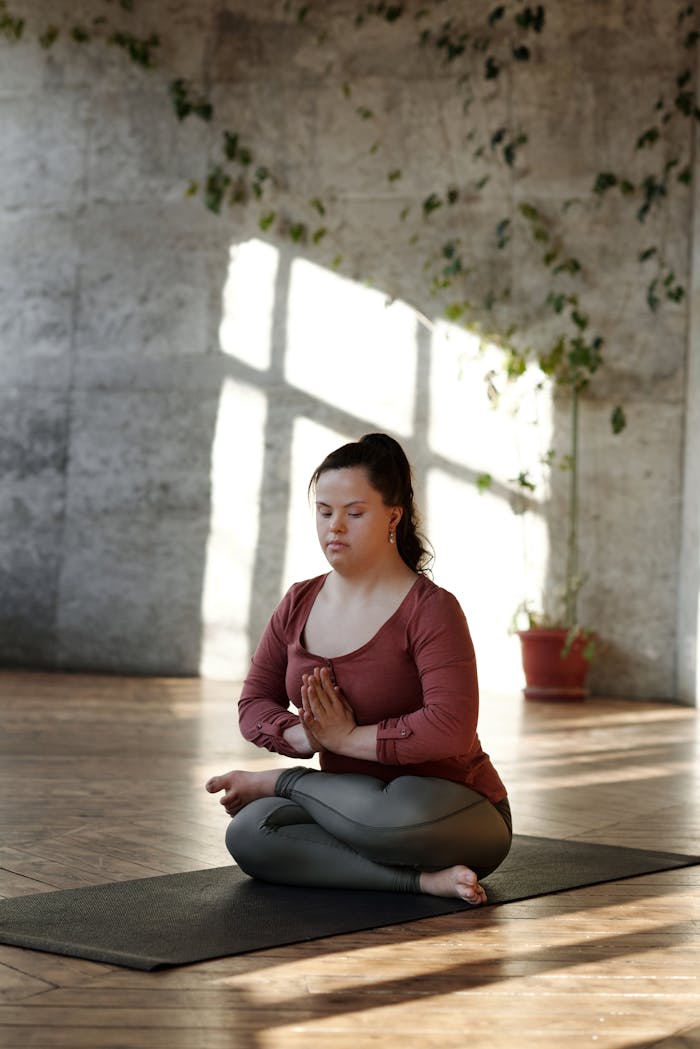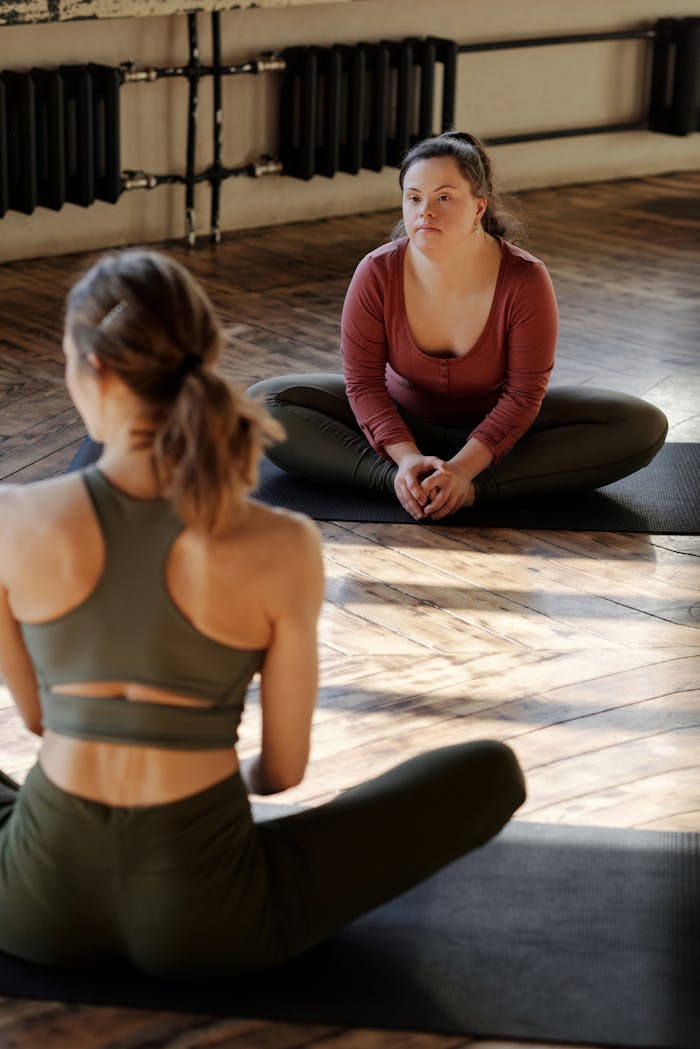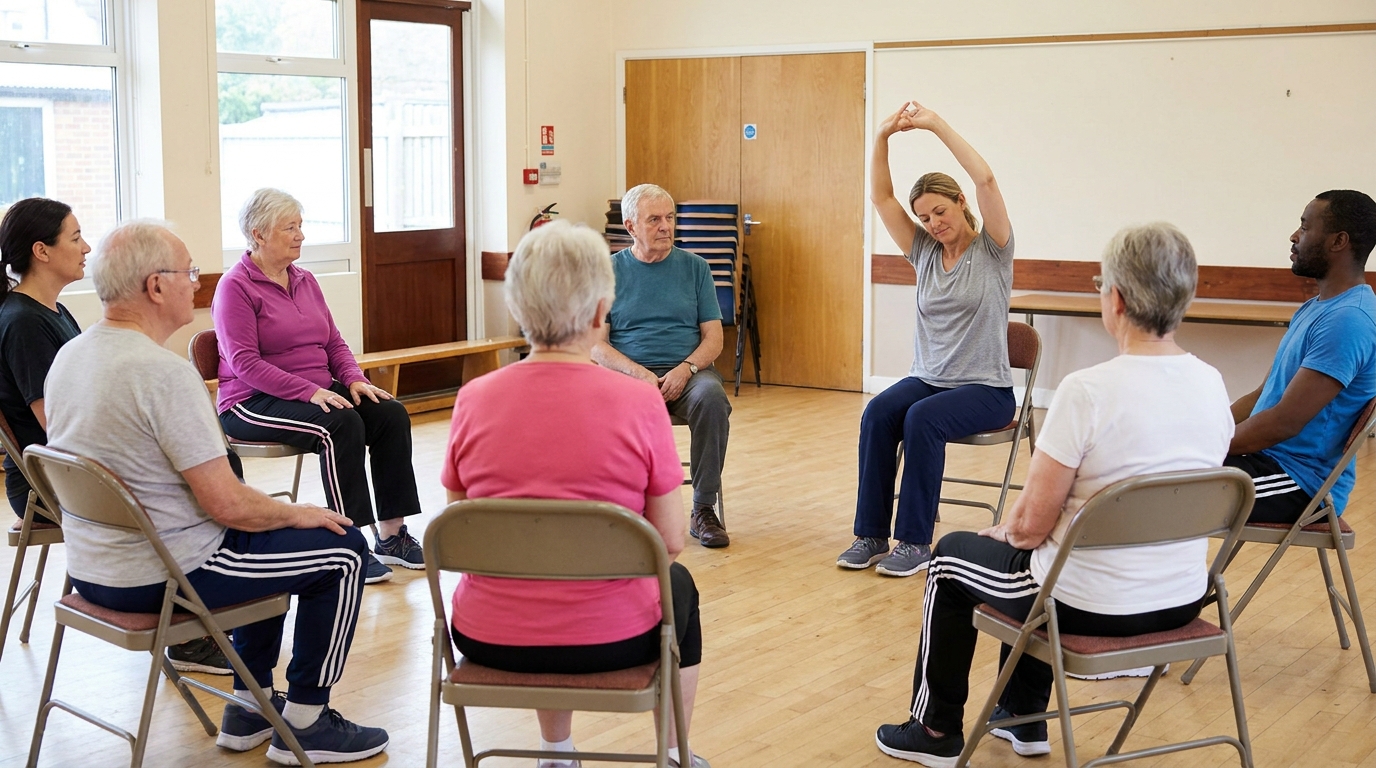
In every season of life, the body asks to be met with kindness. Some days we can move freely; other days we need support, patience, and a softer way. Chair yoga offers that gentle doorway. It welcomes people who may find standing postures difficult, those recovering from illness, older adults, office workers, beginners, caregivers, and anyone who longs to reconnect with the breath in a simple, practical way.
In the spirit of bhakti—loving devotion—we approach the body not as a project to fix, but as a sacred companion to care for. Yoga is not only about flexibility or strength. It is a path of remembrance: remembering the breath, remembering our inner steadiness, and remembering that peace can be practiced even while seated in a chair.
Chair yoga is a gentle form of yoga practiced while sitting on a chair or using a chair for balance and support. It includes mindful breathing, simple stretches, gentle strengthening movements, relaxation, and sometimes meditation.
For many people, chair yoga makes yoga accessible. You do not need to get down on the floor. You do not need to touch your toes. You do not need special clothing or advanced experience. A stable chair, your breath, and a willingness to begin are enough.
Yoga Made Accessible
The Sanskrit word “yoga” comes from the root “yuj,” which means “to unite” or “to join.” In daily life, yoga helps unite body, breath, mind, and heart. Chair yoga carries this same purpose.
Instead of thinking, “I cannot do yoga because I cannot do certain poses,” chair yoga gently says, “Yoga can meet me where I am.”
This is a beautiful and important shift. Yoga is not reserved for the young, flexible, or athletic. It is a practical path for every sincere person.
More Than Stretching
Chair yoga certainly helps stretch the body, but it is more than physical movement. A typical chair yoga practice may include:
- Breath awareness
- Gentle neck, shoulder, spine, hip, and leg movements
- Seated twists and side bends
- Supported balance exercises
- Simple strengthening practices
- Relaxation and meditation
- Gratitude or devotional reflection
In the Yoga Sutras of Patanjali, a foundational yoga text, yoga is described as the calming of the fluctuations of the mind: “Yogaś citta-vṛtti-nirodhaḥ.” In simple words, yoga helps quiet the restless mind. Chair yoga may look modest from the outside, but when practiced with attention, it can become a deep inner discipline.
Why Chair Yoga Supports Health and Wellness
Chair yoga supports health and wellness because it invites safe movement, better breathing, mental calm, and a kinder relationship with the body. For people who sit for long hours, live with limited mobility, experience fatigue, or feel intimidated by traditional yoga classes, chair yoga can be a blessing.
It offers small, steady steps. And in yoga, small steps taken with sincerity are never small.
Gentle Movement for the Body
The body was made for movement, yet modern life often keeps us still for long periods. Sitting at a desk, driving, recovering from surgery, or living with chronic conditions can make the body feel stiff and heavy.
Chair yoga can help:
- Improve flexibility
- Support joint mobility
- Reduce stiffness in the neck, shoulders, back, and hips
- Improve circulation
- Strengthen postural muscles
- Support balance and coordination
- Encourage better breathing
Even a 10-minute chair yoga practice can bring fresh awareness into the body. When movement is combined with breath, it becomes more than exercise. It becomes mindful care.
Support for the Nervous System
Many people live in a state of constant hurry. The mind races, the shoulders tighten, and the breath becomes shallow. Chair yoga helps activate the body’s relaxation response through slow breathing and gentle movement.
In Sanskrit, “prāṇa” means life force or vital energy. We experience prāṇa most directly through the breath. When the breath is calm, the mind often follows.
A simple practice like inhaling slowly through the nose and exhaling gently can help the nervous system feel safer. This does not erase life’s challenges, but it gives us a steady place from which to meet them.
Emotional and Spiritual Well-Being
Chair yoga can also support emotional balance. When practiced with devotion, it can become a form of prayerful presence. Each movement can be offered with gratitude. Each breath can be received as a gift.
The Bhagavad Gita teaches the beauty of steady action without attachment to results. In Chapter 2, Lord Krishna describes yoga as “samatvam,” often translated as equanimity or balanced-mindedness. In chair yoga, we practice this balance in a practical way. We learn to move without forcing, breathe without grasping, and accept the body as it is today.
This humble acceptance is not weakness. It is wisdom.
Who Can Benefit from Chair Yoga?
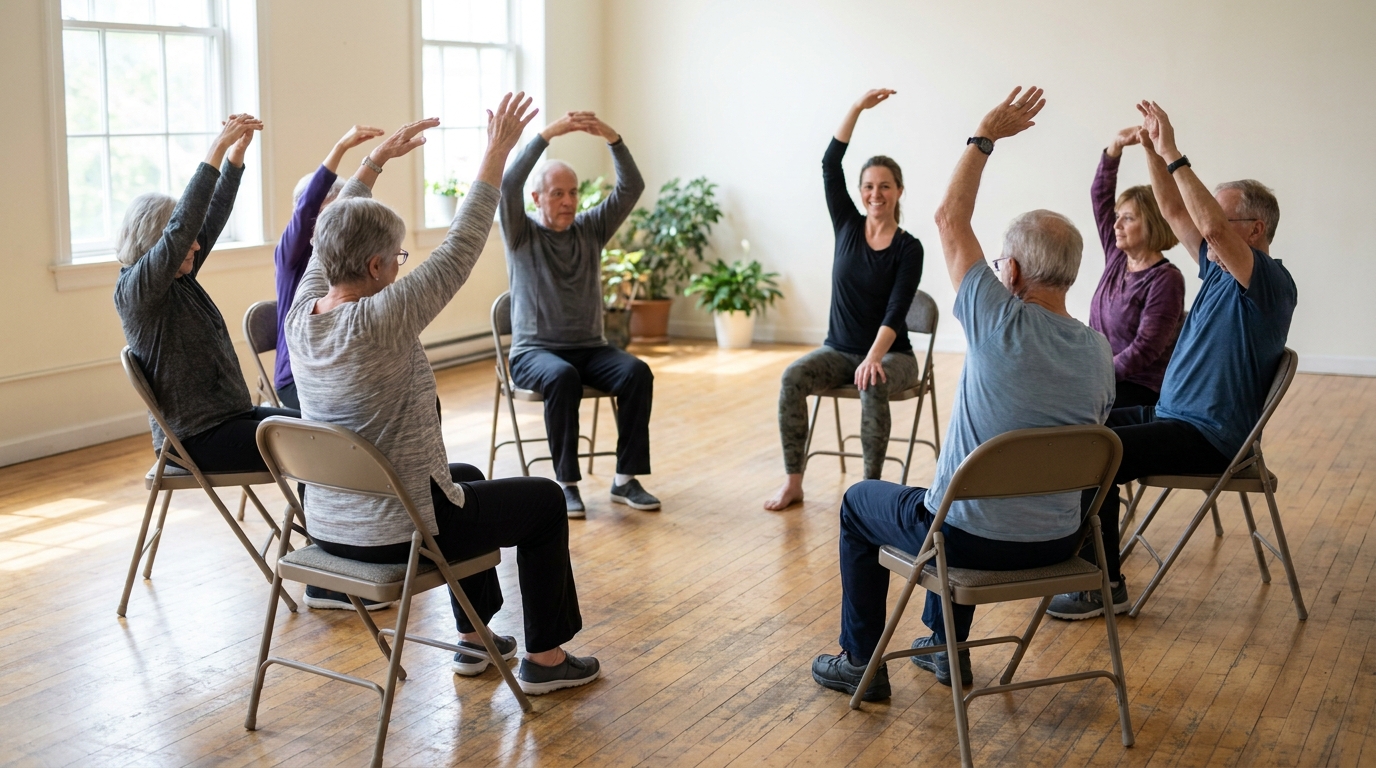
Chair yoga is especially helpful for people who need a gentler, more supported practice. Still, it is not only for those with physical limitations. Many people use chair yoga as a daily wellness tool, a workplace reset, or a peaceful morning ritual.
Older Adults and Seniors
Chair yoga for seniors can support mobility, balance, posture, and confidence. It may help reduce fear of movement by providing stability. Many older adults appreciate that they can practice without needing to lie on the floor or transition quickly between positions.
Gentle seated movements can help maintain independence in daily life—reaching, turning, standing, walking, and breathing with more ease.
Office Workers and Students
People who sit for long hours often experience tight hips, rounded shoulders, neck tension, and mental fatigue. Chair yoga at work can be done in regular clothing and in just a few minutes.
A short office chair yoga practice may include shoulder rolls, seated cat-cow, wrist stretches, neck release, and mindful breathing. These simple movements can refresh the body and clear the mind without needing a yoga mat.
People with Limited Mobility or Chronic Conditions
Chair yoga may be useful for people living with arthritis, chronic pain, fatigue, balance issues, injury recovery, or limited mobility. It can be adapted according to personal needs.
However, it is important to practice safely. Anyone with a medical condition, recent surgery, severe pain, dizziness, uncontrolled blood pressure, or other health concerns should consult a qualified healthcare provider before beginning. A trained yoga therapist or experienced chair yoga teacher can also help adapt the practice.
Beginners and Those Returning to Yoga
If you are new to yoga, chair yoga is a gentle place to begin. If you once practiced yoga but now need a softer approach, chair yoga can help you return without pressure.
The path of yoga is not a competition. It is a relationship. Like any relationship, it grows through patience, honesty, and care.
Sure, here is the sentence with the clickable link:
Check out the latest yoga guides at yoga guides.
The Foundations of a Safe Chair Yoga Practice
Before practicing chair yoga, prepare your space and your mindset. Safety allows the heart to relax. When we feel supported, we can move with more awareness.
Choosing the Right Chair
Use a sturdy chair without wheels. A firm seat is usually better than a soft couch or reclining chair. Ideally, your feet should rest flat on the floor. If they do not, place a folded blanket, yoga block, or thick book under the feet.
Look for:
- A stable chair
- No wheels or sliding base
- A seat height that allows knees to bend comfortably
- Enough space around you to move your arms
- A wall nearby if extra support is needed
If your balance feels uncertain, place the chair against a wall.
Practicing with Ahimsa
“Ahimsa” is a Sanskrit word meaning non-harming or compassion. It is one of the ethical foundations of yoga. In chair yoga, ahimsa means we do not force the body. We listen. We respect pain signals. We move slowly.
A helpful guideline is: sensation is okay, sharp pain is not. Gentle stretching may feel warm or mildly intense, but it should not feel painful, pinching, or alarming.
Let the breath guide you. If you are holding your breath, straining, or tightening your face, ease back.
Breathing with Awareness
Breath is the thread that turns movement into yoga. Without breath awareness, movement may become mechanical. With breath awareness, even lifting the arms can become sacred.
Try this simple breath:
Sit tall but relaxed.
Place both feet on the floor.
Rest your hands on your thighs.
Inhale gently through the nose.
Exhale slowly through the nose or mouth.
Repeat for five rounds.
If breathing through the nose is difficult, breathe in the way that feels comfortable. The aim is not perfection. The aim is presence.
How to Practice Chair Yoga: A Simple Sequence
This gentle chair yoga sequence can be practiced at home, at work, or in a community setting. Move slowly. Stay within your comfortable range. If any movement causes pain, skip it.
1. Seated Centering
Sit near the front half of the chair with your feet flat on the floor. Let the spine lengthen naturally. Relax your shoulders.
Close your eyes if comfortable, or soften your gaze.
Take a few slow breaths. Notice the support of the chair beneath you and the earth beneath your feet.
You may silently offer a simple intention: “May this practice bring steadiness, kindness, and peace.”
This intention is called “sankalpa” in Sanskrit—a heartfelt resolve or sacred intention.
2. Gentle Neck Release
Inhale and lengthen through the crown of your head.
Exhale and gently lower your right ear toward your right shoulder.
Stay for two or three breaths.
Return to center and repeat on the left side.
Then slowly turn your head to look over the right shoulder. Breathe. Return to center. Turn to the left.
Keep the jaw soft. Let the movement be kind, not forceful.
3. Shoulder Rolls and Arm Movement
Inhale and lift your shoulders toward your ears.
Exhale and roll them back and down.
Repeat five times.
Then stretch your arms forward at shoulder height if comfortable. Open the arms wide as you inhale, gently drawing the shoulder blades toward each other. Exhale and bring the arms forward again.
This helps awaken the chest, upper back, and breath.
4. Seated Cat-Cow
Place your hands on your thighs.
As you inhale, gently lift the chest, draw the shoulders back, and look slightly upward. This is a seated version of cow pose.
As you exhale, round the spine, draw the belly inward, and let the chin move toward the chest. This is a seated version of cat pose.
Repeat five to eight rounds.
In Sanskrit, “asana” means posture or seat. Patanjali describes asana as steady and comfortable: “sthira sukham asanam.” In chair yoga, we honor this teaching by finding steadiness and ease in every posture.
5. Seated Side Stretch
Hold the sides of the chair or rest one hand on the thigh. Inhale and lift your right arm overhead. Exhale and gently lean to the left.
Keep both sitting bones grounded. Breathe into the right side of the body.
Return to center and repeat on the other side.
This movement can help open the ribs and support fuller breathing.
6. Gentle Seated Twist
Sit tall. Place your right hand on the outside of your left thigh and your left hand on the chair or hip.
Inhale to lengthen the spine. Exhale and gently turn to the left.
Do not pull hard. Let the twist begin from the upper back and ribs. Keep the belly soft.
Stay for two or three breaths. Return to center and repeat on the other side.
Twists can feel cleansing and refreshing, but they should be practiced gently, especially for people with back issues, osteoporosis, pregnancy, or abdominal concerns.
7. Knee Lifts for Strength
Hold the sides of the chair. Sit tall.
Inhale. As you exhale, gently lift your right knee a few inches, keeping the foot relaxed. Inhale and lower.
Repeat five times, then switch sides.
This simple movement strengthens the hip flexors and core muscles. If lifting the knee is too much, simply press the foot into the floor and release.
8. Ankle Circles and Foot Awareness
Lift one foot slightly or keep the heel on the floor. Circle the ankle slowly in one direction, then the other.
Repeat with the other foot.
Then press all four corners of each foot into the floor: the base of the big toe, the base of the little toe, the inner heel, and the outer heel.
This grounding awareness can support balance and stability.
9. Seated Forward Fold
Place feet slightly wider than hip-width. Rest hands on thighs.
Inhale and lengthen the spine. Exhale and slowly hinge forward from the hips, sliding the hands down the legs only as far as comfortable.
You may rest your forearms on your thighs. Let the neck soften.
Stay for a few breaths, then slowly roll back up, using your hands for support.
Avoid deep forward folding if it causes dizziness, back pain, or discomfort. Keep the movement small and supported.
10. Seated Relaxation
Sit comfortably. Let your hands rest in your lap. Close your eyes or soften your gaze.
Inhale gently. Exhale slowly.
Feel the body breathing. Feel the chair supporting you. Feel the quiet space within.
You may repeat a simple mantra if it resonates with you. A mantra is a sacred sound or phrase used to focus the mind. For example, you might silently repeat “peace” on the inhale and “peace” on the exhale. If you come from a devotional tradition, you may repeat a name of the Divine that is dear to your heart.
Rest for one to three minutes.
How Chair Yoga Fits into Daily Life
Chair yoga is most powerful when it becomes a regular, compassionate habit. You do not need long sessions to receive benefits. Consistency matters more than intensity.
A Five-Minute Morning Practice
Before checking your phone or entering the rush of the day, sit in a chair and breathe.
Try this:
- 1 minute of quiet breathing
- 1 minute of shoulder rolls and neck stretches
- 1 minute of seated cat-cow
- 1 minute of side stretches
- 1 minute of gratitude or silent prayer
This simple morning chair yoga routine can help you begin the day with steadiness.
A Midday Desk Reset
If you work at a desk, set a gentle reminder every few hours. Pause for three to five minutes.
Practice:
- Wrist circles
- Shoulder rolls
- Seated twist
- Gentle forward fold
- Three slow breaths
These moments can reduce tension and improve focus. They also remind us that we are not machines. We are living beings who need breath, movement, and care.
An Evening Wind-Down
Chair yoga before bed can help release the day. Keep the practice slow and calming.
Choose gentle movements, longer exhalations, and a few minutes of stillness.
A simple evening reflection might be: “I offer the efforts of this day. May I rest in peace.”
This is yoga as devotion—not only movement, but surrender.
How Else Can Chair Yoga Be Adapted?
One of the great gifts of chair yoga is adaptability. Each person’s body, history, and energy level are unique. The practice should serve the person, not the other way around.
Chair Yoga with Props
Props can make chair yoga safer and more comfortable. You may use:
- A folded blanket for back support
- A cushion under the hips
- Yoga blocks under the feet
- A strap, scarf, or towel for arm and leg stretches
- A wall for balance
- A second chair for leg support
Props are not signs of weakness. They are tools of wisdom. In yoga, support helps us soften unnecessary effort and discover true alignment.
Chair Yoga for Limited Energy
For people experiencing fatigue, illness, or low energy, chair yoga can be very gentle. The practice may include mostly breath awareness, small joint movements, and relaxation.
A low-energy practice might look like:
- Seated breathing
- Finger and wrist movements
- Shoulder rolls
- Ankle circles
- Gentle neck release
- Rest
Even tiny movements can help circulation and body awareness. Honor your energy as sacred. Rest is also part of yoga.
Chair Yoga for Balance Support
Some chair yoga practices include standing poses while holding the chair. These can help improve balance and leg strength.
Examples include:
- Standing behind the chair and holding the backrest
- Gentle heel raises
- Supported side leg lifts
- Supported marching
- Modified warrior poses
Only practice standing chair yoga if it feels safe. Keep the chair stable, use a wall if needed, and avoid rushing.
Chair Yoga in Community
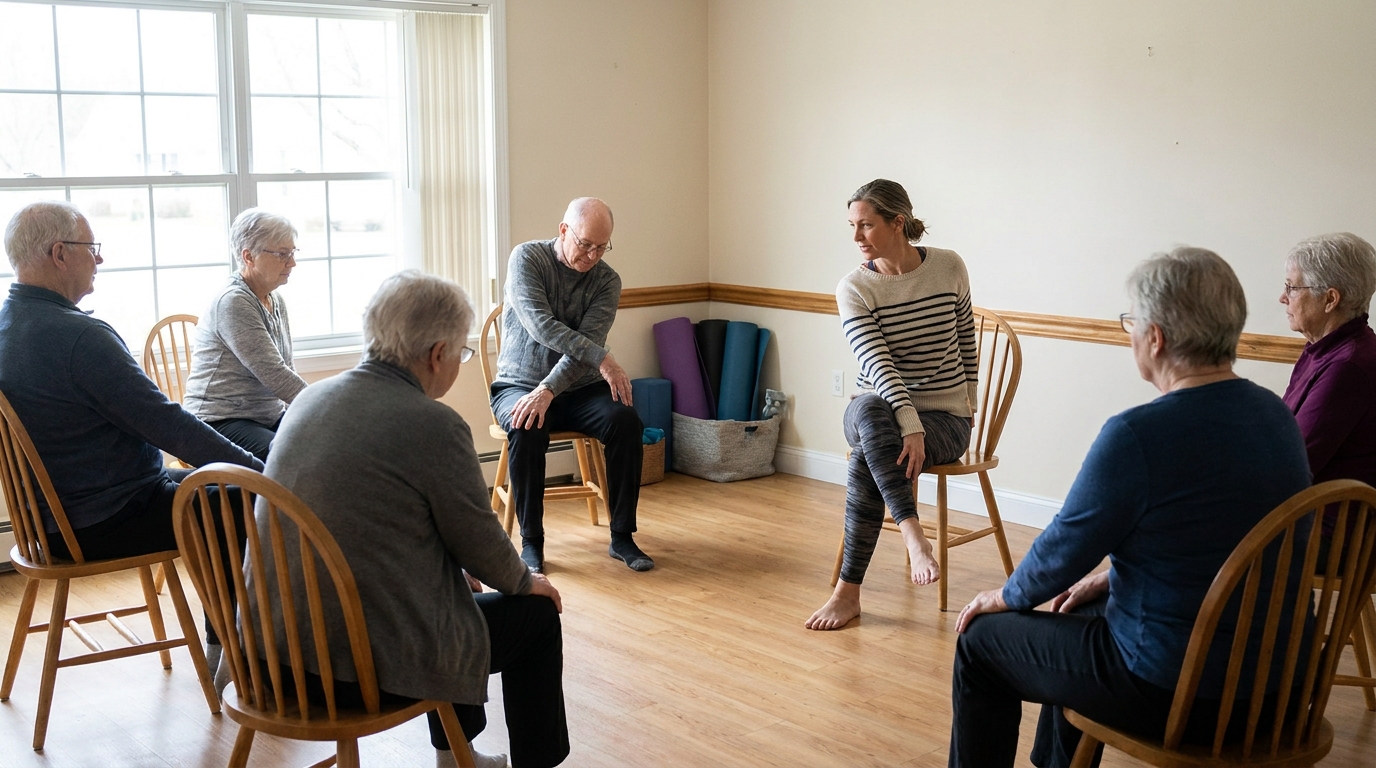
Chair yoga can be practiced in senior centers, workplaces, hospitals, recovery programs, spiritual communities, schools, and homes. Practicing in community can bring encouragement and joy.
In bhakti traditions, “satsanga” means being in the company of truth or uplifting community. A chair yoga group can become a kind of satsanga when people gather with sincerity, kindness, and mutual respect.
No one needs to perform. No one needs to compare. Everyone simply practices together.
The Inner Attitude of Chair Yoga
The physical benefits of chair yoga are valuable, but the inner attitude is equally important. Yoga asks us not only to change how we move, but how we relate to ourselves.
Practice Without Comparison
Comparison can quietly steal joy. One person may lift their arm high. Another may lift only a little. Both can be practicing yoga fully.
The Bhagavad Gita reminds us to do our own dharma—our own path—rather than imitate another’s. In chair yoga, your practice belongs to you. Let it be honest. Let it be kind.
Ask yourself:
- What does my body need today?
- Can I move with respect?
- Can I breathe with patience?
- Can I release the need to look a certain way?
These questions turn practice into self-study.
Svadhyaya: Learning from Yourself
“Svadhyaya” means self-study or sacred study. In chair yoga, svadhyaya may be as simple as noticing:
- Where do I hold tension?
- When do I push too hard?
- What helps me feel peaceful?
- How does my breath change with movement?
This awareness is a doorway to healing. We begin to understand the body as a teacher.
Ishvara Pranidhana: Surrender with Trust
“Ishvara pranidhana” means surrender to the Divine, or offering the fruits of practice to something greater than the ego. For some, this means God. For others, it may mean truth, love, life, or the sacred mystery.
In chair yoga, surrender may be very simple:
“I do what I can with love. I release what I cannot control.”
This humble attitude protects us from frustration. It helps practice become devotional rather than demanding.
Chair Yoga and the Breath: A Practical Path to Calm
Breathing practices are central to yoga. In Sanskrit, breathwork is often called “pranayama.” “Prana” means life energy, and “ayama” can mean expansion or regulation. Pranayama helps guide the breath so the mind and body can settle.
Not all breathing techniques are suitable for everyone, especially those with medical conditions. But simple, gentle breathing is widely accessible.
Three-Part Breath
Sit comfortably. Place one hand on the belly and one hand on the chest if comfortable.
Inhale gently and notice the belly expand.
Continue inhaling as the ribs widen.
Let the upper chest softly receive the breath.
Exhale slowly and feel the body release.
Do not force a large breath. Let it be natural and smooth.
Practice for five rounds.
Longer Exhale Breathing
Inhale for a comfortable count of three.
Exhale for a comfortable count of four or five.
The longer exhale can help calm the nervous system. If counting creates stress, simply think: “Inhale gently, exhale slowly.”
Breath as Prayer
For those who enjoy devotional practice, breath can become prayer.
Inhale: “I receive.”
Exhale: “I offer.”
Inhale: “May I be steady.”
Exhale: “May I be kind.”
This is the heart of bhakti in daily life—turning ordinary moments into offerings.
Common Myths About Chair Yoga
Chair yoga is sometimes misunderstood. Let us gently clear away a few common myths.
Myth 1: Chair Yoga Is Too Easy to Be Effective
Chair yoga can be gentle, but gentle does not mean ineffective. Slow, mindful movement can build strength, improve mobility, support balance, and calm the mind.
In fact, moving slowly often requires more awareness than moving quickly.
Myth 2: Chair Yoga Is Only for Seniors
Chair yoga is wonderful for seniors, but it is not only for older adults. Office workers, travelers, students, people recovering from injuries, and anyone seeking accessible yoga can benefit.
It is yoga for real life.
Myth 3: You Need to Be Flexible
Flexibility is not a requirement for yoga. It may be one result of practice, but the deeper purpose is awareness, balance, and inner steadiness.
Come as you are. Begin where you are.
Myth 4: Seated Practice Is Not “Real Yoga”
Real yoga is not defined by how difficult a posture looks. Real yoga is present when there is awareness, breath, compassion, and sincere effort.
A seated breath taken with devotion can be as meaningful as any advanced pose.
Creating a Sustainable Chair Yoga Habit
A lasting yoga practice grows best with gentleness. If we begin with too much force, we may stop quickly. If we begin with humility and consistency, practice becomes a friend.
Start Small
Begin with five to ten minutes a day. Choose a time that fits naturally into your life.
You might practice:
- After waking
- During a work break
- Before lunch
- After caregiving tasks
- Before evening prayer or meditation
- Before bed
Let the practice be simple enough that you can actually do it.
Keep a Practice Journal
After each session, write one or two lines:
- How did my body feel before and after?
- What movement helped me most?
- What emotion was present?
- What am I grateful for today?
This supports svadhyaya, self-study, and helps you notice progress beyond physical flexibility.
Practice with Devotion, Not Pressure
There may be days when you do only three breaths. That is still practice.
There may be days when the body feels stiff or tired. That is not failure. It is simply information.
Offer each practice humbly. The fruits of yoga often come quietly—more patience, better posture, softer breathing, a little more peace in difficult moments.
A Closing Reflection: The Chair as a Place of Practice
Chair yoga reminds us that wellness does not always require dramatic change. Sometimes it begins with sitting upright, feeling the feet on the floor, and taking one conscious breath.
The chair becomes more than furniture. It becomes a small temple of practice. The breath becomes a teacher. The body becomes a companion. The heart becomes a place of offering.
Whether you are young or old, flexible or stiff, spiritual or simply curious, chair yoga welcomes you. It asks only for sincerity. Move gently. Breathe kindly. Listen deeply.
May your practice support health, peace, and a loving relationship with your own life. May each breath guide you toward steadiness. And may this gentle path of chair yoga remind you that yoga is always near—available here, now, exactly where you are.
FAQs
What is chair yoga?
Chair yoga is a gentle form of yoga that is practiced sitting on a chair or using a chair for support. It is suitable for people of all ages and abilities, including those with mobility issues or limited flexibility.
What are the benefits of chair yoga?
Chair yoga can help improve flexibility, strength, and balance. It also promotes relaxation and reduces stress. Additionally, it can help with pain management and improve overall well-being.
Who can benefit from chair yoga?
Chair yoga is beneficial for individuals who may have difficulty with traditional yoga poses due to age, injury, or physical limitations. It is also suitable for office workers who spend long hours sitting at a desk and can benefit from stretching and relaxation exercises.
Are there any specific poses in chair yoga?
Chair yoga includes a variety of poses that are modified to be performed while seated or using a chair for support. Some common chair yoga poses include seated twists, forward bends, and gentle stretches for the upper body and legs.
Can chair yoga be practiced at home?
Yes, chair yoga can be easily practiced at home. All you need is a sturdy chair and some space to move around. There are many online resources, videos, and books available that provide guidance on chair yoga exercises and routines.