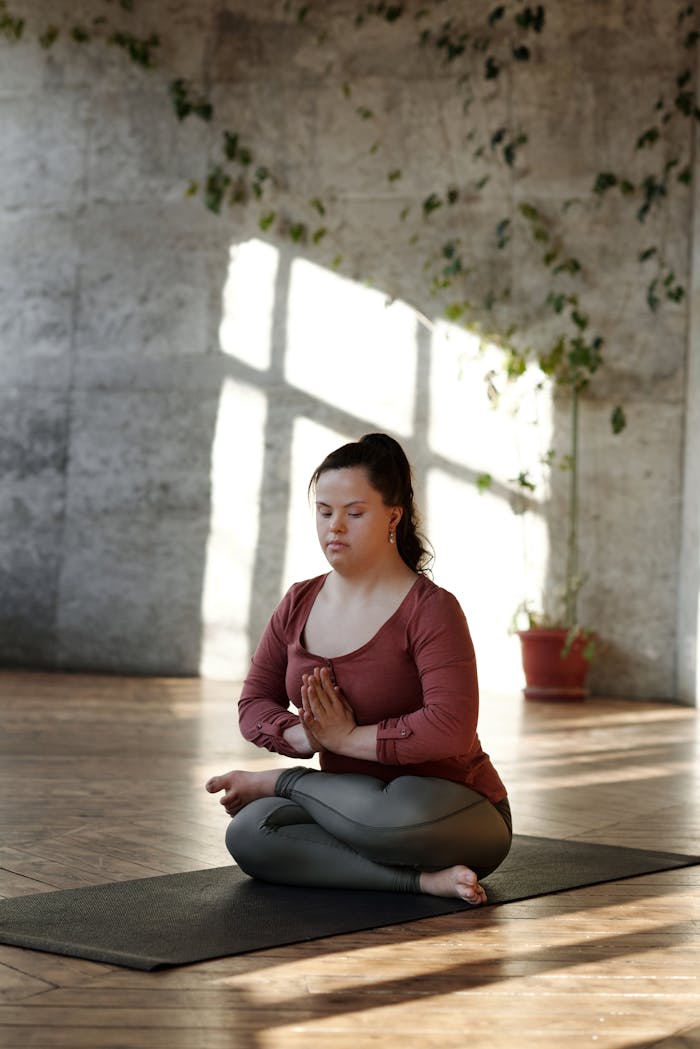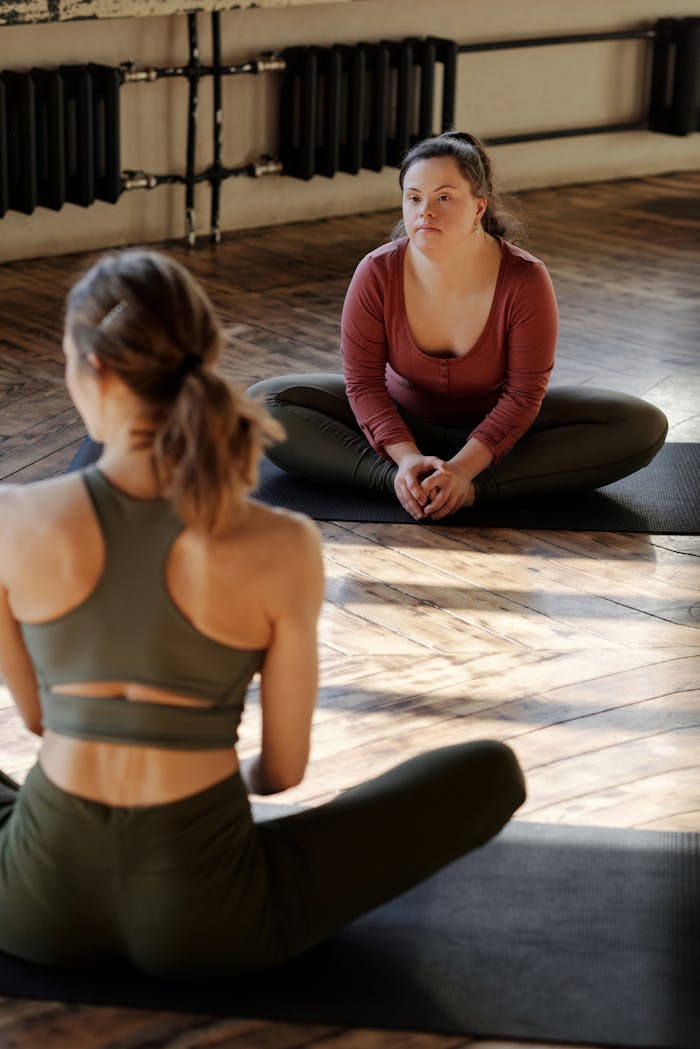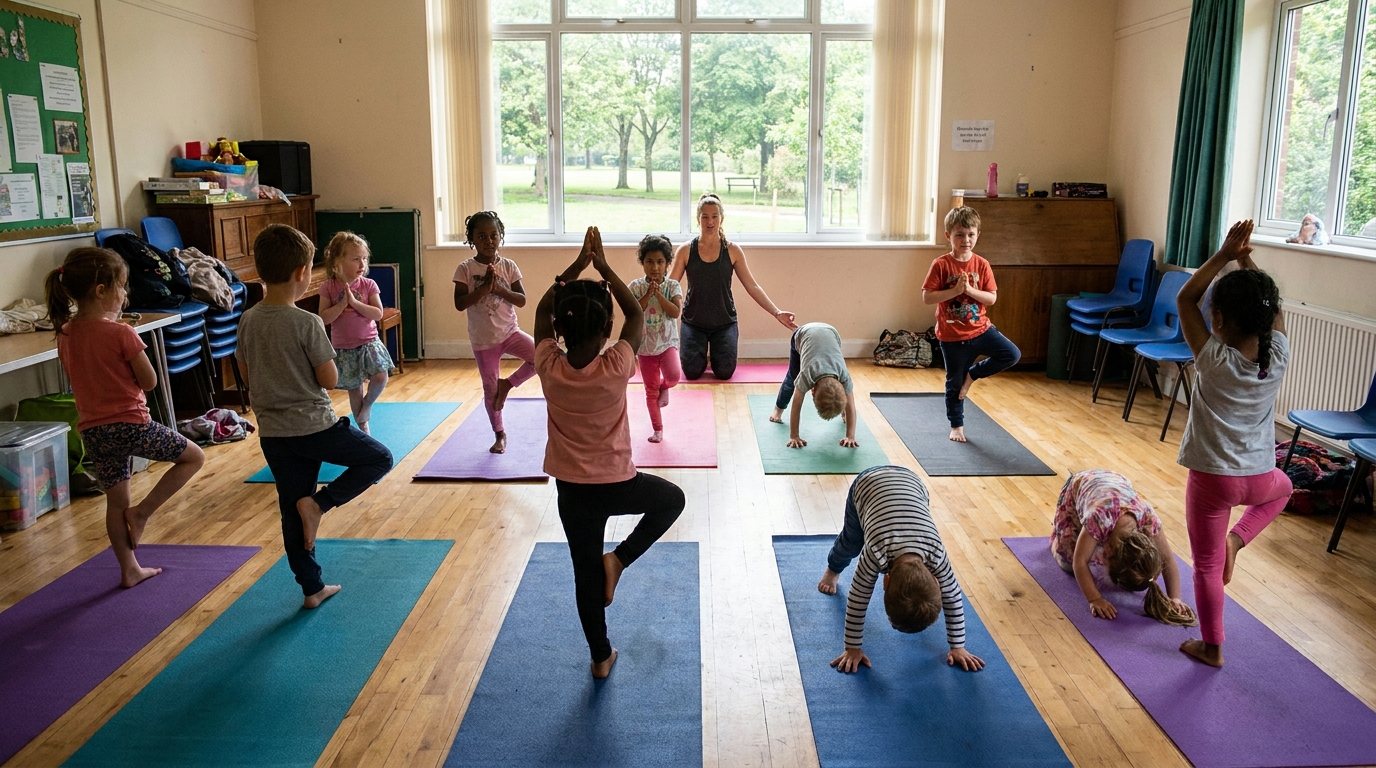
Children come to yoga with a natural wisdom. They stretch like cats, breathe with their whole bodies, laugh when they fall, and return to the present moment more easily than many adults. In this way, kids yoga is not about making children “better” or “more disciplined” in a harsh sense. It is about helping them remember what is already beautiful within them: calm, courage, kindness, curiosity, and joy.
Yoga, from the Sanskrit root yuj, means “to unite” or “to connect.” For children, yoga can be a gentle way to connect body, breath, mind, emotions, and heart. It can also help them connect with others through kindness and cooperation.
In the spirit of bhakti—a Sanskrit word meaning loving devotion—kids yoga can be offered as a loving practice, not a performance. Whether a family is spiritual, secular, religious, or simply curious, children’s yoga can be shared in a practical and welcoming way. It does not require any belief system. It simply invites children to breathe, move, rest, and care.
Kids yoga is a playful, age-appropriate form of yoga designed for children. It includes movement, breathing exercises, relaxation, imagination, storytelling, mindfulness, and simple values such as kindness and patience.
Unlike adult yoga classes, kids yoga is usually more creative and flexible. Children may pretend to be trees, lions, butterflies, mountains, or stars. They may act out a story, make animal sounds, practice breathing with feathers, or rest quietly while imagining a peaceful place.
Yoga for Children Is Not About Perfect Poses
In Sanskrit, yoga postures are called asana. The word asana can be understood as a steady, comfortable seat or posture. In kids yoga, asana is not about touching toes or making a shape perfectly.
It is about helping children feel at home in their bodies.
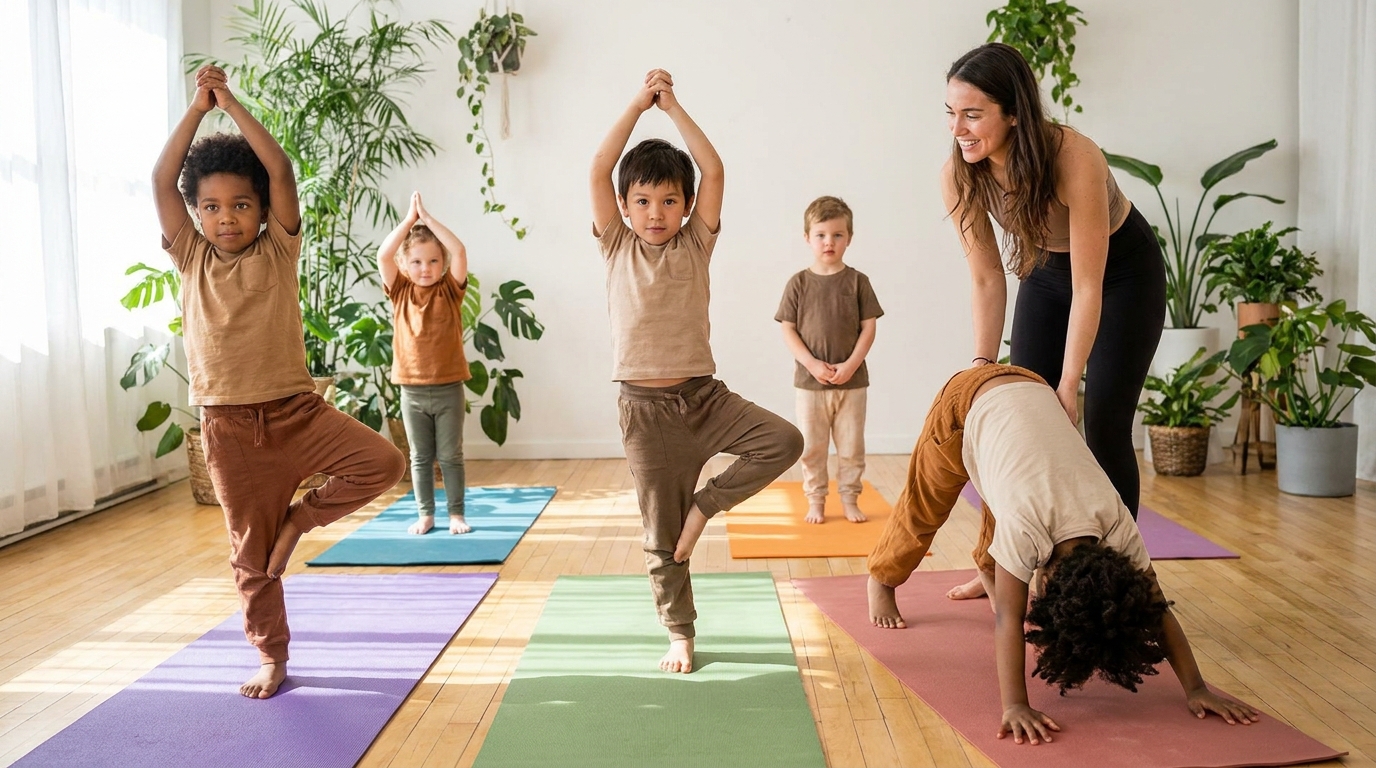
A child’s Tree Pose may be wobbly. Their Downward Dog may turn into a tunnel for giggles. Their resting pose may last only ten seconds. This is all part of the path.
The deeper gift is not the outer shape. It is the inner experience: “I can notice my body. I can breathe. I can try again. I can rest.”
A Practical Path for Everyday Life
Yoga is often described as a path of practice. In the Yoga Sutras of Patanjali, one of the foundational texts of yoga, we find the teaching: yogaś citta-vṛtti-nirodhaḥ—yoga is the calming of the movements of the mind.
For children, this does not mean forcing the mind to be silent. It means giving them simple tools to settle, focus, and feel safe inside themselves.
Kids yoga may support children during everyday moments such as:
- Getting ready for school
- Managing big feelings
- Preparing for sleep
- Building confidence
- Transitioning between activities
- Learning to pause before reacting
- Feeling more connected to family and friends
Yoga becomes most meaningful when it leaves the mat and enters daily life.
Why Kids Yoga Matters Today
Children today often experience busy schedules, screen stimulation, academic pressure, social comparison, and emotional overwhelm. Many children are asked to sit still for long periods, move quickly from task to task, and process more information than their nervous systems may comfortably hold.
Kids yoga offers a soft doorway back to balance.
Supporting the Whole Child
The benefits of kids yoga are not only physical. Yoga supports the whole child: body, breath, mind, emotions, relationships, and inner life.
A regular kids yoga practice may help children develop:
- Body awareness
- Strength and flexibility
- Balance and coordination
- Emotional regulation
- Focus and attention
- Confidence and self-trust
- Relaxation skills
- Compassion and cooperation
- Healthy breathing habits
- A sense of inner calm
These benefits grow slowly and naturally, like a seed receiving sunlight and water.
A Gentle Answer to Stress
Children may not always say, “I feel stressed.” Instead, stress may appear as restlessness, stomachaches, trouble sleeping, irritability, withdrawal, or difficulty focusing.
Yoga gives children nonverbal ways to release tension. Movement helps discharge extra energy. Breathwork helps soothe the nervous system. Rest teaches the body that it is safe to soften.
In the Bhagavad Gita, a beloved yoga scripture, Krishna speaks of balance in daily living. In Chapter 6, he teaches that yoga is supported by moderation in eating, recreation, activity, sleep, and wakefulness. This wisdom is deeply practical for children. A balanced life—movement, rest, nourishment, play, and loving guidance—helps them grow with steadiness.
Building Inner Resources Early
When children learn yoga early, they receive tools they can carry into adolescence and adulthood.
A child who learns to take three calming breaths before speaking has learned a life skill.
A child who learns Child’s Pose as a place of rest has learned self-care.
A child who learns, “I can feel angry and still choose kindness,” has begun to understand emotional wisdom.
These small practices can become lifelong companions.
Physical Benefits of Kids Yoga
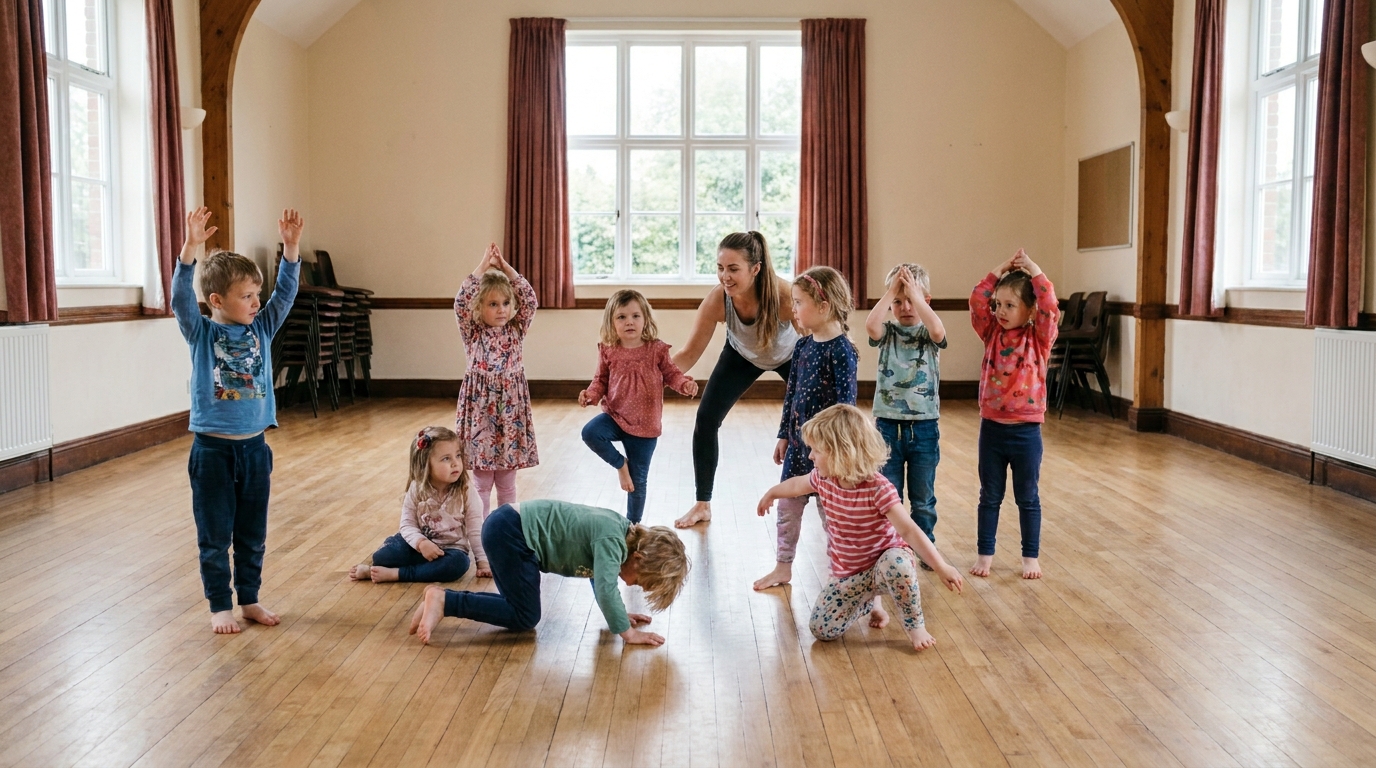
Children are naturally active, but their movement patterns are changing in modern life. More sitting, more screen use, and less free outdoor play can affect posture, coordination, and body awareness.
Kids yoga offers movement that is structured but not rigid, strengthening but not competitive, playful but meaningful.
Strength, Flexibility, and Balance
Yoga poses help children use their muscles in varied ways. Poses such as Plank, Cobra, Warrior, Bridge, and Chair can build strength. Poses like Butterfly, Cat-Cow, and gentle forward folds can support flexibility. Balancing poses such as Tree, Eagle, and Airplane help develop concentration and stability.
Balance poses are especially helpful because they teach children to focus without shame. If they fall, they can smile and try again. This is a wonderful lesson: falling is not failure; it is part of learning.
Coordination and Body Awareness
Many children are still discovering where their bodies are in space. Yoga helps develop proprioception, which is the sense of body position and movement.
Simple instructions such as “press your feet into the floor,” “reach your arms like branches,” or “notice your spine growing tall” help children become more aware of their physical presence.
This awareness can support sports, dance, handwriting posture, classroom sitting, and general confidence in movement.
Healthy Posture and Screen Balance
Children often spend time looking down at tablets, phones, or books. Over time, this can create tightness in the neck, shoulders, and back.
Kids yoga includes gentle movements that open the chest, lengthen the spine, and strengthen the back body. Poses like Mountain Pose, Cat-Cow, Locust, and gentle shoulder rolls can help children notice and improve posture.
Rather than scolding children about posture, yoga invites awareness in a kind way: “Can you stand like a mountain—strong, tall, and peaceful?”
Check out the latest yoga guides on yoga guides for helpful tips and advice.
Emotional Benefits of Kids Yoga
Children feel deeply. Sometimes they do not yet have the language or tools to express what is happening inside. Kids yoga can help children recognize, name, and move through emotions with compassion.
Learning to Notice Feelings
In yoga, awareness is a sacred beginning. Before we can respond wisely, we must notice what is present.
A teacher or parent might ask:
- “What is the weather inside you today?”
- “Is your breath fast or slow?”
- “Does your body feel wiggly, heavy, sleepy, or strong?”
- “Where do you feel anger, excitement, or worry?”
These simple questions help children build emotional literacy.
Breathing Through Big Emotions
In Sanskrit, breath and life energy are connected through the word prana. Prana means vital energy or life force. Breathing practices are called pranayama, which can be understood as guiding or expanding the breath.
For children, pranayama should be simple, gentle, and never forced. Breath practices can include:
- Balloon breathing: expanding the belly like a balloon
- Flower breathing: smelling an imaginary flower
- Candle breathing: softly blowing out a pretend candle
- Bumblebee breath: humming gently like a bee
- Ocean breath: making a soft wave-like sound
Breathing gives children something steady to return to when emotions feel large.
A child can learn: “My feelings are real, but they do not have to carry me away.”
Confidence and Self-Compassion
Kids yoga can be a beautiful place for children who may not feel comfortable in competitive environments. There is no winning or losing. Each child is encouraged to practice in their own body, at their own pace.
This supports self-compassion.
In the Yoga Sutras, the ethical foundation of yoga begins with ahimsa, meaning non-harming or kindness. In kids yoga, ahimsa can be taught simply: “Be kind to yourself, be kind to others, and be kind to the world around you.”
When children learn not to push their bodies harshly, not to compare themselves, and not to laugh at others’ efforts, they are practicing ahimsa in a real and meaningful way.
Mental and Learning Benefits of Kids Yoga
Yoga can support the mind without pressuring it. Through movement, breath, and mindful attention, children may become more able to focus, listen, remember, and transition.
Improving Focus and Attention
Children often focus better after movement. Yoga combines movement with attention, which can be especially helpful before homework, reading time, tests, or classroom learning.
A short yoga break might include:
- 3 rounds of Cat-Cow
- 5 slow breaths in Mountain Pose
- 30 seconds of Tree Pose on each side
- A quiet moment with hands on the heart
These small practices can help reset the nervous system and bring the mind into the present.
Supporting Executive Function
Executive function includes skills such as planning, impulse control, emotional regulation, and flexible thinking. Yoga can gently strengthen these skills.
For example:
- Holding a pose teaches patience.
- Following a sequence teaches memory.
- Moving slowly teaches impulse control.
- Listening to breath teaches attention.
- Trying again after wobbling teaches resilience.
Children do not need lectures about these skills. They learn through experience.
Mindfulness in Child-Friendly Language
Mindfulness means paying attention to the present moment with kindness. Children can practice mindfulness through senses and imagination.
Try asking:
- “What are three sounds you can hear?”
- “Can you feel your feet touching the floor?”
- “What does your breath feel like today?”
- “Can you notice one thing you are grateful for?”
Gratitude is especially close to the heart of bhakti. It helps children see life not only as a list of tasks, but as a gift.
Social and Spiritual Benefits of Kids Yoga
Kids yoga can nurture not only individual well-being but also connection. In a world where many children feel pressure to compete or compare, yoga can create a space of belonging.
Spiritual here does not mean religious instruction. It means helping children connect with meaning, kindness, wonder, and the quiet goodness within.
Cooperation Instead of Competition
Partner poses and group yoga games can teach teamwork. Children learn to communicate, take turns, listen, and support each other.
Examples include:
- Partner Tree Pose
- Group “yoga garden” where each child becomes a flower or tree
- Passing a breathing ball in a circle
- Creating a story sequence together
- Offering kind words after practice
These activities teach that everyone has a place.
Kindness as a Practice
The teachings of yoga are not limited to poses. The yamas and niyamas in the Yoga Sutras are ethical guidelines for living. For children, these can be shared very simply.
For example:
- Ahimsa — kindness and non-harming
- Satya — truthfulness
- Asteya — not taking what is not ours
- Santosha — contentment, or appreciating what we have
- Svadhyaya — self-study, learning about ourselves
These are not rules to create guilt. They are gentle lamps to guide the heart.
In kids yoga, a teacher might say, “Today we practice satya by noticing how we really feel,” or “Today we practice santosha by naming one thing we appreciate.”
A Sense of Wonder
Children often understand wonder better than adults. They marvel at ants, clouds, stars, leaves, and their own breath.
Yoga can protect and nourish this wonder.
When a child lies in rest and imagines floating on a cloud, when they bow to the light in their own heart, when they thank their body for carrying them through the day—these are small devotional moments.
In bhakti, devotion is not always grand. Sometimes it is simply loving attention.
How to Practice Kids Yoga at Home
A home yoga practice does not need to be long, fancy, or perfect. A few minutes offered with warmth can be enough.
Children respond best when yoga feels safe, playful, and pressure-free.
Create a Simple Yoga Space
You do not need a special studio. Choose a quiet corner with enough room to move. A yoga mat, blanket, or soft rug can work well.
You may include:
- A small basket of breathing tools
- A stuffed animal for belly breathing
- A chime or bell
- A picture from nature
- A candle that remains unlit or safely placed for symbolism
- A gratitude jar
Keep the space simple and welcoming.
Begin with a Gentle Routine
A kids yoga session can follow a simple rhythm:
- Arrive
- Breathe
- Warm up
- Move through poses
- Play or imagine
- Rest
- Close with gratitude
This structure helps children feel secure.
A 10-minute home practice might look like this:
- 1 minute: Sit and notice the breath
- 2 minutes: Cat-Cow and gentle stretches
- 3 minutes: Animal poses such as Dog, Cobra, Butterfly, and Frog
- 2 minutes: Balance pose such as Tree
- 1 minute: Rest with a stuffed animal on the belly
- 1 minute: Share one kind thought or gratitude
Use Stories and Imagination
Storytelling is one of the best ways to teach yoga to children. Instead of saying, “Now do Cobra Pose,” you might say, “A sleepy snake wakes up in the warm sun.”
A simple jungle yoga story could include:
- Mountain Pose as a tall mountain
- Tree Pose as jungle trees
- Cobra Pose as a snake
- Frog Pose as a frog by the pond
- Butterfly Pose as a butterfly flying home
- Child’s Pose as a resting turtle
Stories help children enter yoga through joy.
Keep Breath Practices Safe and Gentle
Children should never be asked to hold their breath for long periods or practice intense breathing techniques. Keep breathing soft and natural.
Try these simple options:
Balloon Breath
Ask the child to place hands on the belly. As they breathe in, the belly gently expands like a balloon. As they breathe out, the balloon slowly softens.
Bumblebee Breath
Invite the child to inhale gently through the nose and hum softly while exhaling. The vibration can feel calming. Keep it easy and playful.
Feather Breath
Hold a feather or tissue and invite the child to blow it gently. This teaches slow exhalation in a visual way.
How Kids Yoga Supports Different Ages
Children grow quickly, and yoga should meet them where they are. A toddler’s yoga practice will look very different from a preteen’s practice.
The heart of kids yoga is adaptation.
Toddlers and Preschoolers
For very young children, yoga should be short, playful, and full of movement.
Helpful practices include:
- Animal poses
- Songs
- Simple breathing with bubbles or feathers
- Short stories
- Movement games
- Rest for just a few breaths
At this age, yoga may last only 5 to 10 minutes. That is enough.
School-Age Children
Children ages 6 to 10 may enjoy more structure while still needing play. They can begin learning pose names, simple breathing tools, and relaxation practices.
Helpful practices include:
- Yoga adventures
- Partner poses
- Balance challenges
- Gratitude circles
- Simple mindfulness
- Breath tools for school stress
This age group often loves themes: ocean yoga, space yoga, kindness yoga, superhero yoga, or garden yoga.
Tweens and Young Teens
Older children may appreciate yoga for stress relief, strength, flexibility, self-esteem, and emotional balance. They may also begin to enjoy quieter practices.
Helpful practices include:
- Sun Salutations
- Journaling after practice
- Longer relaxation
- Mindful breathing
- Discussions about kindness and self-talk
- Yoga for sleep or anxiety support
It is important to respect their growing independence. Invite, do not force.
How Else Can Kids Yoga Be Shared?
Kids yoga can be offered in many environments: homes, schools, studios, community centers, therapy settings, libraries, and faith communities. The practice is adaptable and inclusive.
Wherever it is shared, the intention matters. Yoga should be offered with respect for its roots and with sensitivity to the children present.
Kids Yoga in Schools
School yoga can support classroom readiness, emotional regulation, and community building.
Short practices may be used:
- Before tests
- After recess
- During transitions
- At the start of the day
- Before dismissal
- When the class energy feels unsettled
A teacher might guide one minute of breathing, three standing poses, or a gratitude pause.
For inclusive school settings, Sanskrit terms can be introduced respectfully and simply, while also using plain English. For example: “This pose is called Tadasana in Sanskrit, which means Mountain Pose. Let’s stand steady like a mountain.”
Kids Yoga Before Bed
Bedtime yoga can help children shift from activity to rest. Choose slow, quiet poses and soft breathing.
A bedtime sequence may include:
- Butterfly Pose
- Seated Forward Fold
- Cat-Cow
- Legs up on a pillow
- Child’s Pose
- Resting with hands on belly
End with a simple affirmation:
- “I am safe.”
- “I am loved.”
- “My body can rest.”
- “Tomorrow is a new day.”
These words can become a soothing ritual.
Family Yoga as Connection
Family yoga is less about exercise and more about togetherness. Parents and caregivers do not need to be yoga experts. Children benefit from seeing adults breathe, laugh, wobble, and rest.
Family yoga may include:
- Partner poses
- Gratitude sharing
- Breathing together
- A short relaxation
- A kindness intention for the day
Even five minutes can soften the atmosphere of a home.
Yoga for Children with Different Needs
Kids yoga can be adapted for many bodies, personalities, and abilities. Some children may need more movement. Others may need more quiet. Some may prefer not to close their eyes. Some may be sensitive to touch, sound, or group activities.
A compassionate yoga approach always honors the child.
Offer choices:
- “Would you like to sit or stand?”
- “Eyes open or looking down?”
- “Would you like to rest or keep stretching?”
- “Do you want to try alone or with a partner?”
Choice helps children feel safe and respected.
Practical Tips for Teaching Kids Yoga
Whether you are a parent, yoga teacher, school teacher, or caregiver, the way yoga is offered matters deeply.
Children learn best through warmth, consistency, and example.
Lead with Joy, Not Control
Yoga is not a tool to make children obedient. It is a practice to help them become aware, balanced, and kind.
Instead of saying, “Be quiet and do the pose,” try:
- “Let’s see if we can listen to our breath.”
- “Can your body become still like a mountain?”
- “What do you notice?”
- “Would you like to try again?”
The tone should feel like invitation, not command.
Keep Sessions Short and Consistent
A short daily practice is often more helpful than a long occasional one.
Try:
- 3 minutes before school
- 5 minutes after homework
- 10 minutes before bed
- 1 breathing practice during emotional moments
Consistency builds trust.
Avoid Comparison
Every child’s body is different. Some children are naturally flexible. Others are strong, cautious, energetic, or quiet. Yoga should never become another place where children feel judged.
Use language like:
- “Try it in your own way.”
- “Listen to your body.”
- “Wobbling is part of balancing.”
- “Rest is also yoga.”
This helps children develop a healthy relationship with movement.
End with Rest
Rest is one of the most important parts of yoga. In Sanskrit, the final resting pose is often called Savasana, meaning Corpse Pose. For children, we can simply call it “resting pose” or “starfish rest.”
Some children resist rest at first. That is okay. Start with 20 or 30 seconds. Use a stuffed animal on the belly, soft music, or a short guided visualization.
Rest teaches children that they do not always have to do, achieve, or perform. They are worthy even in stillness.
A Simple Kids Yoga Class Plan
Here is a practical 20-minute kids yoga plan that can be used at home, school, or in a small group.
Theme: Growing a Kindness Garden
1. Arrival: Seed Breath
Invite children to sit curled like a tiny seed. Take three slow breaths. Say, “Inside every seed is something beautiful waiting to grow.”
2. Warm-Up: Sunshine Stretch
Reach arms overhead like the sun. Wiggle fingers like sunbeams. Stretch side to side.
3. Movement: Garden Poses
Practice:
- Mountain Pose as the earth
- Tree Pose as growing trees
- Flower Pose or Butterfly Pose as blossoms
- Frog Pose as frogs in the garden
- Cobra Pose as a garden snake
- Downward Dog as a playful puppy visiting the garden
4. Breath: Smell the Flower, Blow the Wind
Inhale as if smelling a flower. Exhale as if blowing a gentle breeze.
5. Kindness Practice
Ask each child to name one kind thing they can do today. If they prefer not to speak, they can think it quietly.
6. Rest: Peaceful Garden
Invite children to lie down and imagine resting in a warm, safe garden. The sun is gentle. The earth is steady. Their breath is soft.
7. Closing: Gratitude
Place hands on the heart. Say, “Thank you, body. Thank you, breath. Thank you, kind heart.”
This simple class includes movement, breath, imagination, values, and rest.
The Deeper Benefits of Kids Yoga
The visible benefits of kids yoga are precious: stronger bodies, calmer breathing, better focus, improved balance, and emotional tools.
But there is also a quieter benefit.
Yoga can help children feel that they belong to themselves.
In a world that often pulls attention outward, yoga invites children inward—not in isolation, but in loving awareness. They learn to listen to their bodies, respect their feelings, breathe through difficulty, and treat others with care.
This is the humble beauty of yoga. It does not need to be dramatic. It can be as simple as a child standing tall like a mountain, breathing like the ocean, resting like a star, and remembering, “There is peace inside me.”
In the bhakti spirit, we may see each child as a sacred being, not because they can perform a perfect pose, but because they carry a light that is already whole. Kids yoga simply helps protect that light, nourish it, and let it shine in daily life.
FAQs
What is kids yoga?
Kids yoga is a form of yoga designed specifically for children, incorporating fun and interactive activities to help them develop strength, flexibility, and mindfulness.
What are the benefits of kids yoga?
Kids yoga can help improve children’s physical health, concentration, and emotional well-being. It can also promote relaxation, reduce stress, and enhance their overall sense of well-being.
How is kids yoga different from adult yoga?
Kids yoga is tailored to the developmental stages and interests of children, using age-appropriate poses, games, and storytelling to engage them in the practice. It also focuses on promoting self-expression and creativity.
What age group is kids yoga suitable for?
Kids yoga is suitable for children of all ages, from toddlers to teenagers. Classes are often divided into different age groups to cater to the specific needs and abilities of each age range.
Is kids yoga safe for children?
When taught by a qualified instructor, kids yoga is generally safe for children. It is important for parents to ensure that the instructor is certified and experienced in teaching yoga to children.