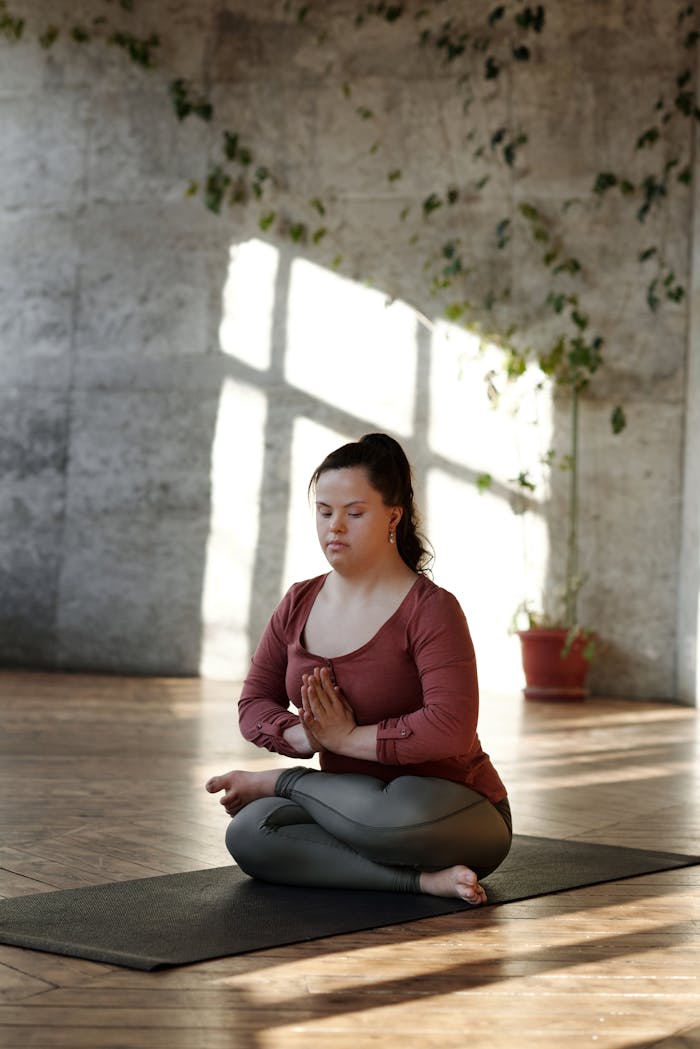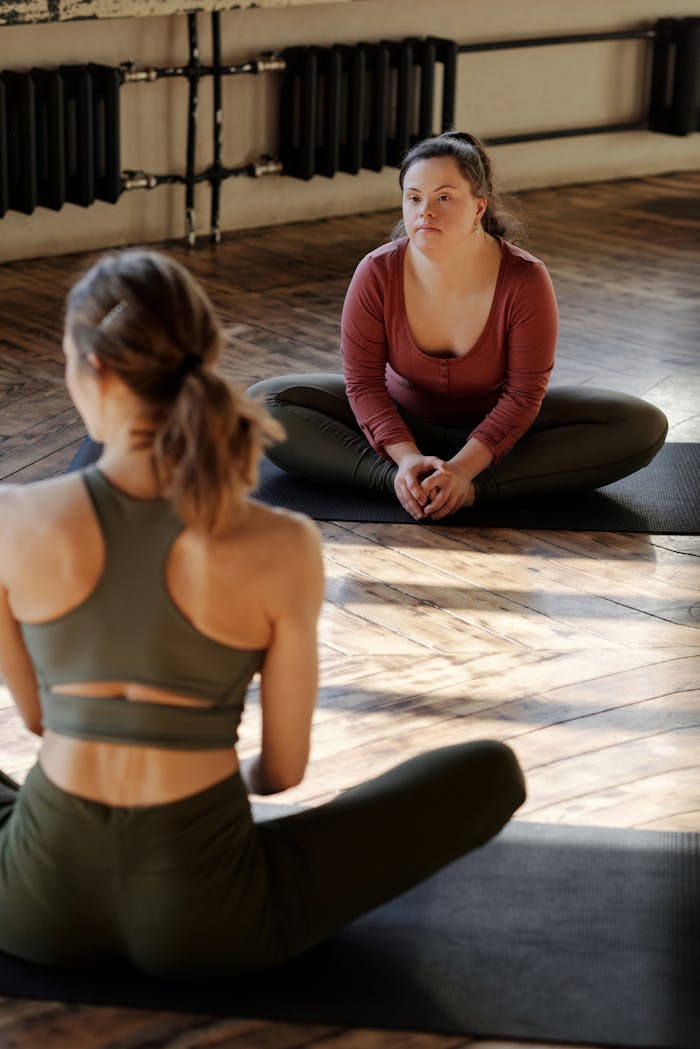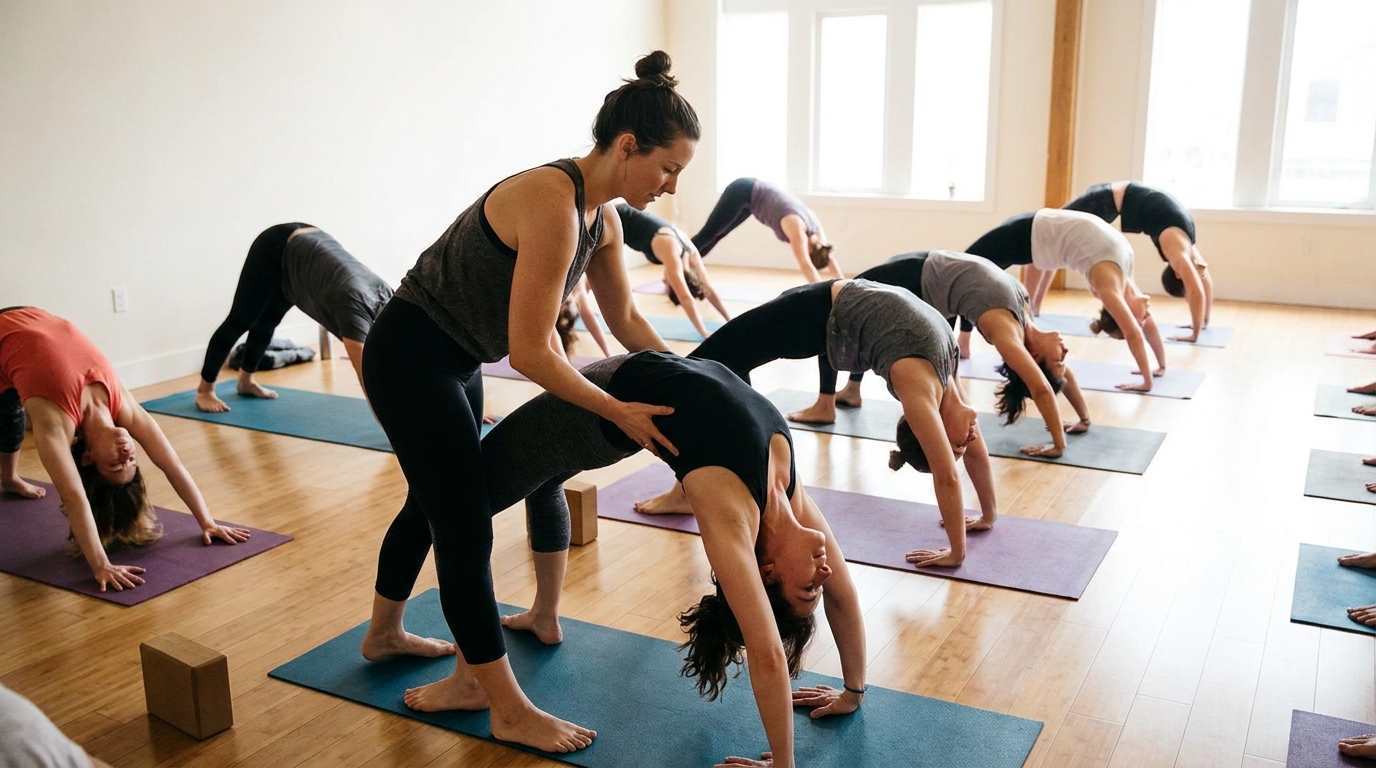
Anusara Yoga is a heart-centered style of yoga that invites us to remember our inner goodness, move with awareness, and live with greater compassion. The word “Anusara” comes from Sanskrit and is often translated as “flowing with grace,” “following your heart,” or “aligning with the Divine current.” In simple language, it means learning to move through life with openness, steadiness, and trust.
Whether you are new to yoga, returning after time away, or already walking a spiritual path, Anusara Yoga offers a practical and uplifting way to care for the body, calm the mind, and open the heart. It welcomes people of all backgrounds, ages, body types, and faith traditions. You do not need to be flexible, spiritual, or experienced to begin. You only need a willingness to listen inwardly.
At its essence, Anusara Yoga combines precise physical alignment with a life-affirming philosophy. It teaches that the body is not an obstacle to spiritual life, but a sacred instrument through which we can experience strength, beauty, humility, and joy.
Anusara Yoga is a modern school of Hatha Yoga founded by John Friend in 1997. “Hatha Yoga” refers to the physical and energetic practices of yoga, including postures, breath awareness, and inner focus. Anusara is known for blending safe, intelligent alignment with a devotional, heart-based approach.
The Meaning of “Anusara”
In Sanskrit, “Anu” can mean “with” or “in accordance with,” and “Sara” can mean “flow,” “essence,” or “current.” Together, Anusara points toward moving in harmony with the deeper flow of life.
This does not mean life is always easy or graceful on the surface. Rather, Anusara Yoga teaches that even in challenge, we can learn to align with something wiser within us. We can meet difficulty with breath, patience, and courage.
A Heart-Centered Practice
Many yoga styles focus mainly on physical technique, discipline, or meditation. Anusara Yoga honors these, but it begins with the heart. In class, teachers often invite students to set an intention, reflect on a meaningful theme, or connect movement with qualities like gratitude, courage, compassion, or devotion.
This heart-centered approach is not sentimental. It is practical. When we begin from the heart, the body softens, the mind becomes more receptive, and the practice becomes a prayer in motion.
The Three A’s of Anusara Yoga
Anusara Yoga is often taught through what are called the “Three A’s”:
Attitude
Attitude refers to the inner feeling or intention we bring to the practice. It is the “why” behind the pose. Are we practicing to force the body? To impress others? Or are we practicing to honor life, cultivate steadiness, and grow in awareness?
In bhakti, the path of devotion, attitude is everything. Even a simple movement becomes sacred when offered with sincerity.
Alignment
Alignment means placing the body in a safe, balanced, and integrated way. In Anusara Yoga, alignment is not about making every body look the same. It is about helping each person experience more freedom, stability, and ease.
Good alignment protects the joints, supports the spine, and allows energy to flow more naturally.
Action
Action is the balanced effort we bring into the pose. It includes muscular engagement, breath, and mindful expansion. Anusara Yoga teaches us to be both strong and soft, grounded and open, active and receptive.
This balance reflects a deep yogic truth: life is not only about surrender, and not only about effort. It is the sacred dance between the two.
Why Practice Anusara Yoga?
Many people first come to yoga for physical reasons: back pain, stress, stiffness, or a desire to feel stronger. These are valid and beautiful reasons to begin. Anusara Yoga can support all of these needs, while also offering emotional and spiritual nourishment.
It Helps You Feel at Home in Your Body
One of the great benefits of Anusara Yoga is that it encourages a friendly relationship with the body. Instead of treating the body as a problem to fix, we learn to listen to it as a wise companion.
The body holds stories, memories, and emotions. Through mindful movement, we begin to release tension and develop trust. We may discover that our body is not separate from our spiritual life. It is part of the path.
The ancient yoga text, the Bhagavad Gita, teaches moderation and balance. In Chapter 6, Krishna explains that yoga is not for one who eats too much or too little, sleeps too much or too little, but for one who lives with harmony. This is a practical teaching. Anusara Yoga reflects this wisdom by encouraging balanced effort rather than extremes.
It Builds Strength Without Harshness
Anusara Yoga can be physically strengthening. Standing poses, backbends, arm balances, and core work are often practiced with careful alignment. But the strength developed is not aggressive. It is rooted in awareness.
In many classes, you may hear reminders to “hug in” to the midline or draw muscles toward the bones. These cues help create stability. From that stability, the body can expand safely.
This is a powerful life lesson. When we are grounded in our values, we can open more fully to the world.
It Supports Emotional Healing
Because Anusara Yoga includes heart themes and mindful breathing, it can gently support emotional healing. We may notice where we are holding grief, fear, or self-judgment. The practice gives us space to feel without being overwhelmed.
In the Yoga Sutras of Patanjali, yoga is described as the calming of the fluctuations of the mind: “Yoga chitta vritti nirodha.” In simple terms, yoga helps quiet the restless movements of thought. Anusara Yoga does this not by rejecting emotion, but by meeting it with compassion and awareness.
It Encourages Joy
Some yoga practices can feel serious or austere. Anusara Yoga often invites a sense of celebration. This does not mean every class is easy or cheerful. Rather, the practice reminds us that joy is part of our nature.
In devotional traditions, joy is not dependent only on outer circumstances. It arises when the heart feels connected—to breath, to life, to the Divine, to others, and to the present moment.
The Main Benefits of Anusara Yoga
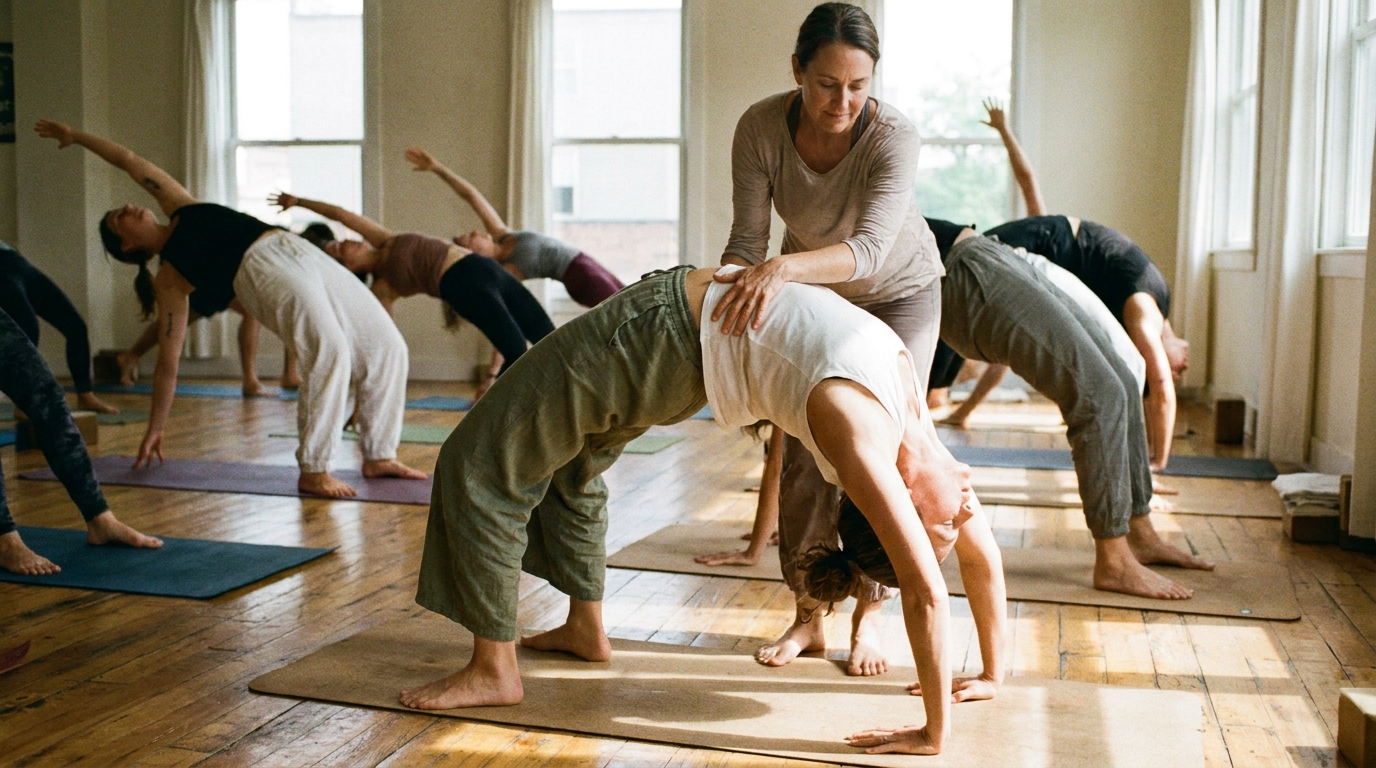
Anusara Yoga benefits the body, mind, and heart. Its approach is both structured and soulful, making it accessible for many kinds of practitioners.
Improved Posture and Alignment
One of the most recognized benefits of Anusara Yoga is improved posture. Through clear alignment principles, students learn how to stand, sit, bend, twist, and move with greater awareness.
This can be especially helpful in modern life, where many people spend long hours sitting, driving, or looking at screens. Poor posture can contribute to neck tension, back pain, shallow breathing, and fatigue.
Anusara Yoga teaches the body to organize itself more intelligently. Over time, you may notice that you carry yourself with more dignity and ease—not only on the mat, but in daily life.
Greater Flexibility and Mobility
Many people associate yoga with flexibility. Anusara Yoga does help increase flexibility, but it does so with respect for the body’s natural structure.
Instead of forcing deep stretches, students are guided to create stability first. This helps protect the ligaments and joints. Flexibility becomes safer and more sustainable.
Mobility also improves. Mobility means the ability to move with control and freedom. This is especially important as we age. A healthy yoga practice should not only help us stretch; it should help us move well.
Stronger Muscles and Better Balance
Anusara Yoga uses active engagement in poses. This strengthens the legs, core, arms, back, and stabilizing muscles around the joints.
Balance poses, such as Tree Pose or Warrior III, train both the body and mind. When you wobble in a pose, you learn humility. When you return to the breath and try again, you learn resilience.
Balance on the mat becomes balance in life. We learn not to collapse when things shift. We learn to stay present.
Reduced Stress and Nervous System Support
Stress often lives in the body as tight shoulders, shallow breath, clenched jaws, or a racing heart. Anusara Yoga helps soothe the nervous system by combining breath, movement, and focused attention.
When the breath becomes steady, the mind receives a message of safety. Slow, mindful movement can shift the body from a stress response into a more relaxed state.
The Bhagavad Gita describes a yogi as one who remains steady in both pleasure and pain, success and failure. This does not mean becoming numb. It means cultivating an inner steadiness that can hold life’s ups and downs with grace.
A Deeper Connection to the Heart
Perhaps the most precious benefit of Anusara Yoga is the way it reconnects us to the heart. In daily life, we may become busy, guarded, or disconnected. Yoga gives us a way to return.
Through intention, breath, and mindful movement, we begin to feel the heart not only as an organ, but as a center of wisdom. We remember kindness. We remember gratitude. We remember that our life has meaning.
Check out the latest yoga guides on yoga guides for helpful tips and advice.
How Anusara Yoga Works: The Universal Principles of Alignment
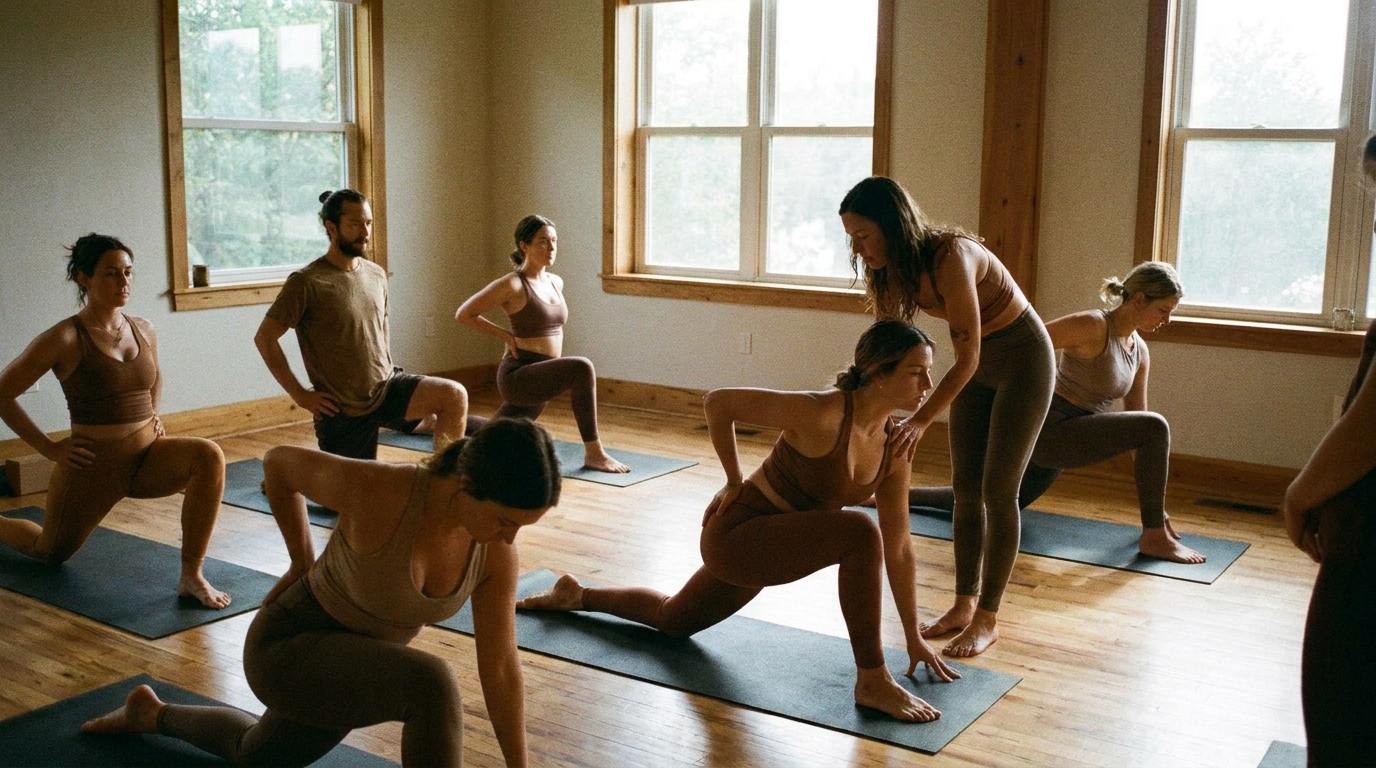
Anusara Yoga is known for its Universal Principles of Alignment. These principles are designed to support safe and graceful movement in many different poses. While the full system can be detailed, its essence is simple and practical.
Open to Grace
The first principle is “Open to Grace.” This means becoming receptive before taking action. Physically, it may look like softening the body, breathing deeply, and expanding awareness. Spiritually, it means remembering that we are supported by something greater than our individual effort.
For people who do not use spiritual language, this can simply mean pausing, arriving, and becoming present.
This principle is deeply aligned with bhakti. Before we strive, we bow inwardly. Before we act, we listen.
Muscular Energy
Muscular Energy means drawing inward toward the center. It creates stability, strength, and integration. In a pose, this may involve engaging the legs, drawing the arms into the shoulder sockets, or hugging the muscles toward the bones.
On a life level, Muscular Energy reminds us to gather ourselves. When scattered, we return to what matters. We come back to our center.
Inner Spiral
Inner Spiral is an alignment action that helps create space, especially in the legs, pelvis, and lower back. It is often taught in standing poses and hip-opening postures.
In simple terms, it encourages a widening and inward rotation that can bring more freedom to the lower body. Teachers guide this carefully, because it is best learned through practice rather than theory alone.
Outer Spiral
Outer Spiral balances Inner Spiral. It helps stabilize the pelvis, lengthen the tailbone, and support the lower back. Together, Inner Spiral and Outer Spiral create both freedom and containment.
This balance is a beautiful metaphor. We need openness, but we also need grounding. We need expansion, but also responsibility.
Organic Energy
Organic Energy means extending outward from the center with vitality. After gathering inward through Muscular Energy, we radiate outward through the limbs, crown of the head, and heart.
This principle teaches that strength is not meant to stay contracted. True strength becomes generosity. We gather ourselves so we can offer ourselves.
How to Begin an Anusara Yoga Practice
Beginning Anusara Yoga does not require special ability. A sincere and steady approach is more important than perfect poses. As with all yoga, it is wise to practice patiently and respectfully.
Find a Qualified Teacher
Because Anusara Yoga includes detailed alignment principles, learning from a qualified teacher is very helpful. Look for teachers who are certified, experienced, and compassionate.
A good teacher will not force your body into shapes. They will offer options, props, and encouragement. They will help you honor your own capacity.
If you are practicing online, choose classes that explain alignment clearly and offer modifications.
Start With Foundational Poses
Beginners can start with simple and steady poses such as:
- Mountain Pose, known as Tadasana
- Child’s Pose, known as Balasana
- Downward-Facing Dog, known as Adho Mukha Svanasana
- Warrior I and Warrior II, known as Virabhadrasana I and II
- Bridge Pose, known as Setu Bandha Sarvangasana
- Easy Seated Pose, known as Sukhasana
Sanskrit names may sound unfamiliar at first, but they are simply traditional names for the postures. You do not need to memorize them. Over time, they become like old friends.
Practice With Breath Awareness
Breath is the thread that connects body and mind. In yoga, breath practice is called pranayama. “Prana” means life force or vital energy, and “ayama” can mean expansion or regulation.
You can begin simply by noticing your natural breath. Let each inhale create space. Let each exhale soften tension. In Anusara Yoga, the breath supports both alignment and devotion.
Use Props With Respect
Props such as blocks, straps, blankets, and bolsters are not signs of weakness. They are tools of wisdom. They help the body experience the pose with more support and less strain.
For example, placing blocks under the hands in a standing forward fold can protect the back and hamstrings. Sitting on a folded blanket can help the spine lift in meditation.
A humble practitioner uses what is helpful.
Listen to Your Body
Anusara Yoga encourages sensitivity. If something feels sharp, pinching, or unsafe, pause. Ask for guidance. Choose another variation.
Yoga is not a performance. The Bhagavad Gita teaches “yoga is skill in action.” Skillful action includes knowing when to engage, when to soften, and when to rest.
Anusara Yoga as a Practical Spiritual Path
Anusara Yoga can be practiced purely for health, and that is a worthy beginning. Yet for many, it gradually becomes a spiritual path—not in a rigid or exclusive way, but as a daily practice of remembering the sacredness of life.
The Body as a Temple
In some spiritual traditions, the body is seen as temporary and therefore less important. Yoga offers another view: the body is temporary, yes, but it is also sacred. It is the place where we breathe, love, serve, learn, and awaken.
Anusara Yoga honors the body as a temple of consciousness. This does not mean worshiping appearance. It means caring for the body with reverence.
When we practice a pose with awareness, we are not just stretching muscles. We are learning how to inhabit life more fully.
Devotion in Movement
Bhakti means devotion, love, or heartfelt offering. In bhakti yoga, the practitioner offers thoughts, actions, songs, and service to the Divine, however they understand the Divine.
Anusara Yoga often carries this devotional mood. A backbend may become an offering of courage. A forward fold may become an offering of humility. A standing pose may become an offering of steadiness.
Even if you do not use the language of God or the Divine, you can practice devotion as sincerity. You can offer your practice to healing, peace, family, community, or the welfare of all beings.
Seeing Goodness
A central philosophical idea in Anusara Yoga is that life is fundamentally sacred and that each person carries innate goodness. This does not deny suffering, injustice, or personal struggle. Rather, it says that beneath the struggle, there is still light.
The Upanishads, ancient wisdom texts of yoga, point toward the presence of the Self, or Atman, within each being. Atman can be understood as the deepest spiritual essence within us. Anusara Yoga invites us to remember that essence—not as an abstract idea, but as a lived experience.
When we see goodness in ourselves, we are more able to see it in others.
How Else Can Anusara Yoga Support Daily Life?
The benefits of Anusara Yoga do not end when class is over. The practice gives us tools for relationships, work, family life, and service.
Practicing Alignment in Relationships
Alignment is not only physical. We can ask: Are my words aligned with my values? Are my actions aligned with my heart? Am I listening before reacting?
“Open to Grace” can become a daily practice in conversation. Before answering someone, pause. Breathe. Receive. Then respond.
Muscular Energy can help us hold healthy boundaries. Organic Energy can help us offer kindness outwardly. In this way, the principles of Anusara Yoga become practical life teachings.
Meeting Difficulty With Steadiness
Life brings unexpected challenges: illness, loss, conflict, uncertainty. Yoga does not prevent all pain, but it can help us meet pain with more presence.
In a difficult pose, we learn not to panic. We breathe, adjust, soften, and stay connected. This skill can support us when life becomes difficult.
The Yoga Sutras speak of practice and non-attachment: abhyasa and vairagya. Abhyasa means steady practice. Vairagya means letting go of clinging. Anusara Yoga gives us a living experience of both. We show up with dedication, and we release the need to control every outcome.
Serving Others From a Full Heart
A true yoga practice naturally leads toward seva, or selfless service. When the heart opens, we become more sensitive to the suffering and needs of others.
Anusara Yoga can help us serve without burning out. By grounding, breathing, and aligning inwardly, we learn to give from fullness rather than depletion.
Service does not have to be grand. It may be listening patiently, cooking for someone, caring for the earth, speaking truth kindly, or offering your work with integrity.
Tips for Getting the Most From Anusara Yoga
Like any meaningful practice, Anusara Yoga unfolds over time. The benefits deepen with consistency, patience, and sincerity.
Practice Regularly, Even Briefly
You do not need a long daily practice to benefit. Ten to twenty minutes of mindful movement and breathing can make a difference. A few rounds of Cat-Cow, a gentle lunge, Mountain Pose, and quiet sitting can reset the body and mind.
Consistency matters more than intensity.
Let Go of Comparison
In yoga classes, it is easy to compare your body to others. But comparison pulls the mind away from presence. Every body has a different history, structure, and capacity.
Anusara Yoga teaches that your practice is your own sacred conversation with life. Honor where you are today.
Ask Questions
If a pose feels confusing, ask your teacher. If an alignment cue does not make sense, seek clarification. Yoga is a path of learning, not blind obedience.
A humble student is not one who stays silent out of fear. A humble student is one who remains open to understanding.
Include Rest and Reflection
Rest is part of yoga. Savasana, or Final Relaxation Pose, is often practiced at the end of class. “Sava” means corpse, and the pose symbolizes surrender. We lie down, release effort, and allow the fruits of practice to settle.
This simple rest can be deeply healing. It teaches us that we are more than what we do.
Bring the Practice Into Your Day
After class, notice how you walk, sit, speak, and breathe. Can you stand in Mountain Pose while waiting in line? Can you soften your jaw during a stressful email? Can you open your heart before entering your home?
These small moments are yoga.
Who Can Benefit From Anusara Yoga?
Anusara Yoga can benefit many people because it is adaptable, thoughtful, and heart-centered. Still, each person should practice according to their needs and seek medical guidance when appropriate.
Beginners
Beginners often appreciate the clear instructions and welcoming philosophy. Anusara Yoga helps new students build a strong foundation from the beginning.
Experienced Practitioners
More experienced students can deepen their understanding of alignment, refine challenging poses, and reconnect with the devotional heart of yoga.
People Seeking Stress Relief
Because the practice includes breath, intention, and mindful movement, it can be supportive for those dealing with stress or emotional fatigue.
People Looking for Spiritual Depth
Those who want more than physical exercise may find Anusara Yoga especially meaningful. Its teachings invite reflection, gratitude, and a loving relationship with the sacred.
People Recovering From Disconnection
Many of us live disconnected from our bodies, emotions, or inner wisdom. Anusara Yoga offers a gentle path back to wholeness.
A Simple Anusara-Inspired Practice to Try
This short practice can be done at home. Move slowly and kindly. If you have injuries or medical concerns, consult a qualified teacher or healthcare professional.
Step 1: Sit and Open to Grace
Sit comfortably on a blanket or chair. Let your spine rise gently. Rest your hands on your thighs or heart.
Take five slow breaths. With each inhale, receive. With each exhale, soften.
You may silently say, “May this practice support healing and clarity.”
Step 2: Cat-Cow for the Spine
Come to hands and knees. As you inhale, gently arch the spine and lift the heart. As you exhale, round the spine and release the head.
Move for six to ten rounds. Feel the spine awakening.
Step 3: Mountain Pose
Stand with feet hip-width apart. Spread your toes. Let the legs engage softly. Lift through the crown of the head.
Feel both grounded and spacious. This is Tadasana, Mountain Pose. It teaches dignity, presence, and steadiness.
Step 4: Warrior II
Step one foot back and bend the front knee. Open the arms wide. Look over the front hand.
Hug the legs inward for stability. Then expand through the arms and heart. Stay for three to five breaths on each side.
Warrior II teaches courage without aggression.
Step 5: Bridge Pose
Lie on your back with knees bent and feet on the floor. Press gently into the feet and lift the hips. Keep the neck relaxed.
Feel the front body open. Breathe into the heart. Lower slowly.
Bridge Pose can be strengthening, energizing, and emotionally uplifting.
Step 6: Rest in Savasana
Lie down comfortably. Support the knees with a pillow if needed. Let the body be held by the earth.
Rest for several minutes. Do nothing. Receive the quiet blessing of stillness.
The Deeper Gift of Anusara Yoga
The benefits of Anusara Yoga are many: better posture, increased strength, improved flexibility, reduced stress, emotional balance, and a more open heart. Yet the deeper gift is this: Anusara Yoga helps us remember that we are not separate from grace.
Grace may mean divine love. It may mean the intelligence of life. It may mean the breath that keeps arriving without our command. Whatever language we use, the invitation is the same: pause, listen, align, and offer yourself with sincerity.
In a world that often asks us to rush, Anusara Yoga asks us to feel. In a culture that often praises appearance, it asks us to honor inner goodness. In moments when we feel scattered, it teaches us to return to the heart.
May your practice be steady but gentle. May your body become a place of friendship. May your breath guide you home. And may every pose, every pause, and every humble beginning help you flow with grace.
FAQs
What is Anusara Yoga?
Anusara Yoga is a modern form of Hatha yoga that was founded by John Friend in 1997. It is based on the principles of alignment, non-dualism, and the celebration of the heart.
What are the key principles of Anusara Yoga?
The key principles of Anusara Yoga include “opening to grace,” “muscular energy,” “inner and outer spiral,” “organic energy,” and “alignment.” These principles are used to guide practitioners in achieving a balanced and harmonious practice.
What sets Anusara Yoga apart from other forms of yoga?
Anusara Yoga is known for its emphasis on alignment, heart-opening poses, and a strong sense of community. It also incorporates a philosophy of non-dualism, which teaches that everything is interconnected and part of a greater whole.
Is Anusara Yoga suitable for beginners?
Anusara Yoga can be suitable for beginners, as it emphasizes proper alignment and offers modifications for different levels of practitioners. However, it is important for beginners to find a qualified instructor who can guide them through the practice safely.
Where can I find Anusara Yoga classes?
Anusara Yoga classes can be found at yoga studios, fitness centers, and online platforms. It is important to look for certified Anusara Yoga instructors who have completed the required training and have a good understanding of the practice.