Chair yoga offers a gentle, welcoming way to build everyday well-being. By adapting familiar yoga movements to a stable chair or supported standing position, it helps beginners, older adults, and anyone with limited mobility move with greater confidence. If you’re new to yoga, this yoga for beginners guide can offer helpful foundations.
You don’t need to reach a perfect shape to benefit. Comfort, steady breathing, and your own range of motion matter most. With mindful practice, simple movements can support mobility, functional strength, balance, and relaxation—without requiring you to get onto the floor.
In this guide, you’ll discover ways to practice safely and listen to your body. Chair yoga can complement your wellness routine, but it isn’t a substitute for individualized medical care. Let’s begin with encouragement, curiosity, and space for your unique journey.
Start Safely: Set Up Your Chair Yoga Practice
Choose a sturdy, armless chair on a nonslip surface. Leave enough space to extend your legs and arms without bumping nearby furniture. A folded blanket can add comfort, while a yoga strap may support movements when reaching feels challenging.
Sit toward the front or middle of the seat, keeping both feet grounded when possible. Lengthen gently through your spine, relax your shoulders, and let your hands rest comfortably. These alignment basics support steadier movement and can complement practices such as yoga for bad posture.
Move slowly and stay curious about how each position feels. Breathe continuously rather than holding your breath, and never force a stretch. A gentle sensation is welcome, but stop if you notice sharp pain, dizziness, numbness, or unusual shortness of breath. If you have an injury, health condition, or concerns about mobility, seek guidance from a qualified healthcare professional before beginning chair yoga.
Gentle Chair Yoga Poses for Mobility and Range of Motion
Begin seated with both feet grounded and your hands resting on your thighs. Inhale as you lengthen through the crown of your head, then exhale and soften your shoulders. Take several steady breaths, noticing how an upright spine supports comfortable movement.
Slowly turn your head to the right, return to center, and repeat on the left. Keep your chin level and use a smaller range if your neck feels sensitive. Add gentle shoulder rolls, moving up, back, and down, then reverse the direction.
Place your hands on your thighs for seated cat-cow. Inhale, broaden your chest, and gently arch your spine. Exhale, round your back, and let your head lower slightly. This movement can ease spinal stiffness and prepare your body for reaching, turning, and daily tasks.
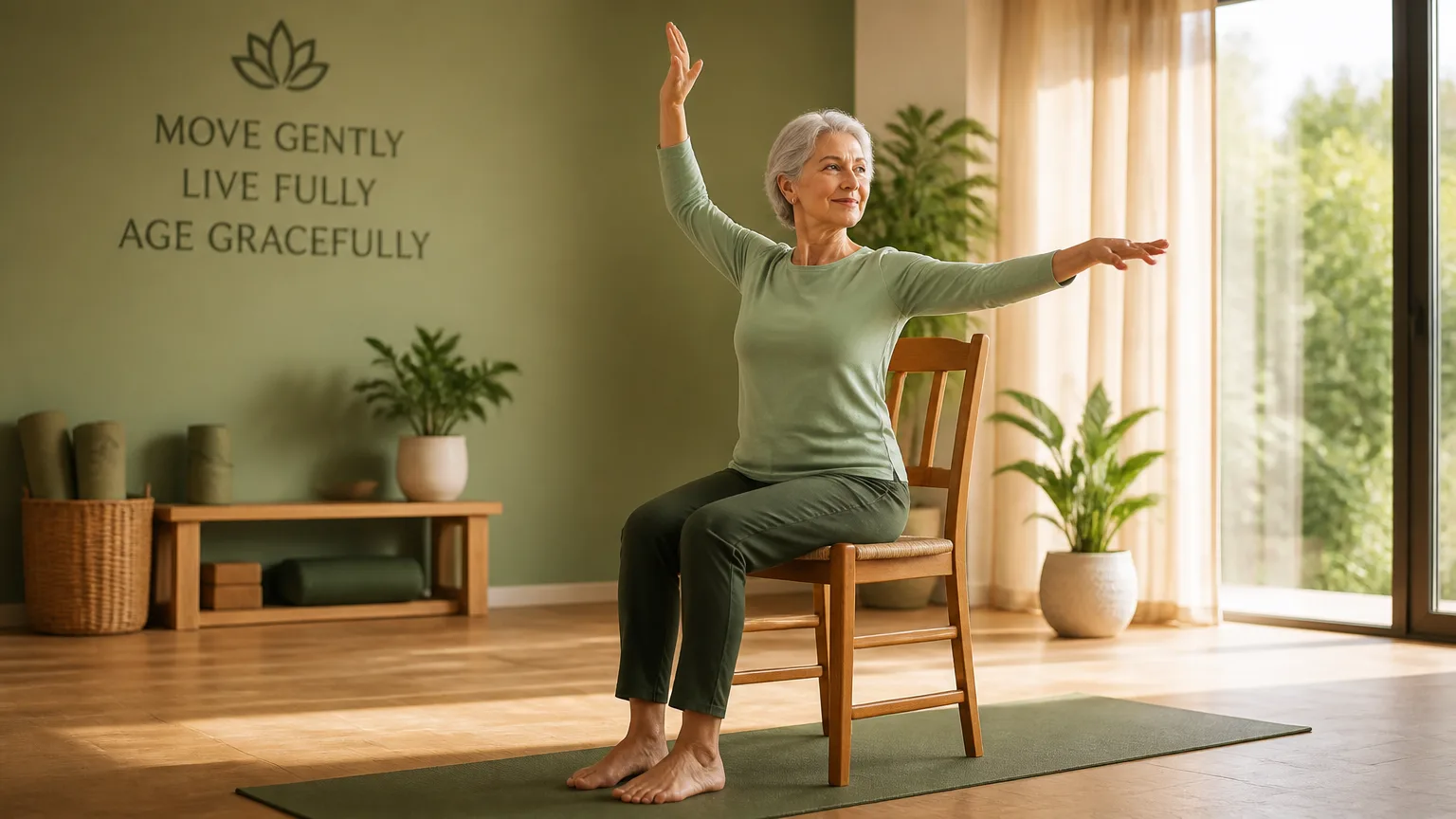
Next, lift one arm overhead for a seated side stretch. Breathe into your ribs, then switch sides. For a seated twist, hold the chair and rotate comfortably, helping your body practice the turning action used while checking behind you.
Finish with ankle circles, heel lifts, and alternating knee lifts. These movements encourage circulation and strengthen patterns that support walking and standing. Practice both sides, resting whenever needed. If balance, joint sensitivity, or fatigue is a concern, make each movement smaller. You might also explore sacral chakra yoga poses as another mindful way to connect movement with inner energy.
Build Functional Strength and Balance With Chair Support
Chair yoga can build practical strength for everyday movements while keeping effort gentle and controlled. Begin seated with marching: lift one foot, then the other, engaging your thighs and hips without rushing. Follow with seated knee extensions, slowly straightening one leg at a time, then lowering it with control.
Add heel-to-toe lifts to awaken your lower legs. Raise your heels, lower them, then lift your toes while keeping your feet grounded and your spine tall. These small movements support circulation, ankle strength, and steadiness.
For a functional challenge, try supported sit-to-stands. Place your feet beneath your knees and press through your feet as you rise, using the chair for balance—not to pull yourself up. Lower slowly for several repetitions, or practice a partial chair squat. If standing is unsuitable, remain seated and repeat the marching and knee extensions.
You can also explore a chair-assisted warrior variation or standing side leg lifts. Keep your knees aligned with your toes, breathe steadily, and hold the chair lightly. Progress gradually by adding time or repetitions, not intensity. These movements may complement yoga poses for solar plexus chakra as you cultivate confidence and grounded strength.
Use Breath and Relaxation Poses to Release Tension
After active movement, let your chair yoga practice become quieter. Place one hand on your abdomen or ribs and notice your natural breath. Inhale comfortably, then allow a slightly longer, unforced exhale. Let your breathing guide the pace instead of chasing a deeper stretch.
Try a seated forward fold with your feet grounded. Keep your spine long as you hinge gently from your hips, allowing your hands to rest on your thighs or a nearby surface. Keep the range shallow if needed; there is no need to round deeply or reach the floor.
Return to a supported seated rest, leaning back against the chair if comfortable. Gently circle your wrists, open and close your hands, and shake them softly to release tension. For more guidance, explore yoga for stress relief.
Finish with a brief body scan. Notice sensations from your feet to your face, soften areas of unnecessary effort, and observe how your breath settles your nervous system. Relaxation grows through mindful attention, not force.
Make Chair Yoga a Sustainable Wellness Habit
Create a simple 10-minute routine: begin with mindful breathing, then explore joint mobility and seated strengthening. If appropriate, add one supported standing movement before ending with a quiet relaxation and body scan.
Practice several short sessions each week, noticing easier movement, greater confidence, renewed energy, or more calm. Progress is not measured by flexibility. Chair yoga invites you to meet your body as it is today, adapting poses with self-compassion and seeking professional guidance when health conditions require personalized support.