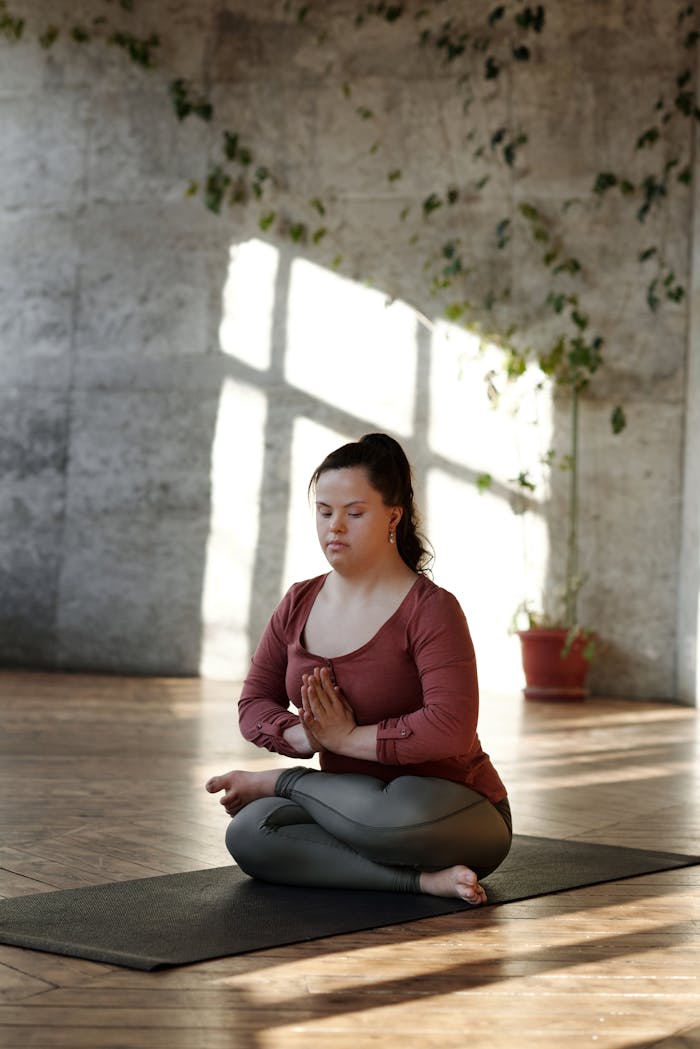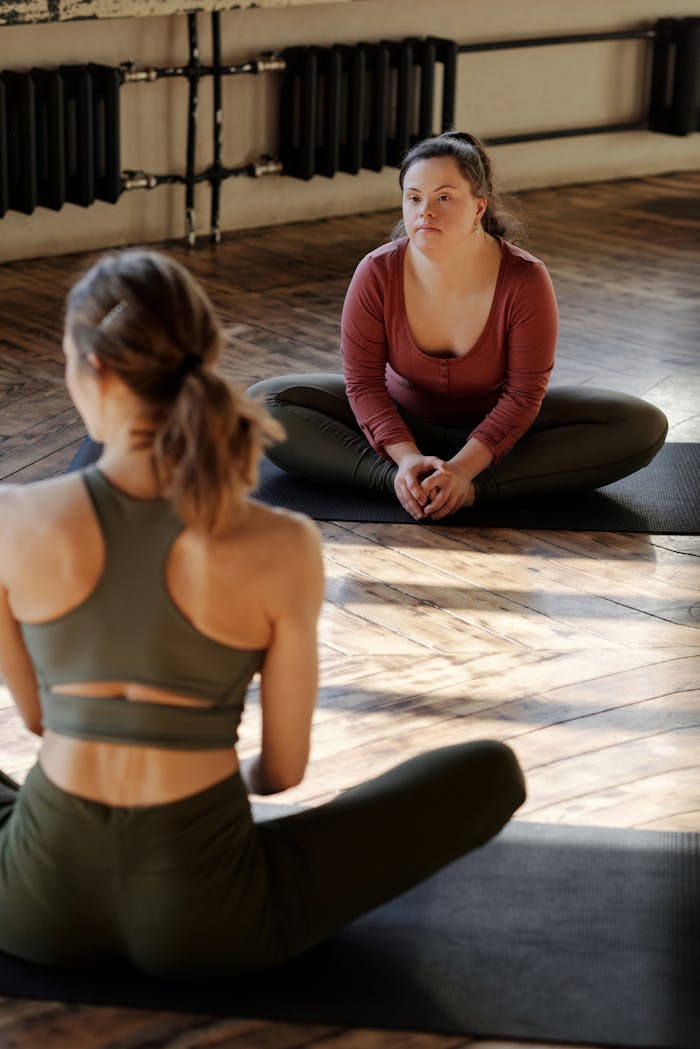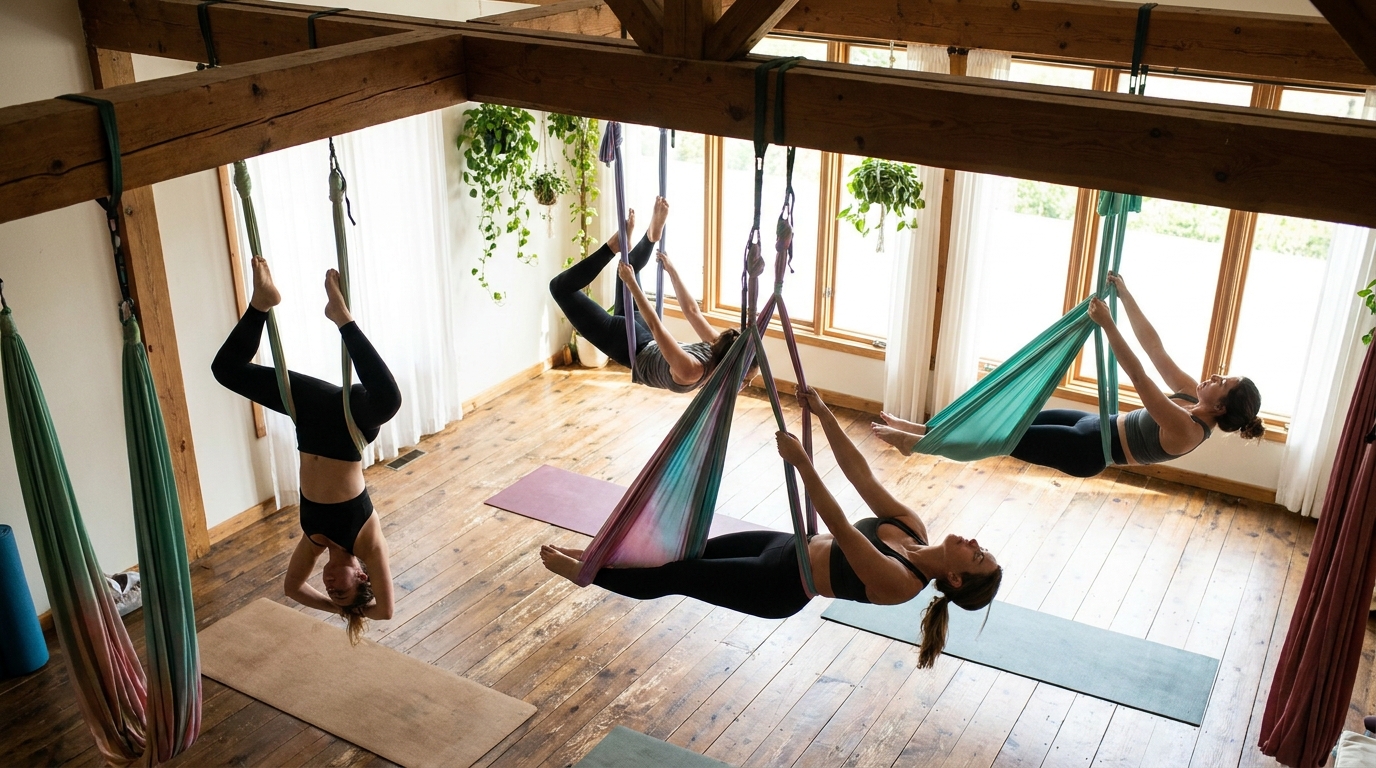
Aerial yoga is a joyful and supportive form of yoga practiced with the help of a soft fabric hammock, often called a yoga swing or aerial silk. The hammock is usually suspended from the ceiling and can hold part or all of the body’s weight. This allows practitioners to explore yoga postures, gentle inversions, strengthening movements, deep stretches, and moments of rest in a new way.
If you are new to yoga, please know this: you do not need to be flexible, athletic, young, spiritual, or experienced to begin. Yoga welcomes every sincere heart. The word “yoga” comes from the Sanskrit root yuj, meaning “to unite” or “to yoke.” In a practical sense, yoga helps unite the body, breath, mind, and deeper self.
Aerial yoga may look dramatic at first, especially when people are hanging upside down or floating gracefully in the air. But at its heart, it is not about performance. It is about support, presence, trust, and healing. The hammock becomes like a compassionate friend, holding us as we learn to release fear and rediscover ease in the body.
In the spirit of bhakti—the path of devotion and loving surrender—an aerial yoga practice can become more than exercise. It can become a humble offering. Each breath, each stretch, each moment of trust can be a quiet prayer: “May I be present. May I be grateful. May I move with kindness.”
Why Aerial Yoga Matters for Modern Bodies and Minds
Many of us live with tension in the spine, tightness in the hips, stress in the nervous system, and heaviness in the heart. We sit for long hours. We look down at screens. We rush from one duty to another, often forgetting to breathe fully.
Aerial yoga offers a practical way to bring lightness back into the body and calm back into the mind. By using the hammock as support, we can explore movement with less pressure on the joints and more freedom in the spine.
A Practice of Support, Not Strain
In traditional floor-based yoga, certain postures may feel difficult because of tight muscles, limited mobility, or fear of falling. Aerial yoga can make some of these shapes more accessible. The hammock supports the body, allowing students to experience alignment and space without forcing.
For example, a gentle backbend in the hammock may feel safer than a deep backbend on the floor. A supported forward fold may help the spine relax without pulling. A mild inversion may decompress the back without requiring the strength of a headstand or handstand.
This is one of the beautiful benefits of aerial yoga: it teaches us that support is not weakness. Receiving support can be wise, healing, and deeply yogic.
Releasing the Weight of Stress
When the body feels held, the mind often softens. Aerial yoga can encourage the nervous system to shift from stress mode into a calmer state. The gentle rocking of the hammock may feel soothing, almost like being cradled.
In Sanskrit, prana means life force or vital energy. When we are stressed, prana can feel blocked or scattered. Through breath, movement, and mindful suspension, aerial yoga may help prana flow more freely.
The ancient yoga tradition teaches that the breath and mind are closely connected. When the breath becomes steady, the mind becomes steadier too. This truth is beautifully reflected in the Yoga Sutras of Patanjali, where yoga is described as the calming of the fluctuations of the mind: yogaś citta-vṛtti-nirodhaḥ.
In simple words, yoga helps quiet the mental waves. Aerial yoga, when practiced with awareness, can become a graceful doorway into that quiet.
The Physical Benefits of Aerial Yoga
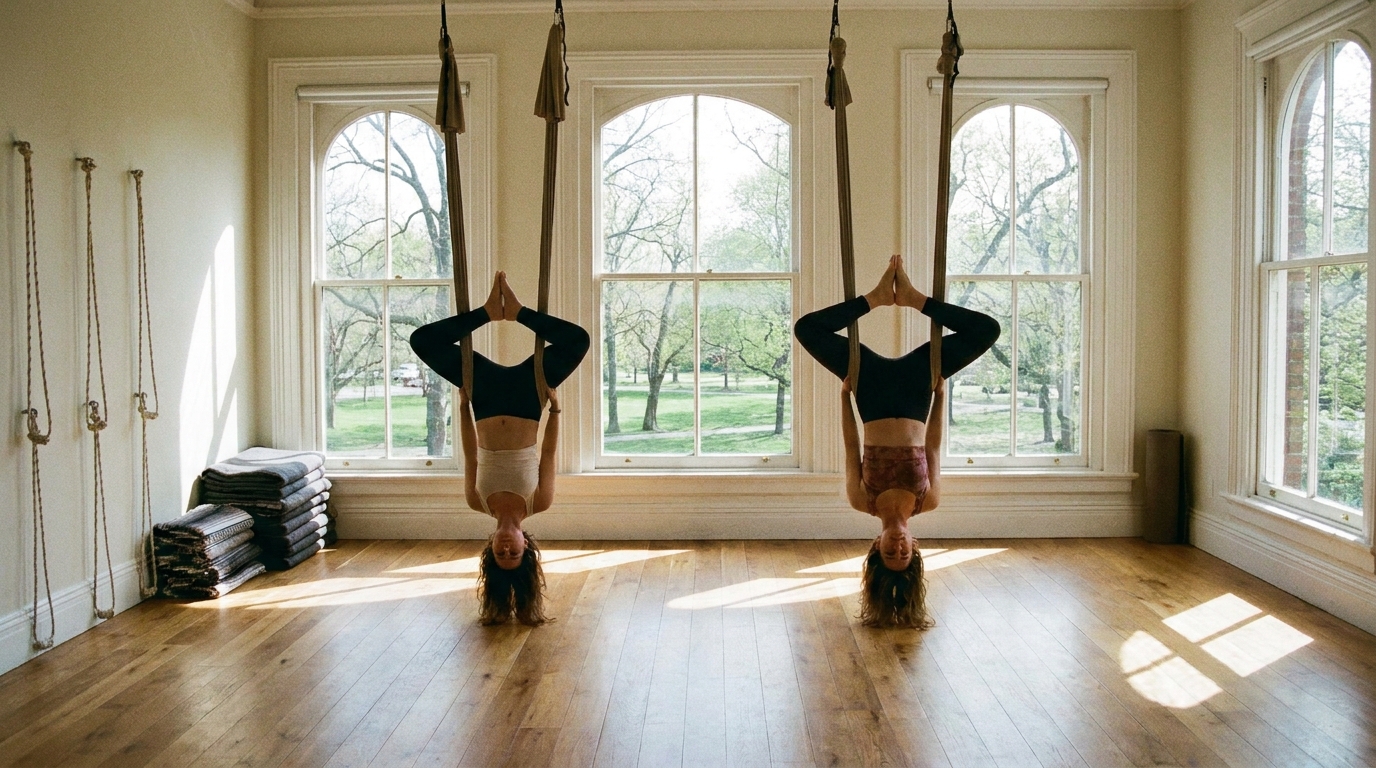
Aerial yoga benefits the body in many practical ways. While every person is different, many practitioners experience improved flexibility, strength, balance, posture, and spinal comfort.
Spinal Decompression and Back Relief
One of the most loved benefits of aerial yoga is spinal decompression. Because the hammock can support the hips, legs, or torso, it allows gravity to gently create space between the vertebrae.
This does not mean aerial yoga is a cure for back problems, and anyone with serious spine conditions should consult a qualified healthcare provider before practicing. But for many people, supported hanging and gentle inversions can relieve pressure and reduce stiffness.
Simple aerial poses like supported down dog, hammock-assisted forward fold, or a gentle inversion can help lengthen the spine. Instead of pushing or pulling, the body learns to release.
Increased Flexibility Without Force
Flexibility is often misunderstood. In yoga, flexibility is not about showing off extreme shapes. It is about creating healthy mobility, reducing unnecessary tension, and moving through life with more ease.
The hammock helps support the body in stretches, making it possible to relax more deeply. When the nervous system feels safe, muscles may release more naturally.
For example, in a supported hamstring stretch, the hammock can hold one leg while the practitioner stays grounded and balanced. In a hip-opening posture, the fabric may support the pelvis so the stretch feels spacious rather than aggressive.
This is important because yoga is guided by ahimsa, a Sanskrit word meaning non-harming or compassion. Ahimsa reminds us to avoid forcing the body. In aerial yoga, the hammock can help us practice stretching with kindness.
Building Functional Strength
Although aerial yoga can feel relaxing, it also builds strength. Moving in and out of the hammock requires engagement of the core, arms, shoulders, legs, and stabilizing muscles.
Because the hammock moves, the body must respond with awareness. This improves coordination and functional strength—the kind of strength that supports everyday life.
Aerial yoga can especially strengthen:
- Core muscles
- Grip and forearms
- Shoulders and upper back
- Glutes and legs
- Deep stabilizing muscles around the spine
The practice teaches strength with softness. We learn to engage without becoming rigid, to lift without hardening the heart.
Better Balance and Body Awareness
Aerial yoga improves proprioception, which means awareness of where the body is in space. Since the hammock is not fixed like the floor, practitioners must listen carefully to the body’s position, weight, and movement.
This can improve balance, coordination, and confidence. Over time, students often become more aware of small habits: leaning to one side, holding the breath, gripping the jaw, or tensing the shoulders.
Yoga invites us into this honest seeing. Not with judgment, but with compassion.
Improved Posture and Alignment
Modern life often pulls the body forward—rounded shoulders, tight chest, compressed neck, and weak back muscles. Aerial yoga can help open the front body and strengthen the back body.
Supported chest openers in the hammock can gently counteract slouching. Core and back-strengthening movements help improve posture from the inside out.
Good posture is not about standing stiffly. It is about allowing the body to align with ease, breath, and dignity.
Check out the latest yoga guides on yoga guides for helpful tips and advice.
The Mental and Emotional Benefits of Aerial Yoga
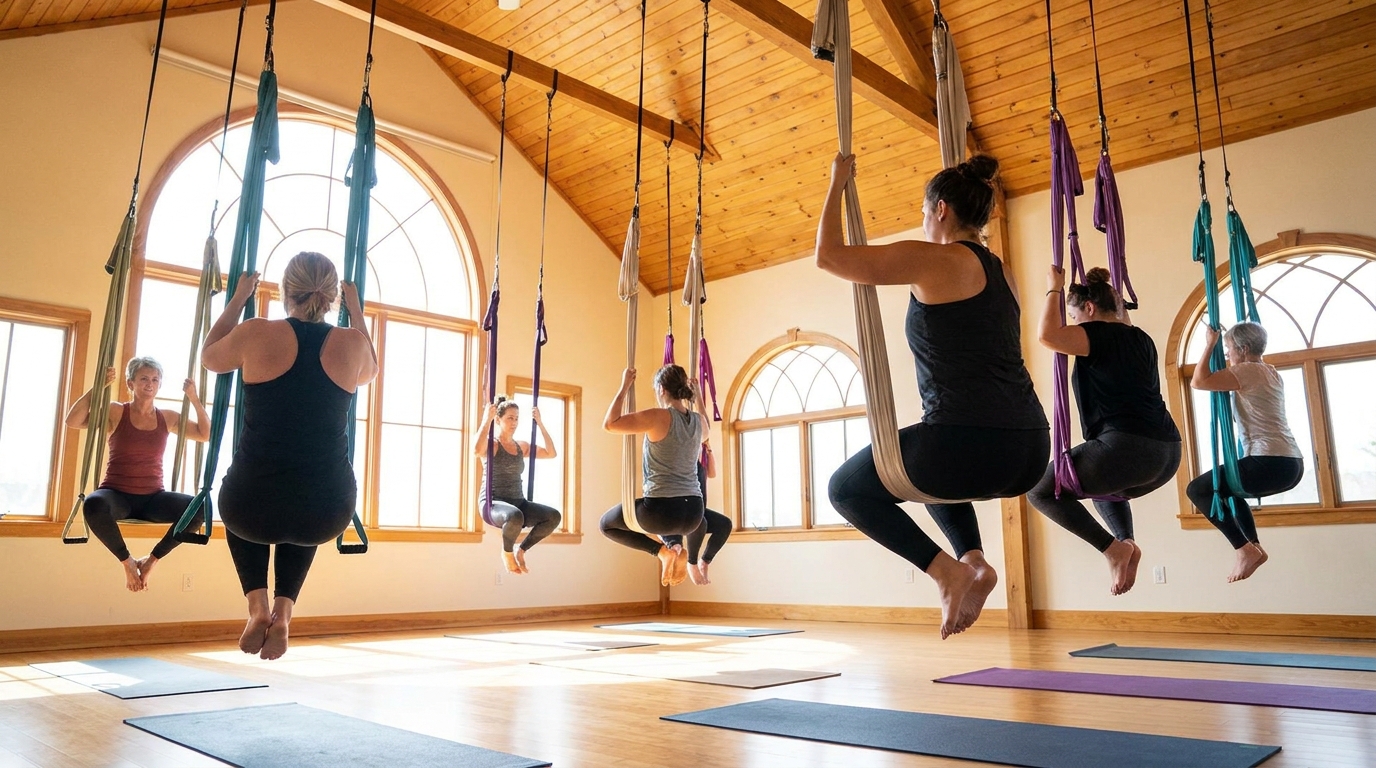
Aerial yoga is not only physical. It also touches the mind and emotions in subtle, meaningful ways. The experience of being lifted, held, and sometimes inverted can awaken courage, playfulness, trust, and emotional release.
Reducing Anxiety Through Breath and Support
Many people carry anxiety in the body. The chest may tighten, the breath may become shallow, and the mind may race. Aerial yoga encourages slow breathing and mindful movement, which can help calm the nervous system.
The hammock offers a sense of containment. Resting inside the fabric, like in a cocoon, can feel deeply soothing. This type of supported relaxation may help the body feel safe enough to soften.
In yogic language, this relates to pratyahara, the drawing inward of the senses. Pratyahara is one of the eight limbs of yoga described by Patanjali. It means turning attention away from constant outer stimulation and gently returning inward.
In aerial yoga, when you rest in the hammock with closed eyes and steady breath, you may experience a simple form of pratyahara. The world becomes quieter. The heart listens.
Building Confidence and Trust
At first, aerial yoga may bring up fear. “Will the hammock hold me?” “Can I go upside down?” “What if I look awkward?”
These thoughts are natural. With patient guidance, students gradually learn to trust the equipment, the teacher, and their own bodies. Each small success builds confidence.
The deeper lesson is not just “I can do this pose.” It is “I can meet fear with breath.” This is a powerful teaching for life.
In the Bhagavad Gita, Sri Krishna teaches the importance of steady practice and balanced action. He says yoga is skill in action: yogaḥ karmasu kauśalam. This means yoga is not escape from life, but learning to act with awareness, grace, and steadiness.
Aerial yoga gives us a living classroom for this teaching. We practice skillful action as we enter the hammock, adjust our balance, breathe through fear, and return to the ground with gratitude.
Awakening Joy and Playfulness
Aerial yoga often brings a childlike joy. Swinging, floating, and exploring movement can remind us that practice does not always need to be serious.
In bhakti traditions, joy is sacred. Devotion is not only tears and longing; it is also song, dance, laughter, and wonder. When we fly in the hammock, even for a moment, we may feel the heart become lighter.
This joy is not separate from spirituality. It can be part of healing.
Supporting Emotional Release
The body holds memories, stress, and emotions. Certain movements, especially hip openers, heart openers, and supported relaxation, may bring emotions to the surface.
If tears come during or after practice, this does not mean something is wrong. It may simply be the body releasing what it has carried. A compassionate teacher will create a safe, respectful space for this process.
The yogic path invites us to witness emotions without becoming lost in them. We learn to say, “This feeling is here, and I can breathe with it.”
How to Practice Aerial Yoga Safely
Aerial yoga is beautiful, but it should be practiced with care. Because it involves suspension and sometimes inversions, safety matters. The goal is not to do the most advanced pose, but to practice with wisdom and humility.
Begin with a Qualified Teacher
If you are new to aerial yoga, begin with a trained instructor in a reputable studio. A good teacher will explain how to enter and exit poses safely, how to adjust the hammock, and how to respect your body’s limits.
The teacher should also ask about health conditions, injuries, pregnancy, recent surgery, blood pressure concerns, glaucoma, vertigo, or other conditions that may affect your practice.
Aerial yoga is not one-size-fits-all. A skilled teacher can offer modifications.
Check the Equipment
The hammock, rigging, ceiling mounts, carabiners, and daisy chains must be properly installed and regularly inspected. This is not an area for guesswork.
If practicing in a studio, do not hesitate to ask about safety standards. A sincere studio will welcome your questions.
If practicing at home, professional installation is strongly recommended. Never hang a hammock from an unsafe structure. The joy of aerial yoga rests upon trust, and trust begins with safety.
Listen to Your Body
Yoga is not about conquering the body. It is about befriending the body. If you feel sharp pain, dizziness, numbness, nausea, or panic, come out of the pose slowly and ask for help.
Some pressure from the hammock is normal, especially around the hips or thighs, but pain is not the goal. Over time, the body adapts, and teachers can offer padding or adjustments.
The Sanskrit word tapas means discipline, effort, or inner heat. But tapas does not mean harshness. True discipline includes patience. It means showing up with sincerity, not forcing beyond wisdom.
Move Slowly In and Out of Inversions
Inversions are poses where the head is lower than the heart, such as hanging upside down. Many people enjoy inversions because they can decompress the spine and shift perspective.
However, inversions are not suitable for everyone. People with certain medical conditions should avoid or modify them. Always learn inversions from a qualified teacher.
When coming out of an inversion, move slowly. Pause. Let the body adjust. This simple care prevents dizziness and supports nervous system balance.
Practice on an Empty or Light Stomach
Aerial yoga involves movement, compression, and sometimes going upside down. It is best to practice on an empty stomach or at least a few hours after a heavy meal.
A small snack may be fine if needed, but avoid practicing immediately after eating.
A Simple Aerial Yoga Practice Structure
Aerial yoga classes vary, but a balanced practice often includes grounding, warm-up, strengthening, stretching, inversions, relaxation, and integration. Here is a simple structure to understand how a class may unfold.
Grounding and Breath Awareness
A class may begin seated or standing with hands resting on the hammock. The teacher may invite students to notice the breath.
In Sanskrit, asana means posture or seat. Traditionally, asana was not only about physical poses, but about finding a steady and comfortable seat for meditation. Patanjali describes asana as sthira sukham asanam—a posture that is steady and easeful.
This teaching is very helpful in aerial yoga. Even when floating, we seek steadiness and ease.
A simple beginning might include:
- Standing with the hammock in the hands
- Feeling the feet on the floor
- Breathing slowly through the nose
- Setting an intention, such as gratitude or patience
Gentle Warm-Up
The warm-up prepares the joints, muscles, and nervous system. This may include shoulder circles, side bends, supported lunges, cat-cow movements with the hammock, and gentle spinal waves.
The hammock helps the body explore range of motion while staying supported.
Strength and Stability Work
After warming up, the practice may include core work, standing balances, supported planks, or hammock-assisted squats. These movements build strength and confidence.
The teacher may guide students to engage the center of the body, known in yoga as the core or sometimes related to uddiyana bandha. A bandha is an energetic lock or engagement. In simple terms, it means lifting and supporting from within.
For beginners, it is enough to think: gently draw the lower belly inward and upward while breathing steadily.
Supported Stretches and Mobility
The class may then move into deeper stretches: hamstrings, hips, shoulders, chest, and back. The hammock allows longer holds with less strain.
A supported pigeon variation, for example, may help open the outer hip. A chest opener with the hammock behind the ribs may release tension in the shoulders and heart space.
Inversions and Flying Shapes
If appropriate, the teacher may introduce inversions or floating postures. These can be playful and empowering. Some may involve hanging upside down with the hammock supporting the hips. Others may look like flying lunges, floating warriors, or suspended backbends.
The most important part is not how impressive the pose looks. The true practice is breath, awareness, and humility.
Rest and Savasana in the Hammock
Many aerial yoga classes end with savasana, the final relaxation pose. Savasana means “corpse pose,” not in a morbid way, but as a practice of complete surrender.
In aerial yoga, savasana may be practiced inside the hammock, fully cocooned. The fabric wraps around the body, creating a peaceful, womb-like space. For some, this is the most healing part of the class.
Here, the practice becomes devotional. Nothing to achieve. Nothing to prove. Just resting in the grace of being held.
The Spiritual Dimension of Flying and Surrender
Aerial yoga can be practiced purely for fitness, and that is perfectly welcome. Yoga meets us where we are. Yet for those who wish to explore the deeper dimension, aerial yoga can become a meditation on surrender.
The Hammock as a Symbol of Grace
In bhakti, grace is central. We make effort, yes, but we also learn to receive. The hammock can symbolize this grace. It holds us when we lean back. It supports us when we are afraid. It reminds us that we do not have to carry everything alone.
This does not mean becoming passive. We still engage our muscles, pay attention, and act responsibly. But we practice a balance between effort and surrender.
In the Bhagavad Gita, Krishna teaches abhyasa and vairagya—practice and non-attachment. Abhyasa means steady practice. Vairagya means letting go of clinging. Together, they guide us beautifully in aerial yoga.
We practice the pose. We learn the technique. We show up with care. Then we release the need to look perfect.
Floating as a Lesson in Trust
Many people discover that the hardest part of aerial yoga is not physical. It is trust.
Trusting the hammock. Trusting the teacher. Trusting the breath. Trusting that we can come back to the ground.
Life also asks this of us. We are often suspended between what was and what will be. We do not always know the next step. Yoga teaches us to remain present in the unknown.
When we float, we practice faith in a very embodied way.
Inversions as a Change of Perspective
Going upside down can be surprisingly profound. The world looks different. The body feels different. The mind may resist at first, then soften.
Inversions remind us that our usual viewpoint is not the only viewpoint. Sometimes healing begins when we are willing to see differently.
This is also a spiritual teaching. Humility means we understand that our perspective is limited. Yoga gently opens us to a wider vision.
Who Can Benefit from Aerial Yoga?
Aerial yoga can benefit many people, but it should always be adapted to the individual. It is not only for dancers, gymnasts, or advanced yogis. Beginners can enjoy it too, especially with proper guidance.
Beginners Seeking Support
New students may find the hammock helpful for balance, stretching, and alignment. It can make certain poses feel more accessible and less intimidating.
A beginner-friendly aerial yoga class usually stays low to the ground and focuses on foundational movements.
Desk Workers and People with Tight Muscles
Those who sit for long hours may benefit from spinal lengthening, hip opening, shoulder mobility, and chest expansion. Aerial yoga can help counter the effects of desk posture.
Supported backbends and gentle inversions may feel especially refreshing.
Athletes and Active People
Athletes may use aerial yoga for mobility, recovery, core strength, and injury prevention. The hammock allows deep stretching and decompression after repetitive training.
It also challenges coordination and balance in new ways.
People Seeking Stress Relief
For those feeling emotionally tired or mentally overwhelmed, aerial yoga may offer a unique form of nervous system support. The combination of movement, breath, and floating relaxation can be deeply calming.
Those Longing for Joyful Movement
Some people struggle with traditional exercise because it feels repetitive or harsh. Aerial yoga brings creativity and play. It can help people reconnect with the body in a joyful, loving way.
Who Should Be Cautious or Avoid Aerial Yoga?
Aerial yoga is not appropriate for everyone in every situation. This is not a failure. It is simply wisdom.
Health Conditions to Discuss First
Please speak with a healthcare provider and a qualified aerial yoga teacher if you have:
- High or low blood pressure
- Heart conditions
- Glaucoma or serious eye conditions
- Vertigo or inner ear issues
- Recent surgery
- Severe osteoporosis
- Spinal injuries or disc problems
- Pregnancy
- Hernia
- Recent concussion
- Neurological conditions
- Severe anxiety or panic triggered by suspension
Some people may still practice modified aerial yoga without inversions. Others may be better served by floor-based yoga, chair yoga, restorative yoga, or therapeutic movement.
Yoga is vast. There is a path for every body.
Respecting Personal Boundaries
Some people do not enjoy being wrapped in fabric or lifted off the ground. That is okay. Aerial yoga should never be forced. Consent and comfort matter.
A humble practice honors the individual, not the pose.
How Aerial Yoga Compares to Traditional Yoga
Aerial yoga and traditional mat yoga are not enemies. They are companions. Each offers unique gifts.
Mat Yoga Builds Grounded Awareness
Floor-based yoga helps us connect with the earth. Standing poses, seated poses, and breath practices cultivate steadiness, discipline, and grounded presence.
Mat yoga is often simpler to practice anywhere and requires little equipment.
Aerial Yoga Adds Suspension and Support
Aerial yoga introduces traction, floating, and dynamic support. It can make some postures easier and others more challenging. The hammock becomes a prop, partner, and teacher.
It adds playfulness, decompression, and a new relationship with gravity.
Both Lead Back to Presence
Whether on the mat or in the air, the essence is the same: awareness. Breath. Compassion. Union.
A pose without awareness is just a shape. A simple breath with devotion can become yoga.
Practical Tips for Your First Aerial Yoga Class
If you are curious about trying aerial yoga, here are some simple tips to help you feel prepared.
What to Wear
Wear comfortable, fitted clothing that covers the armpits and backs of the knees. This helps protect the skin from friction.
Good choices include:
- Leggings or fitted yoga pants
- A fitted T-shirt or long-sleeve top
- No jewelry, zippers, or sharp accessories
- Hair tied back if needed
Avoid lotions or oils before class, as they can make the fabric slippery.
What to Bring
Most studios provide hammocks, but you may bring:
- Water
- A yoga mat if requested
- A small towel
- An open mind
- Patience with yourself
What to Expect
Expect to feel new sensations. The hammock may press into the body. You may laugh. You may feel awkward. You may surprise yourself.
Please remember: everyone was new once. A sincere beginner is beautiful.
After Class Care
After aerial yoga, drink water and move gently. You may feel energized, relaxed, or emotionally tender. Give yourself space to integrate.
Notice how your spine feels, how your breath moves, and how your mind responds.
How Else Can You Deepen the Benefits of Aerial Yoga?
Aerial yoga becomes more powerful when paired with mindful living. The benefits continue beyond the studio when we carry yogic awareness into daily life.
Add Breathwork
Simple breathwork, or pranayama, can deepen your practice. Pranayama means regulation or expansion of life force through the breath.
A beginner-friendly practice is equal breathing:
- Inhale for a count of four.
- Exhale for a count of four.
- Continue for one to three minutes.
This can be done before aerial yoga, after practice, or anytime stress arises.
Practice Gratitude
In the bhakti tradition, gratitude softens the heart. Before entering the hammock, you might silently say:
“Thank you for this body. Thank you for this breath. May this practice serve healing and kindness.”
This simple intention transforms movement into devotion.
Combine Aerial Yoga with Meditation
After class, sit quietly for five minutes. Feel the effects of the practice. Let the breath settle. Notice the inner space.
Meditation does not need to be complicated. It can be as simple as listening inward.
Journal Your Experience
Writing after practice can reveal patterns and insights. You might ask:
- What did I feel in my body today?
- Where did I meet fear?
- Where did I feel supported?
- What can I release?
- What am I grateful for?
This helps aerial yoga become a path of self-understanding.
Bring the Lesson to Daily Life
The hammock teaches us to trust, balance, engage, release, and receive support. These lessons are not limited to the studio.
When life feels uncertain, remember the practice:
Pause. Breathe. Feel what supports you. Take the next step with humility.
Aerial Yoga Benefits Through the 4MAT Lens
To understand aerial yoga more fully, we can look through the 4MAT learning framework: What, Why, How, and How Else. This helps different kinds of learners connect with the practice.
What: Understanding the Practice
Aerial yoga is yoga practiced with a suspended hammock. It includes supported poses, strength work, stretching, inversions, relaxation, and breath awareness.
It is both playful and practical. It can be gentle or challenging, depending on the class and student.
Why: The Purpose and Benefits
The benefits of aerial yoga may include:
- Spinal decompression
- Better flexibility
- Improved strength
- Enhanced balance
- Stress relief
- Increased confidence
- Greater body awareness
- Joyful movement
- Deep relaxation
On a deeper level, aerial yoga teaches trust and surrender.
How: The Method of Practice
Practice safely with a qualified teacher. Begin slowly. Learn how to use the hammock. Breathe steadily. Respect your limits. Choose classes that match your level.
Let the hammock support you, but stay engaged and aware.
How Else: Expanding the Learning
You can deepen aerial yoga through pranayama, meditation, journaling, scripture study, mantra, and mindful daily living.
A simple mantra, or sacred sound, may be repeated silently during rest. For example, Om Shanti means “peace.” You might breathe in “Om” and breathe out “Shanti,” inviting peace into body and mind.
The Heart of the Practice: Flying High with Humility
Aerial yoga may look like flying, but its deepest gift is not escape from the earth. It is learning to live with more lightness while staying rooted in awareness.
We fly not to become superior, but to become free from unnecessary heaviness. We invert not to impress, but to see differently. We strengthen not to dominate, but to serve life with steadiness. We stretch not to perform, but to create space for breath and kindness.
In bhakti, the highest practice is love. So even in aerial yoga, the question becomes: Can I move with love? Can I breathe with gratitude? Can I accept support? Can I honor my body as a sacred home?
The hammock lifts the body, but humility lifts the heart.
May your aerial yoga practice be safe, joyful, and nourishing. May it help your spine feel spacious, your breath feel free, and your mind feel calm. May it remind you that you are held—not only by fabric and rigging, but by the quiet grace that supports all life.
FAQs
What is aerial yoga?
Aerial yoga is a type of yoga that incorporates the use of a silk hammock or sling suspended from the ceiling to support and enhance traditional yoga poses.
What are the benefits of aerial yoga?
Aerial yoga can help improve flexibility, strength, and balance. It also provides spinal decompression, stress relief, and a sense of relaxation.
Is aerial yoga suitable for beginners?
Yes, aerial yoga can be modified to accommodate beginners. Many studios offer introductory classes specifically designed for those new to aerial yoga.
Are there any safety considerations for aerial yoga?
It is important to practice aerial yoga under the guidance of a certified instructor to ensure proper technique and safety. Participants should also follow the guidelines for weight limits and equipment maintenance.
What should I wear for aerial yoga?
Participants should wear comfortable, form-fitting clothing that covers the armpits and backs of the knees to prevent chafing from the hammock. Avoid wearing jewelry or clothing with zippers that could snag the fabric.