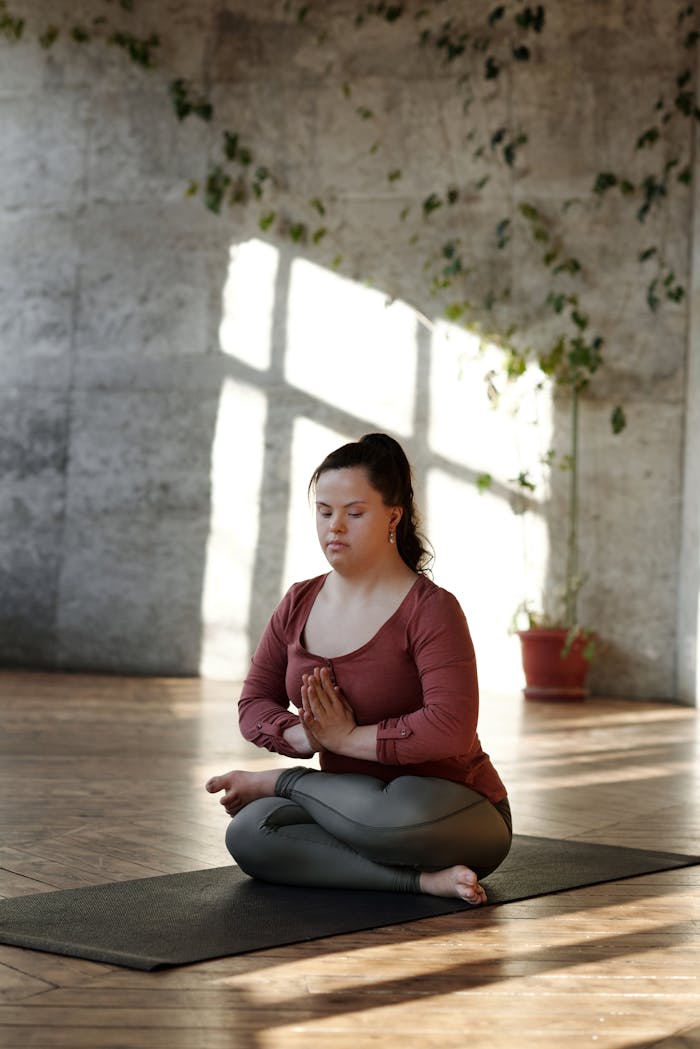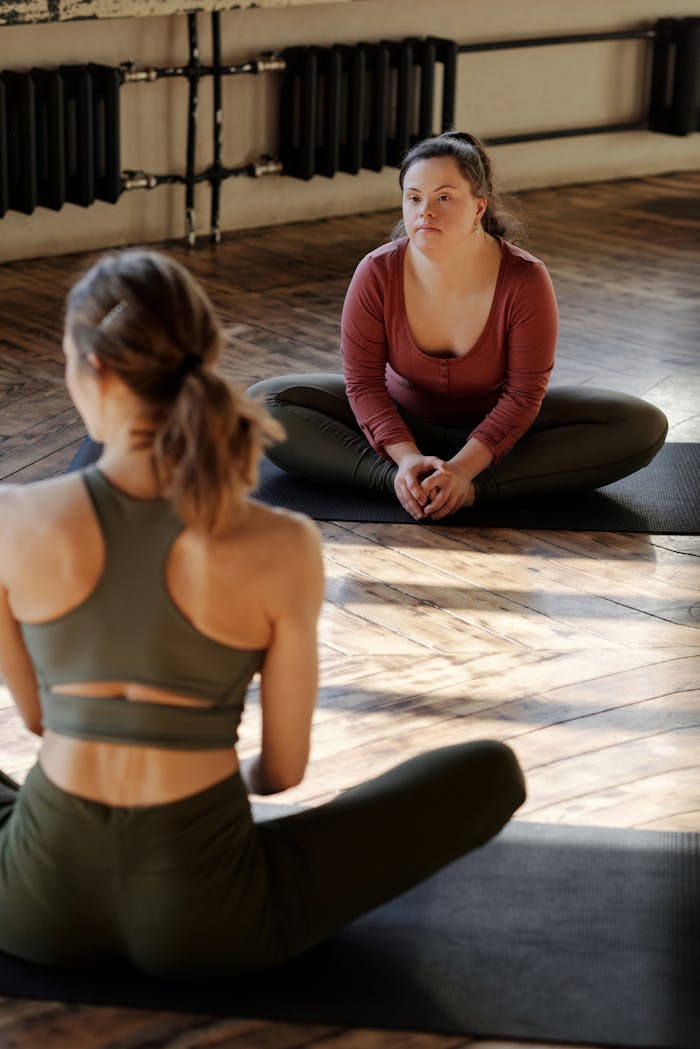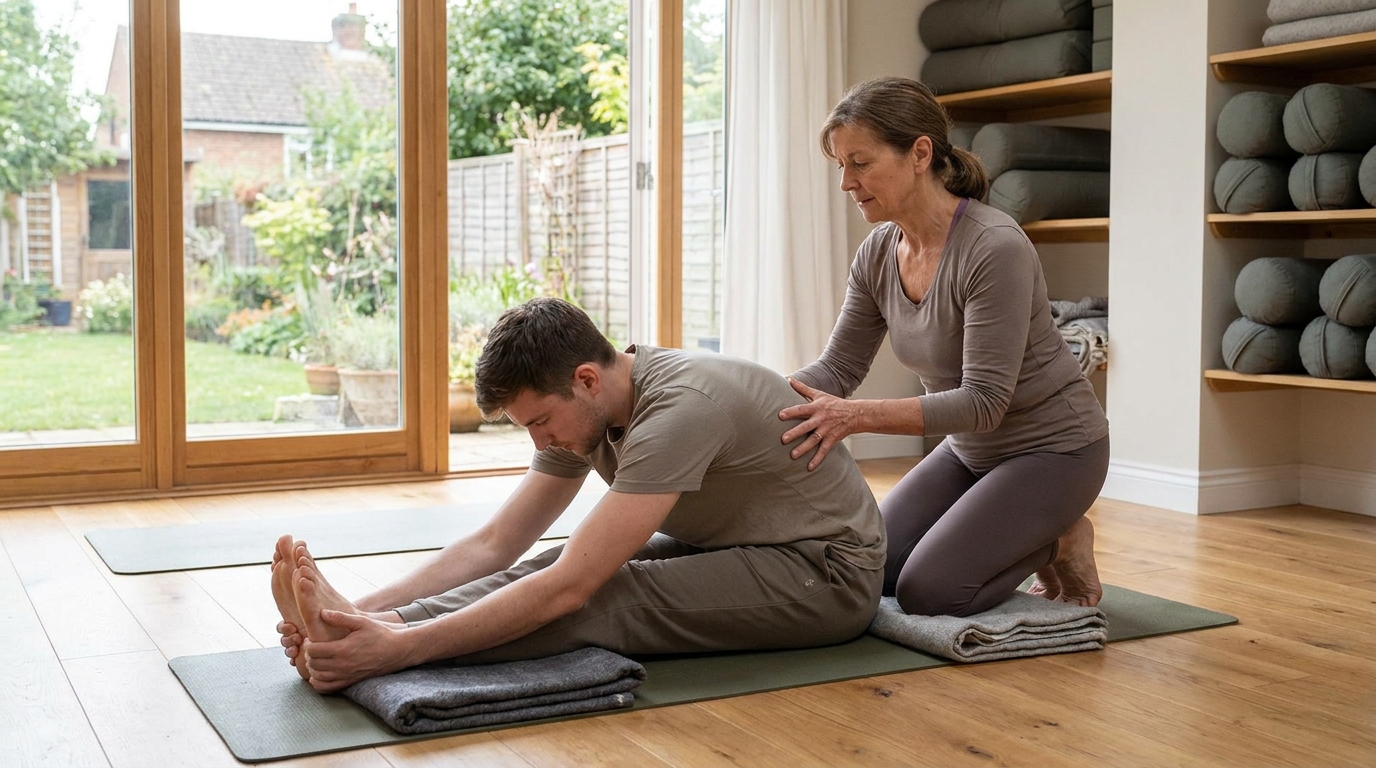
Viniyoga is a compassionate, adaptable approach to yoga that honors the whole person. It does not ask us to force the body into a shape or compare ourselves with anyone else. Instead, it invites us to meet ourselves honestly, kindly, and prayerfully—right where we are.
The word “Viniyoga” comes from Sanskrit. Sanskrit is an ancient language of India in which many yoga teachings were written. “Viniyoga” can be understood as “appropriate application” or “wise placement.” In simple words, it means applying the tools of yoga in the right way, for the right person, at the right time.
This is one of the great gifts of Viniyoga: yoga becomes personal.
Whether you are young or aging, flexible or stiff, healthy or healing, spiritual or simply curious, Viniyoga offers a practical path. It welcomes your body, your breath, your mind, your life story, and your deepest longing for peace.
In the spirit of bhakti—devotion rooted in humility—we approach this subject not as experts trying to conquer yoga, but as sincere seekers. Yoga is not something we “master” by pride. It is something we receive, practice, and allow to transform us slowly, like the morning sun warming the earth.
What Is Viniyoga?
Yoga Adapted to the Individual
Viniyoga is often associated with the teachings of Sri T. Krishnamacharya and his son T.K.V. Desikachar, who emphasized that yoga should be adapted to the individual—not the individual forced to fit yoga.
This means a Viniyoga practice may include:
- Gentle yoga postures, called asana
- Breath-centered movement
- Pranayama, or breath regulation
- Meditation and self-reflection
- Chanting or mantra
- Relaxation and inner awareness
- Lifestyle guidance rooted in yoga philosophy
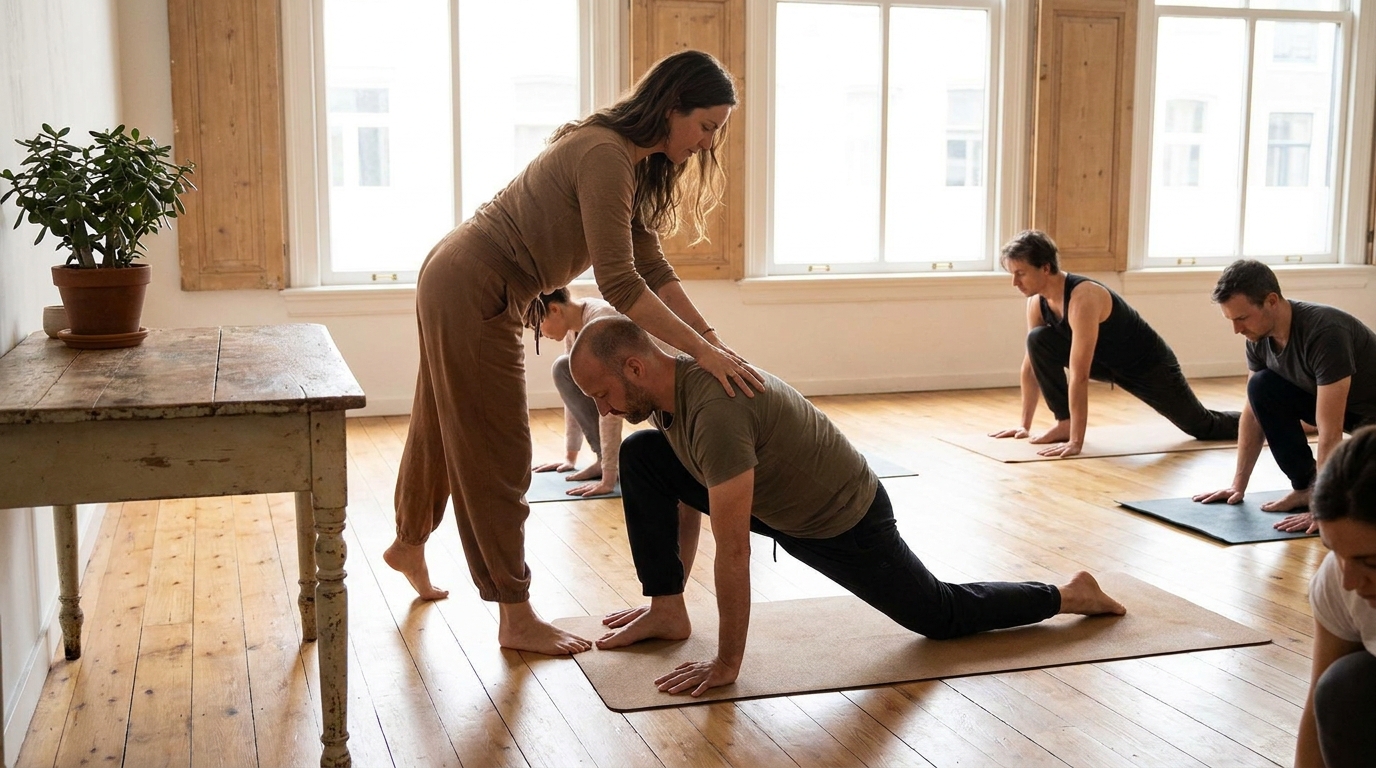
In Viniyoga, the teacher considers the student’s age, health, energy, lifestyle, emotional state, culture, goals, and spiritual orientation. The practice is then shaped accordingly.
This makes Viniyoga especially helpful for people who may feel intimidated by modern yoga classes. It is also valuable for people working with injuries, chronic pain, stress, anxiety, aging, limited mobility, or recovery from illness.
The Scriptural Root of Viniyoga
The idea of Viniyoga appears in the Yoga Sutras of Patanjali, one of the foundational texts of yoga. In Yoga Sutra 3.6, Patanjali says:
“Tasya bhumishu viniyogah.”
A simple meaning is: “Its application is to be made in stages.”
This sutra reminds us that spiritual practice must be applied gradually and appropriately. We do not jump to advanced practices without preparation. We do not treat every person the same. We honor stages, capacity, and timing.
This is deeply practical. A person recovering from surgery needs a different practice from an athlete. A person grieving needs a different practice from someone seeking strength. A busy parent may need short, steady practices, while a retired person may have time for longer meditation.
Viniyoga understands this. It respects life.
Not a Style, But an Approach
Many people ask, “Is Viniyoga a style of yoga?”
It can be taught in class settings, but at its heart, Viniyoga is more than a style. It is an approach, a way of seeing and applying yoga. The practice changes depending on the person and purpose.
Some Viniyoga sessions may feel gentle and meditative. Others may build strength. Some may focus on breath for anxiety. Others may use movement to support the spine. The outer form changes, but the inner principle remains the same: yoga should serve the person.
This is one of the most beautiful Viniyoga benefits. It brings yoga back to relationship—relationship with the body, the breath, the teacher, the tradition, and ultimately, the Divine presence within all life.
Why Viniyoga Matters Today
A Kinder Response to Modern Stress
Many people today carry heavy burdens. We live in a world of speed, screens, noise, comparison, and constant demand. The nervous system often remains in a state of alertness. The body tightens. The breath becomes shallow. The mind grows restless.
Viniyoga meets this modern suffering with ancient wisdom.
By linking movement with breath, Viniyoga helps calm the nervous system. Instead of pushing harder, we learn to listen more deeply. Instead of escaping the body, we return to it with tenderness.
In the Bhagavad Gita, Lord Krishna teaches the importance of steadiness and balance. In Chapter 6, he describes yoga as a path of moderation—not too much, not too little. This is very much in harmony with Viniyoga. The practice becomes balanced, realistic, and sustainable.
Yoga is not only for the mat. It is for how we breathe before speaking. How we pause before reacting. How we care for the body as a sacred gift. How we remember compassion in ordinary moments.
A Path for Every Body
One of the most meaningful benefits of Viniyoga is accessibility. It is not limited to people who can perform complex postures. It does not measure success by flexibility, appearance, or performance.
A person may practice Viniyoga lying down, sitting in a chair, standing with support, or moving gently on a mat. The practice can be adapted for back pain, arthritis, fatigue, pregnancy, aging, or emotional stress.
This people-first approach is especially important because many people have felt excluded from yoga spaces. Some believe they are “not flexible enough,” “not spiritual enough,” “too old,” “too injured,” or “too different.”
Viniyoga quietly says: Come as you are.
This simple invitation carries deep healing.
A Bridge Between Therapy and Spiritual Practice
Viniyoga is often used therapeutically. Yoga therapists trained in this approach may create personalized practices for physical, mental, or emotional concerns. However, Viniyoga is not merely exercise therapy. It also preserves the deeper aim of yoga: integration, clarity, and inner freedom.
In the Yoga Sutras, Patanjali defines yoga as:
“Yogaś citta-vṛtti-nirodhaḥ”
“Yoga is the stilling of the fluctuations of the mind.”
This does not mean we violently suppress thoughts. Rather, through wise practice, the mind becomes less scattered. We begin to see clearly. We respond instead of react. We experience moments of inner quiet.
Viniyoga supports this through gradual steps. Breath, movement, attention, and reflection work together. The body becomes a doorway. The breath becomes a guide. The heart becomes softer.
Check out the latest yoga guides on yoga guides for helpful tips and advice.
The Core Benefits of Viniyoga
Improved Breath Awareness
In Viniyoga, breath is central. Movements are usually coordinated with inhalation and exhalation. This creates a meditative rhythm and helps the practitioner become more aware of inner patterns.
For example, the teacher may guide you to inhale while gently lifting the arms and exhale while lowering them. This seems simple, but over time it trains attention and steadies the mind.
Breath awareness can help with:
- Stress reduction
- Nervous system regulation
- Mental focus
- Emotional balance
- Better sleep
- A deeper sense of presence
Pranayama, or yogic breath practice, may also be introduced gradually. “Prana” means life force or vital energy. “Ayama” means extension or regulation. So pranayama is the mindful regulation of life energy through the breath.
In Viniyoga, pranayama is not rushed. It is taught carefully, according to the student’s capacity.
Greater Mobility and Functional Strength
Viniyoga postures are often practiced dynamically, meaning the body moves in and out of a posture with the breath before holding it. This can be very helpful for improving mobility and preparing the body safely.
Rather than forcing a deep stretch, Viniyoga encourages gradual exploration. Repeated breath-centered movement warms tissues, improves coordination, and builds awareness.
For example, a simple seated or standing spinal movement may help a person sense where the back is stiff, where the breath is restricted, and where movement feels nourishing.
Functional strength is also developed. This means strength that supports daily life—standing, walking, bending, lifting, breathing, and resting with greater ease.
Support for Back Pain and Postural Health
Many people come to Viniyoga because of back pain. While each person needs individual guidance, Viniyoga can be especially helpful because it adapts movements to the condition of the spine.
A Viniyoga practice may include gentle spinal extension, flexion, twisting, lateral bending, and breath awareness. The goal is not to perform dramatic poses, but to restore healthy movement patterns and reduce unnecessary tension.
The practice also helps people become aware of habits: how they sit, stand, breathe, and hold stress in the body.
Over time, this awareness can become healing. We begin to notice the body before it has to shout through pain.
Emotional Balance and Inner Calm
Emotions live not only in the mind but also in the body and breath. When we are anxious, the breath may become fast or shallow. When we are sad, the chest may collapse. When we are angry, the jaw, shoulders, and belly may tighten.
Viniyoga helps us work with these patterns gently.
A calming practice might emphasize longer exhalations, supported forward bends, or quiet seated breathing. An energizing practice might include uplifting movements, stronger inhalation emphasis, or standing postures.
Because Viniyoga is adaptable, it can support different emotional needs. It can soothe agitation, awaken dullness, or create steadiness during uncertain times.
In devotional language, we might say the practice helps us return to the inner altar of the heart. There, beneath the changing weather of emotion, a quiet flame remains.
A Deeper Relationship With Self and Spirit
Viniyoga can be practiced by people of any faith or no formal faith. It does not require belief in a particular doctrine. Yet it naturally opens space for reverence.
As we listen to the breath, we may feel gratitude. As we move gently, we may feel humility. As the mind becomes quiet, we may sense that life is sacred.
Bhakti, the path of devotion, teaches that love and surrender can transform ordinary action into worship. In this spirit, even a simple breath can become prayer. A gentle movement can become an offering. Rest can become trust.
The Bhagavad Gita teaches “yogaḥ karmasu kauśalam”—yoga is skill in action. Viniyoga helps us cultivate this skill not through force, but through sensitivity. We learn to act with awareness, care, and devotion.
How to Practice Viniyoga
Begin With Intention
A Viniyoga practice often begins by asking: What is needed today?
This question is simple but powerful. It shifts yoga from routine performance to living relationship.
You might ask:
- Do I need energy or rest?
- Is my breath calm or strained?
- Is my body asking for strength, mobility, or softness?
- Is my mind scattered, heavy, or clear?
- What would support me in serving life with more love today?
In Sanskrit, an intention may be called sankalpa. A sankalpa is a heartfelt resolve or guiding intention. It does not have to be grand. It may be as simple as: “May I practice with kindness,” or “May this breath bring peace.”
Move With the Breath
One of the most important how-to principles in Viniyoga is breath-centered movement.
Try this simple example:
Stand or sit comfortably. As you inhale, slowly raise your arms forward or out to the sides. As you exhale, slowly lower them. Repeat 4 to 6 times.
Notice:
- Does the movement match the breath?
- Is the breath smooth or forced?
- Can the shoulders stay relaxed?
- Does the mind become quieter?
This simple practice reveals the essence of Viniyoga. Breath leads. Movement follows. Awareness deepens.
Adapt the Posture
In Viniyoga, there is no shame in modifying a posture. Modification is wisdom.
If standing is difficult, practice seated. If reaching overhead strains the shoulders, lift the arms only halfway. If the knees hurt, use support. If the breath becomes disturbed, reduce the effort.
The question is not, “Am I doing the perfect pose?”
The better question is, “Is this practice serving balance, clarity, and well-being?”
This is a humble and liberating shift.
Practice Simple Sequences
A Viniyoga sequence is usually designed with care. It may include preparation, a main focus, compensation, and rest.
For example, a gentle morning practice might include:
- Seated breath awareness
- Arm movements with breath
- Gentle cat-cow movements on hands and knees or seated in a chair
- Standing half-sun movements adapted to your capacity
- Gentle twist
- Short breath practice with smooth exhalation
- Rest or quiet meditation
The sequence should feel coherent. Each part prepares for the next. Nothing is random. This reflects the Viniyoga principle of appropriate application.
End With Reflection
After practice, take a moment to notice the effect.
Ask:
- How do I feel in my body?
- How is my breath now?
- What is the state of my mind?
- What did I learn?
- How can I carry this into my day?
This reflection transforms practice into self-knowledge. In yoga, self-study is called svadhyaya. “Sva” means self, and “adhyaya” means study or inquiry. Svadhyaya is not harsh self-analysis. It is honest, compassionate observation.
Through svadhyaya, yoga becomes a mirror.
How Viniyoga Differs From Other Yoga Approaches
Personalized Rather Than Standardized
Many yoga classes offer a set sequence for everyone. This can be helpful in some settings, but it may not meet each person’s needs.
Viniyoga begins with the individual. The practice may change based on health, age, season, mood, goals, and spiritual orientation.
This does not mean anything goes. Viniyoga is rooted in tradition and careful methodology. But the tradition is applied with intelligence and compassion.
Breath Before Form
In many modern yoga spaces, posture alignment receives the most attention. Alignment can be valuable, but Viniyoga gives special importance to the breath.
If the breath is strained, the practice is reconsidered. If the posture looks impressive but disturbs the nervous system, it may not be appropriate.
This breath-centered approach makes Viniyoga deeply meditative. The practitioner learns that the inner experience matters more than outer appearance.
Function Over Aesthetics
Viniyoga asks: What is the function of this posture?
For example, is the purpose to lengthen the spine, strengthen the back, calm the mind, support breathing, or prepare for meditation?
Once the purpose is clear, the form can be adapted. A person does not need to look like a picture in a yoga book. The posture only needs to serve its intended function.
This is especially encouraging for beginners and people with physical limitations. It removes unnecessary pressure and restores dignity to practice.
Gradual Progression
Viniyoga honors krama, which means step-by-step progression. A practice is built gradually.
This is spiritually wise. In life, most deep transformation happens slowly. Seeds grow underground before we see the sprout. The heart softens through repeated acts of remembrance. The breath becomes steady through patient practice.
Patanjali also speaks of practice over a long time, done consistently and with devotion. In Yoga Sutra 1.14, he teaches that practice becomes firmly established when done for a long time, without interruption, and with sincere dedication.
Viniyoga embodies this principle beautifully.
How Else Can Viniyoga Support Daily Life?
Viniyoga at Work
You do not need a yoga mat to practice Viniyoga. The principles can support you at work, in study, or during daily responsibilities.
Try this:
Before opening your email, pause for three breaths. Lengthen your exhale slightly. Relax your jaw. Feel your feet or seat. Then begin.
This tiny practice can shift the quality of your action. You may become less reactive and more present.
Yoga is not separate from life. Every moment can become a place of practice.
Viniyoga for Caregivers and Parents
Caregivers often give so much that they forget to breathe. Parents, nurses, teachers, and those supporting loved ones may carry quiet exhaustion.
Viniyoga can offer short, nourishing practices. Even five minutes can help.
A caregiver might practice:
- Gentle shoulder movements with breath
- Seated forward folding for rest
- Longer exhalations to calm the nervous system
- A simple mantra such as “I am supported” or “May I serve with love”
Bhakti reminds us that service is sacred, but it must be sustained by inner connection. We cannot pour endlessly from an empty vessel. Practice helps us return to the Source.
Viniyoga for Aging Gracefully
As the body changes with age, yoga can change too. Viniyoga is especially supportive because it does not cling to youthful ideals.
Aging may invite a more subtle practice: breath, balance, joint mobility, strength maintenance, meditation, and acceptance.
This does not mean weakness. It means wisdom. The elder practitioner may discover depths of yoga that were hidden during earlier years of ambition.
In devotional traditions, humility is not defeat. It is openness to grace. Aging can become a sacred teacher when met with respect.
Viniyoga for Spiritual Reflection
For those who seek spiritual depth, Viniyoga can include chanting, mantra, prayer, meditation, or contemplation of scripture.
A mantra is a sacred sound or phrase used to focus the mind and open the heart. It may come from Sanskrit or from one’s own faith tradition. The key is sincerity.
A simple practice might be:
- Sit quietly
- Inhale gently
- Exhale while repeating a sacred word inwardly
- Continue for several minutes
- Rest in silence
This can be practiced by anyone in a way that honors their background. The purpose is not to adopt an identity, but to cultivate remembrance, gratitude, and inner steadiness.
Creating a Personal Viniyoga Practice
Start Where You Are
The best Viniyoga practice is not necessarily long or complex. It is appropriate, consistent, and meaningful.
If you are new, begin with 10 to 15 minutes. Choose a quiet place. Wear comfortable clothing. Let the practice be simple enough that you can repeat it regularly.
A beginner’s practice might include:
- 1 minute of seated breathing
- 5 minutes of gentle breath-led movement
- 3 minutes of simple stretching or strengthening
- 3 minutes of calming breath
- 2 minutes of rest
Consistency matters more than intensity.
Seek Guidance When Possible
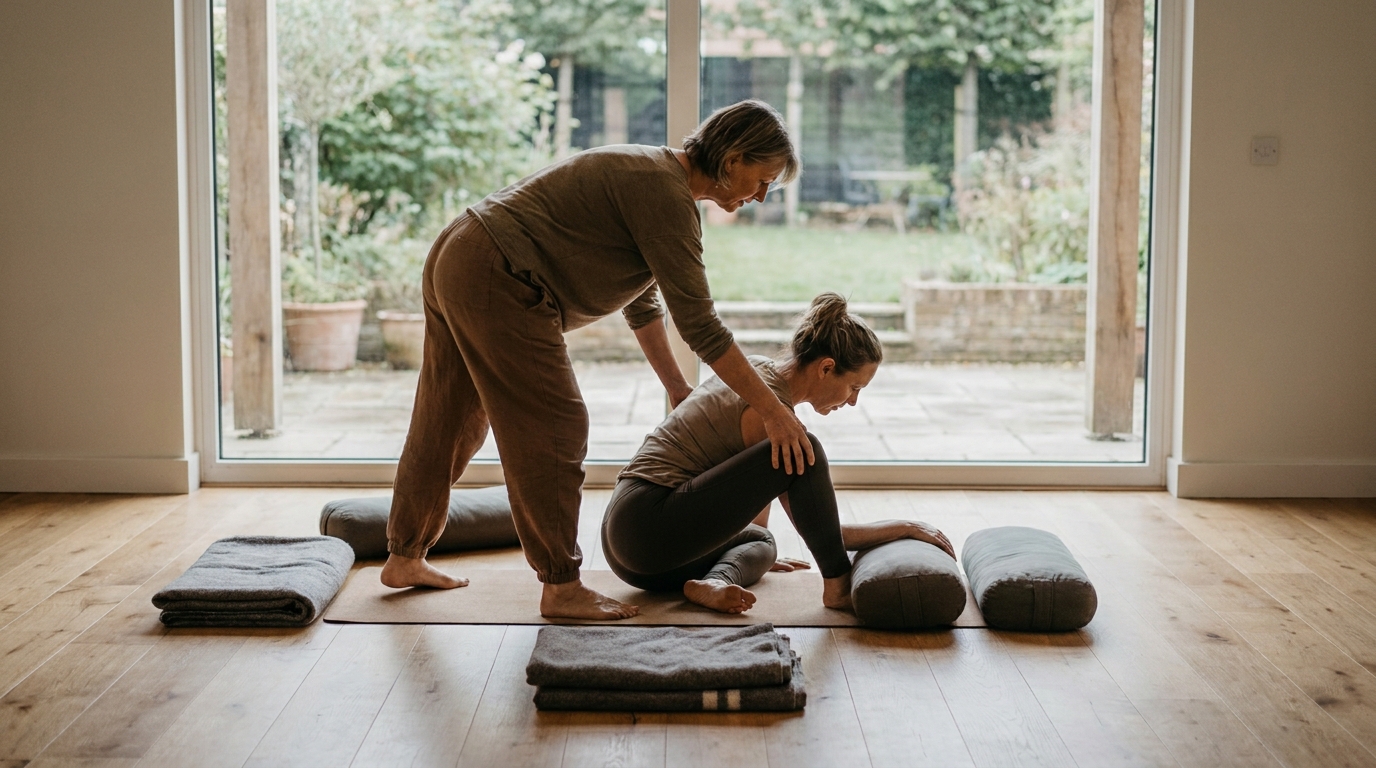
Because Viniyoga is individualized, working with a qualified Viniyoga teacher or yoga therapist can be very helpful. This is especially important if you have medical conditions, pain, trauma history, or specific goals.
A good teacher will not impose a rigid practice. They will listen carefully. They will observe your breath and movement. They will help you practice safely and meaningfully.
In the traditional yoga relationship, the teacher is not a performer and the student is not a consumer. It is a sacred learning relationship based on respect, humility, and care.
Keep a Practice Journal
A journal can deepen your learning. After each practice, write a few notes:
- What did I practice?
- How did I feel before?
- How did I feel after?
- What helped?
- What felt difficult?
- What should be adjusted next time?
This supports svadhyaya, self-study. Over time, you may notice patterns. Perhaps certain breath practices help you sleep. Perhaps strong practices are better in the morning. Perhaps your body needs more preparation before deeper movements.
Your own life becomes part of the teaching.
Honor Rest as Practice
In a productivity-driven world, rest can feel unimportant. But in yoga, rest is sacred. The body integrates. The nervous system settles. The heart receives.
Savasana, often translated as “corpse pose,” is a resting posture that teaches surrender. The name may sound unusual, but its meaning is profound. We practice letting go of unnecessary effort. We remember that we are held by something greater than our personal striving.
In Viniyoga, rest may be adapted too. You can lie on your back, on your side, with knees supported, or sit in a chair. The form is less important than the function: release, integration, and quiet awareness.
Common Questions About Viniyoga Benefits
Is Viniyoga Good for Beginners?
Yes. Viniyoga is excellent for beginners because it is adaptable and breath-centered. You do not need prior experience, flexibility, or strength. A teacher can help you begin with simple movements and breathing practices suited to your needs.
Beginners often appreciate that Viniyoga explains why a practice is being done, how to do it safely, and how to adapt it.
Can Viniyoga Help With Stress and Anxiety?
Viniyoga may support stress and anxiety by calming the breath, relaxing the body, and training attention. Practices with slow movement, gentle forward bending, and extended exhalation can be especially soothing for many people.
However, yoga is not a replacement for medical or mental health care. It can be a supportive practice alongside appropriate professional guidance.
Is Viniyoga Physically Challenging?
It can be, depending on the person and purpose. Some Viniyoga practices are very gentle. Others build strength, stamina, and coordination.
The difference is that challenge is applied wisely. The goal is not to exhaust or impress, but to create beneficial change.
Do I Need to Be Spiritual to Practice Viniyoga?
No. People of all backgrounds can practice Viniyoga. You may approach it for health, stress relief, mobility, or self-care.
At the same time, Viniyoga can also support spiritual life if that is meaningful to you. It is spacious enough to honor different beliefs and sincere intentions.
Walking the Path With Humility
The true beauty of Viniyoga is not only in its techniques. It is in its attitude.
It teaches us to listen. To adapt. To respect limits without being imprisoned by them. To practice with patience. To value the breath more than appearance. To honor the person more than the pose.
In bhakti, humility is a doorway to love. We bow not because we are small in a shameful way, but because life is vast and sacred. We recognize that healing is not always linear, growth is not always visible, and grace often works quietly.
Viniyoga helps us become intimate with this quiet grace.
Each breath can become a teacher. Each movement can become a prayer. Each moment of awareness can unlock a little more freedom.
The benefits of Viniyoga are many: better breathing, improved mobility, reduced stress, greater self-awareness, emotional balance, and a practice that can grow with us through every season of life. But perhaps the deepest benefit is this: Viniyoga reminds us that yoga is not far away.
Yoga is here—in this body, this breath, this heart, this moment.
And with sincerity, patience, and devotion, we may begin again.
FAQs
What is Viniyoga?
Viniyoga is a style of yoga that focuses on adapting the practice to the individual, rather than the individual adapting to the practice. It emphasizes breath-centric movement and is often used as a therapeutic tool for various health conditions.
Who developed Viniyoga?
Viniyoga was developed by T. Krishnamacharya, who is often referred to as the “father of modern yoga.” He passed on his teachings to his son, T.K.V. Desikachar, who further developed and popularized the Viniyoga approach.
What are the key principles of Viniyoga?
The key principles of Viniyoga include adapting the practice to the individual’s needs, using breath as the primary focus of movement, and incorporating a variety of tools such as postures, breath work, chanting, and meditation to create a holistic practice.
What are the benefits of practicing Viniyoga?
Practicing Viniyoga can lead to improved flexibility, strength, and balance, as well as reduced stress and anxiety. It is also often used as a therapeutic tool for managing chronic pain, injury rehabilitation, and improving overall well-being.
How is Viniyoga different from other styles of yoga?
Viniyoga differs from other styles of yoga in its emphasis on individualized practice, breath-centric movement, and therapeutic applications. It is less focused on achieving specific poses and more focused on adapting the practice to meet the needs of the practitioner.