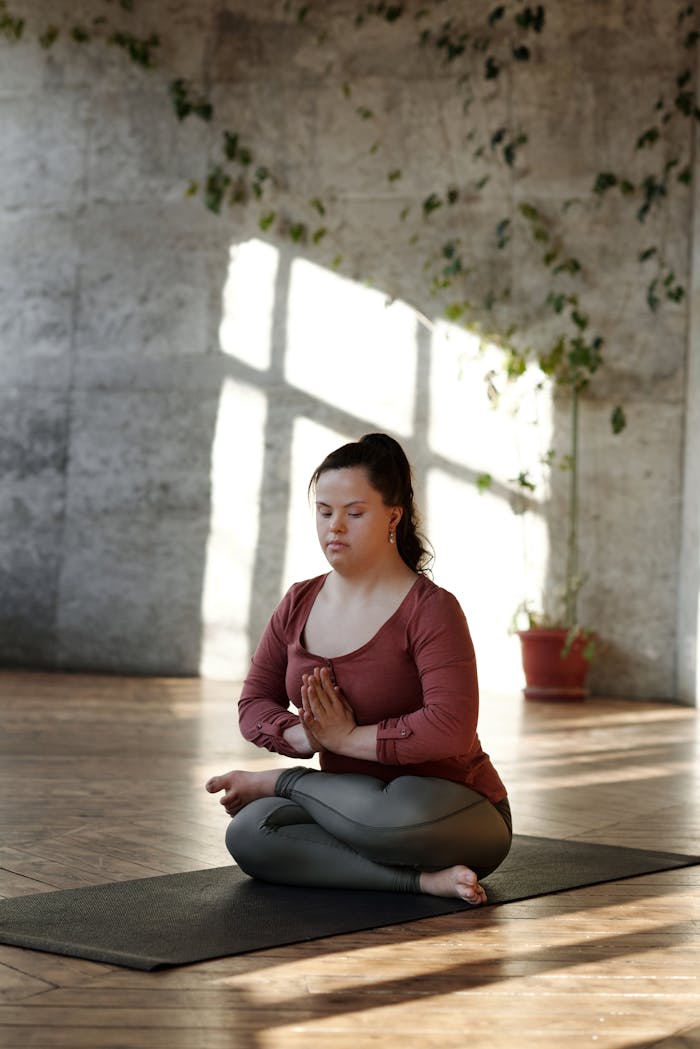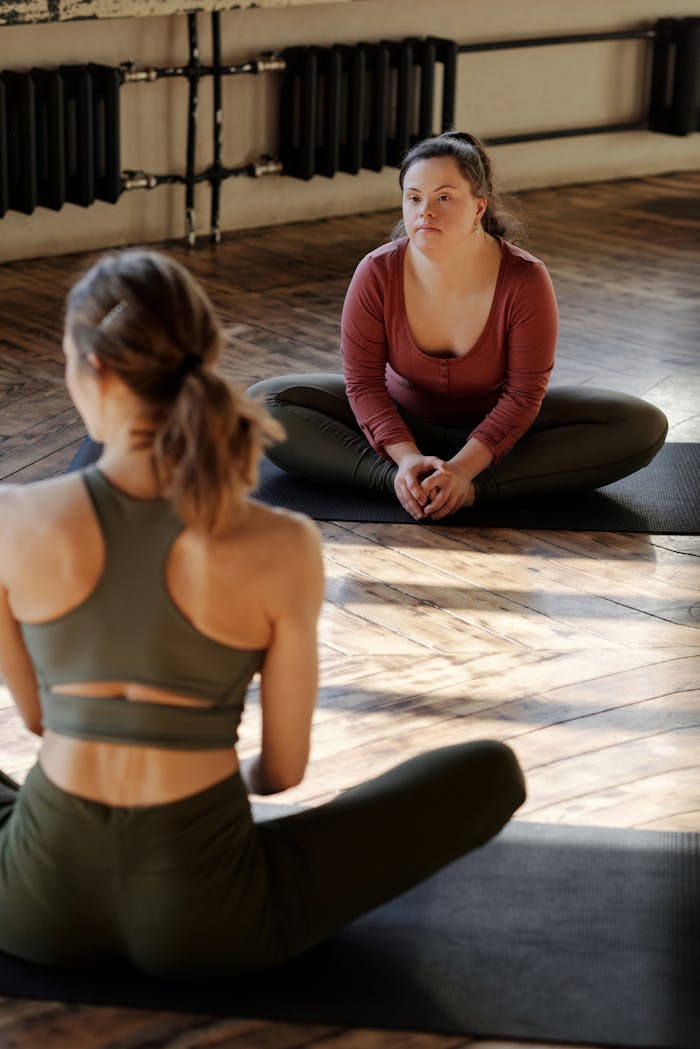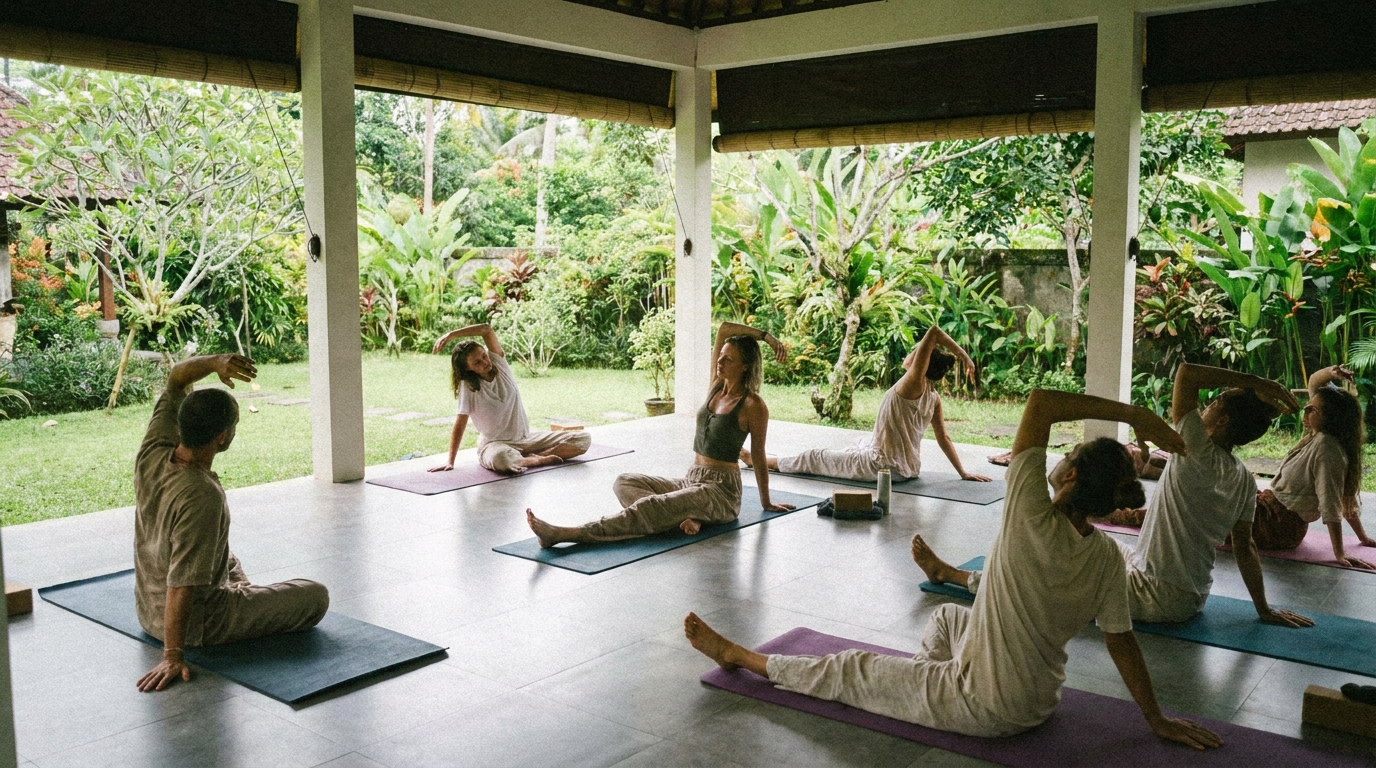
Sivananda Yoga is a classical and heart-centered approach to yoga that helps us live with more balance, devotion, discipline, and peace. It is not only a way to stretch the body or calm the mind, though it lovingly includes both. It is a practical path for daily living, rooted in the ancient wisdom of India and shared in a simple way for people of all backgrounds.
Whether you are new to yoga, returning after many years, or already walking a spiritual path, Sivananda Yoga welcomes you as you are. You do not need to be flexible, strong, religious, or experienced. You only need a sincere willingness to begin.
The word “yoga” means union. It points to the deep truth that beneath our changing thoughts, emotions, names, and roles, there is a quiet inner presence. Sivananda Yoga gently guides us toward that presence through movement, breath, relaxation, wholesome living, meditation, selfless service, and devotion.
In the spirit of bhakti, the path of love and devotion, we approach yoga with humility. We practice not to become superior, but to become more peaceful, more compassionate, and more available to serve life.
What Is Sivananda Yoga?
Sivananda Yoga is a traditional form of yoga inspired by the teachings of Swami Sivananda Saraswati, a beloved saint and spiritual teacher from India, and systematized by his disciple Swami Vishnudevananda. It is often described as a complete yoga system because it includes the body, mind, heart, and soul.
Swami Sivananda summarized his teachings in a beautifully simple way:
“Serve, love, give, purify, meditate, realize.”
These words carry the whole essence of yoga. They remind us that spiritual life is not separate from daily life. We practice yoga in how we speak, how we eat, how we rest, how we work, how we care for others, and how we remember the Divine—however we understand that sacred presence.
The Five Points of Sivananda Yoga
Swami Vishnudevananda organized the teachings of Sivananda Yoga into five practical points:
- Proper exercise
- Proper breathing
- Proper relaxation
- Proper diet
- Positive thinking and meditation
These five points are simple, yet profound. They help support physical health, emotional stability, mental clarity, and spiritual growth. They are not rigid rules, but compassionate guidelines for living with greater harmony.
A Classical Hatha Yoga Practice
Sivananda Yoga is rooted in hatha yoga. “Ha” is often associated with the sun, and “tha” with the moon. Hatha yoga seeks to balance the active and receptive energies within us.
A typical Sivananda Yoga class includes relaxation, breathing practices, sun salutations, classical postures, and final deep relaxation. The pace is usually steady and mindful. There is space to breathe, observe, and become inwardly quiet.
This makes Sivananda Yoga especially helpful for people who feel overstimulated, tired, anxious, or disconnected from themselves.
Why Practice Sivananda Yoga?
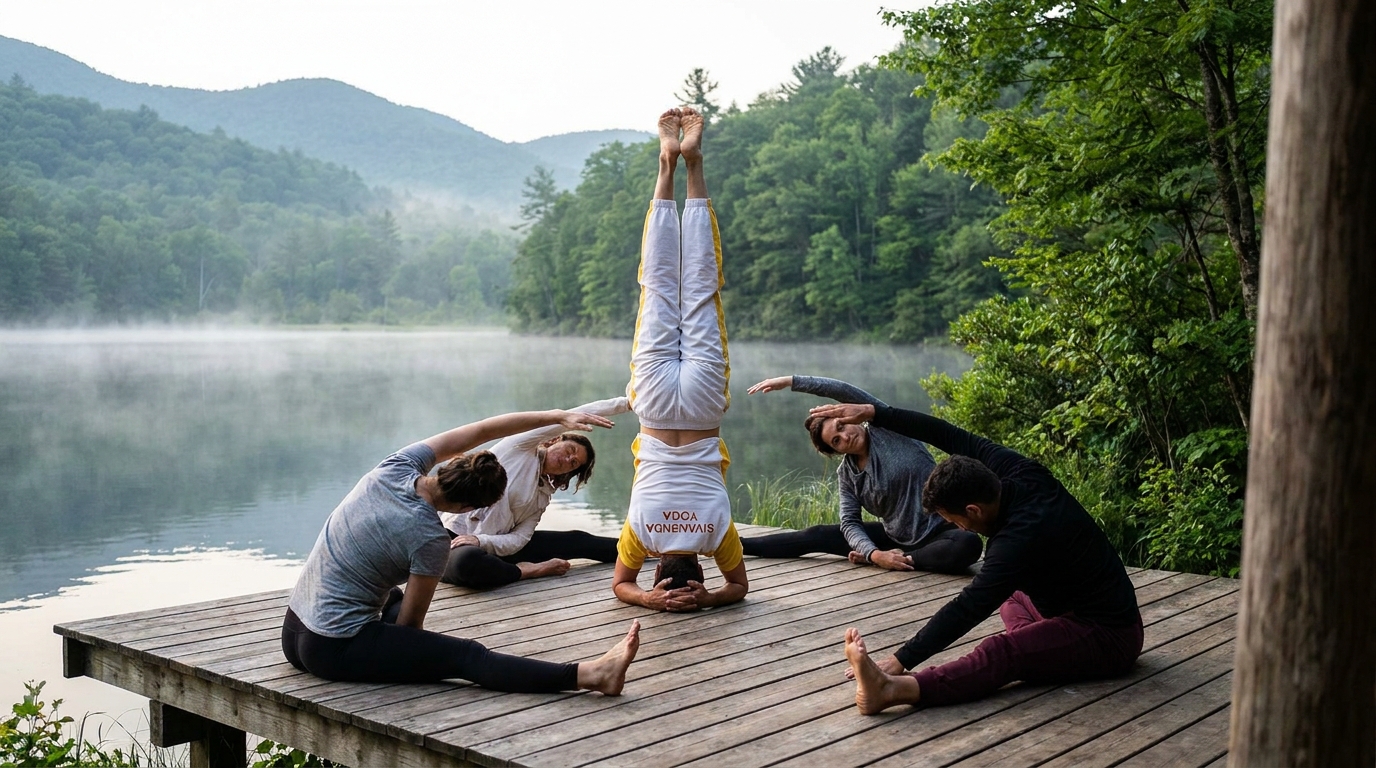
We live in a time of great outer movement and inner restlessness. Many people carry stress in the body, worry in the mind, and longing in the heart. Sivananda Yoga offers a path back to balance.
It does not promise that life will become free of challenges. Instead, it helps us meet life with more steadiness, faith, and wisdom.
A Path for the Whole Person
Some forms of exercise focus mainly on the body. Some meditation practices focus mainly on the mind. Sivananda Yoga embraces the whole person.
The body becomes healthier and more flexible. The breath becomes calmer. The nervous system learns to relax. The mind becomes clearer. The heart becomes softer. Over time, the practitioner may begin to feel a quiet spiritual strength arising from within.
This holistic approach reflects the wisdom of the Bhagavad Gita, one of the great scriptures of yoga. In the Gita, Lord Krishna teaches balance in action, devotion, knowledge, and meditation. Yoga is not presented as escape from life, but as a way to live skillfully and lovingly in the world.
Stress Relief and Nervous System Balance
One of the most appreciated benefits of Sivananda Yoga is stress relief. The combination of slow breathing, mindful postures, and deep relaxation supports the parasympathetic nervous system—the part of the body that helps us rest, digest, heal, and restore.
Many students notice that after class, they feel lighter, quieter, and more centered. This is not accidental. Sivananda Yoga intentionally includes rest throughout the practice, not only at the end. Between postures, students often pause in relaxation. These pauses teach the body how to let go.
In a culture that often glorifies constant effort, this is a sacred lesson: rest is also part of practice.
Inner Peace Through Simplicity
Sivananda Yoga is not complicated. It returns again and again to simple, time-tested practices. Breathe well. Move consciously. Relax deeply. Eat with care. Think positively. Meditate daily. Serve others.
This simplicity is powerful. When practiced regularly, these small actions create deep transformation.
Yoga does not always arrive as a dramatic spiritual experience. Often, it appears quietly: a kinder word, a calmer response, a deeper breath before reacting, a moment of gratitude before a meal, a willingness to forgive.
These are also signs of yoga.
Sure, here is the sentence with the clickable link:
Check out the latest yoga guides at yoga guides.
The Five Main Benefits of Sivananda Yoga
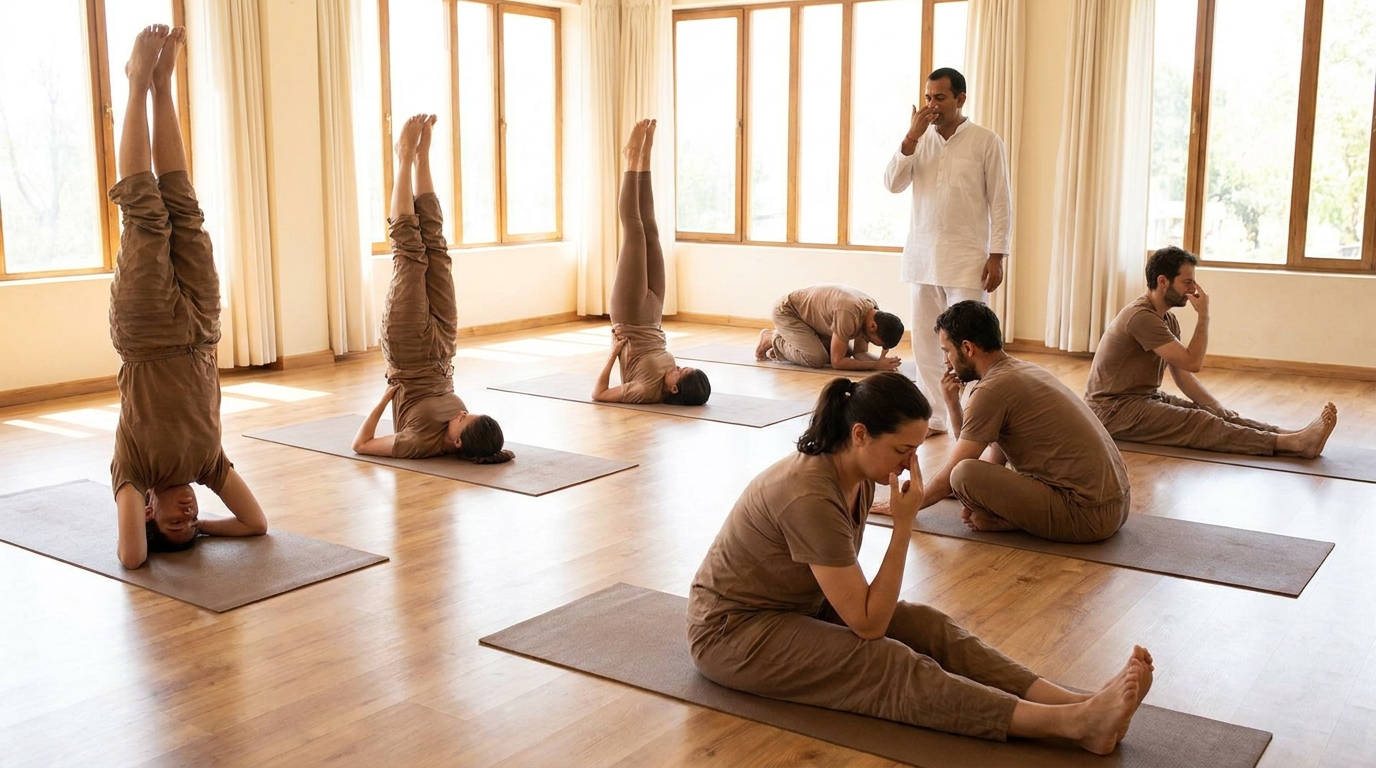
The benefits of Sivananda Yoga can be experienced on many levels. Some are physical, some mental, some emotional, and some spiritual. Each person receives according to their need, effort, and grace.
1. Greater Physical Health and Vitality
Sivananda Yoga postures, known in Sanskrit as asanas, help stretch, strengthen, and tone the body. “Asana” means posture or seat. In classical yoga, the body is prepared to sit steadily and comfortably for meditation.
The practice often includes twelve basic postures, such as:
- Headstand or a gentle alternative
- Shoulderstand
- Plough
- Fish
- Forward bend
- Cobra
- Locust
- Bow
- Spinal twist
- Crow or balancing posture
- Standing forward bend
- Triangle
These postures work systematically through the body. They support the spine, improve circulation, massage internal organs, and increase flexibility.
However, the purpose is not to force the body into shapes. In Sivananda Yoga, the body is treated with respect. We practice with awareness, patience, and humility.
A beginner may use modifications. A senior student may practice advanced variations. Both are practicing yoga if the attitude is sincere.
2. Better Breathing and Increased Energy
Breath is life. In yoga, the life force energy is called prana. Prana is not merely oxygen, though breathing is one way we receive it. It is the subtle energy that supports vitality, clarity, and inner strength.
Sivananda Yoga includes pranayama, which means breath regulation or breath expansion. Two common practices are:
- Kapalabhati, often translated as “skull-shining breath”
- Anuloma Viloma, or alternate nostril breathing
Kapalabhati is energizing and cleansing when practiced properly. Alternate nostril breathing is balancing and calming. It helps harmonize the right and left sides of the nervous system and can prepare the mind for meditation.
For beginners, pranayama should be learned gently and preferably with guidance. There is no need to strain. The breath is a sacred bridge between body and mind. We approach it with reverence.
3. Deep Relaxation and Emotional Balance
Many of us know how to collapse from exhaustion, but not how to truly relax. Sivananda Yoga teaches conscious relaxation.
At the beginning, during, and end of class, students are invited to rest in savasana, the relaxation pose. “Sava” means corpse, and “asana” means posture. Though the name may sound unusual, the practice is deeply healing. We lie still and release effort, allowing the body and mind to settle.
This relaxation can help reduce tension, improve sleep, and support emotional balance. When we relax deeply, we begin to see that we are not only our worries. There is a witnessing awareness within us that remains steady even when thoughts move like clouds.
The Yoga Sutras of Patanjali, a foundational text of yoga philosophy, define yoga as the stilling of the fluctuations of the mind: “Yoga chitta vritti nirodha.” In simple words, yoga helps calm the waves of thought so we can experience our deeper nature.
Sivananda Yoga gives us practical tools for this inner stillness.
4. Clearer Thinking and a More Positive Mind
The fifth point of Sivananda Yoga includes positive thinking and meditation. Positive thinking does not mean pretending everything is perfect. It means training the mind to become constructive, truthful, steady, and compassionate.
In daily life, the mind can easily become restless or negative. It may replay old hurts, imagine future problems, or compare itself with others. Through mantra, meditation, scriptural reflection, and self-observation, we begin to purify these patterns.
A mantra is a sacred sound or phrase used to focus and uplift the mind. For example, “Om” is considered a universal sound in yoga. Some practitioners repeat a mantra connected to their own faith tradition or personal devotion. Sivananda Yoga respects sincere spiritual practice and welcomes people from many paths.
Meditation, even for a few minutes each day, gradually strengthens inner clarity. We learn to respond rather than react. We become less controlled by every passing thought.
5. Spiritual Growth and Devotional Living
At its heart, Sivananda Yoga is a spiritual path. This does not mean it belongs to only one religion or culture. Rather, it invites each person to discover the sacred dimension of life.
Bhakti means devotion, love, and surrender to the Divine. For some, the Divine may be experienced as God, Krishna, Shiva, Divine Mother, Christ, Allah, the inner Self, truth, love, or universal consciousness. The name matters less than the sincerity of the heart.
Sivananda Yoga often includes chanting, prayer, and devotional songs. Chanting can open the heart and quiet the mind. Even if one does not understand every Sanskrit word, the vibration, intention, and humility can be deeply nourishing.
The Bhagavad Gita teaches that whatever we do can be offered with devotion. Our work, our meals, our practice, our service, even our struggles can become offerings. This transforms ordinary life into spiritual practice.
How to Practice Sivananda Yoga
Sivananda Yoga is best learned step by step. The path is gentle, but it asks for regularity. Even a short daily practice can bring meaningful change when done with sincerity.
Begin with Intention
Before stepping onto the mat, pause for a moment. Place your hands near the heart if that feels natural. Take a breath and inwardly offer your practice.
You might say:
“May this practice bring peace to my body, clarity to my mind, and kindness to my heart.”
This simple intention transforms yoga from exercise into sadhana. Sadhana means spiritual practice. It is something we do regularly to remember who we truly are.
Follow a Simple Class Structure
A traditional Sivananda Yoga practice may include:
- Initial relaxation
- Opening prayer or centering
- Pranayama, such as kapalabhati and alternate nostril breathing
- Sun salutations
- Twelve basic postures with relaxation between them
- Final deep relaxation
- Meditation or closing prayer
Beginners do not need to do everything at once. It is better to practice a shorter sequence with awareness than a long sequence with strain.
If you are practicing at home, you might begin with:
- 5 minutes of quiet breathing
- 4 to 6 rounds of gentle sun salutations
- A few basic postures
- 5 to 10 minutes of final relaxation
- 2 minutes of silent sitting
Over time, the practice can grow naturally.
Practice the Postures with Humility
In Sivananda Yoga, the postures are not performed as competition. The real question is not, “How far can I go?” but “Can I remain present, relaxed, and steady?”
The body changes from day to day. Some mornings we feel open and strong. Other days we feel stiff or tired. Yoga teaches us to listen.
A helpful instruction is: effort without violence, relaxation without dullness.
This reflects the teaching from the Yoga Sutras: “Sthira sukham asanam.” A posture should be steady and comfortable. Stability and ease are both needed.
Breathe with Awareness
Throughout the practice, let the breath guide you. If the breath becomes harsh, it may be a sign to soften. If you are holding the breath during effort, pause and return to calm breathing.
The breath is a compassionate teacher. It reveals the state of the mind. When the mind is agitated, the breath becomes irregular. When the breath becomes smooth, the mind often follows.
In this way, pranayama is not only a breathing exercise. It is a doorway to inner balance.
End with Gratitude
Never skip final relaxation if possible. It allows the benefits of the practice to integrate into the body and nervous system.
After relaxation, sit quietly for a moment. Offer gratitude—to your teachers, your body, your breath, the lineage of yoga, and the grace that allows you to practice.
Gratitude softens the heart. It reminds us that nothing is truly practiced alone. We are supported by countless visible and invisible blessings.
The Five Points of Sivananda Yoga in Daily Life
The beauty of Sivananda Yoga is that it extends beyond the mat. Its five points can guide everyday choices in a natural and practical way.
Proper Exercise: Move with Awareness
Proper exercise means caring for the body as a sacred instrument. The body is not an obstacle to spiritual life. It is a temple, a vehicle, and a companion.
Daily movement helps keep the body healthy and the mind clear. Even if you cannot do a full yoga session, you can stretch, walk, breathe, or sit upright with awareness.
Consistency matters more than intensity.
Proper Breathing: Return to the Breath
Many people breathe shallowly without realizing it. During stress, the breath may become tight and fast. A few conscious breaths can change the quality of a moment.
Try this simple practice:
Inhale slowly for four counts.
Exhale slowly for six counts.
Repeat five times.
This small practice can help calm the nervous system before a meeting, after a difficult conversation, or before sleep.
Proper Relaxation: Learn to Let Go
Relaxation is not laziness. It is intelligent recovery. When we relax consciously, we release unnecessary tension and conserve energy.
You can practice mini-relaxation during the day. Pause, soften the shoulders, relax the jaw, and exhale fully. Notice where you are gripping life too tightly.
Sometimes surrender begins in the muscles.
Proper Diet: Eat with Compassion
In Sivananda Yoga, proper diet traditionally means a vegetarian, sattvic diet. “Sattva” means purity, harmony, and clarity. Sattvic foods are fresh, nourishing, and peaceful for the body and mind.
Examples include fruits, vegetables, grains, legumes, nuts, seeds, milk products if suitable, and gentle spices.
This is not about judgment. Food choices are personal and shaped by health, culture, access, and life circumstances. The deeper invitation is to eat with awareness, gratitude, and compassion.
Before eating, pause and offer thanks. This simple act turns a meal into a sacred moment.
Positive Thinking and Meditation: Train the Inner Life
Just as we clean the body, we also need to cleanse the mind. Meditation helps us observe thoughts without becoming lost in them.
Begin with a few minutes daily. Sit comfortably. Keep the spine upright. Watch the breath. If you use a mantra, repeat it gently. When the mind wanders, return without self-criticism.
This returning is the practice.
Over time, meditation can help us become less reactive, more compassionate, and more rooted in inner peace.
Sivananda Yoga and the Wisdom of the Scriptures
Authentic yoga is not only physical technique. It is guided by wisdom passed down through scriptures, saints, and sincere practitioners.
The Bhagavad Gita: Yoga in Action
The Bhagavad Gita teaches that yoga can be lived in the middle of life. Arjuna, a warrior facing confusion and sorrow, receives guidance from Lord Krishna. This setting reminds us that yoga is needed not only in caves and temples, but in moments of real human struggle.
Krishna teaches karma yoga, the yoga of selfless action. We do our duty with sincerity, but we let go of attachment to results. This is deeply practical.
In daily life, it may mean doing your work honestly without needing constant praise. It may mean caring for family with love, while remembering to surrender what you cannot control. It may mean serving others without making the ego bigger.
Sivananda Yoga includes this spirit of service. A true yoga practice gradually makes us more useful to the world.
The Yoga Sutras: Calming the Mind
The Yoga Sutras of Patanjali offer a clear map of the mind. They teach that suffering often arises from ignorance, ego, attachment, aversion, and fear. Through practice and detachment, the mind becomes clear.
Two important Sanskrit words are abhyasa and vairagya.
Abhyasa means steady practice.
Vairagya means non-attachment or letting go.
Together, they guide us beautifully. We practice with commitment, but we do not cling to outcomes. We show up, breathe, stretch, meditate, serve, and surrender.
This is the heart of Sivananda Yoga.
The Upanishads: Discovering the Inner Self
The Upanishads are ancient texts that explore the nature of reality and the Self. They point us inward, asking: Who am I beyond body and mind?
Sivananda Yoga does not ask us to accept this question blindly. It invites us to explore through direct experience. When the body relaxes, the breath becomes peaceful, and the mind grows quiet, we may glimpse a deeper presence within.
That presence is not far away. It has been here all along.
How Else Can Sivananda Yoga Support Your Life?
Sivananda Yoga can be practiced in many seasons of life. It can support students, parents, professionals, elders, caregivers, seekers, and anyone longing for a more peaceful way to live.
For Beginners
If you are new to yoga, Sivananda Yoga offers a structured and traditional foundation. The repetition of a familiar sequence can be comforting. You do not have to wonder what comes next; over time, the body and mind learn the rhythm.
Start slowly. Learn from a qualified teacher when possible. Use modifications. Rest whenever needed.
Yoga is not a performance. It is a relationship with your own being.
For Busy People
If your life feels full, Sivananda Yoga can become an anchor. Even ten minutes of breath and relaxation can change the tone of your day.
You might practice alternate nostril breathing before work, a few stretches at lunch, and a short meditation before bed. Small practices done regularly are powerful.
The path does not demand perfection. It asks for remembrance.
For Spiritual Seekers
For those drawn to deeper spiritual life, Sivananda Yoga offers a rich path. It includes meditation, chanting, study, devotion, selfless service, and ethical living.
You may explore japa, the repetition of a mantra. You may attend satsang, which means gathering in the company of truth. Satsang often includes meditation, chanting, and teachings.
These practices nourish the heart and help keep the mind turned toward what is sacred.
For Healing and Emotional Resilience
While yoga is not a replacement for medical or psychological care, it can be a supportive companion. The gentle rhythm of Sivananda Yoga may help people reconnect with the body safely, regulate breath, and cultivate inner steadiness.
If you are healing from trauma, illness, or grief, practice gently and seek appropriate support. Let yoga be kind. Let it meet you where you are.
Sometimes the most advanced practice is simply lying in savasana and allowing yourself to be held by the earth.
Common Questions About Sivananda Yoga
Is Sivananda Yoga Good for Beginners?
Yes, Sivananda Yoga can be very good for beginners, especially when taught with proper guidance and modifications. The sequence is structured, the pace is mindful, and relaxation is emphasized.
Beginners should avoid forcing advanced postures such as headstand. There are always alternatives. A sincere beginner practicing gently may receive profound benefits.
Is Sivananda Yoga Religious?
Sivananda Yoga is spiritual, but it does not require conversion to any religion. It comes from the Hindu yogic tradition and may include Sanskrit chanting, prayers, and teachings from Indian scriptures. These are offered as sacred tools for inner growth.
People from many faiths, and people with no formal religion, can practice respectfully. The heart of yoga is unity, compassion, and realization of truth.
How Often Should I Practice?
Regular practice is more important than long practice. If possible, practice a little every day. A full class two or three times a week, combined with short daily breathing or meditation, can be very beneficial.
Let your practice be realistic. If you set a goal that is too demanding, the mind may rebel. Begin with what you can sustain.
What Makes Sivananda Yoga Different?
Sivananda Yoga is unique because it preserves a classical, integrated approach. It does not focus only on fitness. It includes physical postures, breathing, relaxation, diet, meditation, philosophy, devotion, and service.
It is a complete lifestyle system, yet it can be practiced step by step according to one’s capacity.
Bringing Sivananda Yoga Into the Heart
The deepest benefits of Sivananda Yoga are not measured only by flexibility, strength, or how long one can meditate. They are seen in the softening of the heart.
Are we becoming more patient?
Are we becoming more truthful?
Are we becoming more compassionate?
Are we learning to serve without pride?
Are we remembering the Divine in ordinary moments?
This is the fragrance of real yoga.
Swami Sivananda’s teachings were vast, yet his message was simple. Serve. Love. Give. Purify. Meditate. Realize. These words can guide a lifetime.
If you feel called to begin, begin gently. Roll out a mat. Sit quietly. Breathe with awareness. Offer your practice. Move with respect. Rest deeply. Chant if the heart wishes. Meditate for a few minutes. Then carry that peace into your next action.
Yoga is not far away. It is in this breath, this body, this moment, this opportunity to love.
May your exploration of Sivananda Yoga bring health to your body, peace to your mind, devotion to your heart, and light to your path. May your practice bless not only you, but all beings around you. Om shanti—peace, peace, peace.
FAQs
What is Sivananda Yoga?
Sivananda Yoga is a form of traditional Hatha yoga that focuses on the integration of mind, body, and spirit. It follows the teachings of Swami Sivananda and his disciple Swami Vishnudevananda, emphasizing proper breathing, relaxation, diet, exercise, and positive thinking.
What are the key principles of Sivananda Yoga?
The key principles of Sivananda Yoga include proper exercise (Asanas), proper breathing (Pranayama), proper relaxation (Savasana), proper diet (Vegetarian), and positive thinking and meditation (Vedanta and Dhyana).
What are the benefits of practicing Sivananda Yoga?
Practicing Sivananda Yoga can lead to improved flexibility, strength, and balance, as well as reduced stress and anxiety. It also promotes overall health and well-being, and helps individuals develop a deeper sense of self-awareness and inner peace.
What is a typical Sivananda Yoga class like?
A typical Sivananda Yoga class includes a combination of breathing exercises, Sun Salutations, 12 basic asanas, and final relaxation. The class may also incorporate chanting, meditation, and a focus on positive thinking.
Who can practice Sivananda Yoga?
Sivananda Yoga is suitable for individuals of all ages and fitness levels. It can be adapted to accommodate beginners as well as experienced practitioners, making it accessible to a wide range of people. However, individuals with specific health concerns should consult with a healthcare professional before starting a new yoga practice.