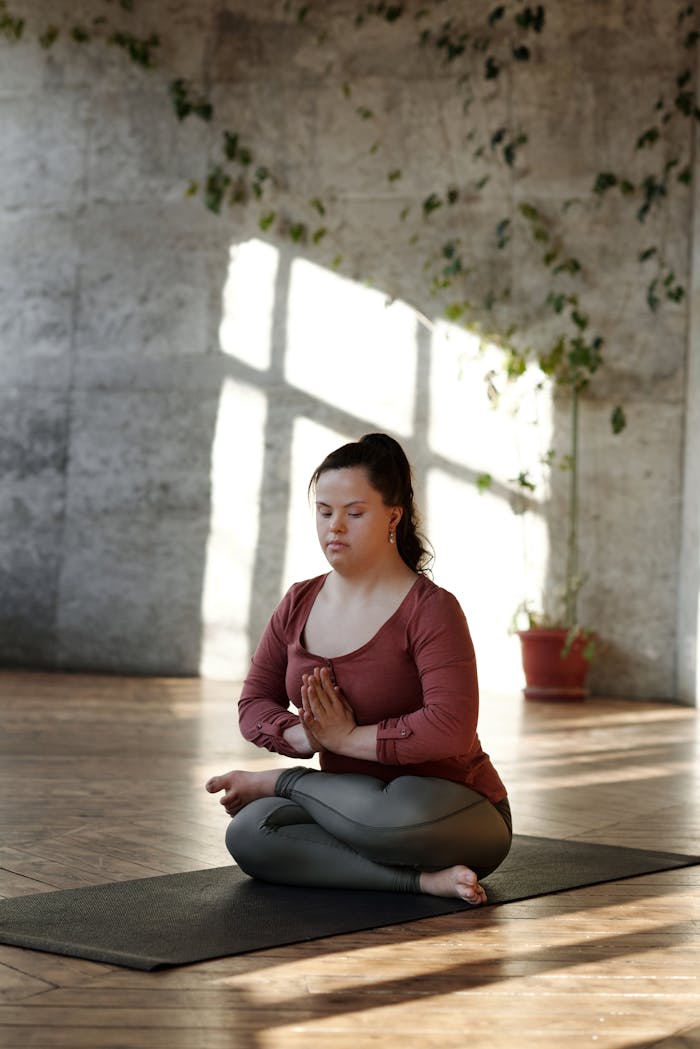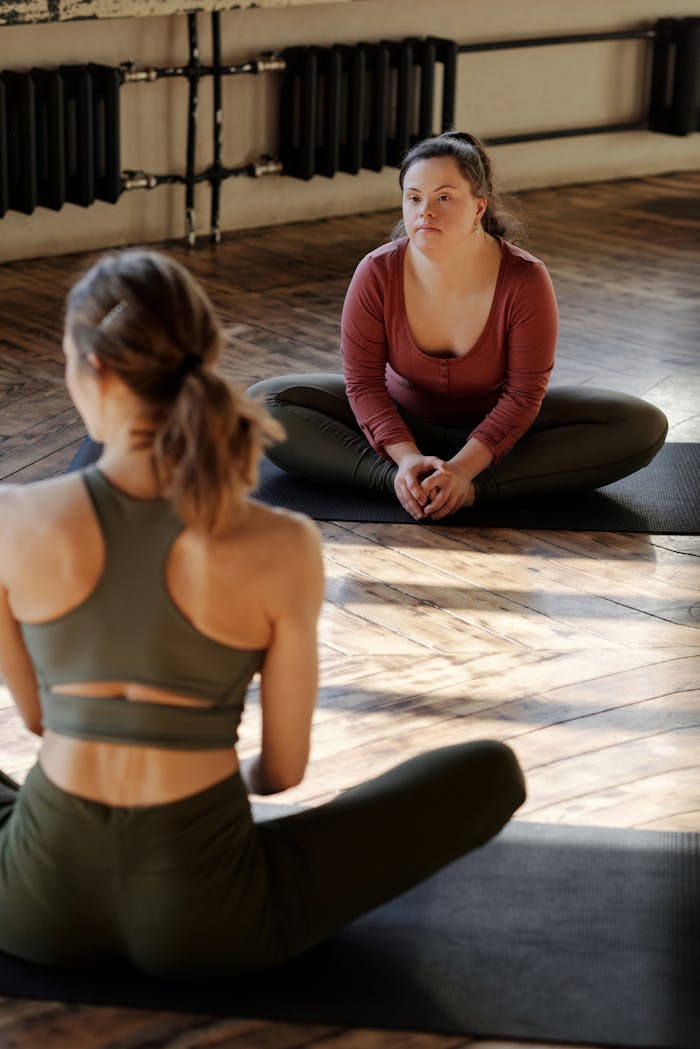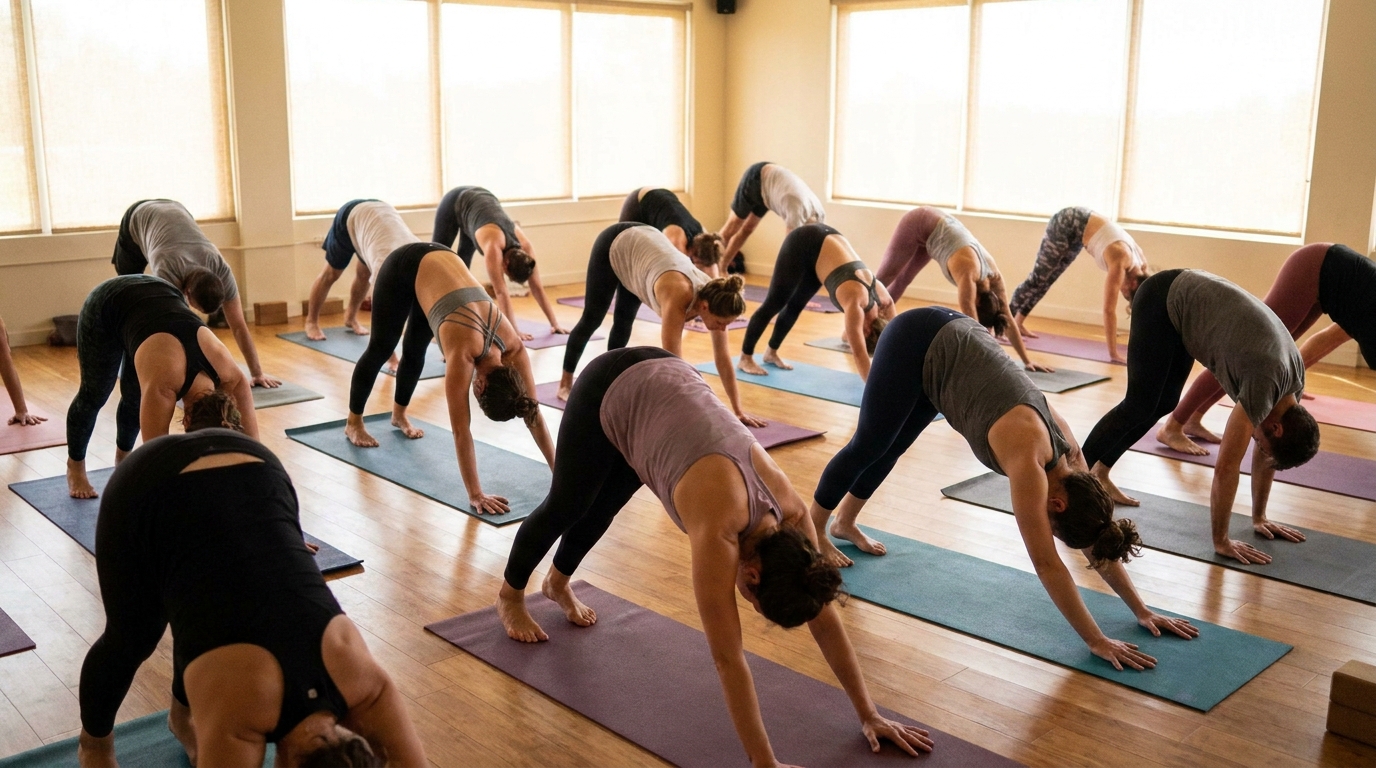
If you are curious about Ashtanga Yoga, you are most welcome here.
You do not need to be flexible, spiritual, strong, young, or already familiar with yoga. You may come with a sincere heart, a tired body, a busy mind, or even many questions. Yoga, in its deepest sense, meets us exactly where we are.
The word Ashtanga comes from Sanskrit, the sacred language of many yogic texts. Ashta means “eight,” and anga means “limbs” or “parts.” So, Ashtanga Yoga means “the eight-limbed path.”
This path is described by the sage Patanjali in the Yoga Sutras, one of the foundational scriptures of yoga. In this classical meaning, Ashtanga Yoga is not only a physical practice. It is a complete way of living with more awareness, kindness, discipline, devotion, and inner freedom.
Today, many people also use the term Ashtanga Yoga to refer to Ashtanga Vinyasa Yoga, a dynamic style of yoga popularized by Sri K. Pattabhi Jois in Mysore, India. This method uses a set sequence of postures, steady breathing, internal focus, and flowing movement.
Both meanings are valuable. One is the ancient eight-limbed path. The other is a powerful physical and meditative practice rooted in that larger tradition.
Let us explore both with humility and care.
What Is Ashtanga Yoga?
The Eight Limbs of Yoga
In the Yoga Sutras of Patanjali, the eight limbs are given as:
- Yama – ethical restraints, or how we live with others
- Niyama – personal observances, or how we care for ourselves
- Asana – physical posture
- Pranayama – breath regulation
- Pratyahara – withdrawal of the senses
- Dharana – concentration
- Dhyana – meditation
- Samadhi – spiritual absorption or deep union
These limbs are not rigid steps we must conquer. They are like branches of one sacred tree. Together, they help us move from restlessness toward peace, from ego toward humility, from separation toward connection.
In a devotional mood, we may see this path as a loving offering. Each breath, each posture, each act of kindness becomes a small flower placed at the feet of the Divine—however we understand the Divine.
Ashtanga Vinyasa Yoga in Practice
Ashtanga Vinyasa Yoga is a structured and energetic form of yoga practice. It includes:
- A set sequence of postures
- Breath synchronized with movement
- Internal gazing points called drishti
- Energetic locks called bandhas
- A steady rhythm that builds heat and focus
The most commonly practiced sequence is the Primary Series, also called Yoga Chikitsa, meaning “yoga therapy.” This series is designed to purify and strengthen the body, improve flexibility, and calm the nervous system.
Unlike some yoga classes where the sequence changes each time, Ashtanga Yoga follows the same order. At first, this may seem repetitive. But over time, repetition becomes a teacher. We begin to notice our habits, our resistance, our progress, and our inner state.
The practice becomes a mirror.
Yoga as a Practical Path
Yoga is not only something we do on a mat. It is a way of seeing, breathing, choosing, and relating.
If we practice a posture but speak harshly afterward, yoga gently asks us to look deeper. If we breathe calmly in class but live in constant hurry, yoga invites us to carry that breath into daily life.
This is the beauty of Ashtanga Yoga. It gives structure, discipline, and direction, but it also gives us space to grow in compassion.
Why Practice Ashtanga Yoga?
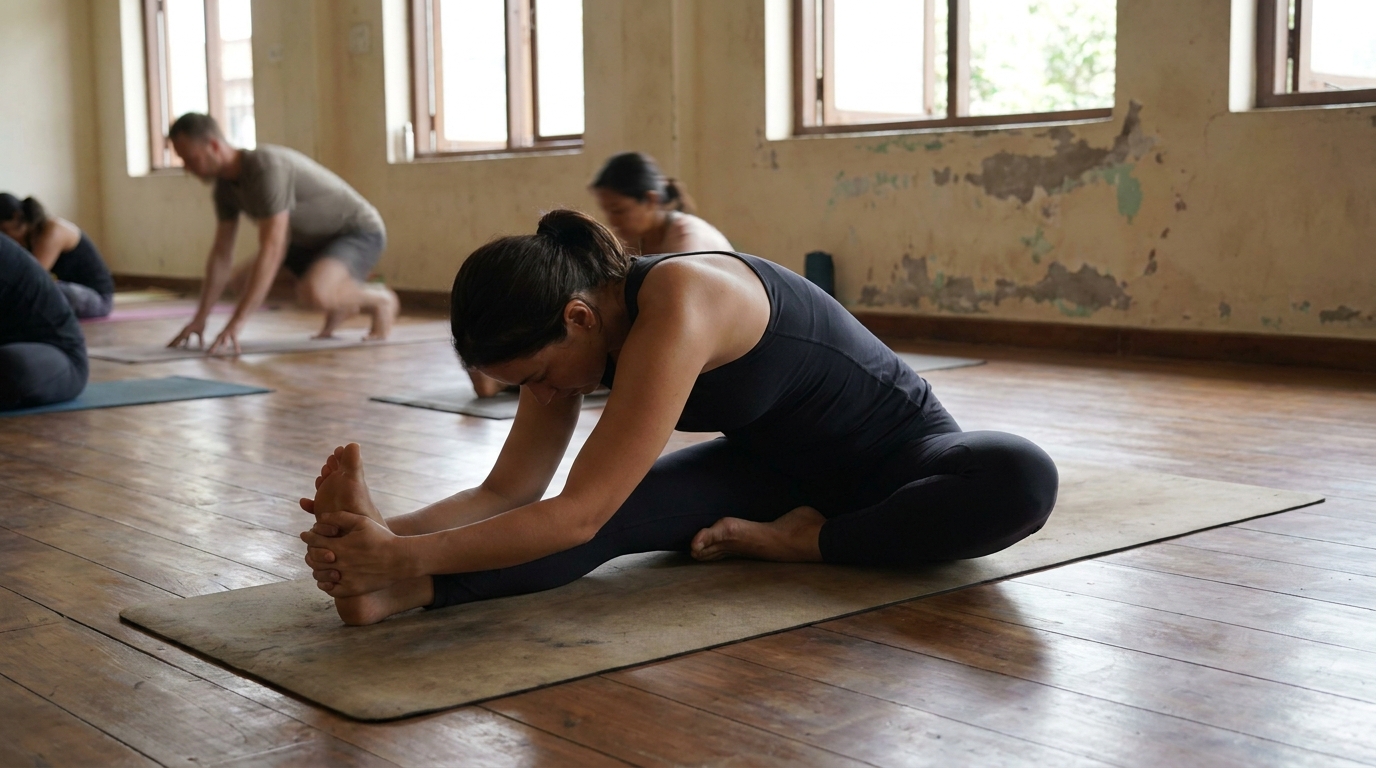
To Build Strength and Flexibility
One of the most visible benefits of Ashtanga Yoga is physical strength. The practice includes standing postures, seated forward folds, twists, backbends, and transitions that use the whole body.
Over time, practitioners often develop:
- Stronger arms, legs, and core muscles
- Better posture
- Improved balance
- Greater mobility
- Increased stamina
But strength in yoga is not meant to feed pride. True yogic strength is steady, humble, and serviceful. It helps us live with more vitality so we can care for ourselves and others.
Flexibility also develops gradually. In Ashtanga Yoga, we do not force the body. We listen. The body opens through patience, breath, and consistency.
A sincere practitioner learns that flexibility of the body is beautiful, but flexibility of the heart is even more precious.
To Calm the Mind
The mind often runs like a restless monkey, jumping from memory to worry, from planning to comparison. Patanjali defines yoga in the Yoga Sutras as:
“Yogas chitta vritti nirodhah”
Yoga is the stilling of the fluctuations of the mind.
In simple words, yoga helps quiet the waves of thought so we can experience our deeper nature.
Ashtanga Yoga supports this through repetition, breath, and focus. Because the sequence becomes familiar, the mind does not need to constantly decide what comes next. It can settle.
The steady breath gives the mind an anchor. The gazing points reduce distraction. The rhythm of movement becomes a moving meditation.
For many people, this is one of the greatest benefits of Ashtanga Yoga: it offers a practical method for mental clarity.
To Develop Discipline Without Harshness
Ashtanga Yoga is traditionally practiced six days a week, with rest days and moon days observed. This level of discipline may sound intense, and for some people it may not be appropriate right away.
But the deeper teaching is not punishment. It is devotion.
Discipline in yoga is called tapas, one of the niyamas. Tapas means heat, effort, or spiritual discipline. It is the warmth that burns away laziness, confusion, and unhealthy habits.
Yet tapas must be balanced with compassion. We are not machines. We are living beings with changing bodies, emotions, responsibilities, and seasons of life.
A wise practice asks: “What is sincere today?” Not “How can I prove myself?”
To Purify Body, Breath, and Heart
In the Ashtanga tradition, practice creates internal heat. This heat may support circulation, sweating, and detoxification. But yogic purification is not only physical.
We also begin to notice the “toxins” of the mind: jealousy, impatience, self-criticism, greed, and fear. We do not notice them to feel ashamed. We notice them so they can soften in the light of awareness.
The Bhagavad Gita, another beloved scripture of yoga, teaches the beauty of selfless action. It reminds us to act sincerely without being attached to the fruits of action.
In practice, this means we do our yoga not to become superior, but to become more present, more loving, and more available to life.
Check out the latest yoga guides on yoga guides for helpful tips and advice.
How Ashtanga Yoga Works
Breath: The Foundation of the Practice
In Ashtanga Yoga, breath is central. The traditional breathing method is often called ujjayi pranayama, though some teachers simply call it “free breathing with sound.”
Pranayama means regulation or expansion of life force through the breath. Prana means life energy. Ayama means expansion or control.
The breath is steady, smooth, and slightly audible. It is usually practiced through the nose. This creates warmth, focus, and rhythm.
When the breath becomes strained, the practice is too forceful. The breath is our guide. It tells us when to soften, slow down, or rest.
In a devotional sense, breath is a gift. We did not create it. Each inhale is received. Each exhale is offered back. Practicing with this awareness brings humility.
Vinyasa: Movement With Awareness
Vinyasa means placing in a special way. In Ashtanga Yoga, it refers to the linking of breath and movement.
For example, we inhale as we lift or lengthen. We exhale as we fold or ground. The movement follows the breath, not the other way around.
This teaches an important life lesson. Instead of rushing ahead, we learn to move with awareness. Instead of forcing outcomes, we learn to listen to rhythm.
Vinyasa can also help generate heat and build endurance. But its deeper gift is presence.
Drishti: Training the Inner Gaze
Drishti means gaze or focused looking point. In Ashtanga Yoga, each posture has a recommended drishti, such as the nose, navel, hand, toes, or upward.
At first, drishti may seem like a small technical detail. But it has great value. Where the eyes go, the mind often follows.
By resting the gaze, we reduce distraction. We become less concerned with what others are doing. We return to our own practice.
This is a quiet form of humility. We stop comparing. We bow inward.
Bandhas: Subtle Support
Bandha means lock or seal. In Ashtanga Yoga, practitioners often work with mula bandha and uddiyana bandha.
- Mula bandha is often described as a gentle lifting of the pelvic floor.
- Uddiyana bandha is a subtle drawing in and upward of the lower abdomen.
These are subtle practices and should be learned carefully, ideally with guidance from a qualified teacher.
Bandhas help create stability, lightness, and energetic focus. But they should not be forced. Like all deeper yogic tools, they blossom through patience.
The Eight Limbs as Everyday Guidance
Yama: Living Kindly With Others
The five yamas are ethical guidelines:
- Ahimsa – non-harming
- Satya – truthfulness
- Asteya – non-stealing
- Brahmacharya – wise use of energy
- Aparigraha – non-grasping
Ahimsa, non-harming, is especially important in physical yoga. If we push the body aggressively, we are not practicing ahimsa. If we compare ourselves harshly to others, we are not practicing ahimsa toward the mind.
Satya, truthfulness, asks us to be honest about our limits and intentions. Are we practicing for healing, or for approval? Are we listening, or performing?
These reflections make Ashtanga Yoga a path of self-knowledge.
Niyama: Caring for the Inner Life
The five niyamas are:
- Saucha – purity or cleanliness
- Santosha – contentment
- Tapas – disciplined effort
- Svadhyaya – self-study and study of sacred wisdom
- Ishvara pranidhana – surrender to the Divine
Santosha, contentment, is a jewel. In Ashtanga Yoga, some days the body feels open and strong. Other days it feels heavy or stiff. Santosha teaches us to practice gratitude in both conditions.
Svadhyaya, self-study, means we observe ourselves honestly. We may also study scripture, chant sacred sounds, or reflect on teachings that uplift the heart.
Ishvara pranidhana means surrender to God, the Divine, or a higher wisdom. For people who do not use the word God, it can mean surrendering the ego’s need to control everything.
This surrender brings softness into discipline.
Asana: The Seat of Stability and Ease
In the Yoga Sutras, Patanjali says:
“Sthira sukham asanam”
Posture should be steady and comfortable.
This does not mean every posture feels easy. It means we are moving toward a balance of effort and ease.
Ashtanga Yoga can be physically demanding, so this teaching is essential. If we only chase difficult postures, we may miss the heart of yoga. If we cultivate steadiness and ease, even a simple posture becomes sacred.
Pranayama to Samadhi: The Inner Journey
The later limbs guide us inward.
Pranayama refines the breath. Pratyahara turns the senses inward. Dharana strengthens concentration. Dhyana deepens into meditation. Samadhi is a state of profound union, peace, or absorption.
Most of us may not live in samadhi. That is okay. Even a few moments of quiet awareness are blessings.
Ashtanga Yoga begins with the body, but it does not end there. The body becomes a doorway to the breath. The breath becomes a doorway to the mind. The mind becomes a doorway to the soul.
How to Begin Ashtanga Yoga Safely
Start With Humility
The first step is simple: begin where you are.
You do not need to do the full Primary Series on your first day. In fact, it is better not to. A traditional Ashtanga practice is often learned gradually, one posture at a time.
This helps the body adapt and helps the mind stay present. It also protects us from injury.
Humility is not weakness. Humility is wisdom. It says, “I am willing to learn.”
Find a Qualified Teacher
If possible, learn from an experienced Ashtanga Yoga teacher. This is especially helpful because the practice includes specific sequencing, transitions, breath, and alignment.
A good teacher will not force you into shapes. They will help you understand the practice according to your body and life.
If you are practicing online, choose instruction that emphasizes safety, modifications, and breath—not only performance.
Learn the Opening Sequence
Many beginners start with:
- Sun Salutations A
- Sun Salutations B
- A few standing postures
- A simple closing sequence
- Rest in Shavasana, the final relaxation pose
Surya Namaskar, or Sun Salutation, is a flowing sequence that warms the body and connects movement with breath. Surya means sun, and namaskar means salutation or bow.
In a devotional mood, each Sun Salutation can feel like a prayer of gratitude—to the sun, to life, to the inner light.
Use Modifications With Respect
Modifications are not failures. They are intelligent choices.
You may bend the knees in forward folds. You may use blocks. You may step instead of jump. You may rest in Child’s Pose. You may shorten the practice.
Yoga is not about forcing the body into an ideal image. It is about awakening awareness through the body you actually have.
Honor Rest and Recovery
Ashtanga Yoga builds heat and strength, but rest is also part of the path.
Traditional practitioners often rest on Saturdays and on moon days. Women may also choose to rest or soften practice during menstruation. People with injuries, illness, pregnancy, or chronic conditions should seek appropriate guidance.
Rest teaches trust. We do not have to earn our worth through constant effort.
Key Benefits of Ashtanga Yoga
Physical Benefits
With steady and mindful practice, Ashtanga Yoga may support:
- Greater strength
- Improved flexibility
- Better balance
- Increased endurance
- Enhanced coordination
- Healthier posture
- More body awareness
Because the practice is dynamic, it can also support cardiovascular health for many people. However, each body is unique. It is important to practice at a suitable pace and consult a healthcare professional when needed.
Mental and Emotional Benefits
Ashtanga Yoga can help quiet mental noise. The repetition of the sequence creates familiarity. The breath gives the mind a place to rest. The focus required in the practice reduces scattered thinking.
Many practitioners report:
- Better concentration
- Reduced stress
- More emotional resilience
- Improved sleep
- Greater self-confidence
- Increased patience
But the practice is not magic. It works through sincere repetition, like watering a plant. Slowly, the roots deepen.
Spiritual Benefits
The spiritual benefits of Ashtanga Yoga are subtle and personal.
Some people may feel closer to God. Some may feel more connected to nature. Some may simply feel more honest, peaceful, and compassionate.
Yoga does not demand that everyone use the same language for the sacred. It invites us to experience life more deeply.
Through practice, we may begin to see that the body is not an object to criticize, but a temple to care for. Breath is not ordinary, but holy. Daily discipline is not a burden, but an offering.
Lifestyle Benefits
Ashtanga Yoga often influences daily choices. As awareness grows, we may naturally become more mindful about food, speech, sleep, work, and relationships.
This does not happen through judgment. It happens through sensitivity.
We begin asking:
- Does this choice bring clarity or heaviness?
- Does this habit support my practice or weaken it?
- Am I living with kindness?
- Am I using my energy wisely?
In this way, Ashtanga Yoga becomes more than exercise. It becomes a companion in daily life.
Common Challenges in Ashtanga Yoga
Comparing Yourself to Others
Because Ashtanga Yoga has a set sequence, comparison can arise easily. You may see someone doing a posture that feels impossible for you.
But each body has a unique history. Bones, joints, injuries, age, stress, and lifestyle all matter.
Comparison steals devotion. It turns practice into performance.
A helpful reminder is: “This is my breath. This is my body. This is my offering today.”
Becoming Too Goal-Oriented
It is natural to want progress. But if we become obsessed with achieving postures, we may lose the deeper purpose.
The Bhagavad Gita teaches us to act without attachment to results. In yoga practice, this means showing up sincerely while releasing the need to control outcomes.
Progress may come. Or it may come differently than expected. Sometimes the greatest progress is not touching the toes, but becoming kinder when we cannot.
Practicing Too Hard
Ashtanga Yoga can attract determined people. Determination is helpful, but too much force can lead to burnout or injury.
Pain is not purification. Exhaustion is not enlightenment.
A wise practitioner respects the body’s signals. The breath should remain steady. The mind should become clearer, not more agitated.
If practice makes you more humble, compassionate, and steady, it is moving in the right direction.
Losing the Joy
Discipline is beautiful, but joy is also sacred.
If practice becomes dry or mechanical, return to gratitude. Feel the breath. Notice the miracle of movement. Offer the practice to something greater than yourself.
Bhakti, the path of devotion, reminds us that love is at the heart of spiritual life. Even in a strong Ashtanga practice, there can be tenderness.
How to Deepen Your Practice Over Time
Practice Consistently, Not Perfectly
Consistency matters more than intensity. A shorter daily practice done with awareness may be more beneficial than an occasional extreme practice.
If you cannot do a full practice, do a small one. Three Sun Salutations with sincere breath can still carry the spirit of yoga.
The path is built through many humble returns.
Study the Yoga Sutras
To unlock the deeper benefits of Ashtanga Yoga, study the Yoga Sutras of Patanjali. You do not need to become a scholar. Even one sutra, reflected upon sincerely, can transform practice.
For example, the teaching of abhyasa and vairagya is very useful.
- Abhyasa means steady practice.
- Vairagya means non-attachment.
Together, they teach us to show up with dedication, but not cling to results.
This is the heart of spiritual discipline.
Bring Yoga Into Relationships
The real test of yoga is not whether we can balance on our hands. It is whether we can be patient when someone irritates us. It is whether we can speak truth kindly. It is whether we can forgive, listen, and serve.
Practice ahimsa in conversation. Practice satya in your work. Practice aparigraha when you want to control others.
Then Ashtanga Yoga becomes alive.
Add Devotional Elements
If it feels natural, you may include devotional practices such as:
- Chanting a mantra
- Offering gratitude before practice
- Lighting a candle
- Reading a sacred verse
- Sitting quietly in prayer
- Dedicating your practice to someone in need
A mantra is a sacred sound, word, or phrase used to focus the mind and open the heart. It may come from Sanskrit or from your own tradition.
Devotion does not need to be dramatic. It can be very simple. A bowed head. A grateful breath. A kind action.
How Else Can Ashtanga Yoga Support Modern Life?
For Busy Professionals
If your life is full of deadlines and responsibilities, Ashtanga Yoga can offer structure and grounding.
The practice teaches you to breathe under intensity. This skill is useful far beyond the mat. When stress rises at work, you may remember your breath. When pressure builds, you may return to steadiness.
Even a shortened morning practice can bring clarity to the day.
For Parents and Caregivers
Parents and caregivers often give so much to others. Yoga can become a small sacred space to receive nourishment.
You may not always have time for a full practice. That is okay. A few minutes of breath, gentle movement, or quiet sitting can restore inner balance.
Yoga should support your life, not become another source of guilt.
For Older Adults
Ashtanga Yoga can be adapted for different ages and abilities. Older adults may benefit from strength, balance, mobility, and breath awareness.
However, the practice should be modified wisely. Slower pacing, props, and guidance from a knowledgeable teacher can be very helpful.
The essence of Ashtanga Yoga is not youthfulness. It is awareness.
For Spiritual Seekers
If you are longing for a deeper relationship with the sacred, Ashtanga Yoga can become a powerful sadhana.
Sadhana means spiritual practice. It is what we do regularly to remember who we truly are.
Through daily practice, the mat becomes a place of prayer. The breath becomes a rosary. The body becomes an instrument of devotion.
And slowly, we may discover that yoga is not only something we practice. It is something that practices us—softening our pride, cleansing our heart, and guiding us toward love.
A Simple Beginner-Friendly Ashtanga Yoga Routine
Begin With Centering
Sit comfortably or stand at the front of your mat.
Close your eyes for a moment. Feel your breath. Let the shoulders soften. Offer your practice inwardly:
“May this practice bring clarity, kindness, and steadiness.”
Take five slow breaths.
Practice Sun Salutations
Begin with 3 rounds of Sun Salutation A.
Move slowly. Let the breath guide each movement. Bend the knees when needed. Step back instead of jumping if that feels better.
If you know Sun Salutation B and it is appropriate for your body, practice 1 to 3 rounds.
Add Standing Postures
You may include:
- Padangusthasana, or Big Toe Pose
- Trikonasana, or Triangle Pose
- Parsvakonasana, or Side Angle Pose
- Prasarita Padottanasana, or Wide-Legged Forward Fold
Stay for about five breaths in each posture. Keep the breath steady and the face soft.
Close With Gentle Postures
Practice a simple seated forward fold, a gentle twist, and then rest.
Always include Shavasana, also called Corpse Pose. This final relaxation allows the body and nervous system to absorb the practice.
Do not skip rest. Stillness is part of yoga.
Practicing With Reverence and Realism
Listen to Your Body
Your body is not an obstacle to spiritual life. It is a sacred companion.
Listen when it whispers, so it does not need to shout. Sharp pain, dizziness, or breathlessness are signs to pause. Discomfort from effort may be normal, but pain should not be ignored.
Respect is yoga.
Let the Practice Change With Life
Your practice may look different in different seasons.
When you are strong and rested, it may be dynamic. When you are grieving, it may be gentle. When you are ill, it may be only breath and prayer.
This is not failure. This is wisdom.
The river of yoga flows through all conditions.
Stay Close to the Heart
Ashtanga Yoga can become very technical. Technique is useful, but the heart must remain present.
Ask yourself:
- Is my practice making me kinder?
- Am I becoming more patient?
- Do I feel more connected to life?
- Can I accept myself with honesty and compassion?
If yes, the benefits of Ashtanga Yoga are unfolding beautifully.
Final Reflections on Unlocking the Benefits of Ashtanga Yoga
Ashtanga Yoga offers many gifts: strength, flexibility, discipline, focus, purification, and inner peace. But its deepest benefit is not measured by advanced postures.
The real fruit of yoga is transformation.
We begin with the body, but we discover the breath. We follow the breath, and we discover the mind. We observe the mind, and we discover the heart. We enter the heart, and perhaps, by grace, we discover the Divine presence that was always there.
Whether you practice the full Primary Series or only a few mindful breaths, you are welcome on this path.
Come with sincerity. Practice with patience. Learn with humility. Rest when needed. Offer the fruits of your effort.
In this way, Ashtanga Yoga becomes not only a method of movement, but a living prayer—steady, simple, and full of grace.
FAQs
What is Ashtanga Yoga?
Ashtanga Yoga is a dynamic and physically demanding form of yoga that involves synchronizing breath with a progressive series of postures. It is designed to purify the body and cultivate a focused and calm mind.
What are the key principles of Ashtanga Yoga?
The key principles of Ashtanga Yoga include the synchronization of breath and movement (vinyasa), the use of specific gazing points (drishti), and the performance of set sequences of postures (asanas) in a specific order.
What are the benefits of practicing Ashtanga Yoga?
Practicing Ashtanga Yoga can lead to increased strength, flexibility, and stamina. It also promotes mental clarity, stress reduction, and a sense of overall well-being. Additionally, it can help improve posture and balance.
Is Ashtanga Yoga suitable for beginners?
Ashtanga Yoga can be challenging for beginners due to its physically demanding nature and the specific sequencing of postures. However, with proper guidance and instruction from a qualified teacher, beginners can gradually build their practice and experience the benefits of Ashtanga Yoga.
What should I expect in an Ashtanga Yoga class?
In an Ashtanga Yoga class, you can expect to follow a set sequence of postures, synchronized with breath and movement. The class may be physically demanding, and the teacher may provide hands-on adjustments to help students deepen their practice. It is important to approach the practice with an open mind and a willingness to challenge yourself.