Wherever you are on your journey, you are welcome here.
You may be new to yoga, returning after many years, or already devoted to a daily spiritual practice. You may come from a religious tradition, from no tradition, or from a place of honest questioning. Integral Yoga offers a compassionate doorway for all sincere seekers because it honors the whole person—body, mind, heart, energy, relationships, work, and the soul’s quiet longing for the Divine.
The word “yoga” comes from the Sanskrit root yuj, meaning “to yoke,” “to join,” or “to unite.” In its deepest sense, yoga is the path of union: union with our true self, with others, with life, and with the Divine Reality that dwells within all.
“Integral” means complete or whole. Integral Yoga is not limited to physical postures, meditation, philosophy, or devotion alone. It embraces all of life as a field of spiritual growth. It invites us to bring awareness, love, discipline, surrender, and service into every breath, every action, and every relationship.
This path has been expressed in different ways by great teachers. Sri Aurobindo and the Mother spoke of Integral Yoga as a complete transformation of human nature through aspiration, rejection of what binds us, and surrender to the Divine. Swami Satchidananda also taught Integral Yoga as a practical synthesis of the major branches of yoga—Hatha Yoga, Raja Yoga, Karma Yoga, Bhakti Yoga, Jnana Yoga, and Japa Yoga—so that the whole being may become peaceful, useful, and God-centered.
At its heart, Integral Yoga is simple: every part of life can become sacred when offered with sincerity.
What Is Integral Yoga?
Integral Yoga is a practical spiritual path that brings together multiple dimensions of yoga into one harmonious way of living. It does not ask us to reject the world, deny the body, suppress emotions, or abandon daily responsibilities. Instead, it teaches us how to transform ordinary life into conscious living.
A Yoga of the Whole Being
Many people first encounter yoga through asana, the Sanskrit word for posture. Asana is beautiful and helpful. It strengthens the body, steadies the nerves, and prepares the mind for stillness. But yoga is much more than exercise.
Integral Yoga includes:
- The body, through mindful movement, breath, diet, rest, and purity of lifestyle
- The mind, through study, meditation, concentration, and self-inquiry
- The heart, through devotion, gratitude, prayer, compassion, and love
- The will, through discipline, ethical living, and selfless action
- The soul, through surrender, inner listening, and union with the Divine
In the Bhagavad Gita, one of the most beloved scriptures of yoga, Sri Krishna teaches different paths for different temperaments: the path of action, the path of knowledge, the path of meditation, and the path of devotion. Integral Yoga honors these paths not as separate roads competing with one another, but as streams flowing toward the same ocean.
A Simple Meaning of Key Sanskrit Terms
Yoga teachings often use Sanskrit words. These words carry deep meaning, but they need not feel distant or difficult.
- Bhakti means devotion, loving relationship with the Divine.
- Karma Yoga means the yoga of selfless action—doing one’s work as an offering.
- Jnana Yoga means the yoga of wisdom—seeking truth through inquiry and discernment.
- Raja Yoga means the royal path of meditation and mastery of the mind.
- Hatha Yoga means the yoga of physical balance, breath, and energy.
- Japa means repetition of a sacred sound, mantra, or Divine Name.
- Sadhana means spiritual practice. It is what we do daily to remember who we truly are.
- Prana means life-force, the subtle energy carried through breath and vitality.
- Dharma means the way of truth, purpose, harmony, and right living.
Integral Yoga brings these together with humility. We do not need to master everything at once. Even one sincere breath can become yoga.
More Than Practice: A Way of Being
Integral Yoga is not only something we do on a mat or cushion. It is a way of seeing.
When we cook with love, that can become yoga.
When we listen deeply to someone in pain, that can become yoga.
When we pause before reacting, that can become yoga.
When we offer our work without ego, that can become yoga.
When we pray, “May my life be of service,” that too is yoga.
The transformation begins gently. The restless mind becomes a little quieter. The heart becomes a little softer. The body becomes more aware. Life becomes less about grasping and more about offering.
Why Integral Yoga Matters Today
We live in a time of great speed. Many people feel tired, scattered, anxious, and disconnected from meaning. We may be surrounded by information but hungry for wisdom. We may be digitally connected but inwardly lonely. We may accomplish much and still wonder, “What is all this for?”
Integral Yoga meets this human condition with tenderness and practicality.
Healing the Fragmented Life
Modern life often divides us. Work is separate from spirituality. Body is separate from mind. Religion may seem separate from daily kindness. Success may be pursued at the cost of peace.
Integral Yoga gently reunites what has been divided.
It reminds us that the body is not an obstacle to the Spirit; it can become a temple. The mind is not an enemy; it can become a clear instrument. Emotions are not shameful; they can be purified into devotion and compassion. Work is not separate from God; it can become worship.
This is deeply aligned with the Isha Upanishad, which begins with the teaching: “All this is pervaded by the Lord.” In simple terms, the sacred is not somewhere far away. It is present here—in breath, in labor, in relationship, in silence, in the hidden chambers of the heart.
A Practical Path for Busy People
Many seekers feel discouraged because they imagine spiritual life requires hours of daily practice, retreat from society, or perfect discipline. Integral Yoga offers another possibility: begin where you are.
If you have five minutes, offer five minutes.
If you have a family, let family life become your practice.
If you have a job, let your work become an offering.
If you feel imperfect, bring that imperfection honestly to the Divine.
The Bhagavad Gita teaches, “Whatever you do, whatever you eat, whatever you offer or give, do that as an offering to Me” (Gita 9.27). This is one of the most practical teachings in yoga. It means that nothing is too small to be sacred.
Washing dishes can become prayer. Sending an email can become service. Caring for a child can become worship. Taking a mindful breath before speaking can become meditation.
Inner Peace With Outer Responsibility
Integral Yoga does not teach escape from the world. It teaches freedom within the world.
Peace is not indifference. Surrender is not passivity. Spirituality is not turning away from suffering. On the contrary, the more we awaken inwardly, the more naturally we become instruments of kindness, justice, patience, and care.
A calm heart can serve more wisely.
A purified mind can act more clearly.
A humble soul can love more deeply.
This is why Integral Yoga is transformative. It changes not only our inner experience but also the way we participate in life.
Check out the latest yoga guides on yoga guides for helpful tips and advice.
How to Practice Integral Yoga Daily
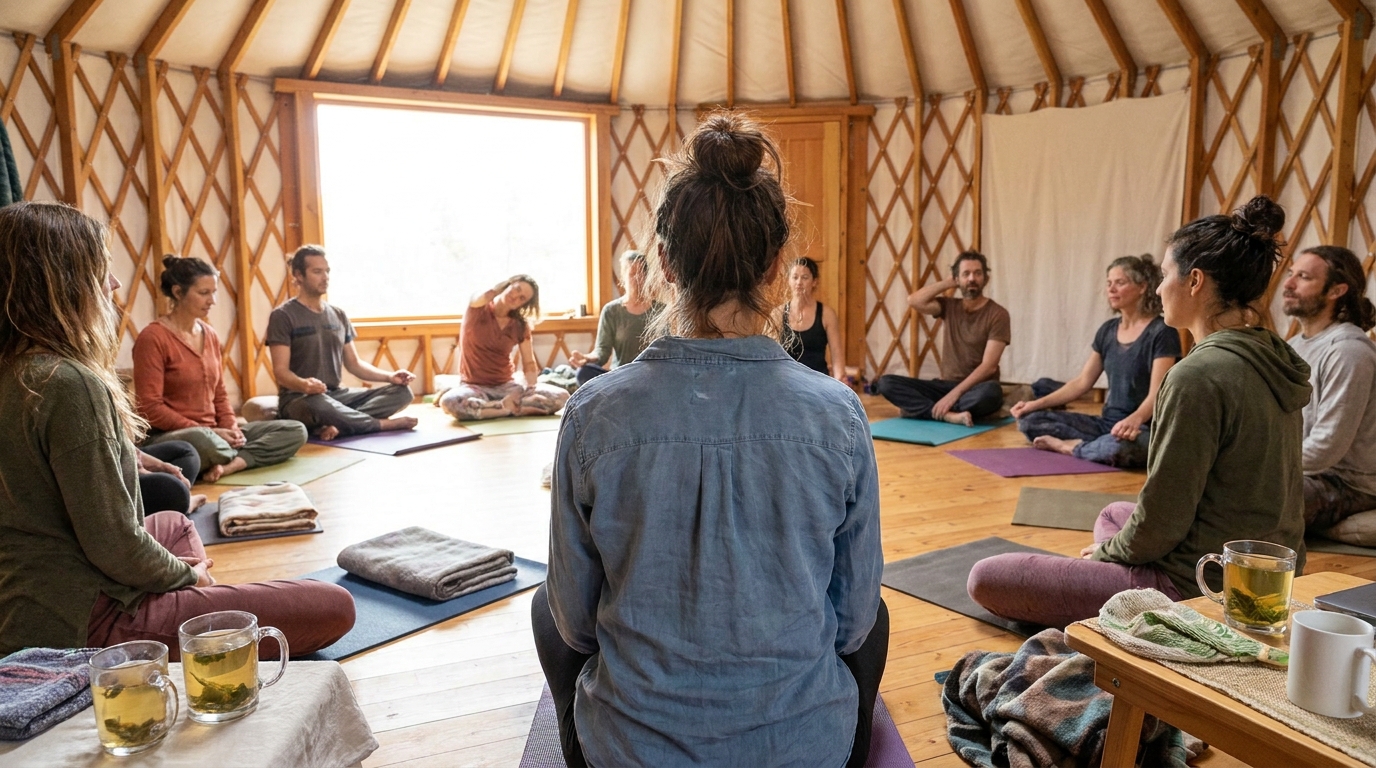
The beauty of Integral Yoga is that it can be practiced by anyone, in any stage of life. There is no need to force the journey. The path unfolds through steady, sincere steps.
Begin With Aspiration
Aspiration means the soul’s upward flame—the sincere longing for truth, love, freedom, and Divine presence. It is not ambition. It is not egoic striving. It is a quiet inner prayer.
You might begin each morning by placing a hand on your heart and saying:
“May I remember the Divine today.”
“May my thoughts, words, and actions be guided by love.”
“May this day become an offering.”
This simple intention sets the tone for practice. It invites grace.
In the path taught by Sri Aurobindo, aspiration is essential. It is the call from the human to the Divine. We do not transform ourselves by ego alone. We open, we ask, we offer, and we allow a greater consciousness to work within us.
Care for the Body as a Sacred Instrument
The body is our companion on the path. It carries our prayers, actions, service, and meditation. In Integral Yoga, caring for the body is not vanity; it is reverence.
A simple daily physical practice may include:
- Gentle stretching or asana
- Conscious breathing
- Walking with awareness
- Eating with gratitude
- Resting when needed
- Avoiding habits that dull the mind or harm the body
In the Yoga Sutras of Patanjali, asana is described as steady and comfortable: sthira sukham asanam (Yoga Sutras 2.46). This reminds us that yoga postures are not about performance. They are about stability, ease, and presence.
Practice in a way that respects your body. If you are older, healing, disabled, pregnant, or managing illness, yoga can be adapted. A chair, a wall, a bed, or even the breath itself can become your practice space.
Practice Breath Awareness
Breath is one of the most accessible doorways into yoga. The Sanskrit word pranayama is often translated as breath regulation, but it also points to the refinement of life-force.
A simple practice:
- Sit comfortably, or lie down if needed.
- Let the shoulders soften.
- Breathe in gently through the nose.
- Breathe out slowly.
- Notice the breath without forcing it.
- Continue for three to five minutes.
If the mind wanders, return lovingly. No harshness is needed.
Breath awareness teaches us that peace is not far away. It may begin with one conscious exhalation.
Meditate With Patience
Meditation is central to Integral Yoga, but it does not require immediate silence. Many beginners think they are failing because thoughts continue. Yet the mind has been active for many years; naturally, it takes time to settle.
A humble meditation practice may look like this:
- Sit at the same time each day if possible.
- Keep the spine comfortably upright.
- Bring attention to the heart, breath, or a sacred word.
- When thoughts arise, notice them and return.
- End with gratitude.
In the Bhagavad Gita, meditation is described as a practice of steadying the mind again and again. The teaching is compassionate: whenever the restless mind wanders, bring it back to the Self. This “again and again” is important. It removes the pressure of perfection.
Every return is part of the practice.
Offer Your Actions Through Karma Yoga
Karma Yoga is the yoga of action performed without selfish attachment. It does not mean we stop caring about results. It means we act wholeheartedly while surrendering the fruits.
This is one of the Gita’s most famous teachings: “You have the right to action, but not to the fruits of action” (Gita 2.47). Practically, this means:
Do your best.
Act with integrity.
Release the need to control everything.
Offer the outcome to the Divine.
At work, Karma Yoga may mean serving with honesty even when no one praises you. At home, it may mean caring for loved ones without keeping score. In society, it may mean contributing to the common good without egoic display.
The practice is subtle. We begin to notice how much of our stress comes from craving recognition, fearing failure, or clinging to results. Karma Yoga slowly frees the heart.
Cultivate Devotion Through Bhakti
Bhakti is the sweetness of the path. It is love directed toward the Divine in whatever form feels sincere to you. For some, this may be Krishna, Shiva, the Divine Mother, Christ, Allah, the formless Light, the inner Beloved, or simply the sacred presence in all beings.
Bhakti may include:
- Prayer
- Chanting
- Singing sacred names
- Lighting a candle
- Reading scripture with love
- Offering flowers, food, or gratitude
- Remembering the Divine during the day
The Narada Bhakti Sutras describe bhakti as supreme love for God. But this love is not limited to ritual. It can become the fragrance of life. A devotional heart sees others not as objects to use, but as expressions of the sacred.
Even if you do not know what you believe, you can practice devotion through gratitude. Gratitude softens the ego and opens the heart.
Study Wisdom Teachings
Jnana Yoga, the yoga of wisdom, invites us to ask: Who am I? What is real? What brings lasting peace? What is the difference between the changing and the eternal?
Scriptural study, or svadhyaya, is recommended in the Yoga Sutras as part of spiritual discipline. But study should not become pride. We study to become humble, not superior.
You may read a few verses from the Bhagavad Gita, the Upanishads, the Yoga Sutras, or teachings of realized saints. Then ask:
How does this apply to my life today?
Where am I still attached?
How can I love more deeply?
What is the Divine asking of me now?
True wisdom becomes kindness.
How Integral Yoga Transforms the Inner Life
Transformation in Integral Yoga is not merely self-improvement. It is a gradual awakening of our deeper nature. We begin to live less from fear and more from faith, less from ego and more from the soul.
From Restlessness to Inner Stillness
The mind is often pulled by memories, worries, plans, comparisons, and desires. Through practice, we learn to witness the mind rather than be ruled by it.
Patanjali defines yoga as the stilling of the fluctuations of the mind: yoga chitta vritti nirodha (Yoga Sutras 1.2). In simple words, yoga helps the waves of the mind become calm so that we can recognize our true nature.
This does not mean life becomes problem-free. Rather, we develop a center within. Like the depths of the ocean beneath surface waves, there is a stillness in us that remains untouched.
From Ego to Offering
The ego says, “I am the doer. I must control. I must be praised. I must be safe at all costs.”
Integral Yoga gently reveals another way: “I am an instrument. Let this life serve something greater.”
This shift is not easy, and we should not pretend it happens overnight. The ego resists surrender. It wants spiritual progress but also wants ownership of that progress. So we practice humility.
We may say:
“Divine Presence, guide me.”
“Let me not misuse this practice for pride.”
“May I serve quietly and sincerely.”
“May my life be an offering.”
This is the essence of bhakti: loving surrender, not out of weakness, but out of trust.
From Emotional Reactivity to Compassion
Integral Yoga does not ask us to suppress emotions. Instead, it invites us to purify and understand them.
Anger may reveal a wound or a need for justice. Fear may reveal attachment. Sadness may open the heart. Desire may show us where we seek fulfillment in temporary things.
Through awareness, breath, prayer, and self-inquiry, emotions become teachers. We learn to respond rather than react. Compassion grows—not only for others, but also for ourselves.
A sincere practitioner does not become cold or detached in an unhealthy way. The heart becomes wider, more forgiving, more courageous.
From Separation to Sacred Relationship
As yoga deepens, we begin to sense that life is interconnected. The suffering of another is not separate from us. The joy of another need not threaten us. The Earth is not merely a resource; it is a sacred home.
Integral Yoga naturally supports ethical living. The Yoga Sutras begin with yamas and niyamas, moral foundations such as non-harming, truthfulness, contentment, purity, and self-discipline. These are not rigid commandments but compassionate guidelines for harmony.
Non-harming, or ahimsa, may begin with how we speak to ourselves. Truthfulness, or satya, may begin with admitting where we are struggling. Contentment, or santosha, may begin with appreciating the breath we are taking now.
How Else Can Integral Yoga Be Lived?
Integral Yoga is wonderfully adaptable. It can be practiced in solitude or community, through silence or song, in a monastery or marketplace. The form may vary, but the essence remains: remember, offer, transform, love.
In Work and Career
Your workplace can become a powerful yoga classroom. Deadlines, conflicts, responsibilities, and ambitions reveal the movements of the mind.
Practice Integral Yoga at work by:
- Beginning the day with a brief inward offering
- Doing one task at a time with full attention
- Speaking truthfully and kindly
- Noticing ego reactions to praise or criticism
- Taking conscious breaths before difficult conversations
- Offering the results of your work to the Divine
This does not mean becoming passive or allowing mistreatment. Yoga includes wisdom and strength. Sometimes the most spiritual action is to set a boundary, speak clearly, or choose a healthier path.
In Family and Relationships
Relationships bring our hidden patterns to the surface. They show us where we cling, demand, fear, avoid, or love conditionally.
Integral Yoga in relationships may include:
- Listening without preparing a defense
- Apologizing when wrong
- Forgiving without denying truth
- Serving without resentment
- Seeing the Divine presence in the other person
- Practicing patience with different temperaments
Family life can be intense, but it can also become a sacred fire that purifies the heart. Every interaction asks: Can I love here? Can I be truthful here? Can I surrender my ego here?
In Times of Suffering
Spiritual practice does not make us immune to pain. Loss, illness, uncertainty, and grief come to all human lives. Integral Yoga does not offer shallow comfort. It offers companionship with the Divine in the midst of difficulty.
In suffering, practice may become very simple:
Breathe.
Pray.
Cry if needed.
Ask for help.
Repeat a mantra.
Place your pain at the feet of the Divine.
Take the next small step.
The Bhagavad Gita was spoken on a battlefield, not in a peaceful garden. This is significant. Yoga is not only for calm moments. It is for the battlefield of life, where confusion, duty, sorrow, and courage meet.
In Service to the World
Integral Yoga naturally flowers as service. When we feel connected to all beings, we cannot remain indifferent.
Service does not have to be grand. It may be feeding one person, caring for an animal, protecting nature, mentoring a child, supporting someone in grief, or doing your professional work with sincerity.
The key is inner attitude. Service becomes yoga when it is offered without superiority. We do not serve because we are above others. We serve because the same Divine lives in all.
As the saying often attributed to saints expresses: serving humanity is serving God. In bhakti, the hands become instruments of love.
Common Challenges on the Integral Yoga Path
Every sincere seeker faces obstacles. This is not failure; it is part of the path. If we meet challenges with humility, they become opportunities for growth.
“I Am Not Consistent”
Many people struggle with regular practice. Rather than falling into guilt, begin again gently.
Spiritual life is not built by self-hatred. It is built by returning.
If you miss a day, return the next day. If you forget the Divine for many hours, remember now. If your meditation is restless, offer the restlessness. Consistency grows through love more than pressure.
Start small. Five minutes daily is better than one hour once a month. A sincere, steady flame is powerful.
“My Mind Is Too Busy”
A busy mind is not a disqualification. It is the very reason practice is helpful.
Instead of fighting thoughts, become a witness. Let thoughts pass like clouds. Use the breath, mantra, or prayer as a gentle anchor.
You might repeat a simple mantra such as Om Shanti, meaning “peace,” or any sacred phrase from your own tradition. The purpose is not mechanical repetition but loving remembrance.
“I Do Not Feel Devotional”
Devotion cannot be forced. Sometimes the heart feels dry. This too can be offered.
Begin with honesty:
“Divine, I do not know how to love You. Please teach me.”
“I feel distant, but I am willing to come closer.”
“Let my heart soften in its own time.”
Bhakti grows through remembrance, gratitude, sacred company, chanting, service, and grace. Even longing for devotion is a form of devotion.
“I Am Afraid to Surrender”
Surrender is often misunderstood. It does not mean losing intelligence, freedom, or dignity. True surrender means releasing the ego’s tight grip and allowing Divine wisdom to guide us.
It is not blind obedience to another person. It is inner offering to the highest truth.
Healthy surrender brings clarity, compassion, courage, and peace. If something makes you smaller, fearful, dependent, or confused, discern carefully. Integral Yoga values sincerity and inner awakening, not manipulation.
A Simple Integral Yoga Practice for Beginners
Here is a gentle daily practice that brings together body, breath, mind, heart, and action. You can complete it in 20 to 30 minutes, or adapt it to your needs.
Morning Offering
Sit quietly for one minute.
Place your awareness in the heart and say:
“May this day be an offering. May my thoughts, words, and actions be guided by truth and love.”
Gentle Movement
Practice 5 to 10 minutes of simple stretching, slow sun salutations, chair yoga, or mindful walking. Move with the breath. Let the body awaken without force.
Breath Practice
Sit comfortably and breathe slowly for 3 to 5 minutes. Allow the exhale to soften the nervous system. If helpful, silently repeat “peace” as you breathe out.
Meditation or Mantra
Spend 5 to 10 minutes in meditation. You may watch the breath, repeat a mantra, pray, or rest in silent awareness.
When the mind wanders, return kindly.
Daily Karma Yoga Intention
Before beginning your responsibilities, choose one action to offer selflessly. It may be a work task, a household duty, or an act of kindness.
Say inwardly: “This is for You. May it serve.”
Evening Reflection
At the end of the day, take two minutes to reflect:
Where did I remember?
Where did I forget?
What can I offer now?
What am I grateful for?
Do not judge harshly. Offer the whole day—its beauty and its mistakes.
The Transformative Power of Integral Yoga
Integral Yoga transforms because it leaves nothing outside the path. It welcomes the body, includes the mind, purifies the heart, guides action, awakens wisdom, and opens us to Divine grace.
It teaches us that spiritual life is not a separate compartment. It is the hidden meaning of all life.
The true fruit of Integral Yoga is not spiritual pride, unusual experiences, or outer appearance. The fruit is peace, humility, compassion, steadiness, devotion, and a growing sense of oneness with all beings.
We may still stumble. We may still feel impatient, afraid, or confused. But slowly, by practice and grace, something within us changes. We become less driven by ego and more guided by love. We become less fragmented and more whole. We become less reactive and more surrendered. We begin to sense that the Divine was never absent.
Integral Yoga is not a race. It is a sacred unfolding.
Take one breath with awareness.
Offer one action with love.
Speak one word with kindness.
Sit one moment in silence.
Remember the Divine one more time.
This is enough for now.
And from such small, sincere beginnings, a whole life can be transformed.
FAQs
What is Integral Yoga?
Integral Yoga is a comprehensive system of yoga that aims to integrate the various aspects of the individual, including the physical, mental, emotional, and spiritual aspects. It was developed by Sri Aurobindo and The Mother in the early 20th century.
What are the key components of Integral Yoga?
Integral Yoga incorporates various traditional yoga practices such as Hatha Yoga (physical postures), Raja Yoga (meditation and mental control), Bhakti Yoga (devotion), and Karma Yoga (selfless service). It also emphasizes the importance of self-awareness, self-discipline, and self-transformation.
What are the benefits of practicing Integral Yoga?
Practicing Integral Yoga can lead to improved physical health, mental clarity, emotional balance, and spiritual growth. It can help individuals develop a deeper understanding of themselves and their place in the world, leading to a more harmonious and fulfilling life.
Is Integral Yoga suitable for beginners?
Yes, Integral Yoga can be practiced by individuals of all levels, including beginners. The system is designed to be adaptable and can be modified to suit the needs and abilities of each practitioner.
Where can I learn Integral Yoga?
Integral Yoga classes and workshops are offered at various yoga studios, wellness centers, and retreats around the world. Additionally, there are online resources and books available for those who prefer to learn and practice Integral Yoga at home.