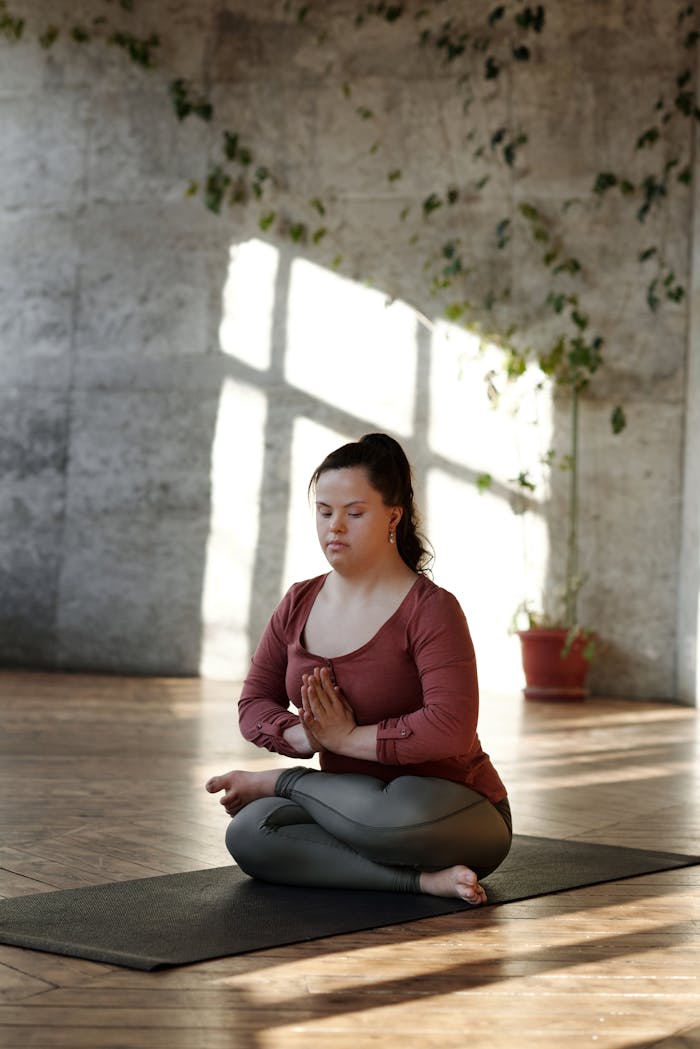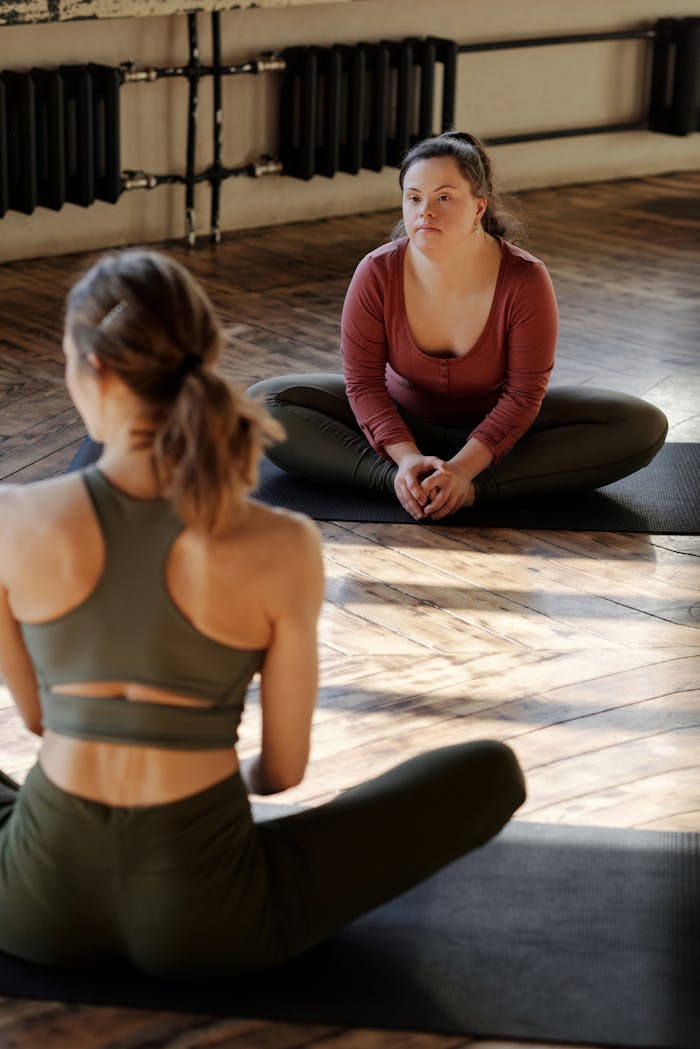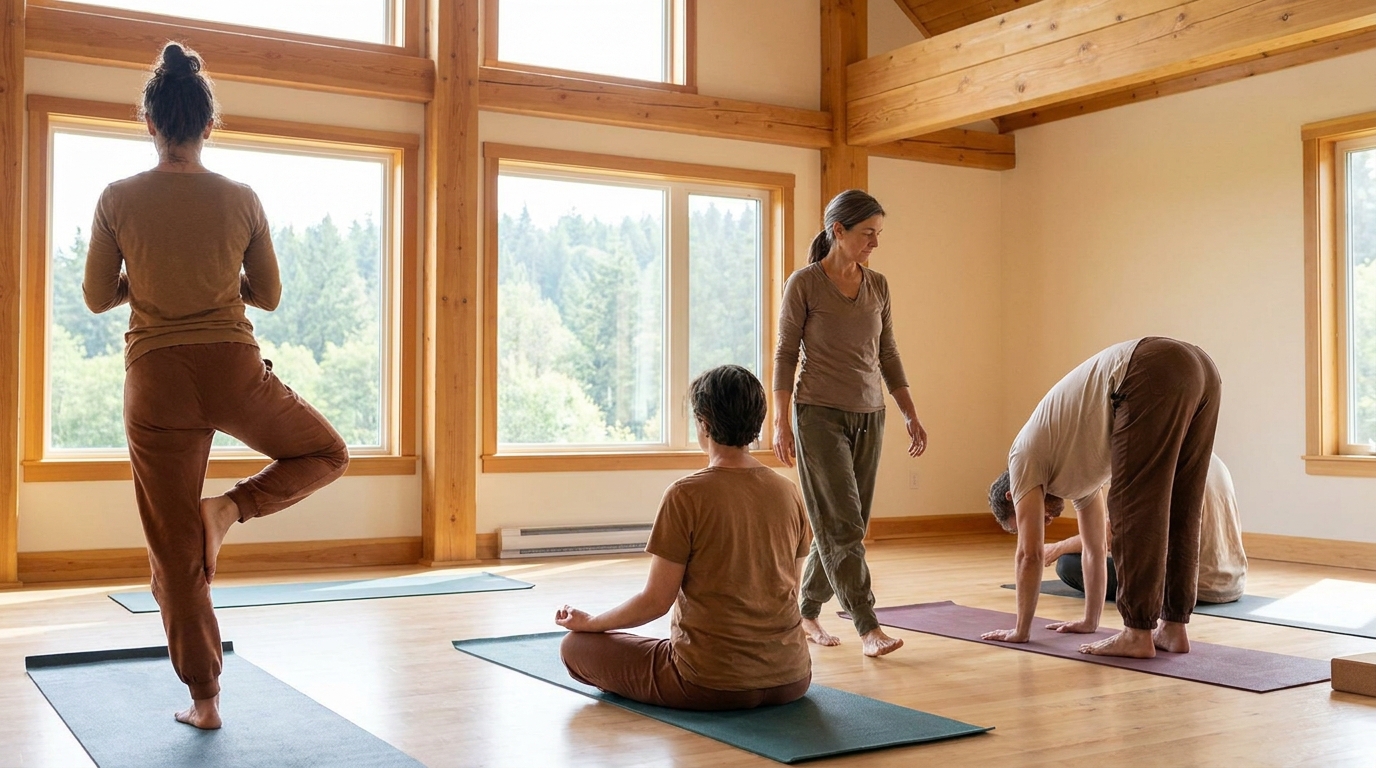
Kripalu Yoga is often described as the yoga of compassion. The word “Kripalu” means “compassionate” in Sanskrit, the ancient language of yoga. It is also the name of Swami Kripalu, a beloved Indian yoga master whose teachings inspired this gentle yet powerful approach.
At its heart, Kripalu Yoga invites us to practice with kindness. Rather than forcing the body into a perfect shape, we learn to listen. Rather than judging the mind, we notice it. Rather than trying to become someone else, we begin to meet ourselves as we are.
This makes Kripalu Yoga especially welcoming for people of all backgrounds, ages, body types, and levels of experience. You do not need to be flexible. You do not need to be spiritual in a particular way. You do not need to know Sanskrit or have any previous yoga training. You simply need a willingness to breathe, feel, and begin again.
Kripalu Yoga includes familiar elements of yoga practice: postures, breathwork, meditation, and relaxation. But its deeper gift is the way it teaches inner awareness. It helps us notice the connection between body, mind, emotions, and spirit in everyday life.
In this way, Kripalu Yoga is not only something we do on a mat. It becomes a way of living with more tenderness, honesty, and presence.
The Meaning of “Yoga” in Simple Words
The Sanskrit word “yoga” comes from the root yuj, meaning “to yoke,” “to join,” or “to unite.” In practical terms, yoga is the path of reconnecting.
We reconnect the body with the breath.
We reconnect the mind with the heart.
We reconnect our daily choices with our deepest values.
And, for those who are devotional by nature, we reconnect with the Divine presence that lives within all beings.
In the Bhagavad Gita, one of the most cherished scriptures of yoga, Lord Krishna teaches that yoga is skill in action: “Yogah karmasu kaushalam” (Bhagavad Gita 2.50). This means yoga is not only about sitting quietly or stretching gracefully. It is about bringing awareness, balance, and love into how we live.
Kripalu Yoga helps us practice this skill gently, one breath at a time.
The Three Stages of Kripalu Yoga
Kripalu Yoga is often taught through three stages. These stages are not rigid levels, but natural ways of deepening practice.
The first stage is learning proper alignment and breath awareness. We practice the postures safely, noticing how the body feels.
The second stage is holding postures longer while observing sensations, thoughts, and emotions. We learn to stay present without reacting too quickly.
The third stage is sometimes called “meditation in motion.” Here, practice becomes intuitive. The body moves in response to inner wisdom. We learn to trust the intelligence that arises from deep listening.
This is one of the beautiful benefits of Kripalu Yoga: it guides us from doing yoga to being yoga.
Why Practice Kripalu Yoga?
Many people come to Kripalu Yoga seeking physical benefits. They may want to reduce stress, improve flexibility, sleep better, or feel stronger. These are all wonderful reasons to begin.
But often, after some time, practitioners discover something more subtle. They begin to feel at home in themselves. They notice they are less harsh in their inner dialogue. They become more patient with their bodies and more honest with their emotions.
Kripalu Yoga is practical and deeply human. It does not ask us to escape life. It teaches us to meet life with an open heart.
A Path of Compassionate Self-Awareness
The practice begins with awareness. We notice the breath. We notice the body. We notice where we are holding tension. We notice when the mind becomes restless or self-critical.
This noticing is not meant to create shame. It is meant to create freedom.
In the Yoga Sutras of Patanjali, a foundational yoga text, yoga is defined as “yogas chitta vritti nirodhah” (Yoga Sutra 1.2). This is often translated as “Yoga is the calming of the fluctuations of the mind.” In simple terms, yoga helps us become less controlled by every thought, worry, fear, or desire that passes through us.
Kripalu Yoga supports this calming not through force, but through compassion. We soften the struggle. We become curious. We witness.
This witness consciousness is a key part of Kripalu Yoga. It means we learn to observe our experience without immediately identifying with it. Instead of saying, “I am anxious,” we may begin to notice, “Anxiety is present.” This small shift can create spaciousness and healing.
A Welcoming Yoga for Beginners
One of the great benefits of Kripalu Yoga is that it is accessible. Beginners often feel safe in a Kripalu class because the practice is not focused on competition or performance.
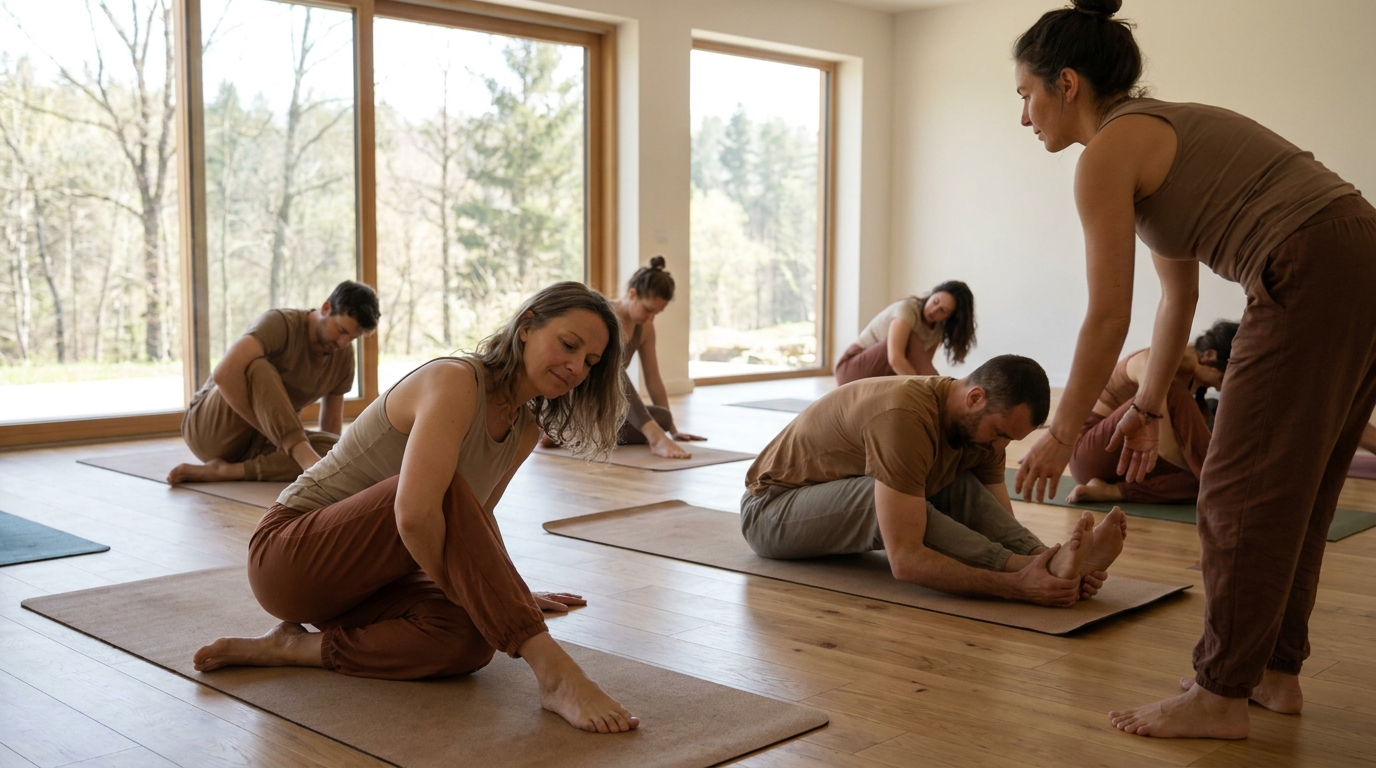
A teacher may offer several options for each posture. Students are encouraged to adjust, rest, or use props. There is no pressure to keep up with anyone else.
This is a precious teaching. In a world that often asks us to push harder, Kripalu Yoga gently asks, “What is true for you right now?”
For beginners, this can be a relief. For long-time practitioners, it can be a revelation.
A Bridge Between Fitness and Inner Life
Kripalu Yoga can certainly support physical wellness, but it also invites emotional and spiritual integration. It is a bridge between fitness and inner life.
You may come for back pain and discover emotional release.
You may come for flexibility and discover self-acceptance.
You may come for stress relief and discover prayerfulness in the breath.
This does not mean the practice must be religious. Kripalu Yoga welcomes people of all faiths and no faith. But it does honor the sacredness of life. It recognizes that healing is not only physical. We are whole beings.
The Physical Benefits of Kripalu Yoga
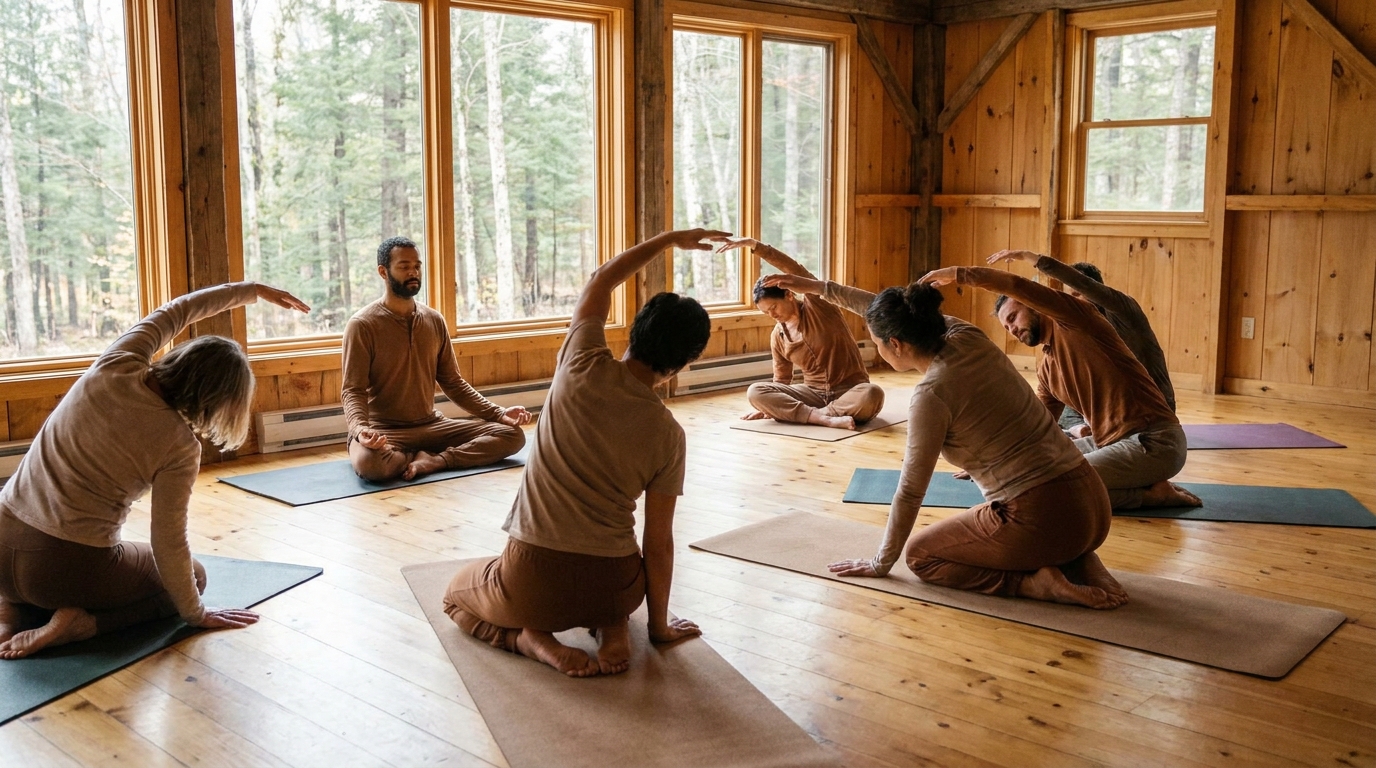
Kripalu Yoga offers many physical benefits because it combines mindful movement, conscious breathing, and deep relaxation. The body is treated as a trusted companion, not a machine to be controlled.
When practiced regularly, Kripalu Yoga can support strength, flexibility, balance, posture, circulation, and nervous system health.
Improved Flexibility and Mobility
Many people associate yoga with flexibility. Kripalu Yoga can indeed help the muscles and joints become more open over time. But its approach is gentle and intelligent.
Instead of forcing a stretch, we enter a posture slowly. We breathe. We notice sensation. We learn the difference between healthy intensity and strain.
This mindful approach protects the body. It also helps us become more patient. Flexibility is not only in the hamstrings or hips. It is also in our attitude.
As the body becomes more mobile, everyday movements may become easier. Walking, sitting, bending, lifting, and resting can all feel more comfortable.
Better Strength and Stability
Though Kripalu Yoga is often gentle, it can also build strength. Holding postures with awareness strengthens the legs, core, back, shoulders, and arms.
The difference is that strength is cultivated without aggression. We learn to engage the body while keeping the breath steady and the face soft.
This balanced strength supports stability. It may help improve posture, reduce discomfort from poor alignment, and create a greater sense of groundedness.
In yogic language, this grounded quality may be connected with sthira, meaning steadiness. Patanjali says in Yoga Sutra 2.46, “Sthira sukham asanam,” often translated as “Posture should be steady and easeful.” Kripalu Yoga honors both parts: steadiness and ease.
Support for Stress-Related Tension
Stress often lives in the body. It may appear as tight shoulders, a clenched jaw, shallow breathing, headaches, digestive discomfort, or fatigue.
Kripalu Yoga helps us release tension by slowing down and bringing awareness to places we habitually tighten. Gentle postures, breathwork, and relaxation tell the body, “You are safe now.”
This can activate the parasympathetic nervous system, sometimes called the “rest and digest” response. Over time, regular practice may help the body recover more quickly from stress.
More Restful Sleep
Because Kripalu Yoga calms the nervous system, many practitioners find that it supports better sleep. Evening practices with gentle stretching, slow breathing, and guided relaxation can prepare the body and mind for rest.
Sleep is not only a physical need. It is also an act of surrender. Each night, we let go. We release control. In a humble way, sleep teaches trust.
Kripalu Yoga can help us enter this surrender more peacefully.
Sure, here is the sentence with the clickable link:
Check out the latest yoga guides at yoga guides.
The Mental and Emotional Benefits of Kripalu Yoga
The mind is powerful. It can imagine, plan, remember, and create. But it can also worry, criticize, compare, and repeat old stories.
Kripalu Yoga offers tools to work skillfully with the mind and emotions. It teaches us to pause, breathe, feel, and respond rather than react.
Reduced Anxiety and Overthinking
Anxiety often pulls awareness into the future. We worry about what may happen, what could go wrong, or whether we will be able to cope.
Kripalu Yoga brings us back to direct experience: the feeling of the feet on the floor, the movement of the breath, the sensation of stretching, the rhythm of the heart.
This return to the present moment can reduce mental spinning. It reminds us that we do not have to solve everything at once. We can take one breath. Then another.
The Bhagavad Gita speaks beautifully about balance. Krishna describes yoga as a state of evenness: “Samatvam yoga uchyate” (Bhagavad Gita 2.48), meaning “Yoga is equanimity.” Equanimity does not mean we never feel difficulty. It means we learn to remain centered within it.
Kripalu Yoga helps cultivate this steadiness in real life.
Greater Emotional Awareness
Sometimes emotions are stored in the body before we consciously understand them. A tight chest may hold grief. A tense belly may hold fear. A stiff neck may hold unspoken frustration.
In Kripalu Yoga, we practice listening without judgment. If emotion arises during a posture or relaxation, we make space for it. We breathe with it. We allow it to move through.
This can be deeply healing. Not dramatic, not forced—just honest.
We may begin to understand that emotions are not enemies. They are messengers. When met with compassion, they can guide us toward what needs care, expression, forgiveness, or change.
A Kinder Inner Voice
Many people live with a harsh inner critic. It says, “You are not enough.” “You should be better.” “Everyone else is doing this right except you.”
Kripalu Yoga gently interrupts this pattern. The teacher may remind students to honor their limits, soften the jaw, rest when needed, and practice self-compassion.
Over time, these reminders become internal. We begin to speak to ourselves as we would speak to someone we love.
This is a profound benefit of Kripalu Yoga. It helps us replace self-judgment with self-respect.
Increased Resilience
Resilience is the ability to return to balance after challenge. Kripalu Yoga builds resilience by teaching us to stay present during mild discomfort.
For example, in a posture, we may notice effort, heat, or trembling. Instead of escaping immediately or forcing through, we breathe and observe. We learn to make wise choices: stay, adjust, or rest.
This becomes a life skill. In difficult conversations, busy days, grief, uncertainty, or change, we remember: pause, breathe, listen, respond.
The Spiritual Benefits of Kripalu Yoga
Kripalu Yoga is deeply compatible with the spirit of bhakti, the yoga of devotion. Bhakti means loving devotion—an offering of the heart to the Divine, to truth, to love, or to the sacredness of life.
Even if one does not use devotional language, Kripalu Yoga can awaken reverence. Reverence for the breath. Reverence for the body. Reverence for the mystery of being alive.
The Body as a Temple
In many spiritual traditions, the body is honored as a sacred vessel. In yoga, the body is not rejected. It is used as a doorway to awareness.
Kripalu Yoga teaches us to inhabit the body with respect. We learn to listen to its wisdom, care for its needs, and honor its limits.
This attitude can transform practice. A forward fold is no longer just a stretch. It becomes a bow. A breath is no longer automatic. It becomes a gift. Rest is no longer laziness. It becomes trust.
In this way, Kripalu Yoga can become a humble offering.
Breath as Prayer
The Sanskrit word for life-force energy is prana. Prana is often described as vital energy carried by the breath. When we practice breath awareness, we become more intimate with life itself.
In Kripalu Yoga, the breath guides movement and attention. We may inhale to lengthen, exhale to soften, or pause to feel.
For devotional practitioners, breath can become prayer. Each inhale may feel like receiving grace. Each exhale may feel like offering oneself back.
There is no need to make this complicated. Simply breathing with awareness can be sacred.
Meeting the Inner Witness
Kripalu Yoga often emphasizes the witness, or the part of awareness that can observe experience without being overwhelmed by it.
In Sanskrit, this witnessing awareness is sometimes related to sakshi, meaning “witness.” The witness sees thoughts, sensations, and emotions come and go. It is spacious, quiet, and steady.
When we rest in the witness, we may sense that we are more than our changing moods or stories. We begin to touch a deeper presence within.
The Katha Upanishad, one of the ancient wisdom texts of India, uses the image of the body as a chariot, the senses as horses, the mind as reins, and the deeper Self as the lord of the chariot. This teaching reminds us that yoga helps align our outer life with inner wisdom.
Kripalu Yoga offers a practical way to experience this alignment.
How to Practice Kripalu Yoga
Kripalu Yoga can be practiced in a class, at home, online, or even through small mindful moments during the day. The most important ingredients are breath, awareness, compassion, and willingness.
You do not need special clothing, advanced flexibility, or a perfect environment. A quiet space, comfortable clothes, and a yoga mat or soft surface are enough.
Begin with Intention
Before moving, take a moment to arrive. Sit or stand comfortably. Close the eyes if that feels safe, or soften the gaze.
Ask yourself gently:
“What do I need today?”
“What is my body asking for?”
“How can I practice with kindness?”
This intention is called sankalpa in Sanskrit. A sankalpa is a heartfelt resolve or inner direction. It does not need to be dramatic. It may be as simple as “I will listen,” “I welcome peace,” or “I practice with compassion.”
Beginning with intention helps turn yoga from exercise into sacred practice.
Warm Up Slowly
Kripalu Yoga often begins with gentle movements to awaken the body. You might roll the shoulders, circle the wrists, stretch the spine, or move with the breath.
Simple warm-ups prepare the joints and muscles. They also invite the mind to settle.
Try this:
Sit comfortably.
Inhale and lift the chest slightly.
Exhale and round the spine gently.
Repeat several times, moving like a wave.
Notice how the body responds. Let the breath lead.
Practice Postures with Compassion
Kripalu Yoga includes many traditional yoga postures, such as Mountain Pose, Child’s Pose, Cat-Cow, Warrior poses, gentle twists, forward folds, and relaxation.
The key is how you practice.
Move slowly enough to feel.
Breathe steadily.
Respect pain as a signal to stop or adjust.
Use props like blocks, blankets, or chairs.
Rest whenever needed.
In Kripalu Yoga, resting is not failure. Resting is wisdom.
Pause and Notice
A beautiful feature of Kripalu Yoga is the pause. After a posture, you may take a moment to stand, sit, or lie still and observe.
What do you feel?
Warmth? Tingling? Emotion? Ease? Resistance?
Has the breath changed?
Has the mind softened?
These pauses help integrate the practice. They teach us to listen more deeply.
This is where yoga becomes self-study. In Sanskrit, svadhyaya means self-study or sacred study. It is one of the practices named by Patanjali in the Yoga Sutras. In Kripalu Yoga, svadhyaya is not only reading scripture. It is reading the living scripture of your own body and heart.
End with Deep Relaxation
Most Kripalu Yoga practices end with Savasana, or Corpse Pose. In this posture, you lie down and rest completely.
The name may sound unusual, but its meaning is profound. Savasana symbolizes letting go of effort, identity, and control. We practice surrender in a safe and simple way.
For many students, Savasana is the most healing part of class. The body absorbs the benefits of movement. The nervous system settles. The heart becomes quiet.
If lying down is uncomfortable, you can rest on your side, sit in a chair, or place support under the knees.
How Kripalu Yoga Supports Daily Life
The benefits of Kripalu Yoga do not remain on the mat. With practice, they begin to shape how we walk, speak, work, eat, rest, and relate to others.
This is one of the most practical gifts of yoga: it helps us live more consciously.
Mindful Communication
Kripalu Yoga teaches us to pause before reacting. This can transform communication.
When someone says something difficult, we may notice the body tighten. Instead of immediately defending or withdrawing, we can take a breath. We can feel our feet. We can listen more fully.
This does not mean becoming passive. It means responding from clarity rather than habit.
Compassionate awareness can help us speak truth with less harm.
Healthier Relationship with the Body
Many people carry pain around body image. We compare, criticize, and measure ourselves against impossible standards.
Kripalu Yoga offers another way. It asks us to feel the body from within, rather than judge it from the outside.
The body becomes not an object to fix, but a companion to honor.
This shift can be deeply liberating. It supports not only yoga practice, but eating, resting, aging, healing, and self-care.
Better Choices Under Stress
Stress can make us automatic. We may overwork, overeat, shut down, lash out, or ignore our needs.
Kripalu Yoga increases awareness of early stress signals. We begin to notice when the breath becomes shallow, when the shoulders rise, when the mind races.
Then we can respond sooner.
A few conscious breaths, a short stretch, a walk outside, or a moment of prayer can interrupt the stress cycle. These small practices matter. They are yoga in daily life.
Living with More Devotion
Devotion does not need to look a certain way. For some, it is chanting the names of God. For others, it is serving family, caring for the earth, creating beauty, or sitting quietly with gratitude.
Kripalu Yoga can help us live devotion through attention. We begin to offer our presence to whatever is before us.
Washing dishes becomes a practice of awareness.
Listening to a friend becomes an act of love.
Resting becomes trust in something greater than productivity.
Moving the body becomes gratitude for life.
This is bhakti in simple form: love expressed through daily living.
How Else Can You Experience the Benefits of Kripalu Yoga?
Kripalu Yoga is flexible and adaptable. Once you understand its principles, you can bring them into many forms of practice and many seasons of life.
The question is not, “Am I doing it perfectly?” The question is, “Am I practicing with awareness and compassion?”
Try a Kripalu Yoga Class
If possible, attend a class with a trained Kripalu Yoga teacher. A good teacher will create a safe, welcoming environment and offer choices for different bodies and needs.
Look for classes described as gentle, mindful, beginner-friendly, meditative, or compassion-based. If you have injuries or health concerns, speak with the teacher before class and consult a healthcare professional when needed.
Remember, yoga is not a competition. You are allowed to move at your own pace.
Create a Simple Home Practice
A home practice does not need to be long. Even 10 to 20 minutes can be meaningful.
Here is a simple Kripalu-inspired sequence:
Begin seated with three minutes of breath awareness.
Move through gentle Cat-Cow for one to two minutes.
Rest in Child’s Pose or a supported forward fold.
Stand in Mountain Pose and feel your feet.
Practice a gentle side stretch on each side.
Try a supported Warrior or chair-assisted lunge.
Pause and notice sensations.
Lie down for a gentle twist on each side.
Rest in Savasana for five minutes.
Move slowly. Let the breath guide you. If something feels wrong, adjust or skip it.
Use Kripalu Principles in Other Yoga Styles
Even if you practice Hatha, Vinyasa, Yin, Restorative, Iyengar, or another yoga style, you can bring Kripalu awareness into it.
Ask yourself:
Can I soften my self-judgment?
Can I listen more carefully?
Can I honor my body today?
Can I pause and notice after each posture?
Can my practice become an offering?
In this way, Kripalu Yoga is not only a style. It is an attitude of compassion.
Practice “Yoga Off the Mat”
Kripalu Yoga becomes especially powerful when practiced in ordinary moments.
Before answering an email, take one breath.
Before eating, pause in gratitude.
While walking, feel your feet touching the earth.
When upset, place a hand on your heart and breathe.
Before sleep, release the day with kindness.
These small acts are not small in their effect. They slowly reshape the nervous system, the mind, and the heart.
Explore Meditation and Pranayama
Pranayama means breath regulation or breath practice. In Kripalu Yoga, pranayama is usually taught gently, with respect for each person’s capacity.
A simple practice is three-part breathing:
Place one hand on the belly and one on the chest.
Inhale gently into the belly, ribs, and upper chest.
Exhale slowly from the upper chest, ribs, and belly.
Continue for several rounds without strain.
Meditation can be equally simple. Sit comfortably. Feel the breath. When the mind wanders, return with kindness. This returning is the practice.
No need to scold the mind. The mind wanders; that is its nature. We return; that is our devotion.
Common Questions About Kripalu Yoga
Kripalu Yoga is simple, but sincere beginners often have questions. These questions are welcome. Inquiry is part of the path.
Is Kripalu Yoga Good for Beginners?
Yes. Kripalu Yoga is one of the most beginner-friendly forms of yoga because it emphasizes self-awareness, choice, and compassion. Students are encouraged to adapt postures and rest when needed.
It is also meaningful for experienced practitioners who want to deepen their inner relationship with yoga.
Is Kripalu Yoga Religious?
Kripalu Yoga is rooted in the spiritual tradition of yoga, but it does not require belief in any religion. People of all faiths and no faith can practice.
Its universal values—compassion, awareness, kindness, truthfulness, and presence—can support anyone’s life.
If you are devotional, Kripalu Yoga can become a form of prayer. If you are not, it can be a practical method for wellness and self-understanding.
Is Kripalu Yoga Physically Challenging?
It can be gentle or moderately challenging, depending on the class and teacher. Some Kripalu classes are slow and restorative. Others include stronger standing postures and longer holds.
The defining quality is not intensity, but awareness. You are invited to listen to your body and make wise choices.
What Makes Kripalu Yoga Different?
Kripalu Yoga is different because of its focus on compassionate self-observation. It is less about achieving external form and more about discovering inner truth.
A Kripalu teacher may guide students to notice sensations, emotions, and thoughts during practice. There is often time for stillness and reflection.
This makes the practice deeply personal and transformative.
The Heart of Kripalu Yoga
The benefits of Kripalu Yoga are many: greater flexibility, strength, relaxation, emotional balance, self-awareness, stress relief, and spiritual connection. Yet its deepest benefit may be this: it teaches us to befriend ourselves.
In a world full of pressure, Kripalu Yoga offers permission to slow down. In a culture of comparison, it teaches inner listening. In moments of pain, it offers compassion. In times of confusion, it returns us to the breath.
The path is humble. We may fall into old habits many times. We may become impatient, distracted, or discouraged. But yoga does not ask us to be perfect. It asks us to return.
Return to the breath.
Return to the body.
Return to kindness.
Return to the sacred presence within.
As the Bhagavad Gita reminds us, even a little practice of this path can protect us from great fear (Bhagavad Gita 2.40). This is a comforting teaching. We do not have to do everything at once. A little sincere practice matters.
May your exploration of Kripalu Yoga bring peace to your body, steadiness to your mind, and softness to your heart.
May your practice become not another burden, but a refuge.
And may each breath remind you that compassion is already within you, waiting patiently to be remembered.
FAQs
What is Kripalu Yoga?
Kripalu Yoga is a form of Hatha yoga that emphasizes meditation, physical healing, and spiritual transformation. It focuses on the development of body, mind, and spirit through a series of postures, breathing exercises, and relaxation techniques.
Who founded Kripalu Yoga?
Kripalu Yoga was founded by Swami Kripalu, a yoga master from India. He developed the practice as a way to integrate the physical, mental, and spiritual aspects of yoga into a holistic approach to health and well-being.
What are the key principles of Kripalu Yoga?
The key principles of Kripalu Yoga include practicing compassion towards oneself and others, observing non-judgmental awareness, and cultivating self-acceptance. It also emphasizes the importance of breath awareness, meditation, and the gradual development of a deeper connection with one’s inner self.
What are the benefits of practicing Kripalu Yoga?
Practicing Kripalu Yoga can lead to improved flexibility, strength, and balance. It can also help reduce stress, increase self-awareness, and promote a sense of inner peace and well-being. Additionally, it can support emotional healing and personal growth.
Is Kripalu Yoga suitable for beginners?
Yes, Kripalu Yoga is suitable for beginners as well as experienced practitioners. The practice can be adapted to individual needs and abilities, making it accessible to people of all ages and fitness levels. It is often practiced in a gentle and nurturing environment, allowing students to explore and deepen their yoga practice at their own pace.