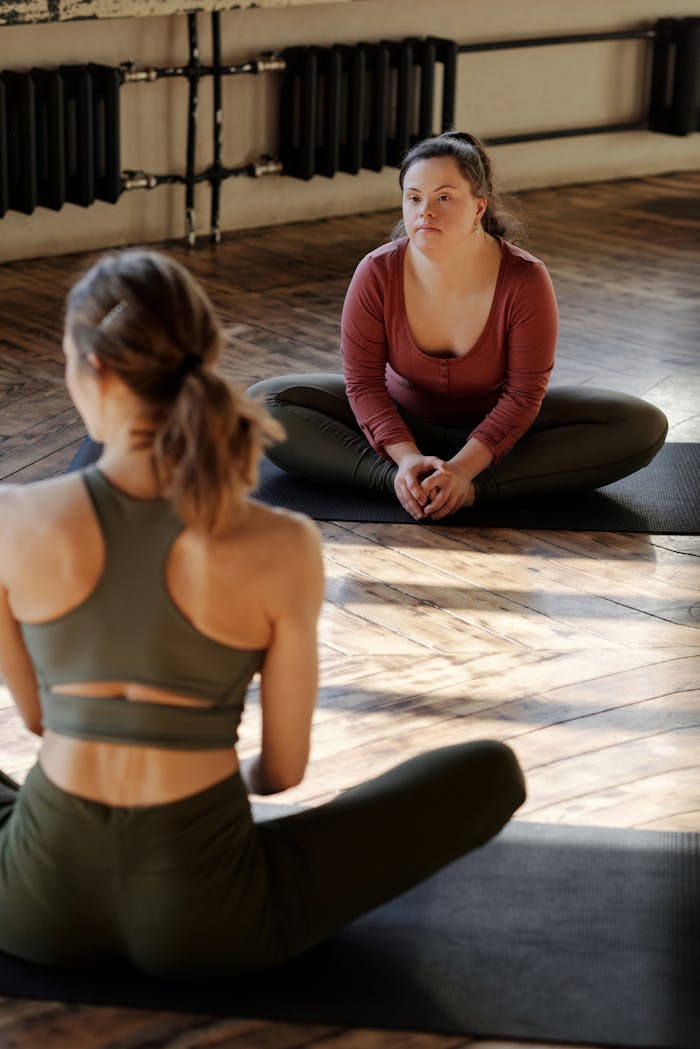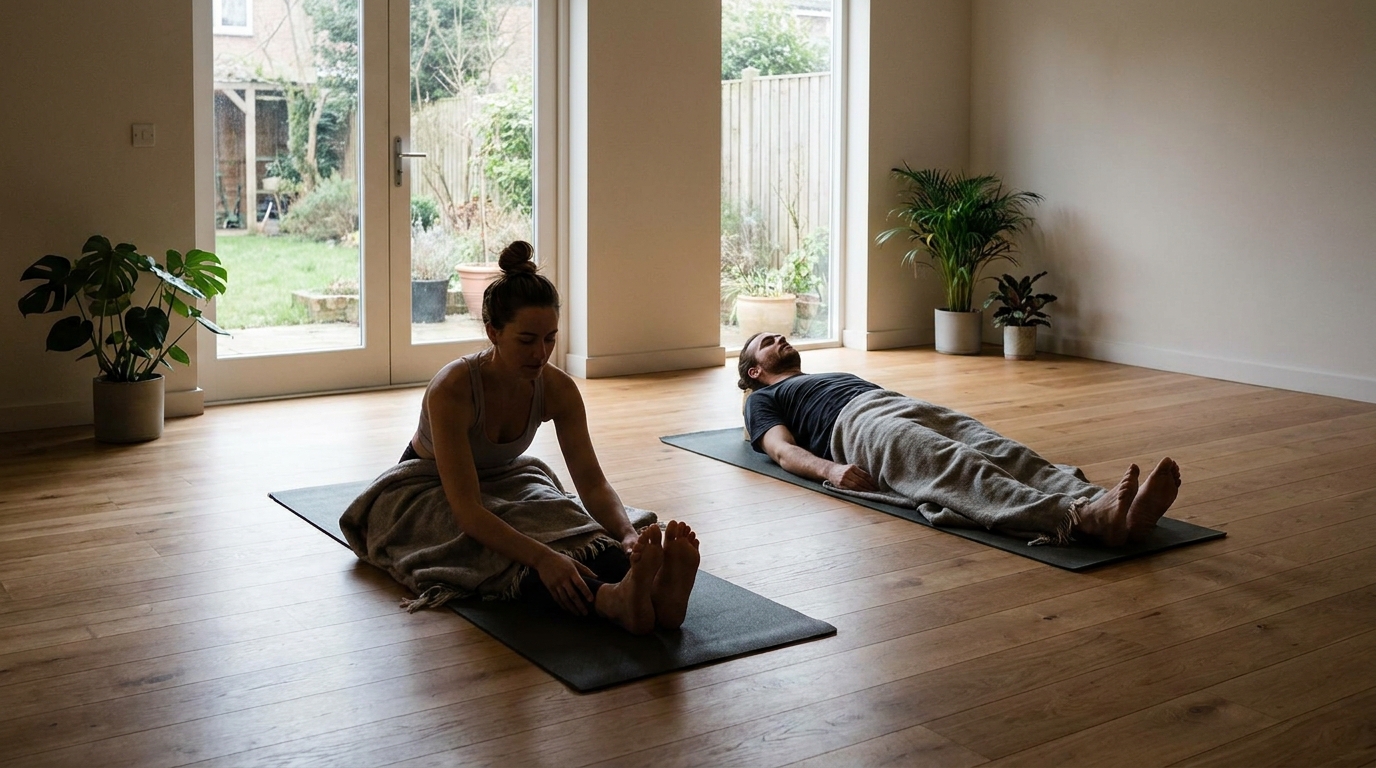
Yin Yoga is a quiet, nourishing style of yoga that invites the body to soften, the breath to slow, and the heart to become still. Unlike more active yoga practices that build heat through movement, Yin Yoga uses long-held, floor-based postures to gently stretch the deeper tissues of the body, especially the fascia, ligaments, joints, and connective tissues.
But Yin Yoga is more than stretching.
It is a practice of listening.
It teaches us to pause with kindness, to meet our body as it is, and to rest in the sacred simplicity of presence. In a world that often asks us to push, perform, and rush, Yin Yoga offers a humble reminder: healing can happen in stillness.
Whether you are new to yoga, returning after a break, aging gracefully, recovering from stress, or simply longing for deep relaxation, Yin Yoga welcomes you. You do not need to be flexible. You do not need special beliefs. You do not need to achieve anything.
You only need to arrive.
In the spirit of bhakti, the yoga of devotion, we can approach Yin Yoga as an offering. Each breath becomes a prayer. Each posture becomes a place of surrender. Each moment of stillness becomes a quiet meeting with the Divine, however you understand that sacred presence.
What Is Yin Yoga?
A Slow and Meditative Yoga Practice
Yin Yoga is a slow, contemplative form of yoga where postures are usually held for 2 to 5 minutes, sometimes longer. Most poses are practiced close to the ground, using gravity and time rather than muscular effort.
The word “yin” comes from the Chinese philosophical tradition of yin and yang. Yin represents qualities such as stillness, coolness, receptivity, softness, and inwardness. Yang represents movement, heat, strength, and outward activity.
Both are needed. Life is a dance between the two.
Many modern yoga practices are more yang in nature. They involve flowing sequences, standing poses, and muscle engagement. Yin Yoga balances this by inviting the body into stillness and deep release.
The Body in Yin Yoga
In Yin Yoga, we gently stress—not strain—the deeper connective tissues of the body. This includes fascia, tendons, ligaments, and joint capsules. Fascia is a web-like connective tissue that surrounds muscles, bones, organs, and nerves. When we move slowly and hold shapes with care, fascia can gradually become more hydrated, supple, and spacious.
Yin Yoga commonly focuses on areas such as:
- Hips
- Lower back
- Spine
- Pelvis
- Inner thighs
- Hamstrings
- Shoulders
- Neck
Because these areas often store both physical tension and emotional holding, Yin Yoga can feel deeply relaxing and sometimes surprisingly emotional. This is natural. The body remembers. When we soften with compassion, we create space for gentle release.
Yin Yoga and Traditional Yoga
Although Yin Yoga as we know it today is a modern practice influenced by Taoist principles and classical yoga postures, its essence is deeply aligned with ancient yogic wisdom.
In the Yoga Sutras of Patanjali, one of the foundational texts of yoga, we find the teaching:
“sthira sukham asanam”
Yoga Sutra 2.46
This means, “The posture should be steady and easeful.”
In Sanskrit, “sthira” means steady, stable, or firm. “Sukham” means ease, comfort, or spaciousness. “Asanam” means posture or seat.
Yin Yoga beautifully explores this balance. We enter a shape with steadiness, but we remain soft. We allow the body to settle without force. We learn that ease is not weakness. It is wisdom.
Why Practice Yin Yoga?
Deep Relaxation for the Nervous System
One of the greatest gifts of Yin Yoga is its effect on the nervous system.
Many of us live in a constant state of stimulation. We answer messages, care for others, manage responsibilities, and carry invisible burdens. The body may remain in “fight-or-flight” mode long after the stressful moment has passed.
Yin Yoga helps activate the parasympathetic nervous system, often called the “rest and digest” system. Through slow breathing, stillness, and supported postures, the body receives a message of safety.
This can support:
- Lower stress levels
- Better sleep
- Slower heart rate
- Calmer breathing
- Reduced muscle tension
- Emotional balance
- A greater sense of inner peace
Deep relaxation is not laziness. It is a sacred necessity. Even the earth rests in winter. Even the ocean has tides. Even the breath has a pause.
A Practice for Emotional Softening
When we stay in a Yin Yoga posture, we may notice more than physical sensation. Thoughts may arise. Memories may surface. Feelings may become clearer.
This does not mean we are doing anything wrong. It means we are becoming present.
The Bhagavad Gita, a beloved scripture of yoga, teaches the importance of equanimity. In Chapter 2, verse 48, Sri Krishna says:
“Yogastha kuru karmani”
“Established in yoga, perform your actions.”
Krishna also speaks of remaining balanced in success and failure. This balance is called “samatvam,” meaning evenness of mind.
Yin Yoga gives us a practical way to explore samatvam. In a posture, we may feel mild discomfort, impatience, boredom, or tenderness. Instead of reacting immediately, we breathe. We observe. We soften.
This is not passive. It is a courageous kind of stillness.
Yin Yoga for Flexibility and Mobility
Many people come to Yin Yoga because they want to become more flexible. This is a beautiful reason to begin. Over time, Yin Yoga may help improve range of motion, especially around the hips, spine, and shoulders.
However, Yin Yoga teaches us not to chase flexibility as an achievement. The goal is not to force the body into a shape. The goal is to create a healthy relationship with the body.
Some bodies are naturally more mobile. Some are more stable. Some carry injuries, surgeries, trauma, or fatigue. Yin Yoga honors this diversity.
The practice becomes less about “How far can I go?” and more about “Can I listen deeply?”
A Doorway to Meditation
For many people, seated meditation feels difficult. The mind wanders. The body becomes restless. Yin Yoga can be a gentle bridge into meditation because it gives the body a shape and the mind a simple focus.
As we hold a pose, we can observe:
- The breath moving in and out
- Sensations changing
- Thoughts passing
- Emotions rising and falling
- The quiet presence beneath it all
In Sanskrit, “dhyana” means meditation or uninterrupted awareness. Yin Yoga prepares us for dhyana by slowing the body and calming the senses.
In this way, Yin Yoga becomes a moving—or rather, still—meditation.
Sure, here is the sentence with the clickable link:
Check out the latest yoga guides at yoga guides.
How to Practice Yin Yoga Safely
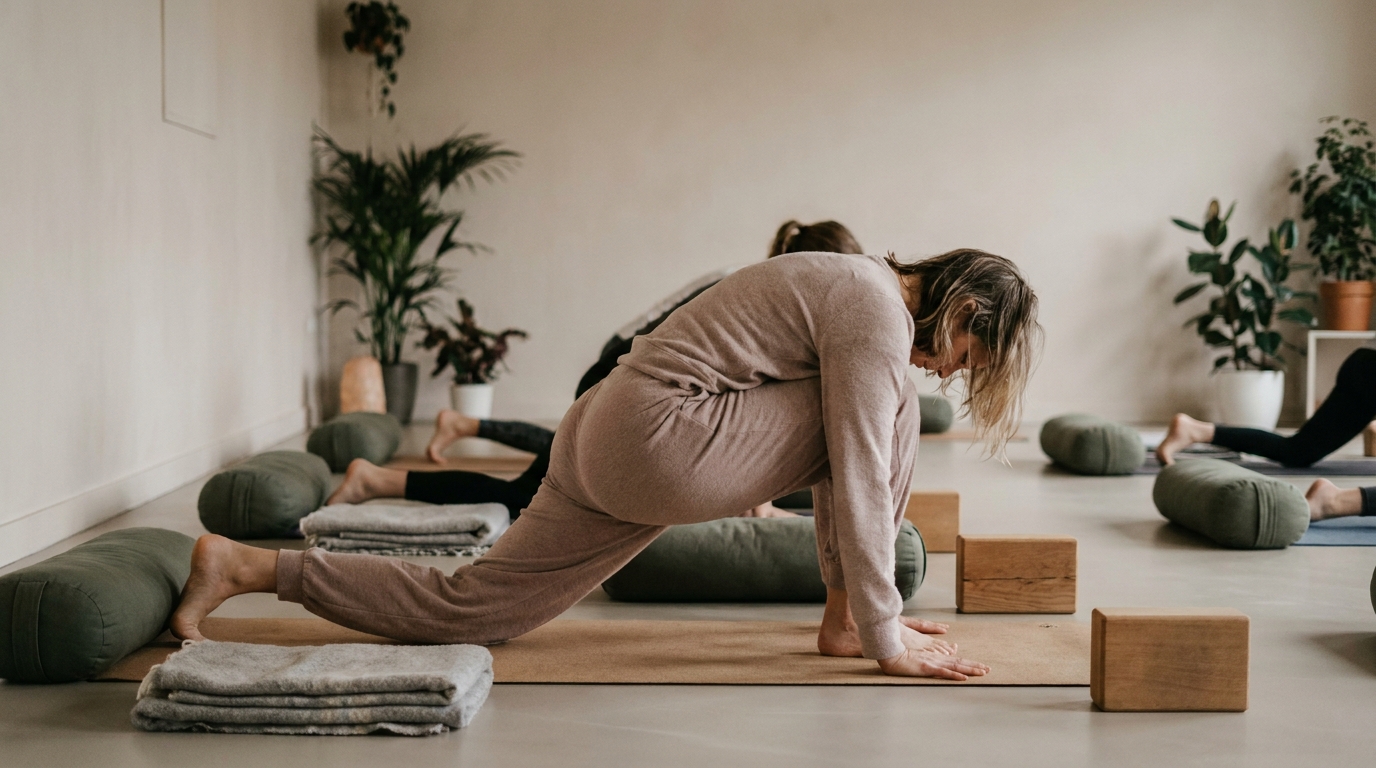
Begin With Humility
A safe Yin Yoga practice begins with humility. We do not conquer the body. We befriend it.
Before beginning, take a moment to sit or lie down. Place one hand on the heart and one on the belly. Feel the breath. Offer a simple intention.
You might say inwardly:
“May I practice with kindness.”
“May I listen to my body.”
“May this practice bring peace to all beings.”
This devotional attitude transforms the practice. It is no longer exercise alone. It becomes seva, a Sanskrit word meaning selfless service. By caring for your own body and mind, you become more available to care for others.
Use the Three Principles of Yin Yoga
Yin Yoga is often taught with three simple principles.
1. Find Your Appropriate Edge
Your “edge” is the place where you feel meaningful sensation without pain. It is not the deepest version of the pose. It is not the place where you hold your breath or tighten your jaw.
An appropriate edge may feel like gentle stretching, pressure, or mild intensity. It should feel sustainable.
If sensation is sharp, burning, electrical, or located inside a joint in a painful way, ease out immediately.
2. Become Still
Once you find your shape, allow the body to become quiet. This does not mean rigid. If you need to adjust, please adjust. But after settling, practice resting in stillness.
Stillness helps the deeper tissues respond gradually. It also reveals the movement of the mind.
3. Stay for Time
Yin Yoga uses time as a teacher. Poses are often held for several minutes. This gives the body time to soften and the mind time to settle.
If you are new, begin with shorter holds: 1 to 2 minutes. With experience, you may stay longer.
Remember: longer is not always better. Wise practice is better.
Use Props With Love
Props are not signs of weakness. They are tools of compassion.
You may use:
- Yoga blocks
- Bolsters
- Blankets
- Pillows
- Cushions
- A folded towel
- A wall or chair
In bhakti, we learn that the Divine meets us where we are. Props help us practice in that same spirit. They allow the body to feel supported, safe, and welcomed.
Practice With the Breath
In Sanskrit, “prana” means life force or vital energy. The breath is one of the most accessible ways we experience prana.
During Yin Yoga, breathe naturally through the nose if possible. Let the exhale be soft and unhurried. You do not need to control the breath aggressively.
A simple breathing practice:
- Inhale gently for 4 counts
- Exhale slowly for 6 counts
- Continue for several rounds
- Then allow the breath to become natural
Longer exhalations can help calm the nervous system and deepen relaxation.
Foundational Yin Yoga Poses for Deep Relaxation
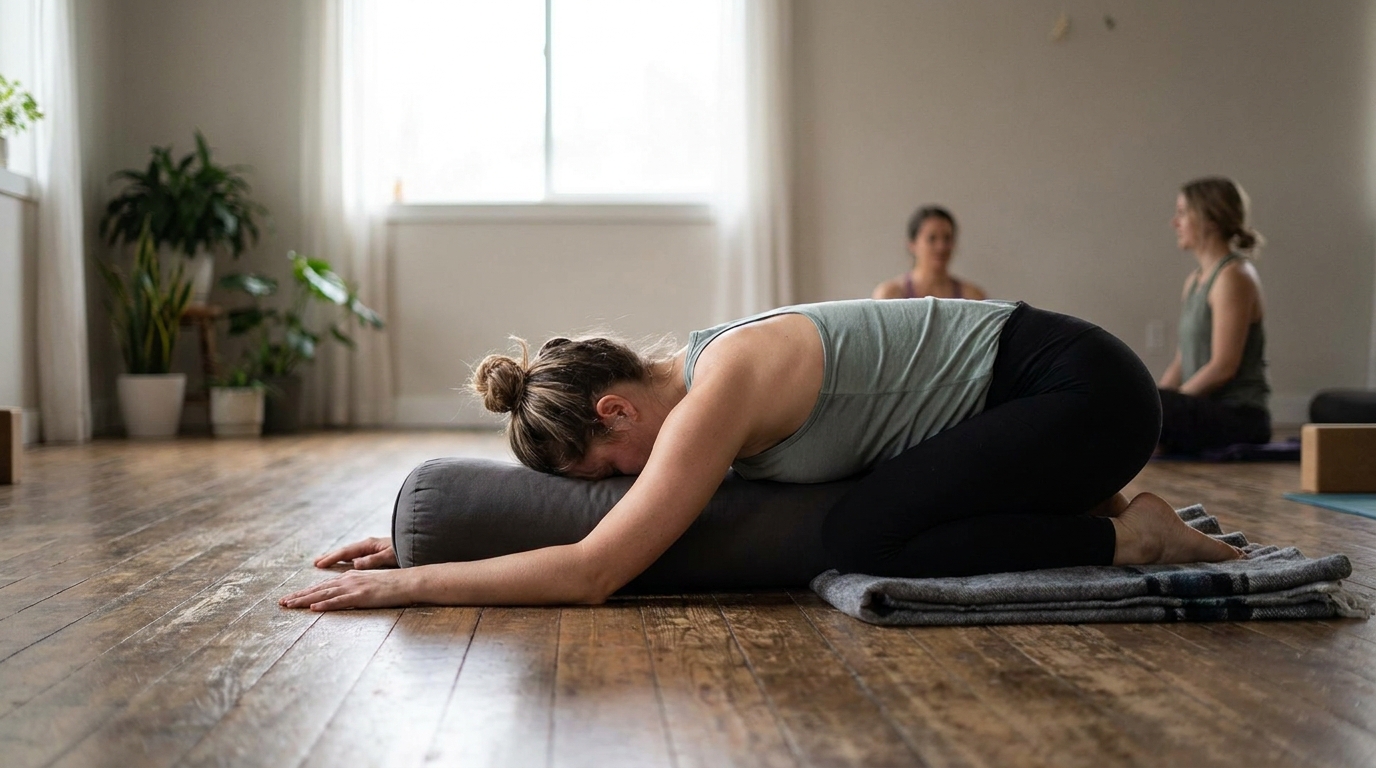
Child’s Pose
Child’s Pose is a gentle forward fold that can feel comforting and grounding.
To practice:
- Kneel on the floor or mat.
- Bring your big toes toward each other.
- Let your knees be together or wide apart.
- Fold forward and rest your forehead on the floor, a block, or a pillow.
- Let your arms rest forward or alongside the body.
Hold for 2 to 5 minutes.
This pose can create a feeling of surrender. The forehead touching the earth may remind us of pranam, a Sanskrit word for bowing with reverence. In Child’s Pose, we bow not from shame, but from love.
Modification: Place a bolster or pillows under the chest for more support.
Butterfly Pose
Butterfly Pose gently opens the hips, inner thighs, and lower back.
To practice:
- Sit on a folded blanket if your lower back rounds strongly.
- Bring the soles of the feet together.
- Let the knees fall open.
- Allow the feet to be farther away from the pelvis for a gentler shape.
- Fold forward slowly, letting the spine round naturally.
Hold for 3 to 5 minutes.
You may support your knees with blocks or pillows. You may also place a bolster on your legs and rest your head on it.
This pose invites inwardness. It reminds us that opening does not need to be dramatic. Sometimes the deepest opening is quiet.
Supported Sphinx Pose
Sphinx Pose gently compresses the lower back and opens the front body.
To practice:
- Lie on your belly.
- Place your elbows under or slightly in front of your shoulders.
- Rest your forearms on the mat.
- Let your chest lift gently.
- Relax your legs and soften your belly.
Hold for 2 to 4 minutes.
If this feels too strong, move your elbows farther forward or place a bolster under the chest. If you feel pinching in the lower back, come out and rest.
Sphinx can be helpful for people who sit often, as it brings the spine into gentle extension. Practice with patience and respect.
Reclined Twist
Reclined Twist supports the spine, belly, and breath.
To practice:
- Lie on your back.
- Hug your knees into your chest.
- Let both knees fall to one side.
- Open your arms in a comfortable shape.
- Turn your head if it feels good, or keep it neutral.
Hold for 3 to 5 minutes on each side.
Place a pillow or bolster under the knees for support. This pose can feel emotionally soothing, like wringing out tension without force.
Twists remind us that release can happen gradually. We do not need to throw away our burdens. We can gently set them down.
Legs Up the Wall
Legs Up the Wall is a deeply restorative posture for relaxation.
To practice:
- Sit with one hip near a wall.
- Slowly lie back and swing your legs up the wall.
- Let your arms rest by your sides or on your belly.
- Use a folded blanket under your hips if comfortable.
Hold for 5 to 10 minutes.
This pose may help tired legs, mild swelling, and nervous system calming. It is a beautiful posture before sleep.
If placing legs up the wall is not comfortable, rest your calves on a chair instead.
The Inner Practice: Meeting Yourself With Compassion
Sensation Is a Teacher
In Yin Yoga, sensation becomes a teacher. Not all sensation is a problem. Some sensation is simply the body communicating.
We learn to ask:
- Is this safe?
- Can I breathe here?
- Am I forcing?
- Can I soften around this experience?
- What is my body asking for?
This inquiry is part of svadhyaya, a Sanskrit word meaning self-study. Svadhyaya is one of the niyamas, or personal observances, described in the Yoga Sutras.
Self-study is not self-criticism. It is loving awareness.
Ahimsa: Practicing Non-Harm
Another foundational yogic principle is ahimsa, meaning non-harming. Ahimsa is the first yama, or ethical guideline, in the Yoga Sutras.
In Yin Yoga, ahimsa means we do not force the body. We do not compare ourselves to others. We do not punish ourselves for being tight, tired, emotional, or distracted.
Ahimsa may sound simple, but it is profound. Many of us have learned to treat the body like a project to improve. Yin Yoga invites us to treat the body like a beloved companion.
This is devotion in action.
Ishvara Pranidhana: Surrender to the Sacred
In the Yoga Sutras, Patanjali also teaches “Ishvara pranidhana,” often translated as surrender to God, the Divine, or a higher reality.
“Ishvara” can be understood as the Lord, the inner guide, or sacred presence. “Pranidhana” means surrender, dedication, or offering.
In Yin Yoga, surrender does not mean giving up. It means letting go of the illusion that we must control everything. It means allowing the breath to guide us, allowing time to soften us, allowing grace to meet us.
A Yin Yoga posture can become a small altar.
The mat becomes sacred ground.
The breath becomes mantra.
The body becomes a temple.
The practice becomes prayer.
A Simple Yin Yoga Sequence for Deep Relaxation
Before You Begin
Choose a quiet space. Dim the lights if possible. Gather pillows, blankets, or bolsters. Wear comfortable clothing. If you like, light a candle or offer a simple prayer.
Please practice slowly. If you have injuries, joint conditions, osteoporosis, pregnancy, or significant medical concerns, consult a qualified healthcare provider or experienced yoga teacher.
30-Minute Yin Yoga Practice
1. Supported Child’s Pose — 4 Minutes
Place a bolster or pillows lengthwise in front of you. Bring your knees wide and rest your torso on the support. Turn your head to one side halfway through.
Let the belly soften. Let the back body widen. Feel the earth holding you.
2. Butterfly Pose — 4 Minutes
Sit with the soles of the feet together. Fold forward gently. Support your knees or head if needed.
With each exhale, release effort. Let the spine be heavy. Let the breath be kind.
3. Sphinx Pose — 3 Minutes
Lie on your belly and come onto your forearms. Keep the shoulders relaxed. If the lower back feels compressed, lower down.
Feel the front of the body open. Breathe into the heart space.
4. Half Dragonfly — 4 Minutes Each Side
Sit with one leg extended and the other knee bent, sole of the foot toward the inner thigh. Fold over the extended leg or between the legs.
This posture can stretch the hamstrings, inner thighs, and side body. Use props generously.
5. Reclined Twist — 4 Minutes Each Side
Lie on your back and let the knees fall to one side. Support the knees with a pillow. Rest into the shape.
Imagine the breath washing through the spine.
6. Legs Up the Wall — 5 Minutes
Rest your legs up the wall or on a chair. Let the arms relax. Close the eyes.
Allow yourself to receive. There is nothing to prove.
Closing the Practice
After your final posture, rest for a few moments in Savasana.
“Savasana” means corpse pose in Sanskrit. It may sound unusual, but it symbolizes deep surrender. We release doing. We release striving. We rest in being.
Lie on your back with support under the knees if needed. Let the body be still. Let the breath be natural.
When you are ready, bring your palms together at the heart. This gesture is called “anjali mudra.” “Mudra” means seal or gesture. Anjali mudra is a gesture of reverence.
You may close with:
“Lokah samastah sukhino bhavantu.”
This Sanskrit prayer means:
“May all beings everywhere be happy and free.”
It reminds us that our practice is not only for ourselves. The peace we cultivate within can ripple outward into our homes, relationships, and world.
How Yin Yoga Supports Everyday Life
Better Sleep and Evening Calm
Yin Yoga is especially helpful in the evening because it encourages the body to slow down. Practicing gentle postures before bed can become a loving ritual that tells the nervous system, “It is safe to rest.”
Try a short bedtime sequence:
- Butterfly Pose
- Reclined Twist
- Legs Up the Wall
- Savasana
Keep the lights low. Avoid forcing deep stretches. Let the practice be more restful than intense.
Stress Relief During Busy Seasons
During busy seasons, many people think they do not have time for yoga. But Yin Yoga can be practiced in small portions.
Even one posture can help.
Three minutes in Child’s Pose.
Five minutes with legs on a chair.
Two minutes of slow breathing.
These simple pauses may not solve every problem, but they can change the way we meet the moment.
The Bhagavad Gita teaches that yoga is skill in action. In Chapter 2, verse 50, the phrase “yogah karmasu kaushalam” is often translated as “Yoga is skillfulness in action.”
When we are rested and centered, our actions become clearer. Our words become softer. Our choices become wiser.
A Kinder Relationship With the Body
Yin Yoga teaches body awareness without judgment.
Instead of asking, “What is wrong with me?” we learn to ask, “What is happening here?”
This shift is healing.
Your body is not an obstacle to spiritual life. It is part of the path. In yoga, the body is a sacred vehicle for awareness, service, and love.
When we treat the body with reverence, we begin to live with more gratitude.
More Patience and Presence
Holding Yin Yoga postures can reveal our relationship with time. We may feel impatient. We may want to move quickly to the next thing. We may notice the mind seeking distraction.
With practice, we learn to stay.
This patience begins on the mat, but it does not stay there. It enters conversations. It enters parenting, caregiving, working, grieving, waiting, and healing.
Yin Yoga gently trains the heart to remain open in the middle of life.
How Else Can You Deepen Your Yin Yoga Practice?
Add Mantra or Prayer
A mantra is a sacred sound, word, or phrase repeated to focus the mind and open the heart. The Sanskrit root “man” means mind, and “tra” suggests a tool or instrument. So mantra can be understood as a tool for the mind.
During Yin Yoga, you may silently repeat a simple mantra with the breath.
Examples:
- “So Hum” — “I am That” or “I am connected with the sacred whole”
- “Om Shanti” — “Om, peace”
- “Thank you”
- “I am held”
- “May I be peaceful”
You do not need to use Sanskrit. Any sincere prayer of the heart can become a mantra.
Practice Loving Awareness
As you rest in a posture, bring awareness to the heart. Imagine breathing in compassion and breathing out tension.
You might repeat:
“Inhaling, I receive.”
“Exhaling, I release.”
Or:
“Inhaling, I am here.”
“Exhaling, I soften.”
This simple practice helps unite body, breath, and mind.
Journal After Practice
Yin Yoga can bring insight. After practice, take a few minutes to write.
You may ask:
- What did I notice in my body?
- What emotions appeared?
- Where did I resist?
- Where did I soften?
- What does my heart need today?
Journaling supports svadhyaya, self-study. It helps us carry the wisdom of practice into daily life.
Combine Yin Yoga With Meditation
After a Yin Yoga sequence, the body is often more prepared for still meditation. Sit comfortably on a cushion, chair, or folded blanket. Let the spine be upright but not tense.
Meditate for 5 to 10 minutes.
Simply observe the breath. When the mind wanders, return gently. There is no need to fight thoughts. Let them pass like clouds.
This is a practical doorway into inner silence.
Bring Yin Yoga Into Community
Yoga is personal, but it is not meant to isolate us. Practicing in a gentle class, spiritual community, or online gathering can create a sense of shared peace.
In bhakti traditions, sangha means spiritual community. Being with others who value kindness, truth, and devotion can support our path.
If you teach or share Yin Yoga, remember that every body is different. Offer options. Use inclusive language. Honor each person’s lived experience.
Yoga becomes more beautiful when everyone feels welcome.
Common Questions About Yin Yoga
Is Yin Yoga Good for Beginners?
Yes, Yin Yoga can be excellent for beginners because it is slow and simple. However, simple does not always mean easy. Staying still can be challenging at first.
Begin with shorter holds, use props, and choose gentle versions of each pose. A beginner-friendly Yin Yoga class can be very helpful.
Is Yin Yoga the Same as Restorative Yoga?
Yin Yoga and Restorative Yoga are both slow and calming, but they are not the same.
In Yin Yoga, you usually feel moderate sensation as the deeper tissues are gently stressed.
In Restorative Yoga, the body is fully supported with props, and the goal is deep rest with minimal stretch.
Both are beautiful. Yin Yoga leans toward stillness with sensation. Restorative Yoga leans toward complete relaxation.
Can Yin Yoga Release Emotions?
Sometimes, yes. Because Yin Yoga involves stillness, breath, and long-held postures, emotions may arise. This can be part of the body-mind connection.
If emotions come, meet them gently. You may breathe, place a hand on the heart, or come out of the pose. If strong emotions or trauma responses arise, consider working with a trauma-informed yoga teacher or mental health professional.
Yoga should support healing, not overwhelm you.
How Often Should I Practice Yin Yoga?
You can practice Yin Yoga 2 to 4 times per week, depending on your body and lifestyle. Some people enjoy a short daily practice, especially in the evening.
Balance is important. If you also do strong exercise or active yoga, Yin Yoga can be a wonderful complement. If you are very flexible or have hypermobility, practice with extra care and avoid going too deep.
Should Yin Yoga Hurt?
No. Yin Yoga should not hurt.
You may feel stretching, pressure, or intensity, but pain is a signal to change or stop. Sharp, stabbing, burning, or electrical sensations are not appropriate.
Let ahimsa, non-harming, guide you.
The Deeper Gift of Yin Yoga
Yin Yoga gives us deep relaxation, yes. It may help the body become more flexible, the mind more peaceful, and the nervous system more balanced.
But its deeper gift is intimacy with life.
In stillness, we begin to notice how much we have been carrying. We notice the ways we brace against the present moment. We notice the tenderness beneath our busyness.
And gently, breath by breath, we return.
We return to the body.
We return to the heart.
We return to the sacred pause.
We return to the quiet presence that has been here all along.
This is the humble beauty of Yin Yoga. It does not demand that we become someone else. It invites us to meet ourselves with love.
May your practice be gentle.
May your breath be peaceful.
May your body feel safe.
May your heart remember its own softness.
May the deep relaxation of Yin Yoga become not only something you do, but a way you live—with patience, devotion, and compassion for all beings.
FAQs
What is Yin Yoga?
Yin Yoga is a slow-paced style of yoga with postures, or asanas, that are held for longer periods of time, typically ranging from 3 to 5 minutes. It targets the deep connective tissues of the body and the fascia, helping to increase circulation in the joints and improve flexibility.
What are the benefits of practicing Yin Yoga?
Practicing Yin Yoga can help improve flexibility, increase circulation, reduce stress and anxiety, and promote relaxation. It also targets the connective tissues, such as the ligaments, tendons, and fascia, which can help improve joint health and mobility.
Is Yin Yoga suitable for beginners?
Yes, Yin Yoga is suitable for beginners as well as experienced practitioners. The long-held poses allow for a gentle and meditative practice, making it accessible to individuals of all levels of fitness and flexibility.
What is the difference between Yin Yoga and other styles of yoga?
Yin Yoga focuses on passive, seated postures that target the connective tissues, whereas other styles of yoga, such as Vinyasa or Hatha, typically involve more active, dynamic movements. Additionally, Yin Yoga emphasizes holding poses for longer periods of time, as opposed to flowing through sequences.
Are there any contraindications for practicing Yin Yoga?
Individuals with certain injuries or medical conditions, such as recent joint replacements, herniated discs, or osteoporosis, should consult with a healthcare professional before practicing Yin Yoga. It’s important to listen to your body and modify poses as needed to ensure safety and comfort during practice.